The famous final sequence, when Kane walks through the corridor of mirrors, is not simply a stylistic and aesthetic choice. Instead, this choice actually resembles one of the primary themes of the films, which is the presence of fractured and fabricated identity. The “many Kanes” that appear because of the mirrored hall shows that there is no true Charles Kane, but instead countless versions of himself that he has portrayed to the general public and been interpreted as. Even Jerry Thompson, who spent weeks studying the life of Kane, could only ever understand him through the fragmented and often unreliable tales told to him by the people closest to Kane.

The mirrors also offer a deep sense of isolation. In Kane’s final days, he spends time not surrounded by loved ones and friends, but by reflections of himself. He has spent years trying to surround himself with people who “love” him, accidentally surrounding himself with people who try and praise him in exchange for power. This isolation can be seen earlier in the film as well, when Susan Alexander sits at her wardrobe, we gaze at her reflection through a mirror. The reflection stands as a confrontation of her loneliness and isolation.
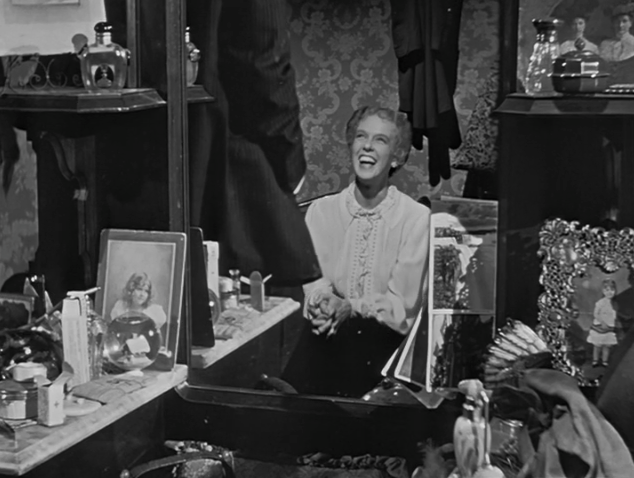
In totality, mirrors and reflections are used throughout Citizen Kane to establish the distorted nature of life these characters are experiencing. Nothing is genuine, not the people they surround themselves with or the stories they tell. Even the story itself goes through multiple levels of connection (a friend, a manager, etc), leading to a convoluted tale that never truly lets us get a good look at who Charles Kane was. And in his final days, he understands that he doesn’t know either.


Leave a Reply to Andrew Cai Cancel reply