In Part 1 of this series, we learned how OTT helps inventors commercialize their copyrighted work while also exploring some of the limitations of copyrights, including the problems that can arise when inventors use copyleft licenses or reveal details of their inventions before securing their intellectual property. Below, we will learn about open-source software (OSS) licenses and how they factor into the commercialization process, or how they might impact commercialization.
What is Open Source?
When talking about software, open-source generally means that anyone can access and modify the software in question for free. When commercializing, there are two ways in which open-source media can impact commercialization: using open-source material in the final product and releasing the final product under open-source rules.
Using Open-Source Material in the Final Product
One of the most important things to do when writing software is to keep track of the sources for any “borrowed” code used in the final product. According to Sat Balachander, a licensing associate at OTT, one of the priorities of the licensing team when evaluating software is to obtain as much information about the tech as possible, especially about any open-source material used during development. This is because any open-source software used can bring with it its own licensing agreements that must be abided within any subsequent licensing agreement. Copyleft is an example of this, such that any copyleft materials used in different software immediately requires that the new software comply with copyleft licensing.
A different way to think of using open-source software would be to equate the final project to a cake being sold at a bakery. The baker created the recipe for the cake but uses frosting made by different bakers, all of whom have different rules for using their frosting on cakes the baker intends to sell. The baker needs to make sure that using the frosting of other bakers won’t impact his ability to sell the cake. The same can be said for using open-source software or data in a project one hopes to eventually commercialize: Make sure the material used won’t affect the product’s potential to be commercialized.
Releasing Under Open-Source
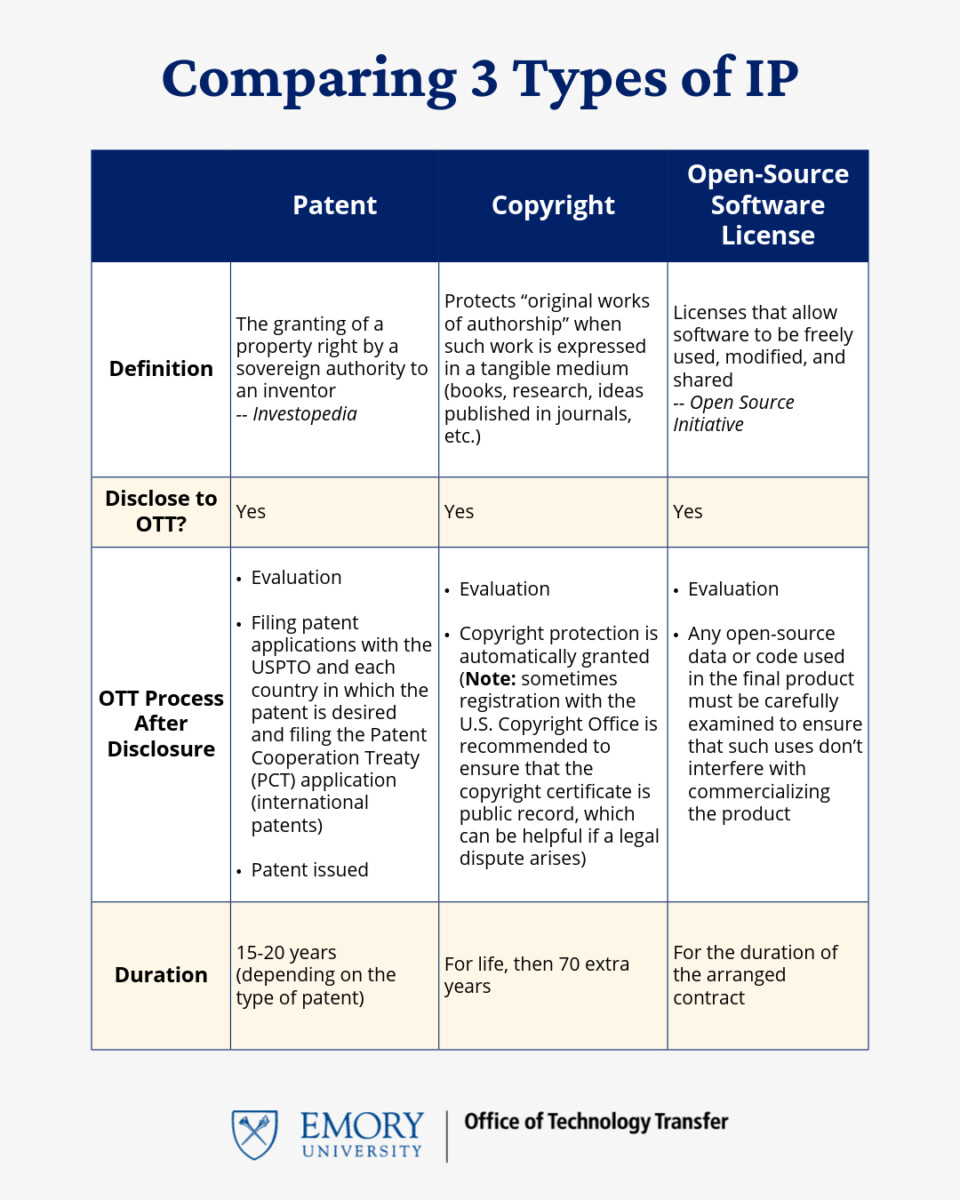
Open-source software has certain licenses: copyleft, as discussed in Part 1, and permissive. A permissive license is similar to copyleft, but where copyleft licensing does not permit proprietization (ownership), permissive licensing allows it and has very few restrictions otherwise. Companies who choose to open-source one version of their software but charge users for using a modified version of that software (with words like “pro” and “premium” attached) are taking advantage of permissive licensing. Thus, if an inventor wants to release their work to the public, doing so will affect the extrinsic value of the work, but their ability to commercialize is not altogether vanquished with careful consideration for licensing.
It should be noted that while open-source software can have elements that can be patented or copyrighted, the question is whether or not the patent would be profitable or enforceable. For instance, if a programmer releases integral parts of their code on a platform like Github, a patent at that point wouldn’t be enforceable because now the code is available to the public to be modified, duplicated, etc. If the baker from the previous metaphor was giving out free cakes, who would want to spend money on the exact same cake?
OTT Can Help
Fortunately, Emory inventors don’t have to navigate the treacherous waters of intellectual property alone. The Emory Patent Group and the licensing team are available to help innovators find a method of release that suits their vision, as well as guide them through the process of commercialization after they disclose their invention.
— Jenna Woods