
Lily Yang is the Emory professor of Surgery and Nancy Panoz Chair of Surgery in Cancer Research, Department of Surgery, Emory University School of Medicine. Stephen Nowland/Emory University
When asked to describe her job, Lily Yang, MD, PhD, said that she is first and foremost “a translational scientist of oncology research.”
Yang is also a professor of Surgery and Radiology and Imaging Sciences, the Nancy Panoz Chair of Surgery in Cancer Research, and Director of the Surgical Oncology Nanomedicine Research Lab, all at the Emory University School of Medicine. She is an innovator and researcher within the field of oncology, and she has made a career of recognizing shortcomings in clinical management of cancer patients, filling the gaps in oncological knowledge, and developing better treatment options for cancer patients.
In fact, that’s how she decided to devote her life to oncology research: by recognizing unmet needs through the development of new detection and therapeutic approaches for improving the outcome of cancer treatment.
Seeing a Need…
Yang went to medical school at the West China University of Medical Sciences and the Chinese Academy of Preventive Medicine. During her training, she noticed clinical challenges in cancer research and treatment.
“While I was in my clinical rotation, I really felt like there was a lack of effective cancer treatment. I decided at that time that I wanted to devote my time to cancer research because there were not many options for cancer patients,” Yang explained.
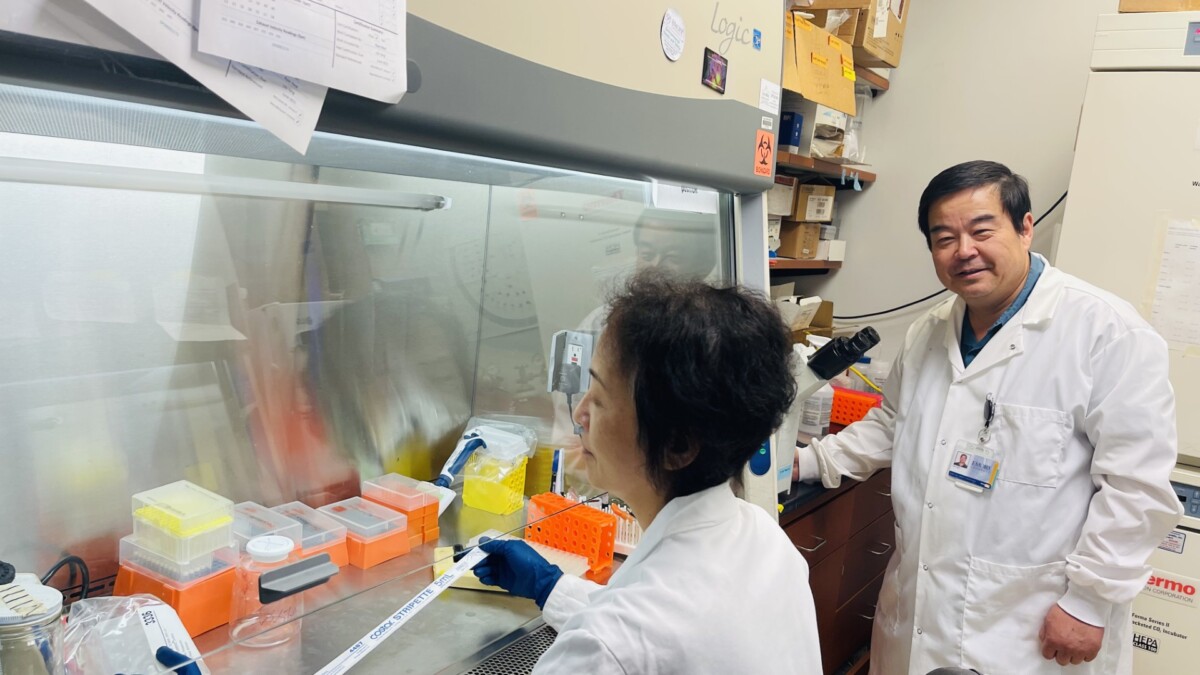
Surgical Oncology Nanomedicine Research Lab members Tongrui Liu (left) and Wei Ping Qian, MD (Photo courtesy of Lily Yang)
After medical and graduate school, Yang worked at the Beijing Institute for Cancer Research for two years but felt that the research environment was not what she was looking for, so she applied to Brown University to complete her graduate education in the United States. She spent the next five years completing her PhD and studying liver cancer and how cancer forms in a process called carcinogenesis. After graduating from Brown, Yang went to the University of Southern California for postdoctoral training in cancer gene therapy, a newly emerging field at the time.
…And Filling It
In 1995, Yang moved to Atlanta and did further postdoc training in molecular medicine and gene therapy. About a year later, she started her lab at Emory University in the Department of Surgery so that she could translate her lab research into clinical applications faster.
“I’ve been here since then, and I work on different research projects for developing novel cancer imaging and therapeutic approaches for early cancer detection and effective treatment,” she said.
Supported by NIH funding, Yang has been able to grow her lab to develop various technologies for cancer treatments. Having her name on 14 patents, her goal of creating better cancer treatments and detection technologies is “becoming a reality in the clinic,” as she puts it.
From the Lab to the Clinic
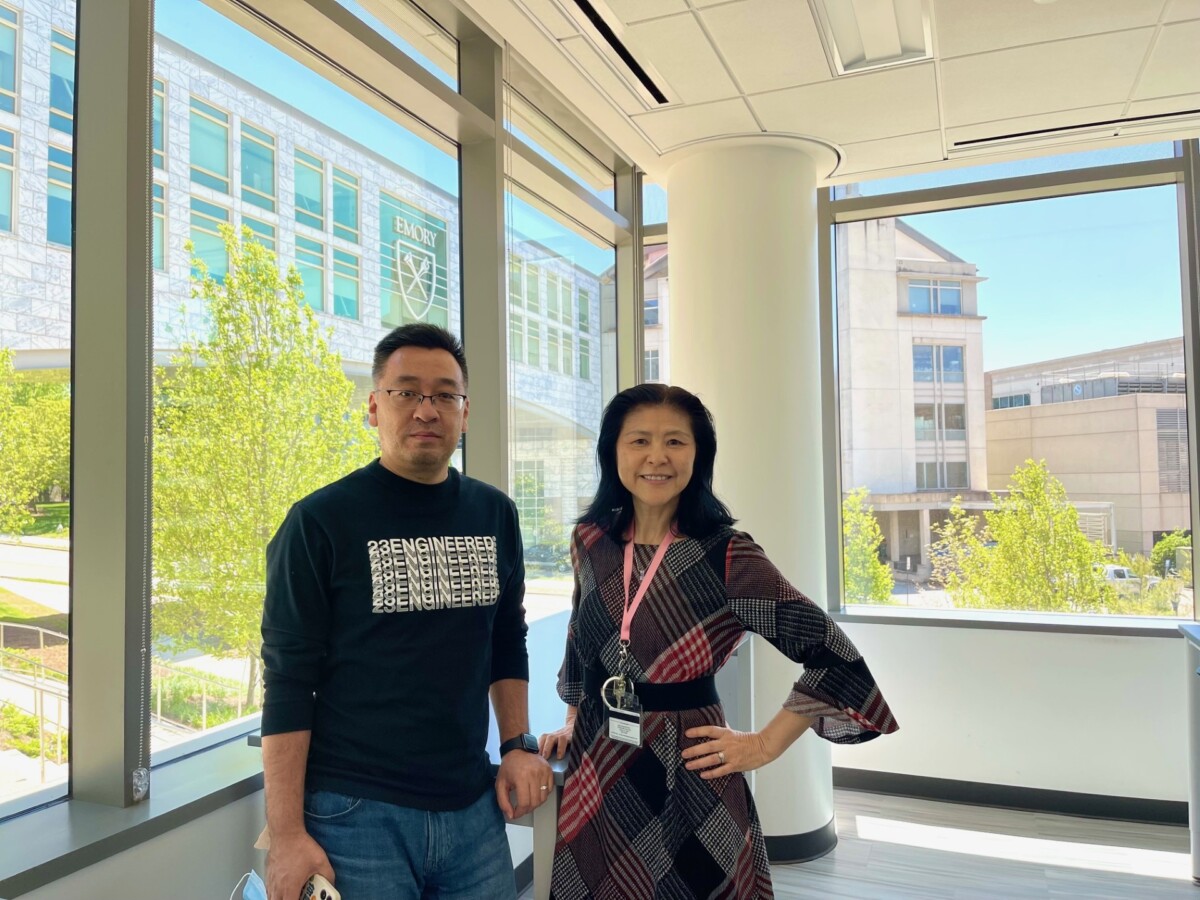
Lily Yang, MD, PhD, (right) and Lei Zhu, PhD, COO of MIGRA Therapeutics and Assistant Professor in the Department Surgery (Photo courtesy of Lily Yang)
Yang formed a start-up company in 2018 with the goal to translate her lab’s patented technologies into clinical applications. After securing funding, they’ve begun the real translation of the work.
Her company, MIGRA-Therapeutics, LLC, is currently funded by an NIH SBIR award to translate a targeted nanoparticle drug for the treatment of pancreatic cancer. Her group is conducting preclinical studies that are required for the FDA approval of the Investigative New Drug application aimed at a phase I clinical trial in pancreatic cancer patients. Additionally, her latest project involves developing a new immunotherapy nanomedicine for the treatment of cancer patients with concurrent cardiovascular diseases. This research project is currently in a preclinical stage. This research project has been supported by the NIH/NCI “Toward Translation of Nanotechnology Cancer Interventions” program.
“I have a great community of collaborators because I cannot do this by myself. This is something where I try to establish a team,” Yang said.
Plans for the Future
Outside of the lab, Yang enjoys dance and even takes classes at Emory’s Woodruff PE Center. She also runs the Winship 5K every year.
Yang is dedicated to the research she and her team are doing. Her biggest focus right now is getting her technologies to clinical trials so that her work can make an impact on clinical practices and in the lives of cancer patients everywhere.
Read our Featured Innovation for Yang’s technology, “Treating Cancer Patients with Comorbid Atherosclerosis.”
— Jenna Woods