Year: 2019

EPIDEMIOLOGIST I – Global Migration Epidemiologist

Category : Alumni

Main Purpose Of Job
The mission of the Prevention and Health Promotion Administration (PHPA) is to protect, promote and improve the health and well-being of all Marylanders and their families through provision of public health leadership and community-based public health efforts, in partnership with local health departments, providers, community-based organizations, and public and private sector agencies, with special attention to at-risk and vulnerable populations. Within PHPA, the Center for Global Migration and Immigrant Health (CGMIH) works to ensure that newly-arrived humanitarian immigrants are connected to culturally-informed and language-accessible healthcare. The CGMIH also works to provide technical assistance to globally-mobile and diverse populations.

This position will serve as the Global Migration Epidemiologist for the CGMIH and will be responsible for identifying, incorporating and implementing travel and migration-related variables. This position will also be responsible for collecting, reviewing, analyzing, and evaluating travel and migration-related surveillance data; conducting related infectious disease epidemiologic investigations; and, developing statewide key indicators and performance metrics for statewide reports and quality improvement processes. In addition, this position will establish a quality assurance approach to ensure a high level of quality and accuracy in data collection, as well as develop related standard operating procedures and provide related training to key stakeholders (e.g. MDH/local health department staff) on investigation techniques for collecting travel-related data.

This position will serve as the back-up to the Senior Epidemiologist/Maryland Immigrant and Refugee Information System (MIRIS) Database Manager, and assist in MIRIS updates/maintenance. Additionally, this position will monitor, identify and assess disruptions to operations, as well as be responsible for other federally-mandated data-related activities. Furthermore, this position will work closely with the Center for Immunization to evaluate the effectiveness, efficiency and impact of connecting overseas vaccination data to the State’s immunization registry.

Finally, this position will provide related technical assistance for State and local partners, while also being responsible for all relevant reporting requirements to federal and State partners. All of these activities will complement and contribute to the surveillance and outbreak investigative functions of the Infectious Disease Epidemiology and Outbreak Response Bureau (IDEORB), whose purpose is to prevent and/or reduce the incidence of communicable diseases in Maryland.

Minimum Qualifications:
Education: A Master’s degree in the field of Public Health from an accredited college or university, with a minimum of three graduate courses in Epidemiology and one graduate course in Biostatistics.

Experience: None.

Note: Candidates may substitute U.S. Armed Forces military service experience as a Commissioned Officer in Health Care Science classifications or Clinical Lab, Medical Scientists or Bio Medical Lab Officer specialty codes in the health research field of work, on a year-for-year basis, for the required education.

Desired or Preferred Qualifications
The desired candidate should have experience working with multiple data sources and creating, as well as analyzing, matched datasets. He/she should also have professional experience using public health surveillance methods to investigate communicable diseases, as well as experience working with culturally diverse populations.

For more information and to apply, click HERE.


EPIDEMIOLOGIST III – Public Health Surveillance Informatics Specialist

Category : Alumni

Main Purpose Of Job
This position will serve as a Senior Epidemiologist/Public Health Surveillance Informatics Specialist in the Maryland Department of Health (MDH)’s Division of Infectious Disease Surveillance. This position will be responsible for designing, monitoring, evaluating, and improving Maryland Statewide infectious disease epidemiologic investigations, as well as surveillance processes and data. This position will also assist with the implementation and maintenance of electronic infectious disease laboratory and case surveillance reporting; be responsible for developing statewide key indicators, volume drivers and other infectious disease surveillance-related performance metrics for statewide feedback reports and quality improvement processes; and, collaborate with stakeholders to define data needs and identify gaps in current capabilities.

In addition, this position will import, clean, transform, and validate data for the purposes of identifying infectious disease clusters, trends or patterns, as well as use a proactive approach to drive a high level of quality and accuracy by identifying new opportunities for process improvement, along with opportunities for coaching, training and other efforts at ensuring best practices for maintaining data accuracy and integrity. Furthermore, this position will oversee other surveillance and prevention-related efforts within MDH’s Division of Infectious Disease Surveillance.

Additionally, this position will serve as the MDH National Electronic Disease Surveillance System (NEDSS)’s Coordinator and lead the modification and maintenance of NEDSS, while also monitoring data systems, in order to identify and assess disruptions to operations. Finally, this position will ensure that standardized data is leveraged for data re-usage and workflow automation, in order to maximize the usage of data for information tracking, statistical analyses and reporting. In all processes and at all times, this position will manage and maintain the confidentiality and security of the data and databases.

Minimum Qualifications
Education: A Master’s degree in the field of Public Health from an accredited college or university, with a minimum of three graduate courses in Epidemiology and one graduate course in Biostatistics.

Experience: Three years of experience as an Epidemiologist, after receipt of the Master’s degree.

Notes:

1. Candidates may substitute a Doctoral degree in the field of Public Health from an accredited college or university, with a minimum of six graduate courses in Epidemiology and three graduate courses in Biostatistics, for the required education and experience.

2. Candidates may substitute U.S. Armed Forces military service experience as a Commissioned Officer in Health Care Science classifications or Clinical Lab, Medical Scientists or Bio Medical Lab Officer specialty codes in the health research field of work, on a year-for-year basis, for the required experience and education.

Desired or Preferred Qualifications
The desired candidate should have supervisory experience, as well as experience managing projects and using electronic disease reporting and/or electronic laboratory reporting systems.

For more information and to apply, click HERE.

Rollins Speaks, 11/12

Category : News/Events

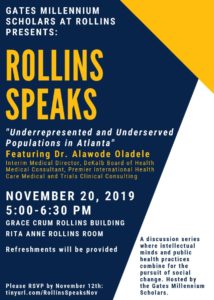
Rollins Speaks: Underrepresented and Underserved Populations in Atlanta, featuring Dr. Alawode Oladele
Wednesday, November 20 | 5PM-6:30PM | Rita Anne Rollins Room
RSVP Here by Friday November 12

ABOUT ROLLINS SPEAKS 
Every year, GMS at Rollins host a lecture series called, “Rollins Speaks.” The purpose of this series is to raise awareness about notable public health topics, and specifically priority minority health issues, to RSPH Faculty, Staff, and Students, as well as community members. Prior topics have included gun violence and food insecurity. 

ABOUT DR. OLADELE
November’s Rollins Speaks will focus on underrepresented and underserved populations in Atlanta, featuring Dr. Alawode Oladele, alumnus of Rollins and Interim Medical Director at the DeKalb Board of Health. Dr. Oladele’s previous work has been in the community of Clarkston and supporting efforts in infectious disease.  He was well-received at CDC Day this year, and we are excited to provide this opportunity for the entire RSPH community to learn from his experience and successes in public health. 


Literature Review Help, 11/12 & 11/13

Join Delta Omega and the Academic Resource Center for lunch sessions on Zotero citation manager and Pubmed literature searches held on Tuesday November 11 and Wednesday November 12.


Global Health Scholars Symposium, 11/12

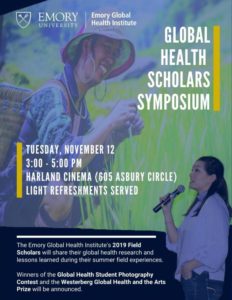
The Emory Global Health Institute’s 2019 Field Scholars will share their global health research and lessons learned during their summer field experiences.


CDC Environmental Health Practice and Informatics Fellowship, closes 12/6

Category : Alumni

Description
*Applications will be reviewed on a rolling-basis.

A research opportunity is currently available within the Water, Food and Environmental Health Services Branch (WFEHSB), in the Division of Environmental Health Science and Practice (DEHSP) of the National Center for Environmental Health (NCEH) at the Centers for Disease Control and Prevention (CDC) in Atlanta, Georgia.

The WFEHSB mission is to strengthen the roles of state, tribal, local, territorial and national environmental health (EH) programs and their professionals to better anticipate, identify, and respond to adverse environmental exposures and their consequences for human health. The participant will be assigned to the WFEHSB EH Practice Section, which focuses on advancing the field of EH by empowering EH professionals, strengthening partnerships, designing innovative solutions, and promoting best practices. This research opportunity focuses on EH information systems, informatics, as well as data use and visualization to enhance EH services and practices.

Under the guidance of a collaborative team of professionals within the EH Practice Section, the selected participant will be involved in the following:

  • Contributing to EH informatics resource development and approaches for strengthening the standardization and utility of EH information systems
  • Conducting literature reviews to inform methodological approaches for identifying and determining EH evidence-based practices
  • Contributing to the design and development of EH educational and informational materials (factsheets, infographics, training courses, webinars, etc.)
  • Participating in responses to EH technical assistance requests through research, scientific reasoning, and effective communication
  • Contributing to various EH research projects involving data analysis and reporting results
    Anticipated Appointment Start Date: November 1, 2019 or later

This program, administered by ORAU through its contract with the U.S. Department of Energy to manage the Oak Ridge Institute for Science and Education, was established through an interagency agreement between DOE and CDC. The initial appointment can be up to one year, but may be renewed upon recommendation of CDC contingent on the availability of funds. The participant will receive a monthly stipend commensurate with educational level and experience. Proof of health insurance is required for participation in this program. The appointment is full-time at CDC in the Atlanta, Georgia, area. Participants do not become employees of CDC, DOE or the program administrator, and there are no employment-related benefits.

Qualifications
The qualified candidate should have received a master’s degree in one of the relevant fields. Degree must have been received within five years of the appointment start date.

Professional registration as a Registered Environmental Health Specialist or Registered Sanitarian is highly desirable.

Preferred skills:

Coursework and experience in informatics and data management, analysis, and visualization
Excellent written and verbal communication skills

For more information and to apply, click HERE.


Global Digital Health Features, 11/12

Category : News/Events

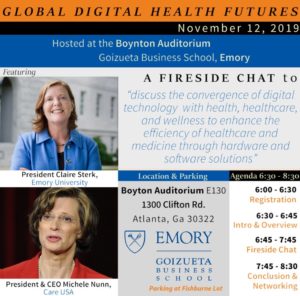
Join the Business School for a fireside chat to “discuss the convergence of digital technology with health, healthcare, and wellness to enhance the efficiency of healthcare and medicine through hardware and software solutions”


Research Manager, Safety and Epidemiology – Epidemiologist (PS28343)

Category : Alumni

HealthCore, Inc., a health services research firm, is seeking a Research Manager, Safety and Epidemiology with experience in the healthcare consulting or biopharmaceutical industry to join our dynamic company. Founded in 1996, and now an independently-operating subsidiary of Anthem, Inc., HealthCore provides the health care system, biopharmaceutical industry, academia, and the Federal Government with “real-world” data to improve the quality, safety, and affordability of healthcare. HealthCore’s projects range from retrospective to large-scale, prospective studies in the areas of drug, vaccine, and medical device safety surveillance, risk management, pharmacoepidemiology, health outcomes, pharmacoeconomics, and comparative effectiveness research.

We are currently seeking a Research Manager to join our Safety and Epidemiology team. This position may be located in either our Wilmington, DE, Andover or Watertown, MA or Alexandria, VA offices. The Research Manager will collaborate with scientists and senior leadership to manage the execution of pharmacoepidemiology, risk management, and medical product safety studies for a portfolio of clients in the biopharmaceutical industry.

Responsibilities include:

Lead pharmacoepidemiology research activities and provide epidemiology subject matter expertise to address key healthcare safety and effectiveness concerns.
Lead or support the scientific study design and development of client proposals, protocols, statistical analysis plans, reports, presentations, and publications.
Present the company’s epidemiology expertise to prospective clients and results of research to clients.
Support quality review of data management and data analysis activities to ensure the accuracy of results.
Publish findings, and present work at professional scientific meetings.
Attend and lead project team and client meetings and serve as the scientific point of contact for the project team and client.
Manage client expectations and proactively identify scientific and operational challenges of study designs, ensure risks have appropriate mitigation and contingency plans, and manage escalation and resolution of issues to senior leadership.
Enhance and expand the service offerings of the Safety and Epidemiology line of business through the identification and execution of novel study design and analytic methodologies.

Qualifications:

This position requires a masters or doctoral level degree in epidemiology or biostatistics; doctoral degree preferred. Four or more years of relevant experience in conducting research using health plan administrative databases (pharmacy and medical claims) and experience with SAS statistical software is required. Strong study design and analytic skills are required. The successful candidate will have excellent oral, written, and presentation skills. Consulting, clinical, payer, biopharmaceutical, or related experience is a plus. Ability to thrive in a constantly changing environment is required.

Working at HealthCore

In addition to a dynamic work environment, HealthCore offers a competitive salary and an outstanding benefits program including a 401(k) plan; health, dental, and vision insurance; discounted fitness club membership; life, AD&D, short and long-term disability insurance coverage, tuition assistance, and an employee stock purchase plan and free parking. As an independently operating subsidiary of Anthem, HealthCore offers the resources of the nation’s leading health benefits company in a small company environment.

HealthCore is headquartered in Wilmington, DE, midway between New York City and Washington, DC, with offices in Andover, MA, Watertown, MA, and Alexandria, VA.

For more information and to apply, click HERE.


Renal Grand Rounds, 11/26

Category : News/Events

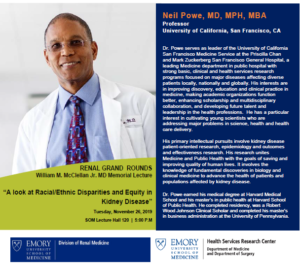
The Renal Ground Rounds lecture will be held on Tuesday, November 26 in the School of Medicine at 5pm. Dr. Neil Powe will present his research uniting Public Health and Medicine involving kidney disease patient-oriented research, epidemiology and outcomes and effectiveness research.


Setbacks (not Failures)

Category : PROspective

Students often ask me how I found my way to public health – and while there’s a long and winding story that involves a knee injury and cigarette butts – it all comes down to a desire to use my quantitative skills to make a difference in the world.

Although I could not envision a more perfect job for myself than the one that I have, the reality is that this work isn’t all sunshine and rainbows, all the time. Among the successes of training the newest members of the public health workforce, shedding light on the importance of studying stillbirth, and breaking ground on a new stillbirth surveillance system, there are plenty of setbacks that have happened (and will continue to happen!) along the way.

It’s rare to hear about these setbacks (some might call them failures – I don’t love that term, and I’ll come back to why shortly!). I don’t know whether it’s a matter of pride, or simply wanting to avoid scaring those early in their careers or coming across as negative. But here’s the deal – no matter what field or sector you’re in, or how many years you have under your belt, we all stumble from time to time. Nothing goes perfectly for anyone 100% of the time

In the last few months, I experienced two setbacks related to funding for my stillbirth research. I knew that the application pools were competitive, and although I prepared myself for either outcome, I took the news much harder than I thought I would. As I reflected on why I was so upset, I came to realize that although I was disappointed that we wouldn’t get to do the research that we had proposed, I couldn’t help but think about all of the families that we wouldn’t be able to help this time around. I felt as though I had let them down. It all came back to why I got into public health in the first place – I wanted to make a difference – and these setbacks had gotten in the way.

I don’t like to think of setbacks as failures – first, it’s just not good for my mental health; but more importantly, the word “failure” sounds so final and evokes imagery of a dead end, where there’s little hope to move forward. It helps me to think of these setbacks as speed bumps, rather than closed roads. Sure, they’ve slowed me down, but they have not, and will not, halt my progress.

After a family trip to my favorite ice cream shop, and sitting in my disappointment for a few days, the first question I asked myself was: what can we do better next time so that we could achieve a different outcome? As I read the reviewers’ comments, I realized that there were no concerns about the science. In fact, the reviewers were convinced that the proposed work was really important. The sticking point, though, was concern about whether the results could be used to secure future funding. Truth be told, funding for stillbirth research is hard to come by, and in light of these concerns, I spent the last few weeks strategizing about how to fund the work in innovative ways. During this time, I identified a few new leads, but I have also channeled some of my frustration into an op-ed with the goal of garnering some more attention for this important topic.   

As you work through your own setbacks, or speed bumps, I would encourage you to consider the strategies outlined in this article (replacing the word failure with setback!), along with the following additions:

  • Remove the word failure from your vocabulary, and reframe those bumps in the road as setbacks – words carry weight, and how you think about these things matters


  • Share those setbacks! If we normalize sharing the things that don’t go as planned, we can support one another, offer suggestions for the next steps, and realize that we are not alone in this experience.


  • Don’t compare your “behind the scenes” to everyone else’s “highlight reel”. I don’t remember where I first heard this phrase, but it really resonates with me. Until we all get comfortable sharing our setbacks, we have to realize that we mostly only see the very best of what happens to those around us. Remember that you only have a sneak peek into someone else’s life, and you are likely unaware of many of the setbacks that they face.


  • Celebrate the little things. If we only celebrate when a manuscript gets accepted, or a grant is funded, those moments of celebration may be few and far between. That op-ed I mentioned before? As of this writing, it hasn’t even been submitted – but having a complete draft is something to celebrate in and of itself. I sure hope it will be published, but this is an important milestone along the way.       


While our work may not be constantly filled with sunshine and rainbows – remember that the rainbows only come with the rain. I hope that the rain motivates you to keep pushing forward to find those rainbows – and that you keep at it. I am certain that you, too, got into this field because you wanted to make a difference – let’s not let those setbacks, however large or small, get in our way.