W 04/05 Reflections From A Tribal Surgeon General

On April 5, Dr. Lance Frye, the Former Surgeon General for the Muscogee Nation, will be guest lecturing during Rollins School of Public Health’s 3rd annual National Public Health Week.

Link to resister: https://sphadmissions.emory.edu/register/?id=d071550c-8e52-492b-a0d5-69ae7c3384cd

Time: 3:00pm to 5:00pm

Place: Margaret H. Rollins Room, RP01 (R. Randall Rollins Building Plaza Level)

Sat 03/18 Standing Peachtree/Pakanahuilli Forgotten History Event

On March 18, the Atlanta’s Upper West Side will be presenting Tour of Peachtree Creek entering the Chattahoochee River and History of the Muscogee Nation Q and A Session with special guest speaker William Lowe MBA (citizen of the Muscogee (Creek) Nation and Speaker of the Muscogee Nation National Council).

For more information: indigenous [dot] diversity [dot] info [at] gmail [dot] com, (770) 402-8288

Time: 1:00 pm – 3:00 pm

Place: 2560 Ridgewood Rd, NW – Atlanta, GA 30327

Emory Wheel Highlights Mellon Foundation Grant for Emory’s Indigenous Studies in Partnership with the College of the Muscogee Nation

On February 15, the Emory Wheel published that the Mellon Foundation awarded $2.4 million dollars towards developing an Indigenous Studies at Emory University in collaboration with the College of Muscogee Nation. Read about it here.

Emory Wheel “Emory plans to develop Indigenous studies program in partnership with the College of the Muscogee Nation”

Mellon Foundation awards Emory $2.4 million to advance Indigenous studies and knowledge with the Muscogee Nation

On February 14, the Emory News Center published that “The Mellon Foundation has awarded Emory University and the College of the Muscogee Nation (CMN) in Oklahoma a $2.4 million grant that will help develop collaborative and independent programs advancing Native and Indigenous Studies and the preservation of the Mvskoke language in a unique partnership between the two schools.” Read more here.

https://news.emory.edu/stories/2023/02/er_mellon_grant_14-02-2023/story.html

T 03/21 Malinda Maynor Lowery: Stories of Lumbee Women

On Tuesday, Feb 21, Dr. Malinda Maynor Lowery will be speaking at the University of Georgia’s Woman’s History Month. This lecture is part of the Humanities Festival https://willson.uga.edu/ and the Signature Lecture Series https://provost.uga.edu/news-events/events/signature-lectures/.

If you need special accommodations for this lecture please contact us 7 days in advance at carlayork [at] uga [dot] edu or 706-542-2846. To read more, click here.

Time: 4:00pm

Place: Special Collections Libraries 271 at UGA

F 02/17 26th Annual Conference on the Americas Opening Plenary, Indigenous Women and Latin American Futures

On Friday, Feb 17, University of Georgia will be hosting the 26th Annual Conference on the Americas Opening Plenary, Indigenous Women and Latin American Futures featuring guest speakers Dr. Patricia Richards, Alejandra Flores Carlos, and Pamela Calla. This event is open to all and does not require any resignation to attend. To read more, click here.

Time: 4:30 pm

Place: Miller Learning Center, Room 171 at UGA

W 02/15 Native Americans & NAGPRA

On Wednesday, Feb 15,  Dr. Ervan Garrison (Choctaw) will present a talk on Native American perspectives on the Native American Graves Protection and Repatriation (NAGPRA) and the history of relevant US policy concerning Native American sites, artifacts, and ancestral remains. NAGPRA’s landmark 1990 legislation has been difficult to implement and fraught with controversy. Dr. Garrison will discuss how NAGPRA has changed the field for archaeology and anthropology and how Native communities view continuing issues around this law. To read more, click here.

Time: 4:00 pm

Place: Leconte Hall 221 at University of Georgia

Megan O’Neil Lecture: “The Ancient Maya: (Not A) Lost Civilization”

In a virtual lecture hosted by the Carlos Museum and the Native American and Indigenous Studies Initiative (NAISI) on January 19, 2023, Professor Megan O’Neil, Assistant Professor of Art History at Emory University and Faculty Curator of the Art of the Americas, delved into the complex and often misunderstood history of the Mayan Civilization. Titled “The Maya: (Not A) Lost Civilization,” Dr. O’Neil’s lecture aimed to challenge the misconceptions and biases that have long clouded our understanding of the ancient civilization, and instead center the voices of the Mayan people themselves in the telling of their history.

Dr. O’Neil began by providing context for the lecture, outlining the geographic location and major architectural achievements of the Mayans, as well as their relationships with other Indigenous communities in Mesoamerica. She then delved into the colonial attempts to explain the Mayans through a Euro-American lens, which erased enduring histories of Mayan presence and cultural continuity in their homeland. These erasures and colonial mythologies have had lasting ramifications to this day– from wild conspiracy theories of “ancient aliens” to the destruction of Mayan cultural heritage sites.

Along with a new generation of researchers, linguists, and Mayan script writers, Dr. O’Neil is dismantling misconceptions with a return to Mayan history told through encoded literature, oral tradition, and temple inscriptions. Together, they are deciphering ancient Mayan scripts which reveal the daily lives of everyday Mayans, legacies of powerful rulers, and artistic styling of Mayan inscriptions. Knowledge encoded as riddles within monastic manuscripts produced during the first waves of colonial Christianization the Mayan people are reemerging traditional records and regional dialects. Previous generations of scholars projected their patriarchal views onto Mayan art, but now, modern reexaminations reveal the egalitarian relationship between men and women in all aspects of Mayan societies. 

Professor O’Neil ended the lecture spotlighting the works of many contemporary Mayan artists who strive to reclaim Mayan culture such as Walter Paz Joj, a Mayan scribe who create new scripts inspired by ancient Mayan inscriptions, and Balam Ajpu, a Mayan hip-hop group who creates music to reclaim Mayan expression. She also highlights the work of numerous activists,like Victor Montejo, Demetrio Cojti Cuxil, and Avexnim Cojti Ren, who secure Mayan representation in research, access to their cultural spaces, and rights for Mayans to tell their own story on their own terms.

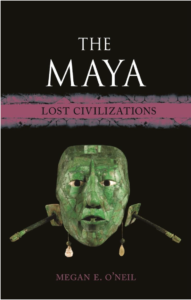
Professor Megan O’Neil’s The Maya: Lost Civilization is available at the Carlos Museum bookstore. Look forward to her upcoming projects and new exhibition at the Carlos Museum (2024) as well. To read more of Dr. O’Neil’s work, click here.
Th 1/19 Megan O’Neil on Lost Civilizations: The Maya

On January 19, Professor Megan O’Neil will host a zoom-only lecture titled The Ancient Maya: (Not a) Lost Civilization where she will discuss how the Maya Civilization is anything but lost. To learn more, click here.

To register for the zoom-only lecture, click here.

Time: 7:30 to 8:30 pm

Place: Zoom

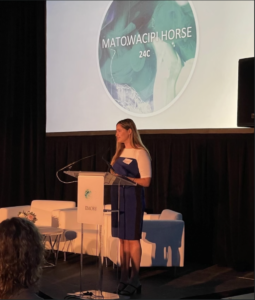
Matowacipi Horse (24C) Presents Her Flourishing at “Emory Explores the Future: Student Flourishing” in DC

On October 24, 2022, Matowacipi Horse (24C), participated in Emory Explores the Future: Student Flourishing in DC, joining President Fenves and other deans of Emory University to in a celebration of student success at Emory.

Matowacipi recounts that her experience in Washington was “absolutely fantastic.” It was her first time traveling to the nation’s capital, where she encountered numerous historical and political significant places. As a Native American, these places held meanings that she has considered herself separated from before being welcomed in during her visit to Washington.

Emory’s office of Advancement and Alumni Engagement invited Matowacipi as a featured speaker at the event. Matowacipi delivered a five-minute speech on her experiences at Emory and the resources and programs she used or was a part of, and then introduced the panelist of the talk who discussed what the university was doing to support students. At the end of the panel,

Matowacipi had meetings with notable Emory parents, deans, and alumni in DC, including John Troutman (95C), Curator of American Music at the Smithsonian Institution’s National Museum of American History. During their discussions, she learned that he works closely with Dr. Malinda Lowery and that she is opening an exhibit in December. He also offered advice for graduate school and pursuing one’s interest. Her overall experience was positive.

Matowacipi ended the interview with this important takeaway for students, “If there’s any struggle you are going through at Emory, whether that be community, identity, financial, mental health, how to look for an internship, get a job, how to write a resume, there is someone there that can help you, you just need to ask. Your work and experience at Emory is important, people are going to do whatever they can to help you thrive, and that you have the self-advocacy to ask for support.”