
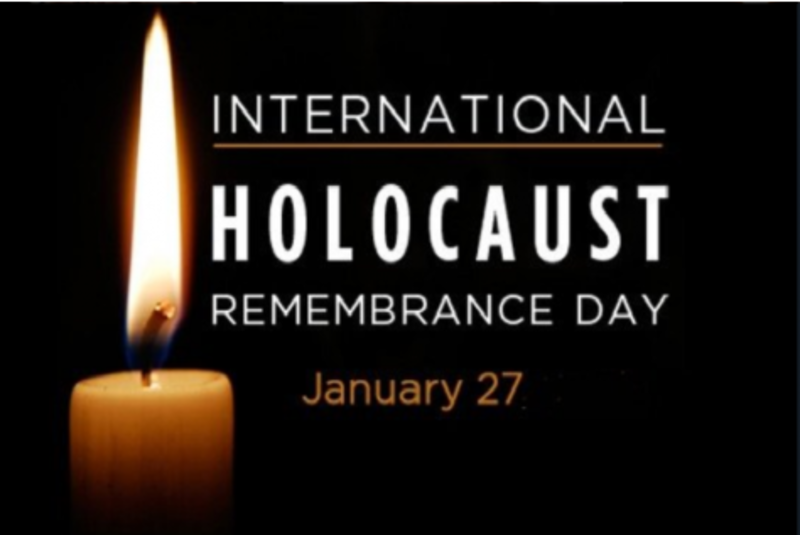
 Resources: Archives and Narratives of Holocaust Survivors
Testaments to the Holocaust: Collections of personal accounts of life in Nazi Germany along with photographs, propaganda materials, serials, and other publications from 1933 to after the war. (Requires Emory login.)
USC Shoah Foundation Visual History Archive: provides access to 59,893 testimonies by Holocaust survivors as well as surviving victims of other acts of genocide, armed conflicts, and massacres. “Our mission is to collect, preserve, and share survivor testimonies in order to increase knowledge and understanding of the Holocaust and to build a future for all that rejects antisemitism, hatred, dehumanization, and genocide.” All the testimonies are accessible for Emory patrons, while only part of the testimonies is available for users without institutional affiliation.
Meet Holocaust Survivors: Personal histories shared by volunteers at the United States Holocaust Memorial Museum.
Lest We Forget Photo Exhibition: Lest We Forget is a photo exhibition featuring victims of Nazi persecution, conceived by the German photographer and filmmaker Luigi Toscano, and in partnership with Austria, Germany, the European Union and the World Jewish Congress. Toscano visited and took portraits of more than 400 Holocaust survivors and victims of Nazi persecution in the U.S., Germany, Ukraine, Russia, Israel, Belarus, Austria, and the Netherlands.
Post-War Europe Series I: Refugees, Exile and Resettlement, 1945-1950: Contains documents from British government files and the Jewish Committee for Relief Abroad and the Jewish Relief Units concerning lives of survivors — Jewish and non-Jewish — of the Holocaust and World War II. Includes surveys, U.S. zone reports, War office memos, Exodus Camp records, Displaced Persons Assembly Centre weekly reports, and more. (Requires Emory login.)
Stuart A. Rose Manuscript, Archives, and Rare Book Library
Archival collections provide intimate access to individual stories of holocaust survivors, helping us reach across generations and cultures to learn from the past. In the Rose Library, there are traces of the Holocaust in many collections, searchable through Emory Finding Aids, Oral Histories, or the Emory Libraries catalog. Specific collections in Rose Library include the following:
Emory University. Center for Research in Social Change, Witness to the Holocaust project files, 1939-2005 (bulk 1978-1983) Records from Emory University’s Center for Research in Social Change Witness to the Holocaust project (1978-1982) primarily consist of recorded interviews and their associated transcripts of World War II concentration camp liberators and survivors, many of them residents of Atlanta, Georgia. Note: the Emory University Center for Research in Social Change Witness to the Holocaust project files have been digitized and made available by the United States Holocaust Memorial Museum.
The Bert and Esther Lewyn papers include correspondence, photographs, speeches and other materials that document Bert Lewyn’s experience as a Jewish person on the run in Nazi Berlin. The papers document sites significant to Bert Lewyn’s life in Berlin, Germany, such as the Jewish Orphan’s home he lived at as a child, the Gustav Genschow and Co. Weapons factory, and various monuments and memorials.
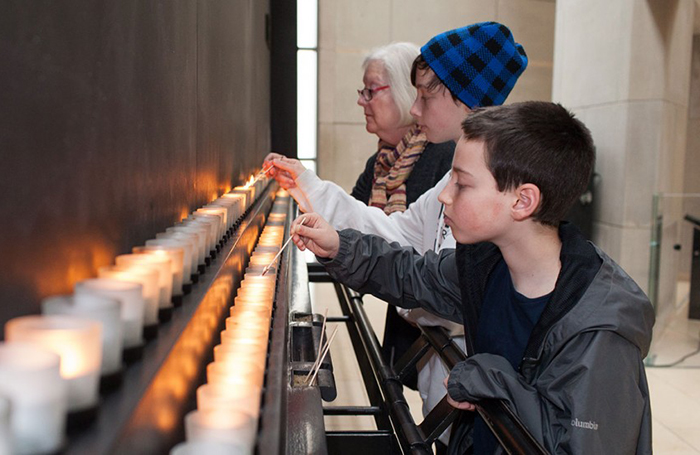
Lighting candles in remembrance at the United States Holocaust Memorial Museum, Washington DC, during Days of Remembrance, 2014. (Credit: US Holocaust Memorial Museum)
Fighting Misinformation
Behind the Lies of Holocaust Denial: Renowned Emory professor and historian Deborah Lipstadt’s TED Talk on how to battle Holocaust denial and fight for the truth in an era marked by “alternative facts.” Lipstadt encourages us all to go on the offensive against those who assault the truth and facts. “Truth is not relative,” she says.
The website Holocaust Denial on Trial, created by Professor Lipstadt, Emory University’s Tam Institute for Jewish Studies, and supported by the Emory Center for Digital Scholarship, provides access to documents of the case and trial David Irving v. Penguin Books U.K. and Deborah Lipstadt “to refute the misleading claims of Holocaust deniers with historical evidence. Alongside these goals, hdot.org strives to educate the public about the threat Holocaust denial poses to history, society, law, and identity. By attempting to force the courts into complicity with his antisemitic, racist worldview, David Irving sought the ultimate legal credential for his hate. Therefore, we present this collection of primary documents and educational materials as aids to students, teachers, journalists, politicians, and the general public to demonstrate power of truth over deception and history over hate.”
#WeRemember: From the website: The World Jewish Congress (WJC) and the United Nations Educational, Scientific and Cultural Organization (UNESCO) established AboutHolocaust.org with the goal of providing young people with essential information about the history of the Holocaust and its legacy.
This online tool includes easy to read facts about the Holocaust and survivor testimonies, reviewed by leading academics and experts in the field of Holocaust studies — including those from The Holocaust and the United Nations Outreach Programme — designed to address gaps in knowledge and to counter the misinformation that circulates across social media and other internet forums.
Protect the Facts: From the website: Holocaust denial and distortion attempts to delegitimize the history of the Holocaust by twisting established facts about the size and causes of the Nazi genocide of the Jews. Its transmission undermines attempts to understand and prevent anti-Semitism. Left unchecked, it threatens our shared human rights values and risks the promotion of conspiratorial thinking and violent extremism.
Woodruff Library resources
New publications of scholarly, belletristic, and memorial literature on the Holocaust are continuously added to the library collection. Most recent acquisitions include those below, with condensed publishers’ descriptions.
The Routledge Handbook to Auschwitz-Birkenau, Sarah Cushman, Joanne Pettitt and Dominic Williams, eds.
This handbook examines Auschwitz-Birkenau as both a site and a symbol of Nazi genocide. Scholars from a range of disciplinary perspectives consider Auschwitz’s history by engaging with Holocaust historiography and its place in Holocaust memory and representation, illustrating their mutual influence. Some of them bring new insights to previously explored topics, such as the Sonderkommando, the Czech family camp, and literary representations of Auschwitz. Others cover recent developments and more neglected areas, such as the experience and memory of Romani prisoners, the fate of Soviet prisoners of war, and Auschwitz’s presence on social media. The handbook also addresses recent trends and new paradigms in Holocaust Studies, including Environmental Studies, Spatial Studies, and Gender Studies.
The Cambridge History of the Holocaust. Volume III, The victims and their worlds: 1939-1945, Marion Kaplan, Natalia Aleksiun, eds.; general editor Mark Roseman
This volume centers upon “the perspectives, examining their experiences, responses, and fates of a range of persecuted groups: Jews, Roma and Sinti, and homosexuals, as well as those with physical and mental challenges, Slavs, and Soviet prisoners of war. Covering a wide geographical scope, contributors underscore the differences between victim experiences in eastern and western Europe while highlighting national and regional complexities. Through a breadth of primary sources including diaries, letters, memoirs and interviews, readers gain insight into the diverse reactions and behaviors of victims as well as those who helped or hurt them.
Shifting paradigms of evil in philosophy: Reading the Armenian genocide with the Shoah, İmge Oranlı
The author explores the relationality between the Armenian Genocide and the Shoah, but also between Turkish genocide denialism and a contemporary case of racist evildoing against Armenians in Turkey, shifting the discussion of political evil in a direction that aims to turn overlooked evils around the world into objects of philosophical thinking. [This book] will appeal to researchers and graduate students working in Continental philosophy, social and political philosophy, political theory, genocide studies, and Holocaust studies.
The Art Spy: The Extraordinary Untold Tale of WWII Resistance Hero Rose Valland, Michelle Young
“The Art Spy” chronicles the brave actions of the key Resistance spy, Rose Valland and the free French soldier, Alexandre Rosenberg in the heart of the Nazi’s art looting headquarters established in the French capital. The narrative moves from the glittering days of pre-War Paris, to the harrowing years of the Nazi occupation of France when brave people such as Valland and Rosenberg risked everything to fight monstrous evil.
Aracy de Carvalho and Jewish Rescue from 1930s Germany: A Righteous Brazilian, Mônica Raisa Schpun
Aracy de Carvalho (1908-2011), “Righteous Among the Nations,” saved German Jews by facilitating their emigration to Brazil in the late 1930s while working at the Brazilian consulate in Hamburg. Among these refugees was Margarethe Levy (1908-2011), who left for Brazil shortly after Kristallnacht with her husband. In the late 1970s, she claimed the title of Righteous from Yad Vashem for Carvalho, who had become her lifelong friend. This book follows the crossed migrations of these two women between Brazil and Germany and their long friendship, tracing the lives of German Jews who, like Levy, left Hamburg to settle in São Paulo.
At home with the Holocaust: Postmemory, domestic space, and second-generation Holocaust narratives, Lucas F. W. Wilson
“At Home with the Holocaust” examines the relationship between intergenerational trauma and domestic space, focusing on how Holocaust survivors’ homes became extensions of their traumatized psyches that their children “inhabited.” Analyzing literature and oral histories of children of survivors, Wilson’s study reveals how the material conditions of survivor-family homes, along with household practices and belongings, rendered these homes spaces of traumatic transference. As survivors’ traumas became imbued in the very space of the domestic, their homes functioned as material archives of their Holocaust pasts, creating environments that, not uncommonly, second-handedly wounded their children. As survivor-family homes were imaginatively transformed by survivors’ children into the sites of their parents’ traumas, like concentration camps and ghettos, their homes catalyzed the transmission of these traumas.
Bitter war of memory: The Babyn Yar Massacre, aftermath and commemoration, Victoria Khiterer
This book discusses how the commemoration of the massacre of Kyiv Jewish inhabitants at Babyn Yar during the Nazi occupation changed over time. After the war, Soviet ideology stressed the universal suffering of the Soviet people during the war. A monument “for one hundred thousand citizens of Kyiv and prisoners of the war” was erected in Babyn Yar in 1976, but the Holocaust was not mentioned in its inscription. Only after 1989 did Holocaust commemoration became an important part of national memory politics in independent Ukraine. Along heated debates about Holocaust memory, over thirty monuments were dedicated to the memory of Jews, Roma, members of the resistance movement, and other people executed at Babyn Yar.
Films
The Brutalist. When an innovative modern architect flees post-war Europe, he is given the opportunity to rebuild his legacy. Set during the dawn of the modern United States (in Pennsylvania), his wife joins him, and their lives are forever changed by a demanding, wealthy patron.
After: Poetry Destroys Silence. “After” is an exploration of poetry written about the Shoah. Contemporary poets respond to the Holocaust and talk about the importance and necessity for poetry in a world that still grapples with genocide. Rather than seeing the devastation, ‘After’ shows how poets respond to catastrophe and write in its aftermath. The film is ultimately about human resiliency, the power and courage to forge new lives, and the value of poetry in looking to the past to help create a better future. Featuring Academy Award winner Melissa Leo, Géza Röhrig, and Bo Corre, along with renowned poets, including Edward Hirsch and Cornelius Eady.
Son of Saul. October 1944, Auschwitz-Birkenau. Saul (Géza Röhrig) is a Hungarian member of the Sonderkommando, the group of Jewish prisoners forced to assist the Nazis. While working, Saul discovers the body of a boy he takes for his son. As the Sonderkommando plans a rebellion, Saul decides to carry out an impossible task: save the child’s body, find a rabbi to recite the mourner’s Kaddish and offer the boy a proper burial.
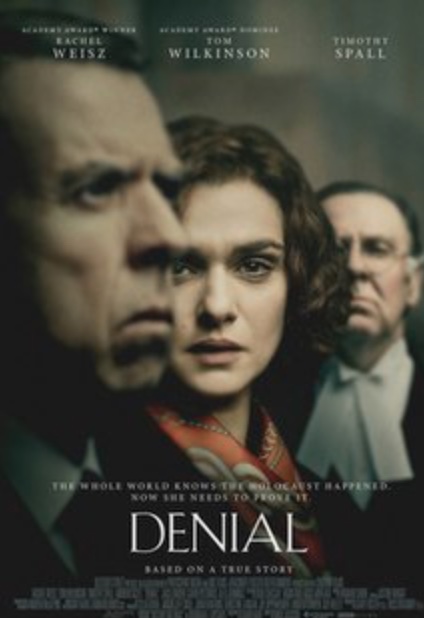
Denial. Bleecker Street, Kanopy Streaming, 2016. Emory professor Deborah E. Lipstadt must battle for historical truth to prove the Holocaust actually occurred when David Irving, a renowned denier, sues her for libel.
Playing for Time. Olive Films, 1980, Fania Fenelon is a Jewish cabaret singer in Paris during the Nazi invasion. Fania and thousands of other Jewish and political prisoners are sent to the Auschwitz death camp.
The Reader. Weinstein Co. Home Entertainment, distributed by Genius Products, 2009. The question of wartime culpability undergirds the May-December romance in postwar Berlin between Hanna and Michael. One day, Hanna is gone, with no explanation, and Michael grows into a promising young law student. His class attends a trial, where the new Germany judges the past and, by default, the lovers as well.
The Pianist. Distributed by Universal Studios Home Entertainment, Focus Features, 2006. Based on the memoirs of Wladyslaw Szpilman, a Polish Jew, who was a brilliant pianist. He watched as his family was shipped off to Nazi labor camps. He managed to escape and lived for years in the ruins of Warsaw, hiding from the Nazis.
Aimée & Jaguar. Zeitgeist Video, 2001. During the Battle of Berlin of World War II, two women find each other. Aimée is single and the other, Jaguar, is unhappily married with four children. In war torn Germany it was not safe to be Jewish, but it was just as unsafe to pursue their relationship. Then Jaguar’s husband, who is a German soldier, finds out about his wife’s affair.
To learn more about the two women’s story, read Erica Fischer’s book in Edna McCown’s translation: “Aimée & Jaguar: A Love Story, Berlin 1943.”
Additional Links
International Holocaust Remembrance Day Names Reading at USHMM
Virtual Tribunals: a comprehensive digital archive database of international criminal law and tribunal records, from post-World War II war crimes trials through to contemporary courts, fully encoded with metadata and rendered searchable online.
UN Holocaust Memorial Observance
EHRI (European Holocaust Research Infrastructure) Project: Holocaust Memorial Day 2026: Worldwide Commemoration Activities
Emory Libraries Jewish Studies Research Guide
—written by Katalin Rac, Jewish Studies librarian