I spent some time explaining the philosophy behind much of the lab’s research to excited students at FIU’s Biomedical Engineering Department, where I laid out the case for mixing different…
Sometimes, it isn’t obvious why a scientists chooses to study the topic they have, like genetically engineering seeds out of watermelon, for example. Bladder research can sometimes come off that…
The lab’s work on using a hybrid of traditional, concise math and the modern, convoluted math of AI to understand how the urinary tract works (and hopefully how to fix…
Science has a been suffering a bit of a public relations setback in the US since the COVID-19 pandemic. Some of the lost trust has come from fierce political fighting…
The lab’s work was recognized this year (2025) by Emory School of Medicine as exemplifying the “pursuit of novel and innovative ideas”. Always nice to get a complement! More cool…
Many neuroscientists, especially those of the computational persuasion, say MATLAB should be dumped for Python. But, they’re wrong. Here’s my take on the best arguments to use Python in neuroscience,…
I would rather watch the TEDx talk: “Our Neurotechnological Humanity“ Why are the Borg so disturbing? They are an alien race from Star Trek who roam the galaxy fusing hapless…
Softmax is supposed to be a function that will tell you, given a list of measurable features about an example (e.g. how red is the picture, how tall is the…
I lurk on science social media (X and BlueSky) and the types of posts about metascience I typically see come in either the triumph flavor (e.g., I just published this…
In his new post on Monster Models, Ben Recht explains why systems physiology modeling is so hard, and why just leaning harder into standard engineering principles cannot possibly be the…
A powerful technique for generating insights into physiology is to mathematically express what we know about it, then to simulate it in a computer. With the mathematical expressions in hand…
Imagine, if you would, a future where your favorite local urologist could tell you how many milliliters your bladder will void two years from now (given the details of your…
“What I cannot build, I do not understand.” – Richard Feynman Since I go around pretending that I know how control of the lower urinary tract (LUT) works, surely I…
The fundamental unit of the brain is the neuron, and the computational essence of a neuron is adding up blips from neurons it listens to then “deciding” whether to issue…
Intracortical brain-computer interfaces (iBCI) read in neuron activity and use it generate useful actions, potentially giving paralyzed users control of a device. A common goal is to establish brain control…
The canonical mind-control task is to operate a thought mediated computer cursor to hit targets on a screen (that’s true for brain-computer interfaces anyway, but maybe not for Jedi). The…
To assess bladder health we need to know (among other things) how well it can empty. We quantify this via the voiding efficiency (VE), which is the fraction of urine…
The lower urinary tract is orchestrated by an intricate web of harmonizing reflexes that act constructively to help you pee effectively (or to not pee effectively). [See Fowler and de…
Academic biomedical scientists don’t really need formal ethical guidelines because they’ve already committed themselves to working for the public good. After all, academics would be in a different (more lucrative?)…
The most natural way to test how well the bladder and lower urinary tract (LUT) are working is to monitor what it does with urine in a process called cystometry…
Many people have declining urinary tract function as they age. Is it possible that weakening sensation (peripheral neuropathy) contributes? It is a concept that has been gaining credence for the…
Suppose you would like to control something with many degrees of freedom (engineering parlance for something complicated that has many parts of it that can move or take actions), how…
I’m very excited to announce that NIDDK at NIH is supporting me to lead a big, interdisciplinary team to invent a new mathematical infrastructure to model the lower urinary tract…
The neuroscience community has been trying to build a brain-to-computer translator, that is, a system that records the electrical chatter of neurons and deciphers the thoughts of the person to…
Many of us accept that our bladders naturally weaken as we age, but is it inevitable? To stop age-related bladder underactivity (UAB) we will need to first understand why it…
The lab is starting its migration to Emory University! It is an exciting time for new science and new opportunities. I will be working with colleagues across the university, and…


 I spent some time explaining the philosophy behind much of the lab’s research to excited students at FIU’s Biomedical Engineering Department, where I laid out the case for mixing different…
 Sometimes, it isn’t obvious why a scientists chooses to study the topic they have, like genetically engineering seeds out of watermelon, for example. Bladder research can sometimes come off that…
 The lab’s work on using a hybrid of traditional, concise math and the modern, convoluted math of AI to understand how the urinary tract works (and hopefully how to fix…
 Science has a been suffering a bit of a public relations setback in the US since the COVID-19 pandemic. Some of the lost trust has come from fierce political fighting…
 The lab’s work was recognized this year (2025) by Emory School of Medicine as exemplifying the “pursuit of novel and innovative ideas”. Always nice to get a complement! More cool…
 Many neuroscientists, especially those of the computational persuasion, say MATLAB should be dumped for Python. But, they’re wrong. Here’s my take on the best arguments to use Python in neuroscience,…
 Introductory article in Emory’s physical therapy magazine, page 8.
 I would rather watch the TEDx talk: “Our Neurotechnological Humanity“ Why are the Borg so disturbing? They are an alien race from Star Trek who roam the galaxy fusing hapless…
 Softmax is supposed to be a function that will tell you, given a list of measurable features about an example (e.g. how red is the picture, how tall is the…
 I lurk on science social media (X and BlueSky) and the types of posts about metascience I typically see come in either the triumph flavor (e.g., I just published this…
 In his new post on Monster Models, Ben Recht explains why systems physiology modeling is so hard, and why just leaning harder into standard engineering principles cannot possibly be the…
 A powerful technique for generating insights into physiology is to mathematically express what we know about it, then to simulate it in a computer. With the mathematical expressions in hand…
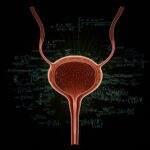 Imagine, if you would, a future where your favorite local urologist could tell you how many milliliters your bladder will void two years from now (given the details of your…
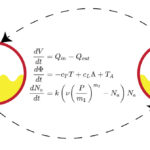 “What I cannot build, I do not understand.” – Richard Feynman Since I go around pretending that I know how control of the lower urinary tract (LUT) works, surely I…
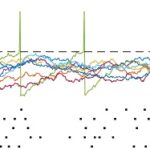 The fundamental unit of the brain is the neuron, and the computational essence of a neuron is adding up blips from neurons it listens to then “deciding” whether to issue…
 Intracortical brain-computer interfaces (iBCI) read in neuron activity and use it generate useful actions, potentially giving paralyzed users control of a device. A common goal is to establish brain control…
 The canonical mind-control task is to operate a thought mediated computer cursor to hit targets on a screen (that’s true for brain-computer interfaces anyway, but maybe not for Jedi). The…
 To assess bladder health we need to know (among other things) how well it can empty. We quantify this via the voiding efficiency (VE), which is the fraction of urine…
 The lower urinary tract is orchestrated by an intricate web of harmonizing reflexes that act constructively to help you pee effectively (or to not pee effectively). [See Fowler and de…
 Academic biomedical scientists don’t really need formal ethical guidelines because they’ve already committed themselves to working for the public good. After all, academics would be in a different (more lucrative?)…
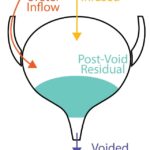 The most natural way to test how well the bladder and lower urinary tract (LUT) are working is to monitor what it does with urine in a process called cystometry…
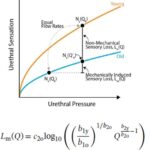 Many people have declining urinary tract function as they age. Is it possible that weakening sensation (peripheral neuropathy) contributes? It is a concept that has been gaining credence for the…
 Suppose you would like to control something with many degrees of freedom (engineering parlance for something complicated that has many parts of it that can move or take actions), how…
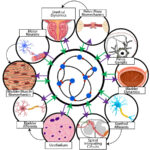 I’m very excited to announce that NIDDK at NIH is supporting me to lead a big, interdisciplinary team to invent a new mathematical infrastructure to model the lower urinary tract…
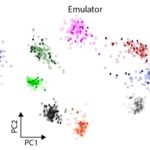 The neuroscience community has been trying to build a brain-to-computer translator, that is, a system that records the electrical chatter of neurons and deciphers the thoughts of the person to…
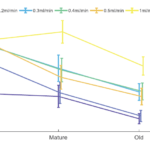 Many of us accept that our bladders naturally weaken as we age, but is it inevitable? To stop age-related bladder underactivity (UAB) we will need to first understand why it…
 The lab is starting its migration to Emory University! It is an exciting time for new science and new opportunities. I will be working with colleagues across the university, and…