Year: 2019

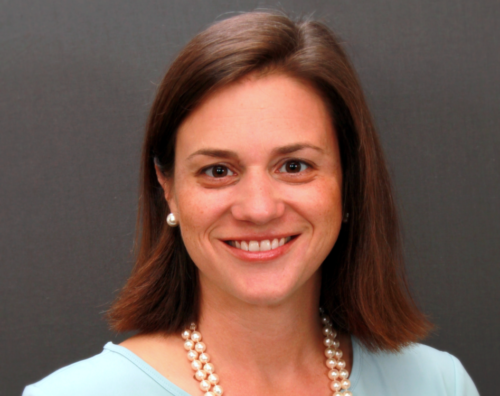
Jena Black: ADAP Extraordinaire

Category : #WeAreEmoryEPI

To kick off the new semester, the Confounder Team wants to recognize someone at the heart of our work – someone, without whom, the Confounder (and so much more) would never have been possible.

No one encapsulates the slogan #IamEmoryEPI better than our longtime EPI ADAP – Jena Black. As Jena takes up a new position with the Admissions and Student Services Department next week, we wanted to show our appreciation for this tireless student advocate, strategic thinker, and unwavering optimist.

Behind the scenes, Jena has orchestrated countless events and brokered connections that have steadily influenced and improved the department’s academic mission, moving it towards becoming an inclusive, inspired, and engaged community – giving true meaning and purpose to the phrase #IamEmoryEPI.

Jena is living proof to the rest of us that true leadership can have an impact at any level of an organization. This impact is no secret – alumni of this program value Jena’s contributions decades after graduating: she is known for her poignant guidance and her ability to create connections to foster new and long-lasting collaborations. 


From all of us at The Confounder and the EPI Department, thank you Jena for everything you do. We will miss you in the department, and wish you well in your new school-wide role!


Break the Cycle of Children’s Environmental Health Disparities

The Southeast PEHSU and Break the Cycle of Health Disparities, Inc. invites university students from a variety of disciplines to participate in our 15th Annual Break the Cycle of Children’s Environmental Health Disparities training program 2019-2020 that focuses on social, economic and environmental influences on children’s health, growth and development.

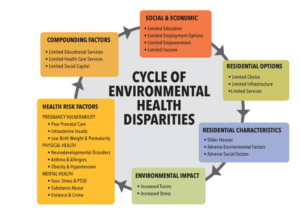
Children who grow up in circumstances of social and economic disadvantage are at greater risk for exposure to adverse environmental factors and are more likely to suffer adverse health and developmental consequences. Break the Cycle supports an interdisciplinary set of student-driven research projects that explore the social, economic and environmental factors that adversely affect children’s health and wellbeing, and creatively develop strategies to reverse this situation to promote improved health and well-being for this group of children and, thereby, Break the Cycle of Children’s Environmental Health Disparities.

Students are required to work with academic mentors from their respective university programs to submit a proposal on how they would develop a project to Break the Cycle. All proposals will be reviewed, and a limited number will be selected based on relevance to the cycle of environmental health disparities, creativity, feasibility, and strength of the project plan. Those selected will have the opportunity to work with the Break the Cycle faculty and with other students from around the country and internationally, to see the project to completion and present their research results and findings at an annual conference in Atlanta scheduled for the spring of 2020. There will be monthly conference calls to review projects and provide perspectives and guidance on the projects. During these conference calls, faculty and students will have the opportunity to communicate and collaborate with their counterparts in other disciplines at other universities. Students will also be required to write a scientific paper on their project which will be published in an international peer-review journal as well as a chapter in a book.

Since the inception of the Break the Cycle program in 2004-2005, have we partnered with over 30 different university departments in 11 States in the USA as well as internationally, and have supported research for over 100 students. We have had 10 monographs published in international journals and 10 books. In 2012 we conducted a survey of past students who rated their experience with Break the Cycle valuable, and many continued to pursue careers related to their Break the Cycle projects.

We invite students to submit a proposal abstract (form enclosed) by September 20th, 2019. Proposals received will be reviewed by a Break the Cycle panel and decisions of the panel will be communicated to all applicants by October 4th, 2019. We are looking forward to working with students and their mentors on the 15th annual Break the Cycle program and making this year another great success. Costs of travel and lodging for the student and faculty mentor to the annual conference will be supported by Break the Cycle. If you have any further questions, feel free to contact me at lrubi01 [at] emory [dot] edu or our Project Coordinator, Nathan Mutic at nathan [dot] mutic [at] emory [dot] edu and we will be happy to discuss potential projects with you.

If you are interested, click HERE for another resource.


MMP Data Manager/Analyst, Georgia DPH

Category : Alumni

The Georgia Department of Public Health is the lead agency entrusted by the people of the State of Georgia with the ultimate responsibility for the health of communities and the entire population.

The agency is seeking a highly qualified candidate for the position of MMP Data Manager/Data Analyst within the Division of Health Protection, Epidemiology Section.

Georgia Medical Monitoring Project (GA MMP) is an HIV surveillance project coordinated nationally by the Centers for Disease Control and Prevention (CDC) and conducted locally by Georgia DPH. It involves collecting behavioral and clinical information on individuals living with HIV through interviews and chart abstraction. Perinatal HIV exposure surveillance is also an activity coordinated by CDC, and is a critical tool for the elimination of mother-child transmission of HIV in Georgia.

Job Responsibilities
Under the leadership of MMP Team Leader, and of the Director of HIV Epidemiology, the incumbent will share their time between the MMP and perinatal HIV exposure surveillance.

MMP data management duties include:

Pulling the sample from the HIV Surveillance registry.
Organizing the sample according to specified characteristics.
Securely tracking and storing interviews.
Transmitting encrypted data sets to CDC through the Data Coordinating Center (DCC).
Responding to data quality queries from the DCC.
Monitoring a set of quality assurance parameters.
Database matching and merging using SQL, LinkPlus, and other software and dataset preparation using SAS.
MMP data analysis and dissemination duties include:
Conducting a variety of data analysis to inform local prevention and care activities.
Preparing surveillance reports and fact sheets.
Making presentations to community partners and stakeholders and at conferences, and working with a variety of collaborators.
Perinatal HIV exposure data analysis responsibilities include:
Preparing analyzing data on mother-baby pairs where mother is HIV positive to identify both successes and gaps in prevention.
Collaborating with the HIV Prevention program help guide prevention priorities and evaluate impact of programmatic activities.
Disseminating the data to stakeholders.
MMP-related duties are expected to take up approximately two thirds of the incumbent’s time.
Minimum Qualifications
Completion of a Master’s degree in Epidemiology or Statistics or Computer Science or a closely related field AND Two years of experience analyzing data, using statistical software packages, and writing reports;
OR
Completion of a Bachelor’s degree AND Three years of experience performing epidemiological work or work in a closely related field.

Preferred Qualifications:
Preference will be given to applicants who, in addition to meeting the minimum qualifications, possess 3 or more of the following:

One year of SAS programming experience or Base SAS certification.
Previous experience conducting data management functions.
Experience analyzing weighted data.
Detail-oriented with exceptional organizational skills, with the ability to multi-task, and meet deadlines.
Previous experience working with medical data.
Previous experience with relational databases.

For more information and to apply, click HERE.


CDC Data Management Fellowship, Division of Scientific Education and Professional Development (DSEPD)

Category : Alumni

A research opportunity is currently available in the Division of Scientific Education and Professional Development (DSEPD), Center for Surveillance, Epidemiology and Laboratory Services (CSELS) at the Centers for Disease Control and Prevention (CDC) located in Atlanta, Georgia.

DSEPD’s mission is to improve health outcomes through a competent, sustainable, and empowered public health workforce. Our programs include fellowships and student programs, training and continuing education for health professionals, and activities for students and teachers interested in learning about public health.

The main purpose of this research opportunity is to strengthen management and evaluation of our programs by using DSEPD’s Electronic Fellowship Management System (eFMS). eFMS collects application data from hundreds of candidates interested in our programs each year. DSEPD seeks to better use eFMS data to support the selection processes. Under the guidance of a mentor, the participant should expect to gain data management, analytical, communications, and problem-solving skills. This fellowship will offer the opportunity to learn about and obtain hands-on experience in the following activities:

· Contribute to the implementation and coordination of all aspects of the selection process for fellowships and student program within the Epidemiology Workforce Branch, such as Epidemiology Elective Program, Laboratory Leadership Service, and the Epidemic Intelligence Service

· Coordinate and collaborate with DSEPD program staff and leadership to identify priority improvements and additions to the division’s fellowship management system

· Participate in the development of approaches to effectively manage and access data stored in the fellowship management system

· Implement changes to information collected through the division’s fellowship management system, collaborating with division fellowship programs and system managers

· Contribute to the development of dashboards and other data visualization activities to transform large data into useful, real-time information

· Collaborate with DSEPD program evaluation staff to integrate fellowship exit surveys and evaluation reporting into the fellowship management system

· Contribute to the development of standard operating procedures and other support for using the fellowship management system

This position includes a $1,500 professional development stipend that the fellow can use for training, conferences, or other professional development activities. The fellow will also be given the opportunity to participate in HHS and CDC training programs, including training activities and DSEPD fellow’s community of practice, and will be expected to attend technical seminars and presentations held throughout the fellowship period.

For more information and to apply, click HERE.


ORISE, CDC One Health Office

Category : Alumni

A research opportunity is currently available at the One Health Office, within the National Center for Emerging and Zoonotic Infectious Diseases (NCEZID) at the Centers for Disease Control and Prevention (CDC) located in Atlanta, Georgia.

The One Health Office recognizes that the health of people is connected to the health of animals and the environment. It is a collaborative, multisectoral, and transdisciplinary approach—working at the local, regional, national, and global levels—with the goal of achieving optimal health outcomes recognizing the interconnection between people, animals, plants, and their shared environment.

The selected participant will gain experience in the field of infectious and zoonotic diseases, specifically those that involve the animal-human interface and One Health. The specific projects involve epidemiologic, programmatic, and educational projects related to the prevention and control of zoonoses (including One Health Disease Prioritization Workshops), and contributing to the development of guidance for use by human and animal health partners that can enhance surveillance, response, and prevention of zoonoses and antimicrobial resistance.

Under the guidance of a mentor, the participant will be trained in the following activities:

· Contributing to One Health activities related to animal-human interface issues, emerging and re-emerging zoonotic diseases, antimicrobial resistance, pandemic preparedness, and outbreak response

· Conducting systematic reviews and literature searches to support the development of evidence- based recommendations related to zoonoses and One Health

· Primary and secondary data abstraction, interpretation, analysis, and synthesis

· Maintaining accurate records of process-specific objectives, timelines, outcomes, and deliverables

· Contributing to the development of One Health frameworks

· Writing and editing summary of evidence documents and prevention recommendations

· Collaborating with One Health groups (both internal and external to CDC), professional human and animal health societies, local, state and city health departments, non-governmental organizations, and community-based organizations

· Contributing to the development of data collection systems for One Health activities

Qualifications

The qualified candidate should have received a doctoral degree in one of the relevant fields, or be currently pursuing the degree and will reach completion by September 30, 2019. Degree must have been received within the last five years. Candidates with extensive experience in veterinary medicine are preferred.

Preferred skills: Basic skills in oral and written communication, and experience with writing and editing of documents

· Competency in quality management system procedures and database software (Adobe Professional, PowerPoint, Excel, and Access)

· Knowledge and experience in web-based analysis tools

· Ability to search and assess scientific literature

For more information and to apply, Click HERE.


Welcome & Welcome Back

Category : News/Events

We wish a warm welcome to our new students, and are delighted to welcome back our returning students! The beginning of the academic year is such an exciting time for all of us.


I’m always energized by the enthusiasm and passion of our new students, who are beginning to explore all that the Rollins School of Public Health has to offer. You have joined a vibrant community of scholars who share your passion for promoting health and eliminating inequities. During the next two years, you will be able to explore your interests further – you may deepen your resolve to pursue the passions that led you here, and you may also discover new areas that you hadn’t considered before. I encourage you to seek out many new opportunities while you are here – there is no better time to soak in all that you can, and these two years will come to a close before you know it.    


The return of our second year students is always exciting, as well. Many of you have spent the summer working on your Applied Practice Experiences and bring fresh ideas and perspectives with you as you return to the classroom. You’ve also turned your eyes towards your theses, and will begin to make measurable progress towards completing this milestone soon. As the semester begins, I encourage all of you to be thoughtful about how you carve out time so that you can balance your coursework, thesis, and your personal wellbeing.


We look forward to having the opportunity to get to know you both inside and outside of the classroom. This year, we will continue our monthly Chair’s Chats – a time for you to spend with myself, as your Director of Graduate Studies, and our Department Chair, Tim Lash. This is an event that we look forward to each month – we enjoy the opportunity to hear from you! It’s important to us to hear what is going well, and whether there are ways in which we can improve. We also use this as an opportunity to bring in guest speakers, and share some tips for how to help you become influential public health leaders.


We are also excited to announce a new seminar series for this academic year: Behind the Manuscript. While it would be nice if research were always packaged nicely and tied up with a beautiful bow, the reality is that things don’t always happen as the text books might lead you to believe. These sessions will be led by faculty in the Department of Epidemiology, and will pull back the curtain to allow you to see what it takes to get to the polished manuscripts that you see in the literature. Our first session will be on September 24th from 12-12:50, and will be led by Dr. Mike Goodman. Stay tuned for more details!


For information on these, and other, Departmental events – please keep an eye out on Canvas, the Confounder, and the weekly RSPH events emails. The best way to ensure that you make it to these events is to get them on your calendar! Please see this link for instructions on how to add these to your calendar.


Again – welcome, and welcome back! We are thrilled that you are here and look forward to the year ahead.


Lauren Christiansen-Lindquist

Director of Graduate Studies, MPH & MSPH Programs


Epidemiologist II Position with the HIV/AIDS Epidemiology Section, Georgia Department of Public Health

Category : Alumni

The Georgia Department of Public Health is the lead agency entrusted by the people of the State of Georgia with the ultimate responsibility for the health of communities and the entire population.
The agency is seeking a highly qualified candidate for the position of MMP Data Manager/Data Analyst within the Division of Health Protection, Epidemiology Section.


Georgia Medical Monitoring Project (GA MMP) is an HIV surveillance project coordinated nationally by the Centers for Disease Control and Prevention (CDC) and conducted locally by Georgia DPH. It involves collecting behavioral and clinical information on individuals living with HIV through interviews and chart abstraction. Perinatal HIV exposure surveillance is also an activity coordinated by CDC, and is a critical tool for the elimination of mother­child transmission of HIV in Georgia.


JOB RESPONSIBILITIES:
Under the leadership of MMP Team Leader, and of the Director of HIV Epidemiology, the incumbent will share their time between the MMP and perinatal HIV exposure surveillance.


MMP data management duties include:

Pulling the sample from the HIV Surveillance registry.
Organizing the sample according to specified characteristics.
Securely tracking and storing interviews.
Transmitting encrypted data sets to CDC through the Data Coordinating Center (DCC).
Responding to data quality queries from the DCC.
Monitoring a set of quality assurance parameters.
Database matching and merging using SQL, LinkPlus, and other software and dataset
preparation using SAS.

MMP data analysis and dissemination duties include:


Conducting a variety of data analysis to inform local prevention and care activities.
Preparing surveillance reports and fact sheets.
Making presentations to community partners and stakeholders and at conferences, and working
with a variety of collaborators.


Perinatal HIV exposure data analysis responsibilities include:


Preparing analyzing data on mother­baby pairs where mother is HIV positive to identify both
successes and gaps in prevention.
Collaborating with the HIV Prevention program help guide prevention priorities and evaluate
impact of programmatic activities.
Disseminating the data to stakeholders.
MMP­related duties are expected to take up approximately two thirds of the incumbent’s time.


MINIMUM QUALIFICATIONS:


Completion of a Master’s degree in Epidemiology or Statistics or Computer Science or a closely related field AND Two years of experience analyzing data, using statistical software packages, and writing reports;
OR
Completion of a Bachelor’s degree AND Three years of experience performing epidemiological work or work in a closely related field.


Preferred Qualifications:


Preference will be given to applicants who, in addition to meeting the minimum qualifications, possess 3 or more of the following:


One year of SAS programming experience or Base SAS certification.
Previous experience conducting data management functions.
Experience analyzing weighted data.
Detail­ oriented with exceptional organizational skills, with the ability to multi­task, and meet deadlines.
Previous experience working with medical data.
Previous experience with relational databases.

To apply, click HERE.


NNSA Graduate Fellowship Program

NGFP places highly qualified graduate students into year-long assignments across the NNSA nuclear security mission space, including:

Nonproliferation. Fellows work closely with international partners, key U.S. federal agencies, U.S. national laboratories, and the private sector to detect, secure, and dispose of dangerous nuclear and radiological material, and related weapons of mass destruction technology and expertise.

Stockpile Stewardship. Fellows work to ensure the Nation sustains a safe, secure, and effective nuclear deterrent through the application of science, technology, engineering, and manufacturing. The central mission includes maintaining the active stockpile, life extension programs, and weapons dismantlement.

Infrastructure and Oversight. Fellows contribute to the secure production and laboratory infrastructure that meet immediate and long-term needs. This work includes the people, systems, and processes necessary to succeed in the acquisition of mission capabilities, products, and services.
Each fellow is assigned to a specific NNSA program or site office. During their year-long assignments, fellows participate in professional development, training, and networking opportunities with leaders from across the nuclear security enterprise. Actual events and activities vary by year.

For more information and to apply, click HERE.


Childhood Obesity: Simulating the Impacts of Policy Interventions, 9/12

Category : News/Events

Monday, August 12, 2019 12:00:00 PM EDT – 1:30:00 PM EDT


Systems thinking, especially with simulation models, facilitates understanding of complex health policy problems. Using a simulation model to educate legislators, public health experts, and education leaders about the policies that have the greatest short- and long-term impact on childhood obesity can encourage strategic investment in low-cost, high-return policies. This webinar will feature the Georgia childhood obesity model created by and for legislators and other stakeholders to support dialogue on policy interventions designed to reduce childhood obesity (specifically, BMI for age percentiles). Participants will have the opportunity to explore the model and understand how policies and evidence-based interventions can impact obesity prevalence and costs over time.

By the end of this webinar, participants will be able to:

• Explain how systems modeling can be useful when
considering investing in public health strategies and policies.
• Describe the Georgia childhood obesity model.
• Compare simulations in a childhood obesity model to
understand the long-term impact of policies on obesity
prevalence and costs.


Below is a link to the accessibility statement for Adobe Connect: http://www.connectusers.com/tutorials/2008/11/meeting_accessibility/


CDC Preparedness and Response At-Risk Populations Fellowship CDC Preparedness and Response At-Risk Populations Fellowship, ORISE

Category : Alumni

A complete application consists of:

  • An application
  • Transcripts – Click here for detailed information about acceptable transcripts
  • A current resume/CV, including academic history, employment history, relevant experiences, and publication list
  • One educational or professional recommendation. Your application will be considered incomplete, and will not be reviewed until one recommendation is submitted.

*Applications will be reviewed on a rolling-basis.

A research opportunity is currently available with the Office of Science and Public Health Practice (OSPHP) in the Center for Preparedness and Response (CPR) at the Centers for Disease Control and Prevention (CDC) in Atlanta, Georgia.

The Center for Preparedness Response (CPR) supports the infusion of science into CDC’s public health emergency preparedness and response activities. CPR’s Office of Science and Public Health Practice is committed to increasing scientific contributions to the preparedness and response knowledge base as well as promoting the translation of science to practice. Previous emergencies have shown that certain groups of people face disproportionate risks during and after public health emergencies. At-risk and vulnerable populations are groups of people who may not be able to access and use the standard resources offered in emergency preparedness, response, and recovery. The selected participant will have the opportunity to collaborate with the Office of Science in understanding and advocating for the needs of at-risk/vulnerable populations in an emergency. This will include reviewing and/or contributing to presentations and papers, synthesizing research and collaborating on preparedness research projects. The participant will also have opportunities to prepare and deliver written and oral briefings on the results of such research and analysis. The Senior Advisor for At-Risk Populations will mentor the participant.

Under the guidance of the mentor, the participant will be involved in these additional learning opportunities:

Learning about issues relevant to current and emerging science in public health preparedness and response topics in order to conduct research, analysis, translation or evaluation

Learning about issues related to at-risk/vulnerable populations and emergencies

Developing and strengthening research and synthesis skills
Conveying results of synthesis and analysis as part of internal and external correspondence, reports, manuscripts, presentations, talking points, and other materials

Contributing to the creation and modification of a range of health education and communication materials (such as guidance documents, toolkits, fact sheets, webpages)

This program, administered by ORAU through its contract with the U.S. Department of Energy to manage the Oak Ridge Institute for Science and Education, was established through an interagency agreement between DOE and CDC. The initial appointment can be up to one year, but may be renewed upon recommendation of CDC contingent on the availability of funds. The participant will receive a monthly stipend commensurate with educational level and experience. Proof of health insurance is required for participation in this program. The appointment is full-time at CDC in the Atlanta, Georgia, area. Participants do not become employees of CDC, DOE or the program administrator, and there are no employment-related benefits.

To apply, click HERE.