Emory Magazine has published a feature of Dr. Edda L. Fields-Black’s most recent book, COMBEE: Harriet Tubman, the Combahee River Raid, and Black Freedom During the Civil War. The book won the 2025 Pulitzer Prize in History and the Gilder Lehrman Lincoln Prize and was a finalist for the James Rawley Prize from the Organization of American Historians. COMBEE offers the first detailed account of the dramatic campaign to free nearly 800 enslaved people led by Harriet Tubman on the Combahee River in South Carolina in 1863. Fields-Black is herself a descendant of one of the participants in the raid.
Fields-Black received her undergraduate degree in history and English from Emory and her PhD from the University of Pennsylvania. She is Professor of History at Carnegie Mellon University.
Dr. Carol Anderson, Robert W. Woodruff Professor of African American Studies, recently offered analysis on MSNBC about the U.S. Supreme Court’s upcoming review of the Voting Rights Act. Along with Slate senior writer Mark Joseph Stern and The Crystal Ball editor-in-chief Larry Sabato, Anderson discusses the likely effects of further weakening the landmark legislation, including for the 2026 midterm elections.
In the summer of 2025 third-year History major Hannah Lo was a finalist for the U.S. State Department’s Critical Language Scholarship (CLS) program. The program supports U.S. citizens to develop foreign language and cultural fluencies through intensive summer training abroad. Lo, who is also minoring in quantitative social sciences, was among only four Emory students accepted for 2025. When the Chinese language program she was planning to attend at China’s Dalian University of Technology was cancelled, Lo pivoted to serve as an immigration intern with Asian Americans Advancing Justice and conducted research with Dr. Yami Rodriguez, Assistant Professor, and Dr. Chris Suh, Associate Professor. Read more about the 2025 Emory CLS cohort here.
The History Department annually awards its Clio Prizes to the best paper in a Freshman History Seminar and the best research paper in a junior or senior History Colloquium. This year, we are pleased to recognize outstanding work by Emma Rose Ceklosky and William Wainwright.
Ceklosky received the prize for the best paper written in a freshman seminar for her work, “From Exotic Blossoms to Budding Women in Science.” Ceklosky completed this paper in Dr. Judith Miller`s spring 2025 freshman seminar “The World of Jane Austen.” About the course, she writes: “I loved the stories I discovered about horticulture and how it empowered 19th-century women. Dr. Miller’s class brought history to life for me. I recommend her to everyone and am honored that she nominated me for this prize.” Ceklosky plans to double-major in English and Creative Writing and Psychology.
Spring 2025 graduate William Wainwright received the prize for the best research paper written in a history junior/senior colloquium for his work “Recentering the Black Sea,” which he completed in Dr. Michelle Armstrong-Partida`s course “Europe: Merchants-Pirates and the Slave Trade.” Wainwright graduated summa cum laude with a BA in International Relations (highest honors) and History in the spring 2025. Reflecting on the prize and his experience as a major, he writes: “Thank you so much for this. I am honored and grateful to receive this prize. The Emory history department, and Dr. Armstrong-Partida’s class in particular, have been hugely important for my academic development. I look forward to continuing to stay in touch with the professors and staff who have made it possible. Thank you again.”
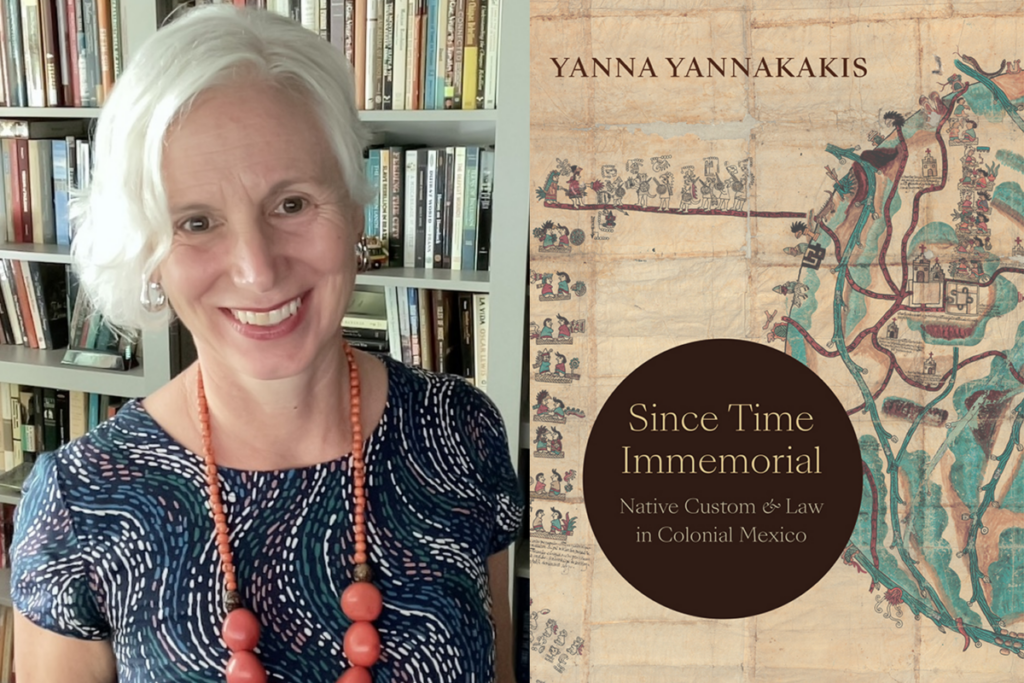
Congratulations to Dr. Yanna Yannakakis, Samuel Candler Dobbs Professor of History and Department Chair, on winning the Howard F. Cline Memorial Prize from the Conference on Latin American History for her latest book, Since Time Immemorial: Native Custom and Law in Colonial Mexico (Duke University Press, 2023). The Klein prize is awarded biennially to the book or article in English, German, or a Romance language judged to make the most significant contribution to the history of Indians in Latin America. Since Time Immemorial has received two other major awards: the 2024 Friedrich Katz Prize from the American Historical Association and the 2024 Peter Gonville Stein Book Award from the American Society for Legal History. Her first book, The Art of Being In-Between: Native Intermediaries, Indian Identity, and Local Rule in Colonial Oaxaca (Duke University Press, 2008), also won the Klein prize. Find the abstract of Since Time Immemorial below, and read the Open Access version of the book (made possible via Emory’s TOME initiative) here.
In Since Time Immemorial Yanna Yannakakis traces the invention of Native custom, a legal category that Indigenous litigants used in disputes over marriage, self-governance, land, and labor in colonial Mexico. She outlines how, in the hands of Native litigants, the European category of custom—social practice that through time takes on the normative power of law—acquired local meaning and changed over time. Yannakakis analyzes sources ranging from missionary and Inquisition records to Native pictorial histories, royal surveys, and Spanish and Native-language court and notarial documents. By encompassing historical actors who have been traditionally marginalized from legal histories and highlighting spaces outside the courts like Native communities, parishes, and missionary schools, she shows how imperial legal orders were not just imposed from above but also built on the ground through translation and implementation of legal concepts and procedures. Yannakakis argues that, ultimately, Indigenous claims to custom, which on the surface aimed to conserve the past, provided a means to contend with historical change and produce new rights for the future.