Wiggins’s ‘Black Excellence’ Named Finalist for AAIHS’s Pauli Murray Prize


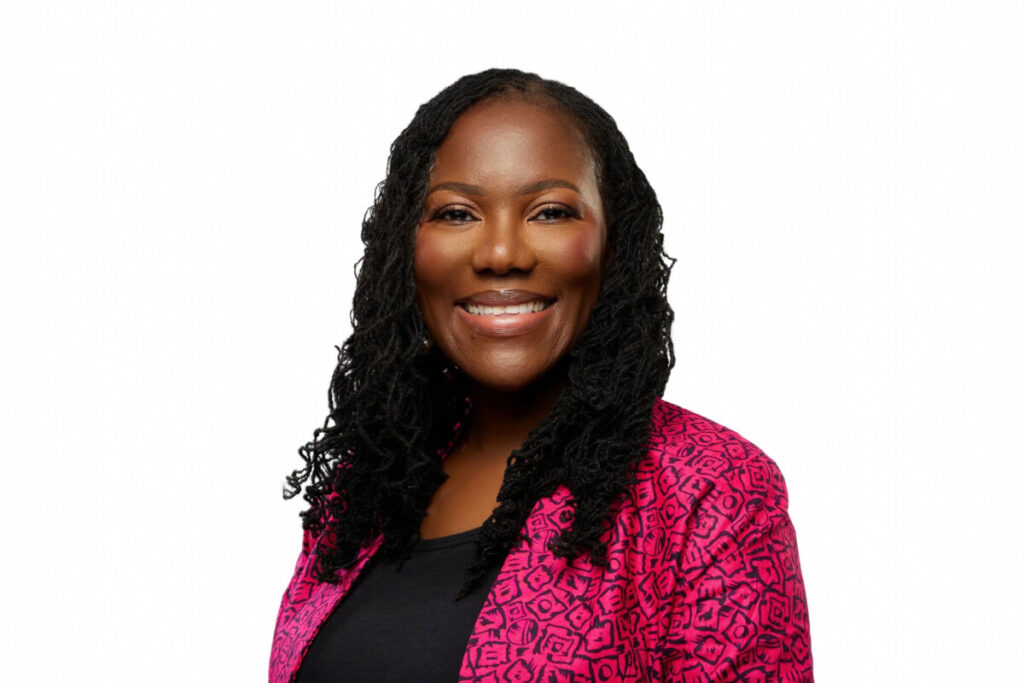
The African-American Intellectual History Society has named the finalists for its annual Pauli Murray Book Prize, and Dr. Danielle Wiggins (PhD, ’18) was short-listed for her newly-published monograph Black Excellence: Atlanta and the Making of Modern Black Liberalism (University of Pennsylvania Press, 2025). Named for pioneering lawyer, scholar, activist, and theorist Pauli Murray, the prize recognizes the best book concerning Black intellectual history published in the preceding year.

Described as a “provocative new history of modern black liberalism,” Black Excellence has already received notable praise. For instance, George Derek Musgrove, co-author of Chocolate City: A History of Race and Democracy in the Nation’s Capital, writes: “Beautifully written and wonderfully insightful, Black Excellence is a must read for anyone who wants to understand both the liberatory and disciplinary history of black liberalism in the post–civil rights era.”

Wiggins is Assistant Professor of History at Georgetown University. She completed under doctoral work under the advisement of Dr. Joe Crespino, Jimmy Carter Professor of History and Interim Dean of Emory College of Arts & Sciences.

Read the abstract of Black Excellence below, and learn more about the other nominees for the 2026 Murray prize.

Black Excellence offers a provocative new history of modern black liberalism by situating the seemingly conservative tendencies of black elected officials in the post–civil rights era within neoliberal American politics and an enduring black liberal tradition.

In the 1970s and ’80s, cities across the country elected black mayors for the first time. Just as these officials gained political power, however, their cities felt the full brunt of white flight and deindustrialization. Tasked with governing cities in crisis, black political leaders responded in seemingly conservative ways to the social problems that austerity worsened. Nowhere was this response more evident than in Atlanta. In the nation’s preeminent black urban regime, black leaders such as mayors Maynard Jackson and Andrew Young employed the power of policing and the private sector to discipline black Atlantans, hoping they would equip vulnerable communities with the tools to manage the volatility of the era.

Danielle Wiggins shows that these punitive responses to the problems of crime, family instability, and unemployment were informed by black liberalism’s disciplinary impulse: an enduring tendency to reform behaviors believed to threaten black survival in a white supremacist nation. Forged in response to the violence of Jim Crow, the disciplinary impulse relied upon notions of pathology and its inverse, black excellence. Wiggins identifies several black liberal efforts to cultivate excellent black communities, families, and workers in the post–civil rights era, including community policing, corporate-sponsored family initiatives, and black entrepreneurship.

In embracing disciplinary strategies, however, black liberals often focused on behavior at the expense of addressing structural inequality. Consequently, their approaches dovetailed with those of the “New” Democrats, whose post–Great Society social policies were informed by urban black liberals. 
Black Excellence reveals thus how urban black liberals not only reshaped black politics but, as Democrats, also helped build the neoliberal Democratic Party.
Sanders Contextualizes Struggle Over MLK’s Legacy


Dr. Crystal R. Sanders, Associate Professor of African American Studies and Associated Faculty in the History Department, recently contributed analysis to the article: “Stevie Wonder’s Battle for MLK Day and the New Challenges to King’s Legacy.” Sanders helps to chronicle the critical role that prominent figures like Wonder played in securing the establishment of the federal holiday for Martin Luther King, Jr., which was signed into law in 1983. Sanders also offers fascinating analysis of the struggle to get the holiday observed on state and local levels, including in her hometown of Clayton, North Carolina (see more on this below). A specialist in the twentieth-century history of the U.S., Sanders is the author, most recently, of the multiple prize-winning book A Forgotten Migration: Black Southerners, Segregation Scholarships, and the Debt Owed to Public HBCUs (UNC Press, 2024).

Read an excerpt from the Capital B News article below and find the full piece here.

“Whether we’re talking about the local, state, or federal level, it took a lot of maneuvering to get this holiday,” Sanders said.

She grew up in Clayton, a small North Carolina town about 15 or 20 minutes from Raleigh. She recalled how her father, the first Black American elected to the Clayton Town Council, basically had to trick the council into recognizing the holiday, even after North Carolina had adopted it as a state holiday in 1983.

“After several failed attempts at getting the holiday recognized, my father introduced a motion that the town would observe all holidays observed by North Carolina,” she said. “And many of his colleagues didn’t think twice. They voted in the affirmative. Later, during that same meeting, an elderly white man said, ‘Wait, did I just vote for the King holiday?’ And my father said, ‘You most certainly did.’”

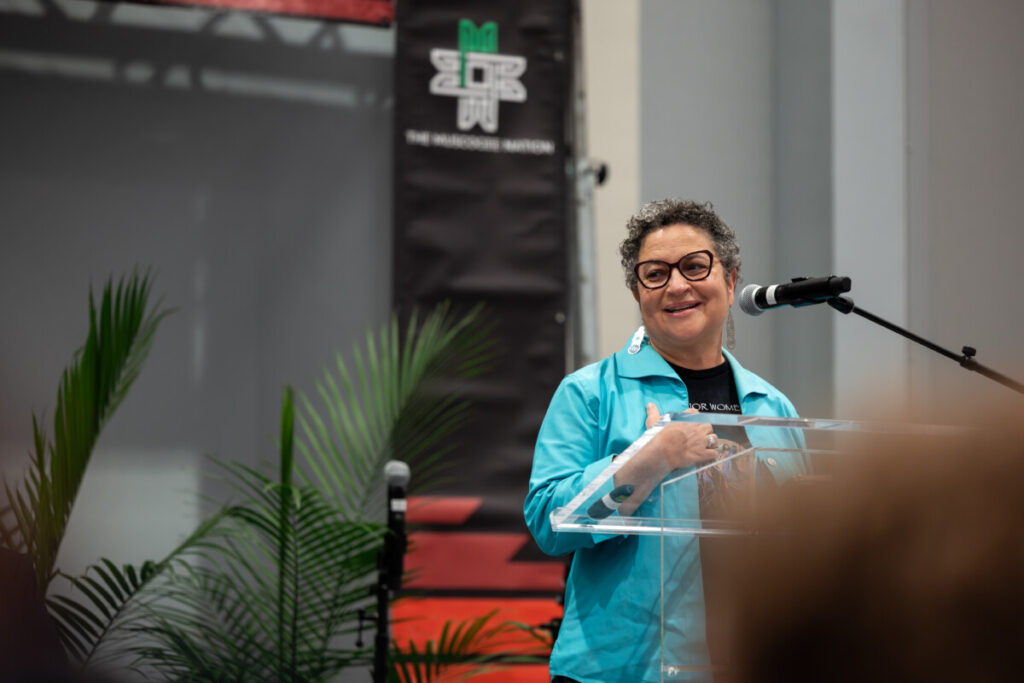
Lowery Delivers Remarks at Fourth Annual Muscogee Teach-In

Sarah Woods/Emory Photo/Video


Dr. Malinda Maynor Lowery, Emory Cahoon Family Professor of American History and a member of the Lumbee Tribe of North Carolina, recently delivered remarks at the fourth installment of the annual Muscogee teach-in. The event brings representatives of the Muscogee Nation, displaced from the site of Emory’s campus in the early 1800s, to campus to teach Muscogee history and culture and to continue fortifying relationships with the Emory community. Since arriving at Emory in 2021, Lowery has been instrumental in building those relationships, including through programming at Emory’s Center for Native American and Indigenous Studies and curricular offerings in the History Department and beyond.

Lowery is the author of The Lumbee Indians: An American Struggle (UNC Press, 2018) and Lumbee Indians in the Jim Crow South: Race, Identity, and the Making of a Nation (UNC Press, 2010). She has also produced Peabody Award-winning and Emmy-nominated films.

Read the Emory News Center’s full feature about the teach-in: “Muscogee Teach-in spotlights sovereignty, storytelling and dance.”

“The United States is on Indigenous land at all times…So, Native American and Indigenous studies is relevant to all of us.”

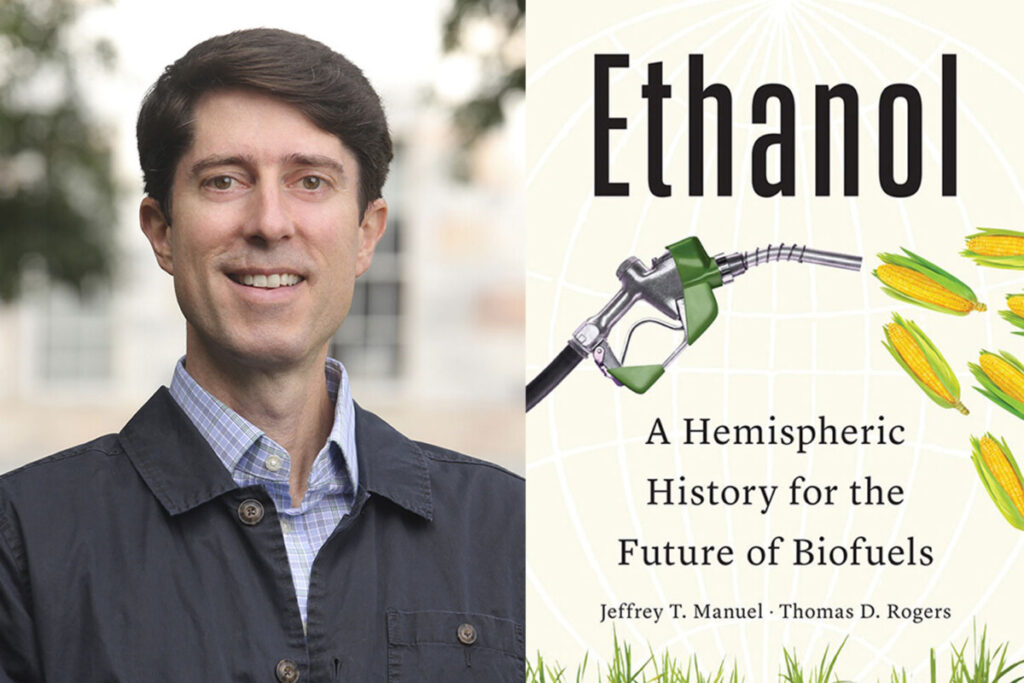
Rogers Publishes ‘Ethanol: A Hemispheric History for the Future of Biofuels’ with Co-Author Manuel


Dr. Thomas D. Rogers, Professor of History with specializations in environmental and labor history, has published a new book with co-author Dr. Jeffrey T. Manuel (Southern Illinois University Edwardsville). Titled Ethanol: A Hemispheric History for the Future of of Biofuels, the book chronicles the transnational history of ethanol in Brazil and the U.S. (the globe’s largest producers). Ethanol, which is Rogers’s third book, offers “the first full picture of the long history of this renewable fuel that from the beginning offered an imperfect alternative to oil.”

The Emory News Center recently published a conversation with Rogers about Ethanol, titled “Emory historian Tom Rogers talks biofuel beyond borders.” Read the abstract of the book below and the full Q&A here.

Though ethanol, a liquid fuel made from agricultural byproducts, has generated controversy in recent years—good or bad for the environment? a big-ag boon or boondoggle?—its use goes back more than a century. Tracing the little-known history of this promising and contentious fuel, Ethanol: A Hemispheric History for the Future of Biofuels reveals the transnational nature of ethanol’s development by its two biggest producers, the U.S. and Brazil. By drawing the connections between the shifting fortunes of ethanol in these two countries, the book presents the first full picture of the long history of this renewable fuel that from the beginning offered an imperfect alternative to oil.

Though generally presented as parallel stories, the histories of ethanol in the U.S. and Brazil are inextricably linked. Authors Jeffrey T. Manuel and Thomas D. Rogers show how policies in one country shaped those in the other. Brazil patterned its mid-century development on the U.S. model, adopting an automobile- and highway-focused transportation system and a fossil fuel-intensive agricultural sector. U.S. policymakers in turn took note when Brazil responded to the 1970s oil shocks by distributing ethanol nationwide, replacing half of its gasoline consumption. In the 2000s, the nations’ leaders worked together to dramatically expand ethanol production. Today, as a new generation of biofuels meant to power aviation and fight climate change again connects Brazilian and U.S. ethanol, Manuel and Rogers explain how the fuel’s future, like its history, is complicated by technical, scientific, economic, and social questions—about how to calculate carbon emissions, agricultural land use, national security and sovereignty, and the balance between government regulation and market forces. Understanding the future of biofuels demands a reckoning with this extensive, shared history—a reckoning that Manuel and Rogers’s far-reaching, deeply researched book brings into view.

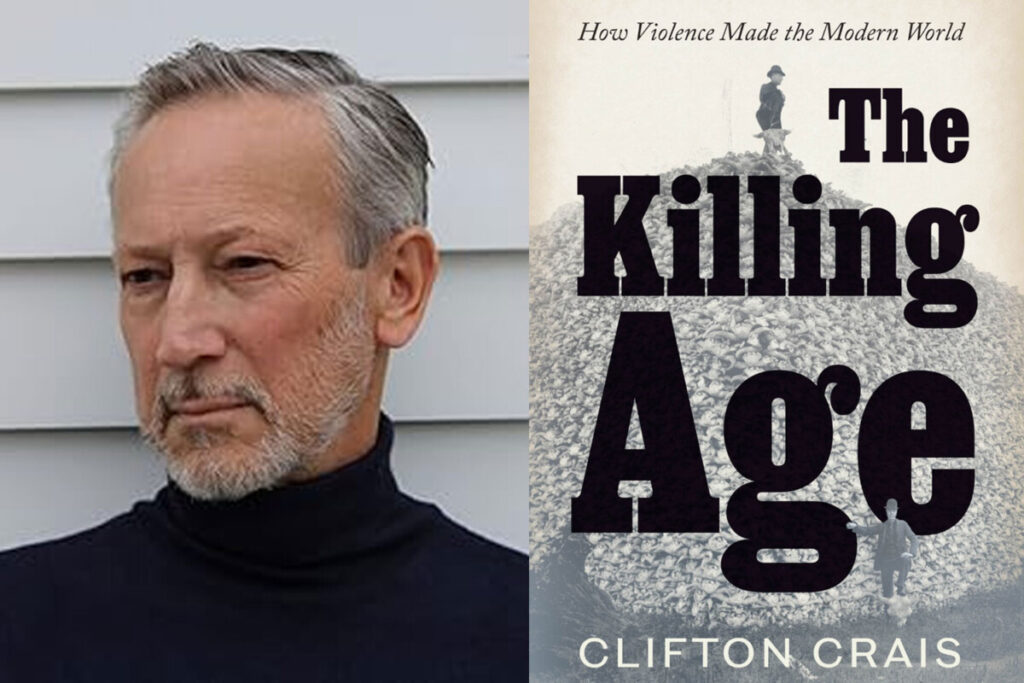
New Books Series: Q&A with Clifton Crais about ‘The Killing Age’


Dr. Clifton Crais, Professor of History, has published his most recent book, The Killing Age: How Violence Made the Modern World, with the University of Chicago Press. Crais foregrounds the role and significance of violence in the development of global capitalism from 1750 to the early 1900s, arguing that the period commonly described as the Anthropocene should, instead, best be understood as the Mortecene, or killing age. During this age, he writes, the new “ease and profitability of killing created a disturbing network of global connections and economies, eliminating tens of millions of people and sparking an environmental crisis that remains the most urgent catastrophe facing the world today.”

South African Nobel laureate J.M. Coetzee offered the following praise for Crais’s book: “Synoptic in its reach, overwhelming in its detail, The Killing Age leaves one feeling like Jonathan Swift’s Gulliver, who came to prefer the company of peaceable horses to membership of humankind.”

In the Q&A below, Crais gives us a glimpse into the making of the monograph as part of the History Department’s New Books series.

Books are produced over years if not decades. Give us a sense for the lifespan of this book, from initial idea to final edits.

In some respects, The Killing Age returned me to questions I have been interested in since graduate school in the mid-1980s when books by scholars like Immanuel Wallerstein, Eric Wolf and others called attention to the importance of understanding the world economy and the development of capitalism. But it was only about a decade ago when I decided it was time to undertake a new project, partly inspired by a graduate course Mark Ravina and I taught on comparative empire. I became convinced that the literature on the Anthropocene was inadequate or at least incomplete and that, more generally, we had a poor understanding of the role of violence in the development of capitalism and the making of our contemporary world of planetary peril.

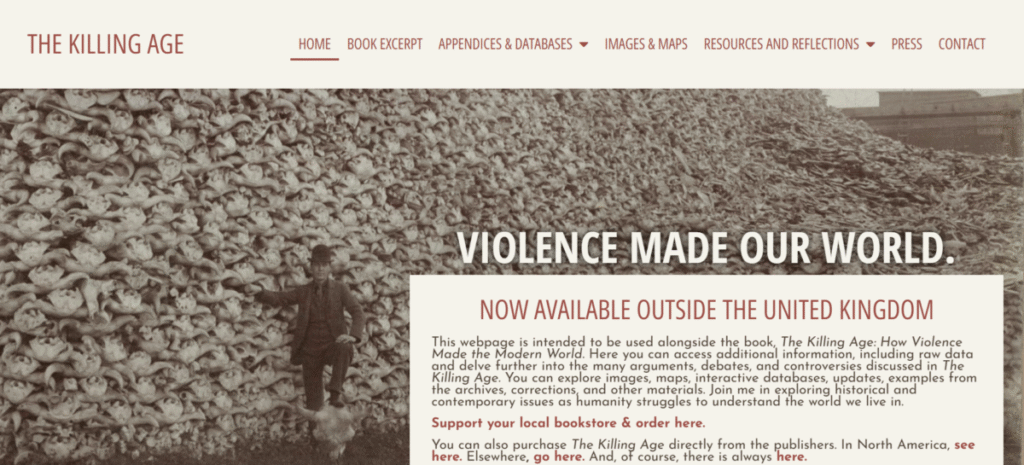
The research, writing and publication took about eight years. There was a lot of climate science and environmental history I had to first learn, and I had to decide on which archives I would delve into. I spent lots of time in England, but also many places across the United States. So, it took longer to research and write than previous books. Plus, The Killing Age is hefty, over 700 pages long, plus an associated website, thekillingage.com.


What was the research process like?

The Killing Age was by far the most difficult project I have undertaken. I had never done research in the histories of South America, Asia, and especially the United States. I also relied on multiple databases, some massive. The total amount of data I have stored and used for the project is more than 1 terabyte, in other words more than a million pages. One of the biggest challenges was how to navigate all the material while producing a book that is narratively driven and accessible to the general public. I ended up going through more than a dozen drafts.

Are you partial to a particular chapter or section?

I was originally trained in the history of Africa, so the chapters covering this part of the world had a certain familiarity; not so with other regions, including the United States. I am partial to the section “The American Ways of Killing” that explores the hunting of whales, beaver, and bison and its connections to economic change and the emergence of the US as a global power. Just learning about the entwined histories of humans and non-humans was fascinating, especially as I wrote some of these chapters during COVID-19.

How does this project align with your broad research agenda (past, present, or future)?

The Killing Age is both a kind of culmination and a departure. I have been thinking about many of the issues I explore for decades. At the same time, the project has convinced me of the importance of writing a global history of the twentieth century, about the possibilities of human progress and how these possibilities were so often subverted. In my next project I will be returning to the issue of violence and especially the redemocratization of the means of destruction, particularly after 1945.