Strocchia’s FYS, ‘Epidemics in History,’ Brings Historical Insights to Unfolding Pandemic

Dr. Sharon T. Strocchia, Professor of History, is teaching a first-year seminar titled “Epidemics in History” this spring. The COVID-19 pandemic has made the course far more timely than she or the students anticipated. The Emory News Center featured “Epidemics in History” among Emory courses where professors and students are using the pandemic as a learning opportunity. Read about all of those courses in their article, “COVID-19 in Class.” Strocchia also offered comments on her original idea for the class and how she modified it in order to investigate this historical moment in real time. Read her comments below.

My freshman seminar this semester, “Epidemics in History,” was not designed to coincide with a global pandemic. I did plan to end the course with a study of the 1918 influenza epidemic after examining the Black Death and nineteenth-century cholera outbreaks. Our goal was to explore the historical and biological effects of urbanization, environmental change, and the human connectivity resulting from faster modes of transportation. But I also wanted to raise issues of preparedness with my students, many of who planned careers in medicine and science. It seemed oddly serendipitous that the Wuhan outbreak of coronavirus hit the headlines just as spring semester started. At our first class meeting in January, we decided that tracking its progression would make a good class project. Relying on trusted news outlets, we learned the value of social distancing, good hand hygiene, and flattening the curve. Week by week, the news grew more startling but still seemed far from home. By the time spring break arrived, though, COVID-19 already had an official name and the world was on the verge of pandemic. We’ve since modified our syllabus to make direct comparisons between the experiences of 1918 and our own day, looking at public health policies, frontline healers, issues of fear and resilience. It’s been a rewarding but sobering experience—one that shows there’s much to be learned about health and society from studying the past.

– Sharon Strocchia
Dr. Polly J. Price, Associated Faculty in History, Discusses Jurisdiction and COVID-19 on CNN

Dr. Polly J. Price is the Asa Griggs Candler Professor of Law, Professor of Global Health, and Associated Faculty in the History Department. Price recently contributed to a CNN segment with host Michael A. Smerconish about jurisdiction in the context of stay-at-home orders and social distancing measures intended to curb the spread of COVID-19. View the segment here: “Why is there no national lockdown?”

Price is a public health law scholar as well as a legal historian and citizenship and immigration law expert. Her current book project, Plagues in the Nation (forthcoming from Beacon Press), examines how epidemics have shaped US law and continue to pose challenges for disease control in democratic societies. In recent weeks Price has also authored two pieces for The Atlantic: “A Coronavirus Quarantine in America Could Be a Giant Legal Mess” and “How a Fragmented Country Fights a Pandemic.”

Carol Anderson on COVID-19 and Voter Suppression in ‘Time’

anderson-covid

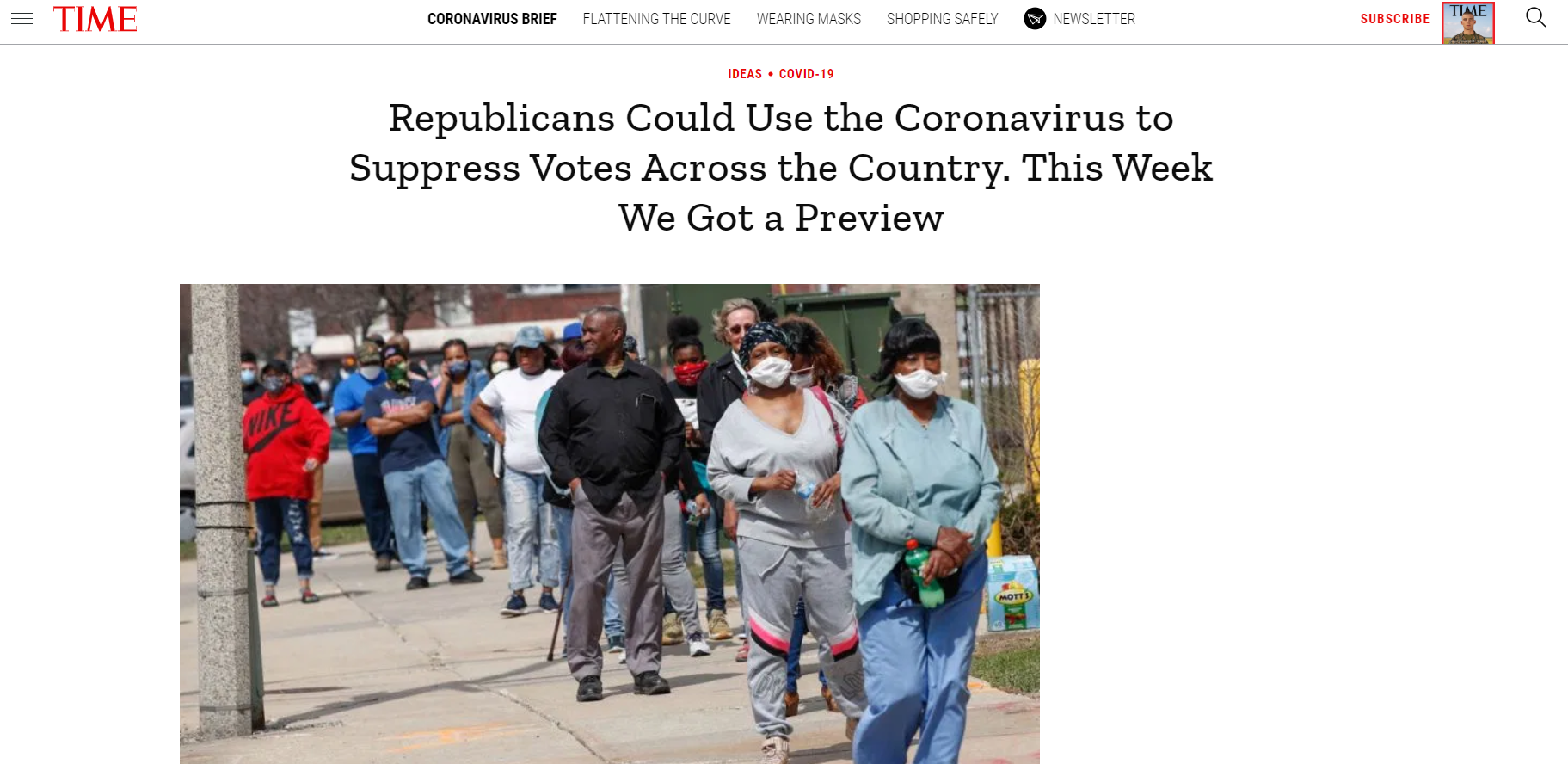
Dr. Carol Anderson, Charles Howard Candler Professor of African American Studies and Associated Faculty in the History Department, has written an article in Time titled  “Republicans Could Use the Coronavirus to Suppress Votes Across the Country. This Week We Got a Preview.” Anderson’s piece examines how stay-at-home orders prompted by COVID-19 could lead to the disenfranchisement of voters in primary elections and may portend the same for the general election in November. Anderson is the author, most recently, of One Person, No Vote: How Voter Suppression is Destroying Our Democracy, which was published by Bloomsbury and a finalist for the PEN/Galbraith Award in Non-fiction and a National Book Award Longlist finalist in Non-fiction.


Ashley Parcells (PhD, ’18) Receives NEH Summer Stipend

Dr. Ashley Parcells, Assistant Professor of History at Jacksonville State University, has received a Summer Stipend from the National Endowment for the Humanities. The support will allow Parcells to complete interviews and two chapters for a book on apartheid and sovereignty in KwaZulu, South Africa. Her project is titled “Ethnicity, State-Building, and the Making of Apartheid, ca. 1951 to 1994.” Parcells completed her doctorate in 2018, with Dr. Clifton Crais, Professor and Director of the Institute of African Studies, serving as her primary dissertation adviser.


Four History Majors Inducted into Phi Beta Kappa

Congratulations to the four history majors inducted into the Phi Beta Kappa Society this spring. They are Melanie Dunn, Cameron Katz, Yaza Sarieh, and Jesse Steinman. Sarieh and Steinman are seniors; Dunn and Katz are both juniors. The Gamma Chapter of Georgia was established at Emory University on April 5th, 1929, by the authority of the Sixteenth National Council of the United Chapters of Phi Beta Kappa. The initiation ceremony, originally slated for the first week of April 2020, has been postponed to the fall due to the COVID-19 pandemic.

Phi Beta Kappa Society of Georgia Recognizes Eckert and Suh for Teaching Excellence

eckert     

The Gamma Chapter of Georgia of the Phi Beta Kappa Society has recognized two Emory History Department faculty members for teaching excellence: Dr. Astrid M. Eckert, Associate Professor, and Dr. Chris Suh, Assistant Professor. Eckert is a historian of modern Europe and modern Germany, with teaching interests that cover German and European history in the nineteenth and twentieth centuries. A few of her recent courses include “Borderlands in History,” “Modern Germany,” and “Nazi Medicine and Biology.” Suh, who joined the faculty last fall, is a historian of race, ethnicity, and inequality, specializing in the United States’ engagement with the Pacific World and Asian migration to the United States. His courses at Emory thus far have included “Transpacific Lives,” “Sounds of the Century,” and “Asian American History.”

Amsterdam UP Releases ‘Gender, Health, and Healing, 1250-1550,’ Co-Edited by Sharon T. Strocchia

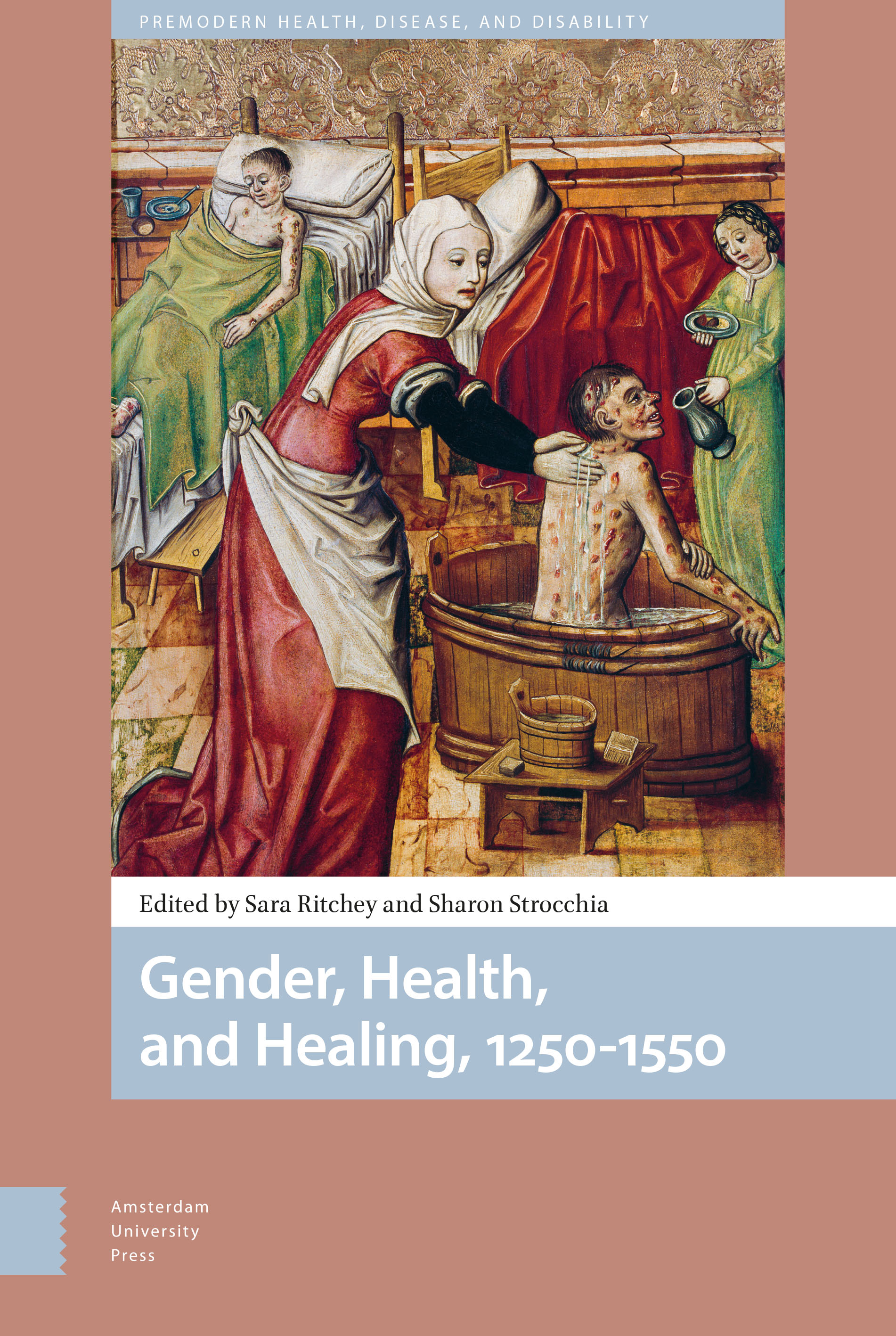
Dr. Sharon T. Strocchia, Professor of History, co-edited a newly-published volume of essays with Dr. Sara Ritchey, Associate Professor at the University of Tennessee. Titled Gender, Health, and Healing, 1250-1550, the collection’s 13 essays offer new understandings about women healers and bodywork in societies of the later medieval and Renaissance eras, a formative period in the history of healthcare and medicine. Read the full blurb from Amsterdam University Press below and find more information at Gender, Health, and Healing, 1250-1550 (Amsterdam University Press, 2020).

This path-breaking collection offers an integrative model for understanding health and healing in Europe and the Mediterranean from 1250 to 1550. By foregrounding gender as an organizing principle of healthcare, the contributors challenge traditional binaries that ahistorically separate care from cure, medicine from religion, and domestic healing from fee-for-service medical exchanges. The essays collected here illuminate previously hidden and undervalued forms of healthcare and varieties of body knowledge produced and transmitted outside the traditional settings of university, guild, and academy. They draw on non-traditional sources — vernacular regimens, oral communications, religious and legal sources, images and objects — to reveal additional locations for producing body knowledge in households, religious communities, hospices, and public markets. Emphasizing cross-confessional and multilinguistic exchange, the essays also reveal the multiple pathways for knowledge transfer in these centuries. Gender, Health, and Healing, 1250-1550 provides a synoptic view of how gender and cross-cultural exchange shaped medical theory and practice in later medieval and Renaissance societies.

Hannah Abrahamson Wins AHA’s Beveridge Research Grant

4th-year doctoral student Hannah Abrahamson was recently awarded a Beveridge Research Grant from the American Historical Association. Abrahamson is a historian of colonial Mexico writing a dissertation entitled, “Women of the Encomienda: Households and Dependents in Sixteenth and Seventeenth-Century Yucatan, Mexico.” The Beveridge grant supports research in the history of the Western Hemisphere (the United States, Canada, and Latin America).

Channelle Russell Receives Mellon Mays Undergraduate Fellowship

Congratulations to Channelle Russell on winning a Mellon Mays Undergraduate fellowship. Russell is a sophomore with a joint major in History and English, concentrating in African Atlantic history and literature, with a minor in Anthropology. Her Mellon Mays research project is tentatively titled “Unspooling Venus: Intimacy, Space, and Memory in 1700s Brazil” and explores the life of 18th-century enslaved woman Xica da Silva, whose historical enslavement became a cultural monument in contemporary Brazilian media. Russell’s interest in the Atlantic stems largely from a Fall 2018 freshman seminar she took with Dr. Adriana Chira, “Radicals and Revolution in the Caribbean.” Her interest in archival work took root in Dr. Maria Montalvo’s current “North American Slave Revolts” course. Beyond being a College undergrad, Russell is interested in knowledge production and media and plans to further explore the intersections of narrative formation and history in graduate school.

Funded by the Andrew W. Mellon foundation, the Mellon Mays Undergraduate Fellowship program works to increase the number of underrepresented minority students pursuing doctoral degrees in the arts and sciences and, in doing so, to create more diverse faculties on university campuses in the United States and South Africa. Emory has had comprehensive participation in the Mellon Mays Undergraduate Fellowship program for more than 17 years. Read more about the fellowship here.

Harvard UP Publishes Q&A with Sharon T. Strocchia about “Forgotten Healers”

Harvard University Press recently published a Q&A with Dr. Sharon T. Strocchia, Professor of History, about her newest book, Forgotten Healers: Women and the Pursuit of Health in Late Renaissance Italy (Harvard UP, 2019). The exchange, which was published as part of Women’s History Month, outlines the major themes and historiographic contributions of Strocchia’s monograph. Read the piece on the Harvard UP Blog: “Q&A with Sharon Strocchia.”