‘HowStuffWorks’ Features Crespino’s ‘History 385: Right-Wing America’

This spring Jimmy Carter Professor of History and Department Chair Joseph Crespino is teaching a 385 course titled “Right-Wing America.” HowStuffWorks contributing writer John Donovan recently featured Crespino’s course in the article “Bridging the Chasm: Emory Class Delves Into America’s Right-wing History.” HowStuffWorks editorial board describes the website as a “source for unbiased, reliable, easy-to-understand answers and explanations of how the world actually works.” Read the full article here and check out Donovan’s observations from the first day of the spring course below.

“‘Donald Trump really defied what we thought we knew about American politics,’ Crespino tells his class that first day. ‘Trump’s election not only kind of upended what we thought were these iron laws of American politics’ — mainly, that candidates have to run toward the center to get elected — ‘but it also makes the American past look a lot different, you know? Things that we used to take for granted as kind of hiccups along the way all of a sudden look more important. And they look more ominous. And we begin to see that they weren’t just hiccups, but they’re kind of a recurring pattern.’

That pattern is what interests scholars. It’s what Crespino hopes his students will grasp, too; that the ideas and beliefs that drive right-wing America today didn’t begin with Trump. And they won’t disappear when he does, either.”
Lipstadt Discusses the Reemergence of Public Antisemitism on ‘All Things Considered’

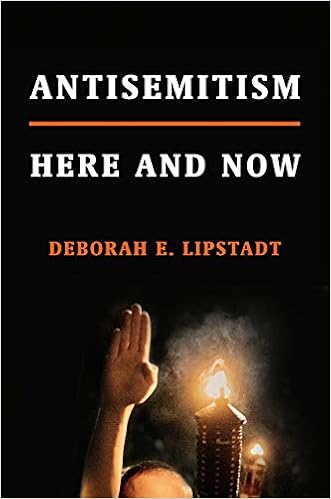
NPR’s Michel Martin, host of “All Things Considered,” recently interviewed Dr. Deborah E. Lipstadt about the resurgence of public antisemitism in the contemporary United States. Lipstadt is, most recently, the author of Antisemitism: Here And Now (Schocken, 2019). At Emory she holds positions as Dorot Professor of Modern Jewish History and Holocaust Studies and as associated faculty in the History Department. Read the full transcript of the interview here.

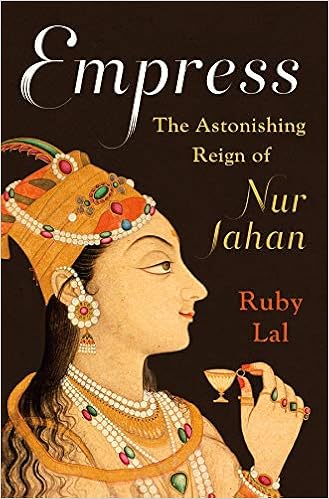
Ruby Lal’s ‘Empress: The Astonishing Reign of Nur Jahan’ Named Finalist for ‘L.A. Times’ Book Prize

Congratulations to Dr. Ruby Lal, Professor of South Asian Studies and affiliated faculty in the History Department. Lal’s recent monograph, Empress: The Astonishing Reign of Nur Jahan (W. W. Norton & Company, 2018), has been named a finalist in the History category for the 2018 L.A. Times Book Prize. Read more about Lal’s book here.

Jeffrey Lesser Lectures on “Bad Health in a Good Retreat” at the University of Cape Town’s African Centre for Cities

Localização_do_Desinfectório_Central_(Bom_Retiro_-_São_Paulo_-_SP)

Bom Retiro’s Desinfectório Central, a key site of public health history in São Paulo. Image by Giuliana Saringer [CC BY-SA 4.0 (https://creativecommons.org/licenses/by-sa/4.0)]

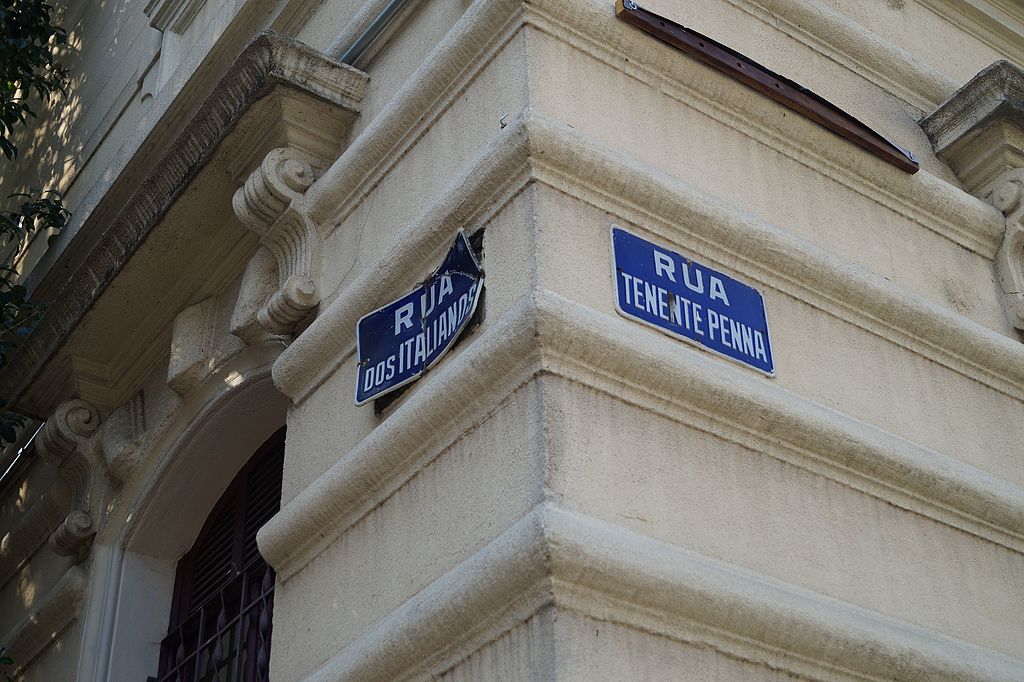
Dr. Jeffrey Lesser, Samuel Candler Dobbs Professor of History and Director of the Halle Institute for Global Research and Learning, will deliver a seminar at the University of Cape Town’s African Studies Centre on February 25, 2019. Lesser will speak about his research on the history of public health in São Paulo’s Bom Retiro neighborhood. The talk is entitled, “Bad Health in a Good Retreat: Life and Death in the ‘Worst’ Neighborhood of São Paulo, Brazil.” Read the paper abstract below and find out more information about the seminar.

Bom Retiro was (and is) a small neighborhood in the huge megalopolis of São Paulo, Brazil.  The mainly working class neighborhood has been populated since the end of the 19th century by immigrants, migrants from the impoverished Brazilian northeast, and Afro-Brazilian descendants of slaves. While the cultural backgrounds of the immigrants have shifted (from Italians, Spaniards and Portuguese Catholics in the early 20th century to East European Jews in the mid-20th century to Chinese, Korean, Paraguayan, and Bolivian immigrants today), the neighborhood has been viewed internally and externally as one where health (in the broadest sense of the word) is precarious. “Bad Health in a Good Retreat” analyzes the relationship between “Public Health” (as a state driven set of policies and linked enforcement) and “The Public’s Health” (how real people understand their own experiences).  By focusing on one square block of Bom Retiro from about 1900 to the present I use archival and ethnographic methods to analyze the daily practices of residents and health officials, and the stories they tell about life, death, and the spaces in between.


Brian Vick Co-Edits ‘Securing Europe after Napoleon’ with Cambridge UP

securing-europe

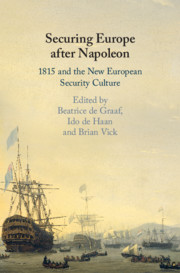
Cambridge University Press recently released the edited volume Securing Europe after Napoleon: 1815 and the New European Security Culture, co-edited by Emory Professor of History Brian Vick. Vick’s collaborators are Beatrice de Graaf (Universiteit Utrecht, the Netherlands) and Ido de Haan (Universiteit Utrecht, the Netherlands). The volume includes a chapter by Vick, who is a specialist in Modern Germany and Central Europe in the Long Nineteenth Century, entitled “The London Ambassadors’ Conferences and Beyond: Abolition, Barbary Corsairs, and Multilateral Security In The Congress Of Vienna System.” A book launch in New York City will take place on February 27. More details and registration can be found at: bit.ly/after-napoleon.

Yanna Yannakakis and Co-Author Bianca Premo Discuss Forthcoming Article in the ‘American Historical Review’

The February edition of the American Historical Review will feature an article co-authored by Yanna Yannakakis and Bianca Premo entitled “A Court of Sticks and Branches: Indian Jurisdiction in Colonial Mexico and Beyond.” Yannakakis is Associate Professor of History and currently holds the Winship Distinguished Research Professorship in History. Premo is Professor of History at Florida International University. The American Historical Association recently published a podcast with Yannakakis and Premo about the article, which will appear as part of a forum titled “Indigenous Agency and Colonial Law.” Listen to the episode here: “Bianca Premo & Yanna Yannakakis: ‘A Court of Sticks and Branches.‘”

Deborah E. Lipstadt Discusses New Book and Antisemitism in Interview with ‘The New Yorker’

The New Yorker recently published an interview with Dr. Deborah E. Lipstadt, Dorot Professor of Modern Jewish History and Holocaust Studies and associated faculty in the History Department. Staff writer Issac Chotiner conducted the interview with Lipstadt, who recently published Antisemitism: Here and Now with Schocken. Read the full article on The New Yorker website: “Looking at Anti-Semitism on the Left and the Right: An Interview with Deborah E. Lipstadt.”


Goldstein’s ‘On Middle Ground’ Named Finalist for National Jewish Book Award

Image result for on middle ground goldstein

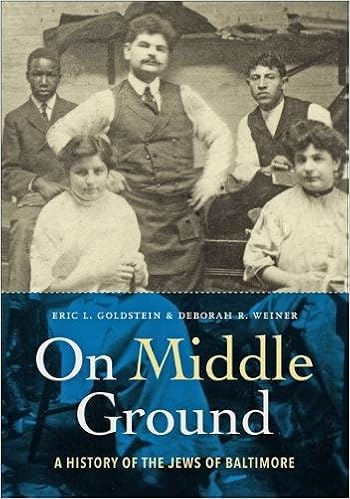
Congratulations to Eric Goldstein for his recent book On Middle Ground: A History of the Jews of Baltimore (Johns Hopkins Press, 2018), which was named a finalist for the American Jewish Studies Book Award of the Jewish Book Council. On Middle Ground was co-authored with Deborah R. Weiner. Goldstein is the Judith London Evans Director of the Tam Institute for Jewish Studies and Associate Professor of History and Jewish studies.

Mary L. Dudziak Summarizes 2018 – “The Year of Cruelty” – for ‘Politico Magazine’

Asa Griggs Candler Professor of Law Mary L. Dudziak was one of 16 historians who authored a first and brief draft of 2018 history for a piece in Politico Magazine.  Dudziak is Associated Faculty in the History Department. Read her appraisal of last year along with those of other leading historians at Politico Magazine: “What Will History Books Say About 2018? 16 top historians predict the future.”

“2018 will be remembered as the year of cruelty. The United States separated thousands of migrant children from their families and created prison camps for them. The country aided Saudi Arabia’s war in Yemen resulting in a humanitarian catastrophe seen in images of starving children. Trump refused to sanction or even criticize Saudi Crown Prince Mohammed bin Salman for the brutal murder of journalist Jamal Khashoggi. Trump told Californians devastated from the loss of homes and loved ones to fire that the tragedy was, in essence, their own fault. He said the same to victims of mass shootings. The list goes on and on—there is too much cruelty for one paragraph. Congress, and the American people, aided the president’s cruelty by failing to do whatever it would take to stop him.”

Joseph Crespino in ‘The Washington Post’: “How will Broadway change Atticus Finch?”

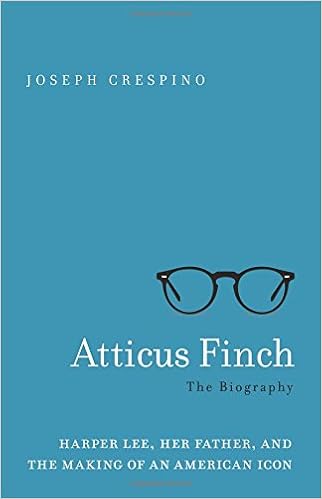
Jimmy Carter Professor of History and Department Chair Joseph Crespino recently authored a piece in The Washington Post on the Broadway adaptation of Harper Lee’s novel To Kill a Mockingbird. Crespino, who published Atticus Finch: the Biography with Basic Books in 2018, discusses the current production in the context of the 1962 adaptation of Lee’s novel as an award-winning film. The play is written by Aaron Sorkin and stars Jeff Daniels, and it has set box office records since opening in mid-December. Read an excerpt of Crespino’s piece below and the whole article here: “The ever-shifting hero of ‘To Kill a Mockingbird’: How will Broadway change Atticus Finch?

“…Sorkin has the difficult task of pleasing throngs of Lee devotees while also making the story relevant to contemporary audiences. Can Sorkin avoid writing another white savior narrative? Can he acknowledge the agency of Calpurnia and Tom Robinson, the African American characters in the story? If he muddies the character of Atticus too much, will he run afoul of Lee’s estate, inviting further legal action? And how does he present the racism that was pervasive in the 1930s South to a new generation of Americans accustomed to trigger warnings and safe spaces?

Given the challenges, Sorkin and crew would do well to recall the definition of courage that Atticus gave to his son Jem: ‘It’s when you know you are licked before you begin but you begin anyway and you see it through no matter what. You rarely win, but sometimes you do.’”