Dr. Kristin Mann Wins Distinguished Scholar Award

Congratulations to Dr. Kristin Mann, Professor of History, for winning the Distinguished Scholar Award from the Lagos Studies Association. Mann’s book publications about Lagos include  Marrying Well: Marriage, Status and Social Change among the Educated Elite in Colonial Lagos (Cambridge UP, 1985) and Slavery and the Birth of an African History: Lagos, 1760-1900 (Indiana UP, 2007). Read a more complete description of Mann’s scholarship and service to the discipline, written by Dr. Jessica Reuther (Ph.D., 2016), here.

Image result for Slavery and the Birth of an African History: Lagos, 1760-1900

Courses Taught by Crespino and Sasson Highlighted by Emory News Center

Two History Department courses made the list of 19 notable offerings for Emory’s undergraduates this fall. Professor Joseph Crespino, Jimmy Carter Professor of American History, will teach a seminar course titled “Atticus Finch and American History.” Professor Tehlia Sasson, Assistant Professor of History, is offering “Origins of Human Rights.” Read the course descriptions below, and check out other compelling fall 2017 offerings around campus here.

Atticus Finch and American History

“Since its publication in 1960, Harper Lee’s To Kill a Mockingbird has been one of the most widely read books in the world. The recent publication of Lee’s apprentice novel, Go Set A Watchman has renewed interest in the figure of Atticus Finch and the historical and cultural sources that influenced Lee. This seminar examines the history of the American South in the Jim Crow era that prefigured both the idealized Atticus of Mockingbird and the reactionary Atticus of Watchman. The class will analyze the political uses to which this character has been put since Mockingbird’s publication.”

Origins of Human Rights 

“This course recovers the multiple histories of human rights from their deep origins in the 1750s to their more recent formations in the 1990s. It focuses on the history of Europe and its engagement with the wider world: looking at how Europe has shaped and was shaped by Africa, South Asia and the United States over the course of the 19th and 20th centuries. The goal will be to analyze how the evolution of human rights became part of our contemporary framework of politics, law and culture.”


Dr. Tehila Sasson Wins Bernath Scholarly Article Prize

Congratulations to Dr. Tehila Sasson, Assisant Professor of History, for winning the Bernath Scholarly Article Prize from the Society for Historians of American Foreign Relations. Sasson won the prize for her article, “Milking the Third World: Humanitarianism, Capitalism, and the Moral Economy of the Nestlé Boycott,” published in the October 2016 edition of the American Historical Review. 

Daniel LaChance on GPB: ‘How Americans Change Their Tune On The Death Penalty’

Photo of

Assistant Professor of History Daniel LaChance recently appeared on Georgia Public Broadcasting’s show On Second Thought to discuss changing perceptions among the U.S. populace about capital punishment. LaChance published his first book,  Executing Freedom: The Cultural Life of Capital Punishment in the United States, last year with the University of Chicago Press. Listen to the full interview here.

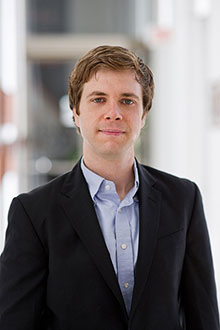
History Department Chair, Dr. Jeffrey Lesser, Named Director of Claus M. Halle Institute for Global Learning

Jeffrey Lesser

Dr. Jeffrey Lesser, Department Chair and Samuel Candler Dobbs Professor of History, was named director of the Claus M. Halle Institute for Global Learning last week by Philip Wainwright, Emory’s Vice Provost for Global Strategy and Initiatives. The three-year appointment commences September 1, 2017. Lesser will continue as History Department Chair through 2018 while working to expand existing and build new strategies for the Halle Institute on Emory’s Campus and beyond. A historian of modern Brazil, Lesser brings a deep background of academic and administrative experience in global studies to the position. A press release from the Office of Global Strategy and Initiatives further outlines Lesser’s role and the direction of the organization:

“As director, Lesser will promote Emory’s global identity by maximizing the Halle Institute’s impact as a global center for research, scholarship, and education. A great deal of Emory University’s research and teaching takes place outside of the United States. The Halle Institute supports Emory’s strategic global priorities by facilitating the exchange of people and ideas between Emory and institutions around the world. It partners with schools and centers at Emory to cultivate global perspectives and international understanding on campus and beyond.”

Dr. Carol Anderson on President Trump and Black History in ‘The Boston Globe’

Professor Carol Anderson, Charles Howard Candler Professor of African American Studies, was recently quoted in an article in The Boston Globe titled “Trump’s blind spot on black history worries scholars.” The May 3 article (by Astead W. Herndon) examined the reactions of numerous leading historians, including Dr. Anderson, to the U.S. president’s comments about American and especially black history. “From the first moments of the Trump administration, historians said in interviews, they were baffled along with other Americans by factual inaccuracies flowing from the White House. But in the months that followed, and especially this week, scholars said their initial surprise has turned to deep dismay over Trump’s seemingly ill-informed views of US history, especially as it relates to racial minorities.” Read Dr. Anderson’s contribution to the article below and check out the full piece here.

“‘There seems to be this kind of disdain for the reality of African-American history,’ said Carol Anderson, a professor at Emory University who specializes in black studies.

“‘When you don’t care enough about something to learn about it, yet you open up your mouth to speak about it — that’s contempt,’ Anderson said.”

Emeritus Professor James L. Roark in ‘The New York Times’

Dr. James L. Roark, Samuel Candler Dobbs Emeritus Professor of History, contributed to the May 1, 2017 New York Times article, “AP Explains: Could the Civil War Have Been ‘Worked Out?'” Roark is a specialist on southern and nineteenth-century american history and provided commentary in response to President Donald Trump’s conjecture that Andrew Jackson “never would have let [the Civil War] happen.” Read Professor Roark’s analysis below and check out the full Associated Press piece here.

“COULD IT HAVE BEEN AVOIDED?

“Probably not, according to James Roark, an author and retired history professor at Emory University in Atlanta.

“‘As it got tangled with American politics and regional interests, nobody could figure out a way to save both the Union and preserve slavery in the South,’ he said. ‘It wasn’t for a lack of talking. There was plenty of talking.'”

Emory News Center Features Prof. Daniel LaChance’s Book ‘Executing Freedom’

Story image

Assistant Professor of History Daniel LaChance published Executing Freedom: The Cultural Life of Capital Punishment in the United States with the University of Chicago Press last year. LaChance’s book examines the role of the death penalty in American culture over a span of fifty years. The Emory News Center’s April Hunt recently published a feature about LaChance’s work, “‘Executing Freedom’ examines the evolving role of the death penalty.” Read an excerpt from the article below and check out the full piece here.

“I’ve long been interested in the place of punishment in our society,” says LaChance, who got his first glimpse of the criminal justice system by watching his father defend accused murderers in courtrooms in a state without the death penalty.

“Criminal trials, sentencing hearings and execution ceremonies are spectacles,” LaChance adds. “They are more than an outraged community’s response to crime. They are occasions where we reveal our deeply held beliefs about the relationship between the individual and the state.”

Eckert, Payne, and Undergraduates Explore Roots of Contemporary Conflict in “History of Now”

Story image

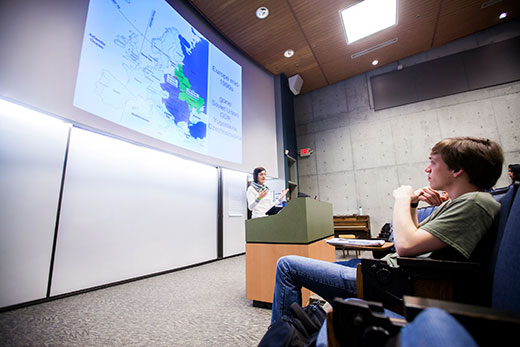
The Emory News Center recently published a profile on the spring 2017 course “History of Now,” taught by Drs. Astrid M. Eckert and Matthew Payne. The co-taught class is structured around the examination of contemporary events — ranging from Russian presidential politics to Brexit — in historical context. Pitched an introductory level, the course has drawn an array of students across disciplines and year from Emory’s College of Arts and Sciences. Read the full Emory News Center article (“‘History of Now’ helps students understand roots of current conflicts”) and check out the course description below.

The course covers European history from the devastation of World War II to Europe’s current predicaments, such as the Ukrainian crisis, the Brexit decision, and refugee movements. Team-taught by specialists on German and Russian history, the course takes an expansive view of what constitutes Europe and considers select topics in European postwar history such as postwar affluence, détente, war memories, environmental challenges, and others, from western, central and eastern European perspectives. It traces how experiences of the war years rippled through postwar Europe, merged with Cold War exigencies, and reverberated in new ways after the fall of Communism. The course offers students not only an overview of postwar European history but also introduces them to ways of analysing current events in regard to their deep roots in the continent’s past.