Doctoral student Alejandro Guardado won the Albert J. Beveridge grant from the American Historical Association for his research project, “Reimagining Community: Indigenous Organizing in Mexico’s Neoliberal Turn, 1968–2000.” Guardado’s dissertation centers on Self Determination Movements in Zapotec and Mixe communities in the Sierra Norte of the Mexican state of Oaxaca. He analyzes how Indigenous intellectuals and activists developed networks with micro-regional political coalitions, anthropologists, liberation theologians, and NGOs as a means of renegotiating their relationship to the Mexican government and market forces.
The Beveridge grants support research in the history of the Western Hemisphere, and Guardado was among just 15 graduate students nationwide selected for the prize. Dr. Yanna Yannakis, Samuel Candler Dobbs Professor of History and Department Chair, serves as Guardado’s dissertation advisor.
Dr. Jinyu Liu, Betty Gage Holland Professor of Roman History, was awarded a fellowship at the Institute for Advanced Study (IAS) in the School of Historical Studies for the fall 2025 semester. This prestigious membership allows for focused research and the free and open exchange of ideas among an international community of scholars at one of the foremost centers for intellectual inquiry.
At IAS, Jinyu Liu will be working on “Outsiders in Town,” which explores social exclusion and the negotiation costs of relocation for mobile and immigrant tradesmen and craftsmen in the Roman West during the first three centuries.
Each year, IAS welcomes more than 250 of the most promising post-doctoral researchers and distinguished scholars from around the world to advance fundamental discovery as part of an interdisciplinary and collaborative environment. Visiting scholars are selected through a highly competitive process for their bold ideas, innovative methods, and deep research questions by the permanent Faculty—each of whom are preeminent leaders in their fields. Past IAS Faculty include Albert Einstein, Erwin Panofsky, John von Neumann, Hetty Goldman, George Kennan, and J. Robert Oppenheimer.
Among past and present scholars, there have been 37 Nobel Laureates, 46 of the 64 Fields Medalists, and 24 of the 28 Abel Prize Laureates, as well as MacArthur and Guggenheim fellows, winners of the Turing Award and the Wolf, Holberg, Kluge, and Pulitzer Prizes.
History graduate student Emilie Cunning has received a Moody Research Grant from the LBJ Presidential Library. She will head to Austin this fall to conduct archival research on transnational protest cultures in the US and UK in the 1960s-1970s. Her dissertation project is tentatively titled “Transnational Protest Cultures: The Anti-War and Black Power Movements in Britain and the United States, 1960-1974.”
Cunning has developed her dissertation project through varied activities over the last year. In the spring semester, she taught a course related to her research titled “US & the Cold War.” In March, she presented her work at the Boston University American Political History Graduate Conference. The paper focused on transnational anti-war networks during the Vietnam era, specifically on the role of “American Exiles” in Britain who formed a persistent source of opposition to the American war in Vietnam while working with British anti-war groups such as the BCPV and CND.
Earlier this summer, Cunning attended BOCA LONGA at University College London. BOCA LONGA is an annual spring workshop that brings together U.S. historians (both faculty and graduate students) from Boston University, Stanford University, UC Berkeley, UC Davis, University College London, and Emory. She attended along with History Department graduate student Jessica Locklear, Emory College Senior Associate Dean Joseph Crespino, and Profs. Jason Ward, Daniel LaChance and Carl Suddler.
Cunning will defend her dissertation prospectus this August.
Doctoral candidate Olivia Cocking has won two fellowships to support her dissertation, titled “France After Empire: Migration, Citizenship, and Social Rights, 1946 – Present.” The European Union Studies Association awarded Cocking its Ernst Haas Dissertation Fellowship, and Emory’s Laney Graduate School awarded her the Emory University Women’s Club Memorial Fellowship. Cocking is completing research and dissertation write up in Paris. She has presented papers at the Society for the Study of French History conference in Manchester, UK, and the Groupe de recherche sur les orders coloniaux colloquium, in Nantes, France.
Cocking has also received honorable mention for the Edward T. Gargan Prize from the Western Society for French History for her paper “‘Je ne comprends pas pourquoi j’ai perdu tous mes droits’: Migration and Welfare in France After Empire.” She presented the paper at the society’s conference in San Francisco in November 2024.
History Department faculty and students are well represented in the recently-announced 2025-26 cohort of fellows at the Fox Center for Humanistic Inquiry. Faculty and graduate fellows will conduct research intersecting with this year’s theme, Life/Story, which draws “inspiration from the many ways humanities fields and disciplines often approach a single life as the entry point for examining broad political, socio-cultural, and historical phenomena.”
Four undergraduate History students will hold Undergraduate Humanities Honors fellowships. These Fellowships support undergraduates as they complete their honors theses, introduce them to the life of the Humanities, and provide a venue for interdisciplinary interchange, mentorship, and conference-style presentation.
View short profiles of the faculty and student fellows below and follow the links to more extended biographies.
Hwisang Cho (Associated Faculty in History) specializes in the cultural, intellectual, and literary history of Korea, comparative textual media, and global written culture. His major work-in-progress is “Irresistible Fabulation: Moral Imagination and Storytelling in Korean Confucian Tradition.”
Alejandro Guardado is a 6th year PhD Candidate in the Department of History. His dissertation, “Reimagining Community: Indigenous Organizing in Mexico’s Neoliberal Turn (1968-2000),” examines how Indigenous activists developed political networks to bolster self-determination movements in the Mexican state of Oaxaca.
Leo Raykher is a senior majoring in History. His thesis, titled “Economics, Espionage, and Exile: the Surveilled life of David Drucker, esq.,” examines the life of his great, great uncle David Drucker.
Thora Jordt is a History and Art History major from Chapel Hill, North Carolina. Her project examines the artist Alexandra Exter’s contributions as a costume and set designer for theatre and film between 1915 and 1925, with a focus on the 1924 film Aelita: Queen of Mars.
Daniel Bell is a rising senior from Chicago, Illinois, double-majoring in Economics and History. His thesis project is centered around Herbert Jenkins, Atlanta’s influential twentieth-century police chief.
Eunjae Thompson is a senior studying Philosophy and Religion with a minor in History. Their honors thesis, titled “Beyond Capture: Blackened Piety & the Politics of Refusal,” will interrogate how the life-writing genre not only illuminates but draws the boundaries of the human condition.
Doctoral student Ursula Rall has won a fellowship for at the McNeil Center for Early American Studies at the University of Pennsylvania. She is working on her dissertation, entitled “Forging Inter-Urban Communities: Spatial Mobilities and Social Networks of Women of African Descent in New Spain, 1580-1740.” Drawing on research in Spain and Mexico, the project explores how the social networks that Black women formed across urban centers were key to the socioeconomic mobility of the Black Mexican population during the seventeenth century. She argues that Afro-descended women had a sense of a shared racialized and gendered community, forming close ties and financial networks that improved their social and material lives.
Rall’s research has been supported by a Fulbright-Hays Doctoral Research Abroad Grant, the American Historical Association, the Forum on Early-Modern Empires and Global Interactions, the Conference on Latin American History, and Emory University’s Halle Institute for Global Research. Dr. Yanna Yannakakis, Professor and Department Chair, is Rall’s faculty advisor.
Dr. Adriana Chira, Associate Professor of Atlantic World History, has been named Winship Distinguished Professor of History (effective September 1, 2025). Chira’s research and teaching specializations include: Atlantic history; Cuba in world history; race; slavery and the law; land tenure and property; and post-emancipation. This prestigious appointment recognizes Chira’s scholarly eminence and contributions to Emory’s mission.
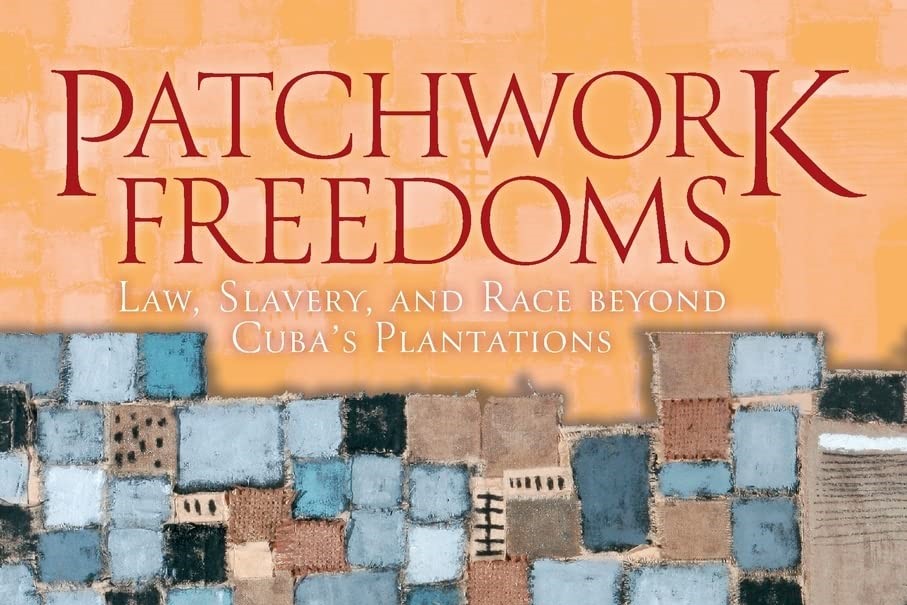
Chira’s first book, Patchwork Freedoms: Law, Slavery, and Race beyond Cuba’s Plantation (Cambridge University Press, Afro-Latin America Series, 2022), focuses on enslaved and free Afro-descendants’ efforts to own landed property and to attain free legal status through claims to ownership filed inside first instance and appellate courts in Cuba during the nineteenth century. The book traces the political implications of these processes, arguing for a history of emancipation that pays attention to vernacular legalism and modes of claiming property. The project is based on extensive archival research within Cuba (in Havana and Santiago de Cuba) and Spain.
Patchwork Freedoms received the Outstanding First Book Prize from the Association for the Study of the Worldwide African Diaspora, the James A. Rawley Prize in Atlantic World History from the American Historical Association, the Peter Gonville Stein Prize for best book in non-US legal history from the American Society for Legal History, and the Elsa Goveia Prize for excellence in Caribbean history from the Association of Caribbean Historians. It has also received honorable mentions from the Latin American Studies Association (the Nineteenth Century Section) and from the Latin American and Caribbean Studies Section of the Southern Historical Association.
Chira has also authored multiple acclaimed scholarly articles, including:
“Freedom with Local Bonds: Custom and Manumission in the Age of Emancipation,” The American Historical Review 126.3 (September), 949-977
“Ampliando los significados de sevicia: Los reclamos de protección corporal de los esclavos en la Cuba del siglo XIX,” Páginas: Revista Digital de la Escuela de Historia de la Universidad de Rosario (Argentina) no. 33 (Sept./Oct.): https://revistapaginas.unr.edu.ar/index.php/RevPaginas/article/view/546
“Affective Debts: Manumission by Grace and the Making of Gradual Emancipation Laws in Cuba, 1817-1868,” Law and History Review 36.1 (winter), 1-33.
Chira teaches a range of thematic and placed-based courses, from “Human Trafficking in World History” to “History Lab: Puerto Rico.” She also created an Emory study abroad program in Cuba, which focuses on questions of food sovereignty and environmental history, that usually takes place during the Maymester semester.
Students and faculty on Cuba study abroad trip, 2024
Chira’s research has been supported by the National Endowment for the Humanities and by residential fellowships at Yale University (at the Agrarian Studies Center) and at Harvard University (with the Weatherhead Initiative in Global History).
The History Department was pleased to receive an update from Dr. Rachel M. Johnston-White, a 2010 graduate of Emory College. After graduating with a BA in French and High Honors in History, Johnston-White headed to Yale Graduate School. She completed her doctorate in French History in 2017. Currently, she is an Assistant Professor of Contemporary History at the University of Groningen in the Netherlands. The volume Social Justice in Twentieth-Century Europe, to which she contributed a chapter, was published with Cambridge University Press this spring.
Johnston-White also just learned that she has won a one-year Open Competition XS grant from the NWO (Dutch Research Council) to work on a brand-new project on soldiers’ photographs of wartime atrocities, a subject that unfortunately remains all too relevant. Soldiers’ photographs not only shape public opinion, as in the current Israel/Gaza conflict and the ongoing Russian invasion of Ukraine, but also constitute an evidence base for legal action against states and individual perpetrators. Yet soldiers’ unique positionality and its impact on their photography are poorly understood, leaving scholars and the public alike blind to the subjectivity of such photographs. Her project will use an earlier conflict, the Algerian War for independence from France (1954- 1962), to contextualize and compare the photos of soldiers who were participants in or opponents of war atrocities in order to answer the question: does a soldier’s attitude towards war atrocities shape the photographic choices they make, and, if so, how?
Are you an Emory History alum? Please share updates on your life and work with us!
Six undergraduate honors students from the Emory History Department are among the 2024-25 cohort of Undergraduate Humanities Honors Fellows at the Fox Center for Humanistic Inquiry. These fellowships support up to 12 students completing honors projects in a Humanities or Humanistic Social Science field. The goal of these Fellowships is to support undergraduates as they complete their theses, introduce them to the life of the Humanities, and provide a venue for interdisciplinary interchange, mentorship, and conference-style presentation. View short profiles of the students below and follow the links to more extended biographies.
Emilyn Hazelbrook is a senior majoring in history on the pre-law track. Her honors thesis project will map the trajectory of the battered woman legal defense from 1970 to 2000 in the United States.
Klaire Mason is a double major in history and creative writing. Her honors research will focus on opposition and repression leading up to Putin’s election to a third term and how it changed Russia’s trajectory.
Mercedes Sarah is a senior at Emory studying history and English & creative writing. Her honors thesis explores the Indigenous methodologies, the role of the archive, and oral history in the context of Indigenous California.
Alex Minovici is a senior majoring in History and Philosophy, Politics, & Law. Her thesis explores how modern political engagement in democratic Romania is influenced by the memory of the 1989 Revolution.
Adelaide Rosene is a senior studying History with a minor in English. Her thesis project titled “Shadows of Exclusion: The Legacy of Sundown Towns In Wisconsin” examines how communities enforced racial segregation through policing and discrimination in housing.
Charlotte Weinstein is a senior majoring in History and minoring in Ethics. Her honors thesis explores the ideological shifts within the Czech and Slovak punk music scenes through political transition and the dissolution of Czechoslovakia in 1993.
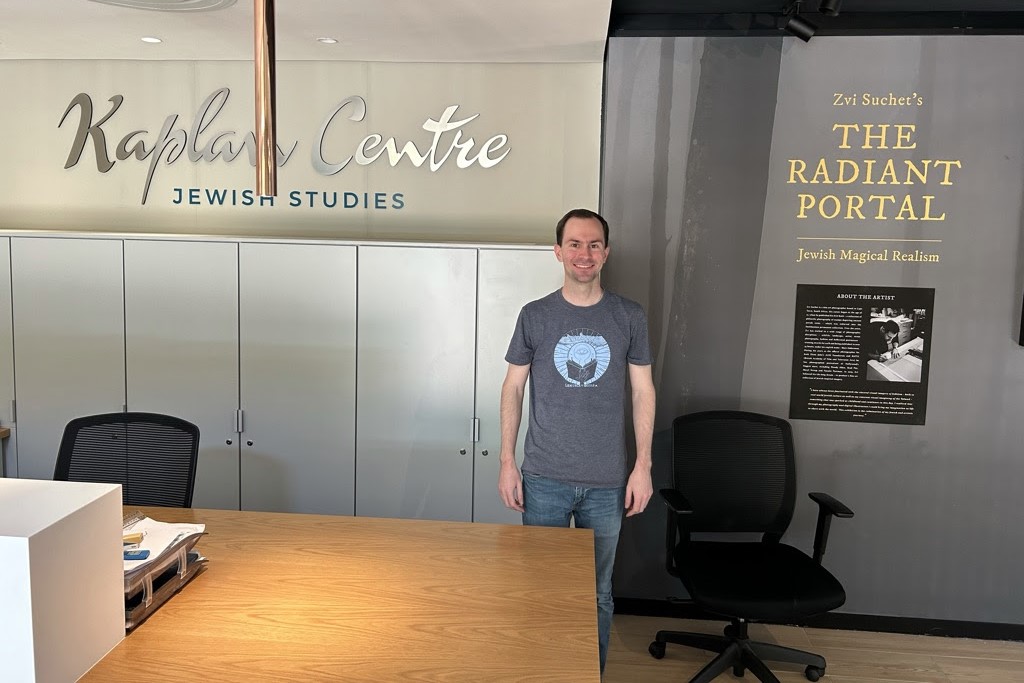
Earlier this year, Emory History Department PhD candidate William (Robert) Billups investigated connections between antisemitic networks in South Africa and civil rights opponents in the US South. Emory’s Tam Institute for Jewish Studies (TIJS) supported Billups’ research on this topic, which included three weeks at two South African archives, the Kaplan Centre for Jewish Studies and the University of the Free State’s Archive for Contemporary Affairs. Records from those archives helped Billups to understand the links between some US civil rights opponents and far-right groups outside of the US.
In an excellent reflection on the research published by the TIJS, Billups writes:
“As KKK members increasingly perpetrated violence in the civil rights South, some white South Africans sought to join US-based KKK organizations. To study South African Klan members, I spent two weeks in the Archive for Contemporary Affairs in Bloemfontein. Following guidance from the South African historian Milton Shain and the archivist Lwazi Mestile, I focused on the papers of Ray Rudman, South Africa’s self-described Klan leader during the 1950s and 1960s. Rudman’s papers contained letters and recruitment materials about joining a Klan organization based in Waco, Texas.
I expected white South African Klan recruits to describe their opposition to the anti-apartheid movement, a liberation movement that in many ways paralleled the US civil rights movement, as their main motive for joining. Some did. But to my surprise, antisemitic beliefs that far-right South Africans shared with US-based Klan leaders seemed to them an equally important connection, if not a more important one. They described entering the Klan as joining US white supremacists in fighting the supposed international Jewish conspiracy that they falsely believed controlled world communism, the civil rights movement, and the anti-apartheid movement.”
Billups received his doctorate in May 2024. He completed his dissertation, “‘Reign of Terror’: Anti–Civil Rights Terrorism in the United States, 1954–1976,” under the advisement of Drs. Joseph Crespino and Allen Tullos. Billups was recognized for his stellar record of research with the Laney Graduate School’s Outstanding Scholarly Research Award.