Anderson Addresses More Challenges to Voting Rights Act on MSNBC

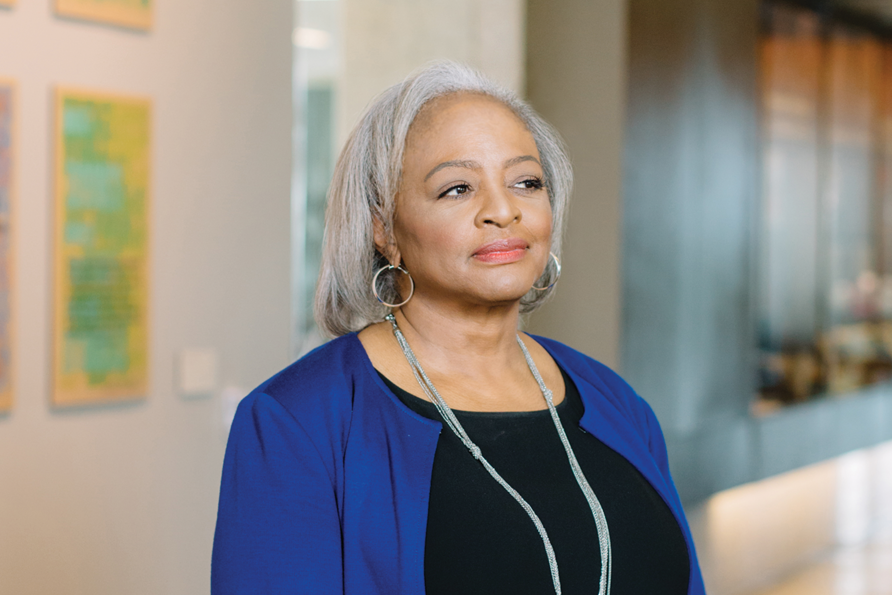
Dr. Carol Anderson, Robert W. Woodruff Professor of African American Studies and Associated Faculty in the History Department, recently appeared on MSNBC to discuss a new challenge to the 1965 Voting Rights Act. The eighth circuit federal appeals court overturned Section 2 of the Act, which gives private citizens the right to sue in the name of fair voting rights. Anderson appeared alongside Judith Browne Dianis, Executive Director of the Advancement Project. Anderson is the author of numerous books, including One Person, No Vote: How Voter Suppression Is Destroying Our Democracy (Bloomsbury, 2018). Watch the full MSNBC interview with host Charles Coleman: “New attack on Voting Rights Act threatens Black vote protections: ‘It’s a problem’.

Malinda Maynor Lowery Discusses Native Pasts, Presents, and Futures in Walk & Talk with Josh Newton


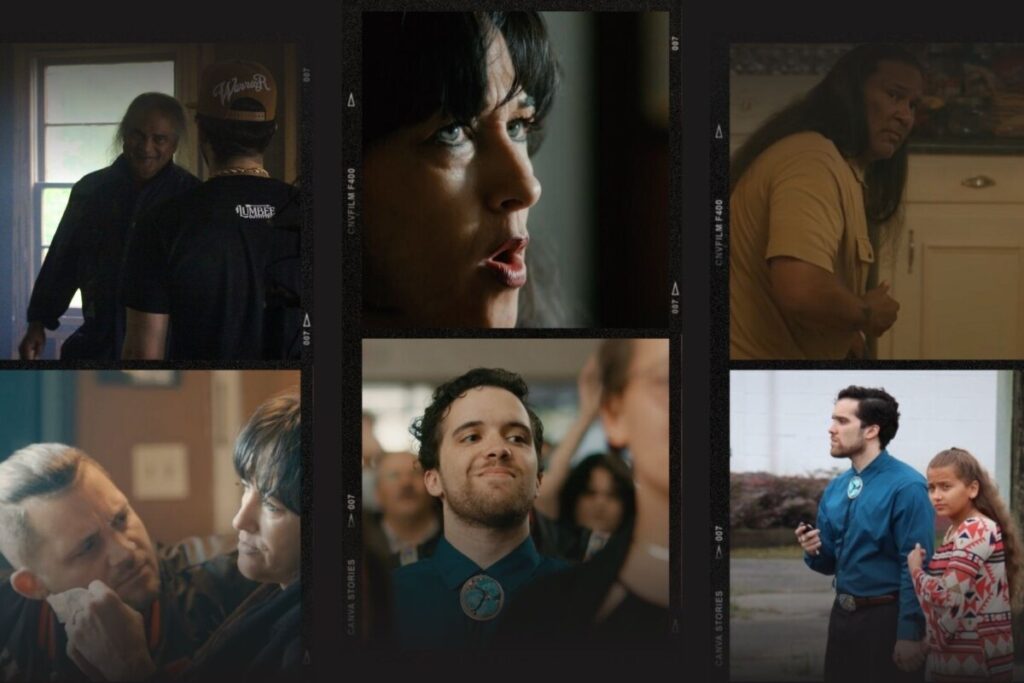
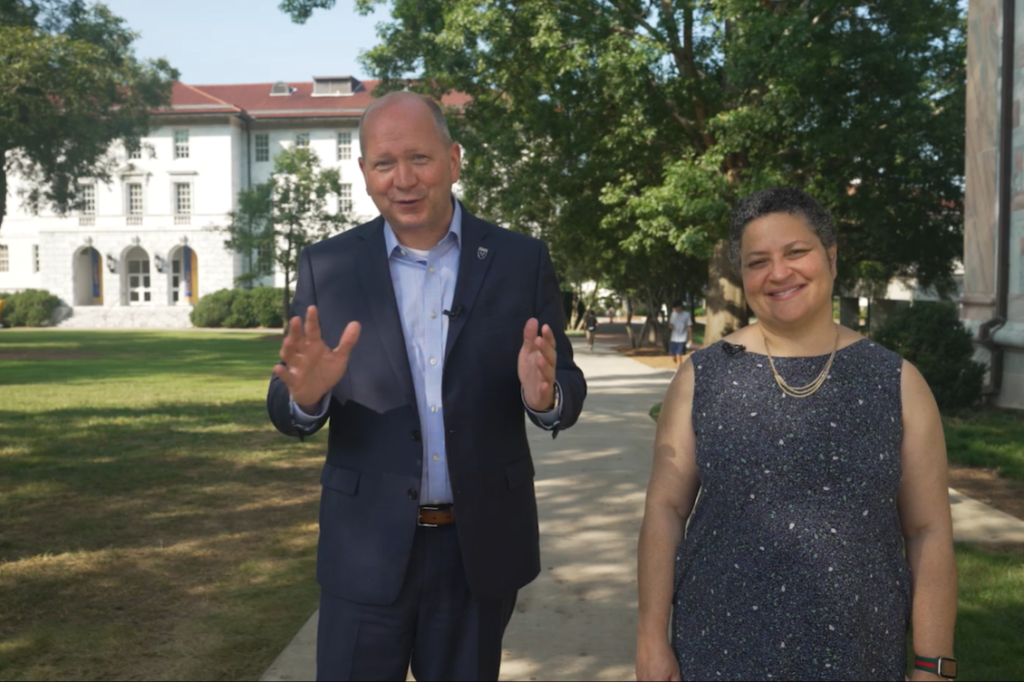
Dr. Malinda Maynor Lowery, Cahoon Professor of American History, recently joined Senior Vice President of Advancement Josh Newton for an edition of his series Walk & Talk with Josh Newton. Lowery, a member of the Lumbee Tribe of North Carolina and a historian of Native America, discusses her work as a scholar, teacher, documentary filmmaker, and tribal community member. Since coming to Emory from UNC-Chapel Hill in 2021, Lowery has been instrumental in facilitating Emory’s reckoning with practices of dispossession and colonialism, including by helping to craft the university’s Land Acknowledgement and creating a deep, reciprocal partnership with the College of the Muscogee (Creek) Nation. Lowery will lead Emory’s new Center for Native American and Indigenous Studies, set to launch in the 2023-24 academic year. Watch her conversation with Newton, which also includes discussion of what drew her to the History Department, here: “Understanding the present begins in the past.”

Anderson Places 1906 Atlanta Race Massacre in Historical Context for A Closer Look

Dr. Carol Anderson was recently a guest on an episode of WABE’s “A Closer Look” with Rose Scott centered on a new documentary about the 1906 Atlanta Race Massacre. Titled (re)Defining History: Uncovering The 1906 Atlanta Race Massacre and produced by WABE studios, the documentary tells the story of one of the deadliest outbreaks of racial violence in United States history. In her conversation with Scott, Anderson discusses the history of other race massacres in America’s past. Anderson is Robert W. Woodruff Professor of African American Studies and Associated Faculty in the History Department. Listen to the episode here: “New documentary explores untold story of the 1906 Atlanta Race Massacre.”

Emory Undergraduates, Including ‘HIST 285: Intro to Native American History,’ Visit Ocmulgee Mounds

Emory students and faculty gathered on the stairs of the Ocmulgee Mounds National Historic Park.

Students in Dr. Michael Mortimer’s class “HIST 285: Introduction to Native American History” recently visited one of the most sacred sites in the ancestral homeland of the Muscogee People, the Ocmulgee Mounds, for the 31st Ocmulgee Indigenous Celebration. The Provost Postdoctoral Fellow in Native North American History, Mortimer co-organized the trip with Dr. Debra Vidali (Anthropology) and Heidi Aklaseaq Senungetuk (Music). Undergraduates from Vidali’s “Anthropology 190–Land, Life, and Place” and Senungetuk’s “Music 460RW–North American Indigenous Music and Modernity,” along with students from Emory’s Native American Student Association, also joined the chorot of 35 students and faculty. Their trip marked the first time that Emory University has organized an official journey to the Ocmulgee Mounds National Historic Park. The History Department was a co-sponsor of this event. Read more about the experience from Jessanya Holness, an undergraduate who travelled to the Ocmulgee Mounds and wrote a news story for the site Native American and Indigenous Engagement at Emory: “Relational Accountability and Place-Based Learning: Emory Students Participate in 31st Annual Ocmulgee Indigenous Celebration.”

Anderson is Guest on WBUR Podcast The Gun Machine


Dr. Carol Anderson, Robert W. Woodruff Professor of African American Studies, was recently a featured guest on the WBUR podcast “The Gun Machine,” which charts the development of the gun industry in the United States. Anderson discusses insights from her most recent book, The Second: Race and Guns in a Fatally-Unequal America (Bloomsbury, 2021). Read a summary of the episode below and listen to the conversation in full here: “Fear sells guns. Here’s how that culture was created.”

Gun advertising is all about mistrust and the need to carry a gun for self-protection. But protection from whom?

The first European settlers wielded firearms to control enslaved people and fight Native people. Later, during Reconstruction, white Southerners afraid of losing their place in the new status quo picked up arms, not only for self-defense and to enact racist terror, but as a totem against imagined threats — sowing the roots of what guns represent to many people today.

In turn, this legacy of racism has long compelled some Americans of color to arm themselves. In 2020, five million Americans bought guns for the first time, including a record number of Black Americans.

In episode two of The Gun Machine, host Alain Stephens talks to historian Carol Anderson about the racist roots of the Second Amendment and travels down to Florida to attend the Pew Party. There, he talks to Black gun owners about why they carry, examining the link between our nation’s fraught history and why it’s so easy to sell us guns today.

Yannakakis Interview, Making and Remaking History in Colonial Oaxaca, Airs on University and Community Radio

Dr. Yanna Yannakakis, Professor of History and Associate Department Chair, was recently interviewed by the Oaxaca-based university radio station Radio Pez en el SURCO (“Servicios Universitarios y Redes de Conocimientos en Oaxaca” [“University Services and Networks of Knowledge in Oaxaca”]). Titled “Oaxaca colonial, haciendo e rehaciendo historia colonial” (“Colonial Oaxaca, making and remaking history”), the interview draws on Yannakakis’ newest monograph, Since Time Immemorial: Native Custom and Law in Colonial Mexico (Duke UP, 2023). The interview was and will continue to be aired on the following Oaxaca university and community radio stations: Radio Universidad de Oaxaca (Sept 19, 2023); Radio Nanhdiá, Movimiento Radio, Estéreo Lluvia y Radio Aire Zapoteco Bëë Xhidza (September 23, 2023); Radio Nandiá (September 24, 2023); and Estéreo Dinastía Xhdca (September 25, 2023). You can also catch a recorded version on Spotify.

Klibanoff Helps Write New Chapter at WABE

Emory Journalism Professor Hank Klibanoff, who heads the Georgia Civil Rights Cold Cases Project at Emory and is also Associated Faculty in the History Department, was recently featured in an article about the shifting format and programming of the 75-year-old Atlanta NPR affiliate, WABE. Published in the Atlanta Jewish Times, the article discusses how Klibanoff’s renowned podcast, “Buried Truths,” has helped to carry WABE into a vital, digitally-oriented next chapter. A native of the small Jewish community of Florence, Alabama, Klibanoff’s work as a journalist and advocate for racial justice has received extensive recognition, including through a Pulitzer Prize and Peabody Award and a seat on the Presidential commission on racial justice. Read an excerpt of the AJT article below, along with the full piece here: “Klibanoff, Reitzes Lead WABE into a Digital Future.”

“When Hank Klibanoff won a Pulitzer Prize in 2007 for a book on journalism in the Deep South of the 1950s, he felt he might achieve a certain amount of fame and a boost to his professional reputation. Maybe, he thought, he might be able to make some money off the nonfiction award winner.

“‘It was good recognition,’ Klibanoff says. ‘It won a Pulitzer Prize, for goodness sakes, and you feel if you sell 30,000 copies of the book you’ve accomplished something, but even at that, I didn’t make a nickel from it, not even over several years.’

“But Klibanoff, who grew up in the small Jewish community of Florence, Ala., before his long and successful career in journalism, was destined for stardom. It would not come in newspapers or the publishing world he knew so well, but on the radio and in the rapidly growing world of podcasts — something he knew little about.”

Anderson Talks Democracy in America, Past and Present, for WaPo Live

Dr. Carol Anderson, Charles Howard Candler Professor of African American Studies and Associated Faculty in the History Department, was recently a featured guest on The Washington Post Live with Post journalist Sarah Ellison. Framed by the theme “Democracy in America,” Anderson offers historical context and contemporary analysis of issues threatening the vitality of democracy in the U.S., ranging from polarization in Congress and popular mistrust in institutions to the dissemination of political disinformation. Anderson is the author, most recently, of The Second: Race and Guns in a Fatally Unequal America (Bloomsbury, 2021). Watch the interview below or on YouTube: “Historian Carol Anderson on America’s democracy and the lessons of the past.”

Klibanoff Helps Identify Two Victims of 1906 Atlanta Race Massacre

Professor Hank Klibanoff, Director of the Georgia Civil Rights Cold Cases Project and Associated Faculty in the History Department, recently contributed to the identification of two of the at least nine unknown Black victims of the 1906 Atlanta Race Massacre. The two victims, Stinson Ferguson, 25, and 13-year-old Marshall Carter, were among 25 Black Atlantans killed by a massive white mob in one of Georgia’s bloodiest, yet least remembered, outbursts of collective racial violence. The revelation coincided with the 117th anniversary of the massacre. Klibanoff and staff from the Georgia Civil Rights Cold Cases Project worked alongside the National Center for Civil and Human Rights and the Afro-American Historical and Genealogical Society on the effort to identify the unknown victims. Read more about this project here:

LaChance Interviewed for One Year Podcast on Slate

Dr. Daniel LaChance, Winship Distinguished Research Professor in History, 2020-23, and Associate Professor, was recently interviewed on the Slate podcast One Year: 1955. The episode, “Siberia, USA,” focuses on “The Communist-hunting housewives who spawned a far-right conspiracy theory about an American gulag.” The episode features a discussion of Lucille Miller, the subject of LaChance’s forthcoming book, Mrs. Miller’s Constitution: Civil Liberties and the Radical Right in Cold War America.