Lowery Quoted in CNN Article on Indigenous Peoples’ Day

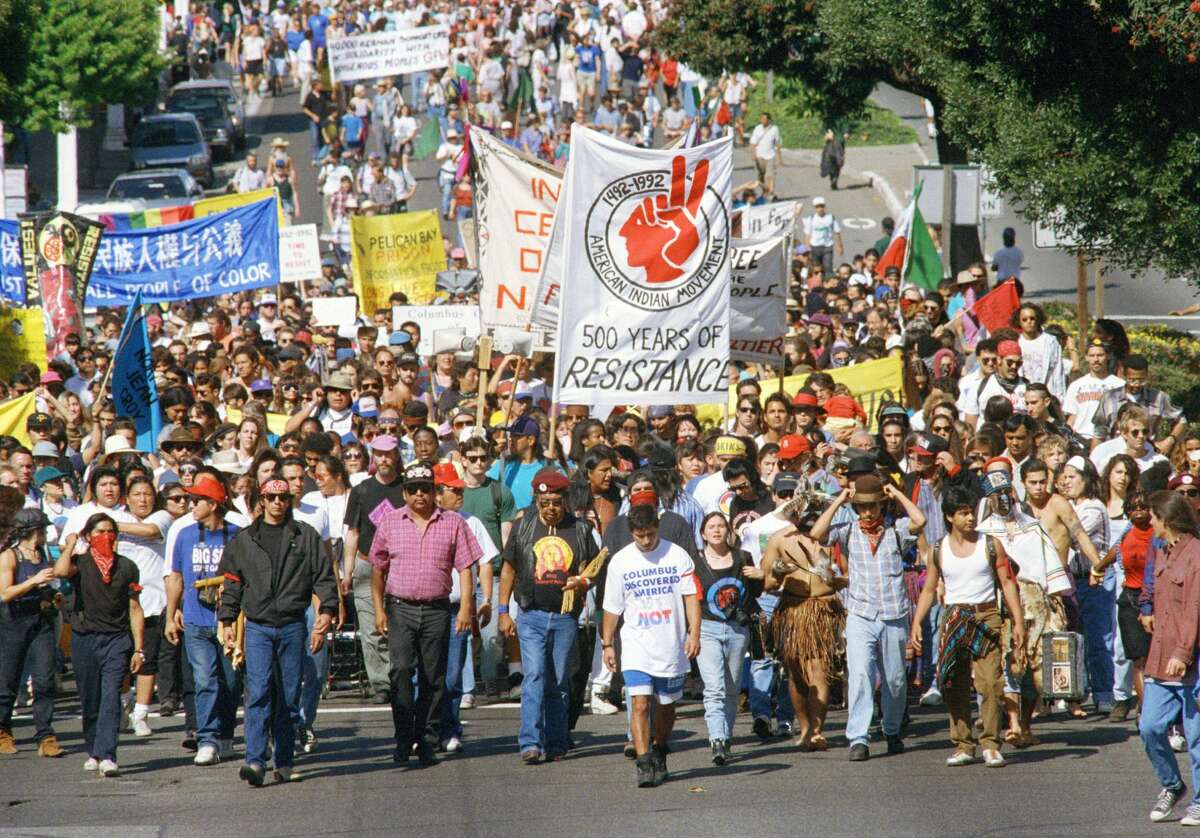
Marchers celebrate the first Indigenous Peoples Day in Berkeley, Calif. on Oct. 10, 1992. AP Photo/Paul Sakuma

Dr. Malinda Maynor Lowery, Cahoon Professor of American History, was recently quoted in a CNN article about Indigenous Peoples’ Day. The piece discusses the roots of the holiday in the Red Power Movement of the 1960s, along with the meanings of the holiday for Native Americans today. The CNN journalist, Harmeet Kaur, draws on information from a 2020 article that Lowery penned in The Conversation, titled “Why more places are abandoning Columbus Day in favor of Indigenous Peoples Day.” Read an excerpt from the CNN piece below along with the full article: “What Indigenous Peoples’ Day means to Native Americans.”

The narrative around Columbus Day helped uphold “the new racial order that would emerge in the US in the 20th century, one in which the descendants of diverse ethnic European immigrants became ‘White’ Americans,” historian Malinda Maynor Lowery wrote in a 2019 article for The Conversation.

Eventually, Native Americans began to challenge the history behind it.

Inspired by the Civil Rights Movement, Native American activists in the late 1960s formed the Red Power Movement, built on principles of self-determination and cultural pride. At a 1977 United Nations conference in Geneva, Indigenous delegates from around the world resolved “to observe October 12, the day of so-called ‘discovery’ of America, as an International Day of Solidarity with the Indigenous Peoples of the Americas.”

Anderson Speaks at 10th Annual Athens Democracy Forum

International premier of Dr. Carol Anderson’s film I, Too.

Dr. Carol Anderson, Charles Howard Candler Professor of African American Studies and Associated Faculty in the History Department, recently participated in the Athens Democracy Forum in the Greek capital. The event – now in its tenth year – is convened by the Democracy & Culture Foundation in association with The New York Times. Anderson screen her film I, Too at the forum (marking the film’s international premier) and discussed how voter suppression tactics in the U.S., particularly those that limit the right of American-Americans to vote, are threatening American democracy. Read an excerpt from the New York Times’s coverage of the event below, along with the full article here: “TikTok, Fake News and Obstacles to the Ballot Box.”

Carol Anderson — a professor of African American studies at Emory University in Georgia and the maker of a documentary titled “I, Too,” which was screened in Athens — kicked off the debate with an urgent entreaty for voter registration to be simplified.

One of the first things that we have to recognize, in the U.S. context, is that you have the rise of what we call voter suppression laws,” she said. “These laws were targeted at key elements in the population to ensure that they would have multiple obstacles to have to jump over” to vote.

Those groups are then blamed for not voting, when in fact, they faced, and continue to face, “obstacles that look race-neutral, but that are racially targeted. What we have to do is dismantle the barriers to voting.”

Muscogee Nation and Indigenous Language Path Working Group Hold Events on Campus

Dr. Malinda Maynor Lowery

The Muscogee Nation and the Indigenous Language Path Working Group held events for Emory students, faculty, and staff on the Atlanta and Oxford campuses this past week. Listening sessions were held on October 27 and 28 for members of the Emory community associated with the Working Group, which is co-chaired by Dr. Malinda Maynor Lowery (Lumbee), Cahoon Family Professor of American History. Then, on October 28, singers, storytellers and other artists from the Muscogee Nation conducted a teach-in on the Quadrangle at the Atlanta campus. Read more about these events and the broader initiative of which they form part via the Emory News Center’s article: “Muscogee Nation members to conduct teach-in; Emory community invited to Indigenous Language Path listening sessions.”

Klibanoff Quoted in ‘AJC’ Article on Dubious 1950 Murder Conviction

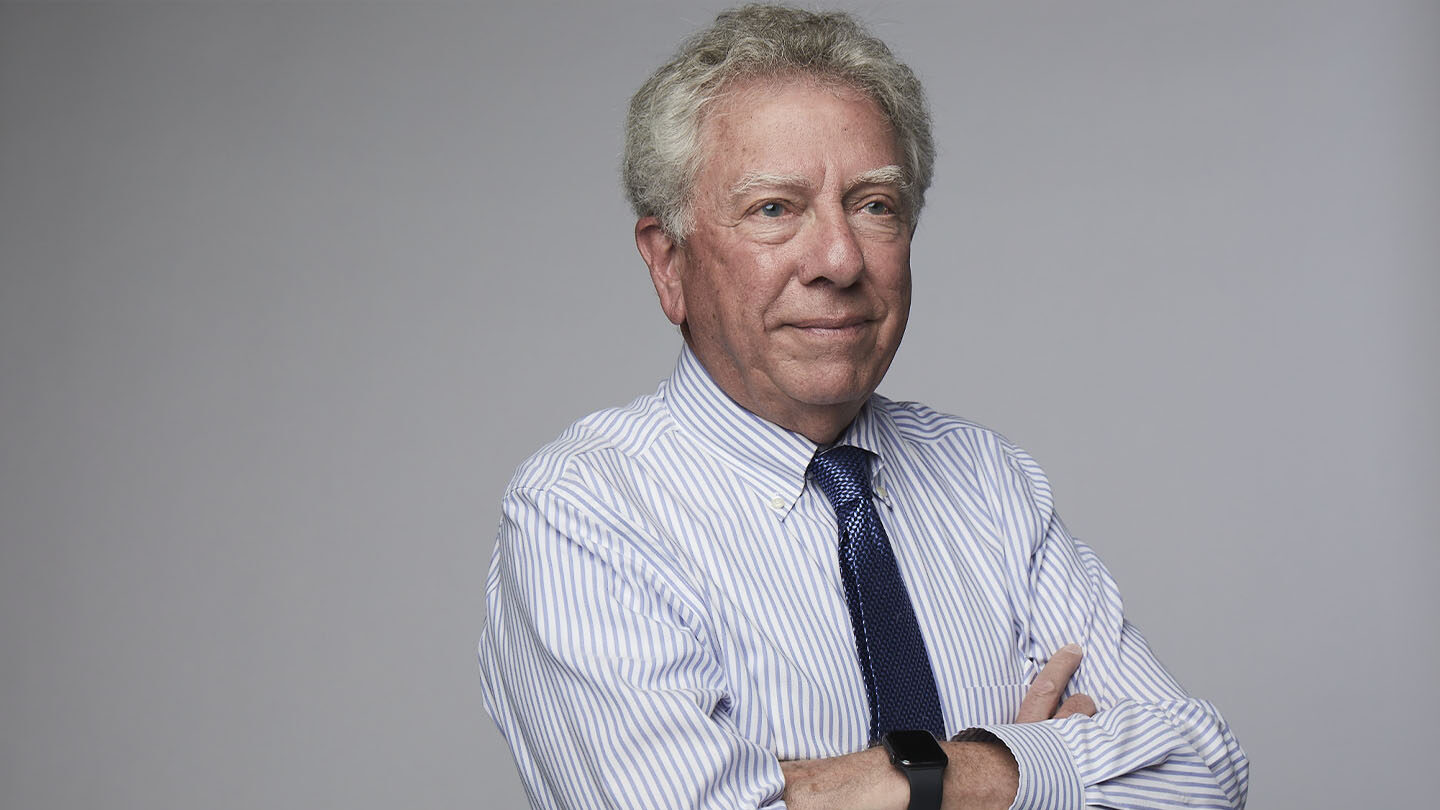
Hank Klibanoff, from WABE

Hank Klibanoff, Director of the Georgia Civil Rights Cold Cases Project and Associated Faculty in the History Department, was recently quoted in an article in the Atlanta Journal-Constitution. The piece focuses on the 1950 murder trial of Clarence Henderson, a Black Carrollton sharecropper convicted of murdering a White Georgia Tech student under highly-questionable circumstances. Prompted by a new book, The Three Death Sentences of Clarence Henderson, the Carrollton county District Attorney is revisiting the case. The Associated Press also recently covered the DA’s decision in the article, “Prosecutor might seek sharecropper’s posthumous exoneration.” Read an excerpt from the AJC article below, along with the full piece here: “Georgia DA revisits decades-old murder case against sharecropper.”

“Hank Klibanoff, an Emory University professor and director of the school’s Civil Rights Cold Cases Project, said addressing injustices from decades past is important, even when the victims and perpetrators are dead.

“‘There is a very important judgment that history can make,’ he said.

“There also is the chance for healing. Klibanoff and his Emory students have delved into several Jim Crow era racial killings and cold cases. In one case, the white descendant of one of the named murderers was so moved by their findings that he sought out the victim’s daughter to apologize.

“‘It went an enormous way to salving their wounds,’ he said.”

Lipstadt Discusses Her Work as Special Envoy in ‘The New Yorker’

Dr. Deborah E. Lipstadt, Dorot Professor of Modern Jewish History and Holocaust Studies, recently spoke with The New Yorker’s Issac Chontiner to discuss her work as the U.S. State Department’s special envoy to fight antisemitism. Lipstadt addresses an array of topics, from her motivation in accepting this position to the threat that antisemitism poses to global democracy and security. Read an excerpt from the interview below, along with the full piece here: “Can Countries with Grave Human-Rights Records Help Fight Anti-Semitism?”

I came across a quote of yours where you said that anti-Semitism is a “threat to democracy and global security. It’s a threat to the stability of society.” You also said that “it rarely stands alone as a hatred.”

“That’s exactly right. I stand by what I said.

But this gets to what we were talking about earlier in terms of dealing with other countries.

“To go back to the Abraham Accords, I think they opened the space for the sorts of conversations that we never thought possible. Sometimes people say that anti-Semitism starts with the Jews but doesn’t end with the Jews. Maybe the conversation starts about anti-Semitism, but it won’t stop there. It’ll go to other areas as well. It’s a beginning. If it can move the conversation along and change attitudes, then I’m there and I’m willing to take part in it.

‘I, Too’: A Documentary Film from the Mind of Carol Anderson

Dr. Carol Anderson’s Documentary Film I, Too

Charles Howard Candler Professor of African American Studies Dr. Carol Anderson provides historical context for contemporary practices of white supremacy and political violence in the U.S. through a new documentary, titled I, Too. The film, which premiered at the Carter Center in Atlanta on September 7, is a co-production of Humanity in Action, Emory University, the Bertelsmann Foundation, and the Donner Foundation. The film presents continuities between the insurrection at the U.S. Capitol on January 6, 2021, and earlier events, including the Hamburg Massacre in South Carolina in 1876 and the Wilmington, North Carolina, Coup d’Etat of 1898. Listen to a post-premiere interview between Dr. Anderson and WABE’s Rose Scott here: “‘History is uncomfortable’: Emory professor Carol Anderson live at the Carter Center.”

Rodriguez’s Class Inspires Pioneering, Undergraduate-Curated Exhibit on Latinx History

“Consciousness is Power: A Record of Emory Latinx History”

Emory Libraries has showcased a pioneering exhibit on Latinx histories in recognition of Hispanic Heritage Month. Titled “Consciousness is Power: A Record of Emory Latinx History,” the exhibit was curated by Arturo Contreras, a fourth-year student majoring in Latin American and Caribbean Studies. In the Emory News Center piece about the exhibit, Contreras describes how History Department Assistant Professor Yami Rodriguez helped to inspire the project through her class “Migrants, borders and transnational communities in the U.S.” Read an excerpt from the Emory News Center Article below along with the full piece here: “Celebrating Hispanic Heritage Month with an Emory Libraries pop-up exhibit.”

As a student, Contreras wanted to integrate his community work into his academic life. In spring of 2022, he enrolled in Yamileth “Yami” Rodriguez’s special topics history class to expand as a scholar in the field of Latinx studies. Rodriguez, an assistant professor of history at Emory, inspired and supported Contreras in proposing his exhibit project to the Emory Libraries Events and Exhibits team. 

“Yami’s presence is what Emory needed, especially for students wanting to be involved with their respective communities,” Contreras says. “Her field of study and method of facilitating makes the classroom an environment of belonging and safety to explore intellectual curiosity.” 

Celebrating Hispanic Heritage Month with an Emory Libraries pop-up exhibit,” September 14, 2022.

Anti-Defamation League Hosts Lipstadt on “Fighting Hate from Home” Webinar

Dr. Deborah E. Lipstadt on the ADL’s webinar “Fighting Hate from Home.”

The Anti-Defamation League hosted Dr. Deborah E. Lipstadt, Dorot Professor of Modern Jewish History and Holocaust Studies and the U.S. State Department’s special envoy to fight antisemitism, on their webinar “Fighting Hate from Home” in late July of 2022. In conversation with ADL CEO Jonathan Greenblatt, Lipdstadt discussed her work thus far in combating antisemitism around the world, including through trips to, and negotiations with officials in, Israel, Saudi Arabia, and the United Arab Emirates. Watch the full webinar above or on the link to the ADL’s YouTube page.

Lowery Helps to Forge Relationships of Learning and Healing with Muscogee Nation

Dr. Malinda Maynor Lowery, Cahoon Family Professor of American History and a member of the Lumbee tribe of North Carolina, was one of fifteen Emory community members to travel earlier this year to Okmulgee, Oklahoma, to meet with members of the Muscogee Nation. Before the founding of Emory, Michelle Hiskey of the Emory News Center writes, the Muscogee “lived, worked, produced knowledge on, and nurtured the land where Emory’s Oxford and Atlanta campuses are now located.” The journey to Oklahoma was part of a broader Emory initiative, commissioned by President Fenves and co-led by Lowery, to memorialize Indigenous peoples who previously lived on land now owned by Emory, including through the development of “physical reminders and remembrance rituals on campus, such as a Muscogee (Creek) Language Path that highlights Muscogee language and knowledge.” Learn more about this endeavor, the Indigenous Language Path Working Group, on their website here. Also see the Emory News Center’s piece “In Oklahoma, Emory builds relationships with the Muscogee Nation,” which includes the quote from Lowery below.

“At Emory, we want to embrace a spirit of accountability,” said Malinda Maynor Lowery (Lumbee), Emory College of Arts and Science’s Cahoon Family Professor of American History and co-chair of the Indigenous Language Path Working Group. “But frankly, we’re not sure how to do that without the direction of the Muscogee Nation.”

Klibanoff Discusses Civil Rights Era Cold Cases and Contemporary Hates Crimes

Professor Hank Klibanoff, James M. Cox Jr. Professor of Journalism and Associated Faculty in the History Department, recently spoke before the City Club of Cleveland about his work on racially-motivated killings in the U.S. South during the Civil Rights era and since. Klibanoff founded the Georgia Civil Rights Cold Cases Project and is the host of the Buried Truths podcast. He was also recently confirmed by the U.S. Senate to the Federal Civil Rights Cold Case Review Board. Klibanoff’s talk in Cleveland is available on The Sound of Ideas, Ideastream Public Media’s weekday morning news and information program focusing on Northeast Ohio: “Examining racial murders of the Civil Rights era, and drawing connections to hate crimes of today.”