Students in Miller’s “The History of Skiing and Snowsports” Launch Website

This spring Dr. Judith A. Miller, Associate Professor of History, taught a new course, “The History of Skiing and Snowsports.” Explaining the genesis of the course, Miller said, “I wished to create a course that took the history of skiing and snowsports seriously, that is, a course that reflected the questions that historians have.” The students in this course have just published their final projects on a website, which was produced in collaboration with Emory’s Center for Digital Scholarship (ECDS). Browse the students’ projects on the new website, and read more about the course via the description below.

This new course explores the history of snow sports, especially skiing, from the 18th century to today. We have many topics and Zoom guests lined up. This class is not only for history majors or skiers, but also for business students, and anyone interested in environmental history, sports history, and the history of gender and race. The class will look at the military uses of skiing in World War II, the expansion of leisure sports after 1960, the development of ski schools, history of ski patrols, lift technology, emerging environmental issues, snow science, avalanche control, the history of the land and the indigenous peoples, race and inclusivity in winter sports, the transformation of ski equipment, snow fashions, and the business of ski resorts. Students who have never taken a history course and first-year students are welcome. Each student will do a short final research project. Check out the promotional video on @emoryhistory Instagram during the enrollment period. As American Historical Association Executive Director Jim Grossman says, “Everything has a history.” Skiing and snow sports have a fascinating histories.

History Major Scott Benigno Publishes Research in ‘The Haley Classical Journal’

Scott Benigno

History major Scott Benigno recently published a paper, “A Martyrdom that Overshadowed Heresy: Saint Lucian of Antioch,” in The Haley Classical Journal. Scott’s paper originated in the course “Byzantium: Gold, Glory, and Gore in the Eastern Roman Empire,” taught by graduate student Mary Grace Gibbs-DuPree. Scott’s assignment was to pick a saint and explain how this saint came to be included in the Byzantine religious calendar. Saint Lucian of Antioch was so appealing, Scott thought, because he gained sainthood for having died for his faith but, during his lifetime, had strayed from Church doctrine. The journey from a class assignment based on a keen observation to a published paper was still long, though: “The peer-editing and review process was tough,” Scott said, “and I have never dug deeper to find sources than I did for this paper. It was a very rewarding experience.” Find the article here: “A Martyrdom that Overshadowed Heresy: Saint Lucian of Antioch.”

‘AJC’ Cites Investigative Work of Miller and Hartstein in ‘Fake News’ FYS

Dr. Judith Miller and sophomore history major Edina Hartstein tracked a disturbing recent news item about an alleged child smuggling ring. Their work was cited in the Atlanta Journal Constitution article, “Feds cobbled criminal cases together in missing children operation, creating false perception.” Read an excerpt from the article below along with more about Miller’s course on “fake news” via the Emory News Center’s feature from last year, “‘Fake News’ class helps students learn to research and identify false information.”

“Judith Miller, an associate history professor at Emory University who teaches a class on “fake news,” tracked Operation Not Forgotten’s course on social media and in news coverage as it evolved into descriptions of a “criminal enterprise” on cable TV news shows, then became a subject of the false mythology of QAnon.”

LaChance Named Winship Distinguished Research Professor for 2020-23

Congratulations to Dr. Daniel LaChance, Associate Professor and Andrew W. Mellon Faculty Fellow in Law and the Humanities, on being named a Winship Distinguished Research Professor for 2020-23. LaChance is an expert in twentieth century American legal history and culture. The Winship Distinguished Research Award is given to tenured faculty who demonstrate singular accomplishments in research and is designed to encourage further scholarly research and research-based teaching.

Klibanoff Awarded New Arts and Social Justice Fellowship

In the fall 2020 semester Emory inaugurated the Arts and Social Justice (ASJ) Fellowship program, which pairs Emory faculty and students with Atlanta artists to examine how creative thinking and artistic expression can inspire positive social change. One of the recipients of the inaugural fellowship is Hank Klibanoff, the director and co-teacher of the Georgia Civil Rights Cold Cases Project and the James M. Cox Jr. Professor of Journalism. Klibanoff is paired with actor Garrett Turner, an Emory alumnus as well as former Woodruff and Bobby Jones Scholar. Their work will center on the lives and times of known victims of the 1906 Atlanta race massacre. Read more about the collaboration and the other members of the inaugural ASJ cohort here: “Emory faculty, students join forces with Atlanta artists to explore social justice.”

Stein to Teach Emory Alumni Association’s First Masterclass

The Emory Alumni Association has tapped Kenneth W. Stein, Professor of History, to teach their first alumni masterclass. The course, entitled “Arab-Israeli Negotiations – From Nixon to Trump and Beyond the 2020 Elections,” will take place Wednesday, August 19, from 7:30-8:30 PM on Zoom. Read more about Stein’s 43-year career at Emory and further details about this event via the Emory Alumni Association website.

Lipstadt Receives Exemplary Teacher Award

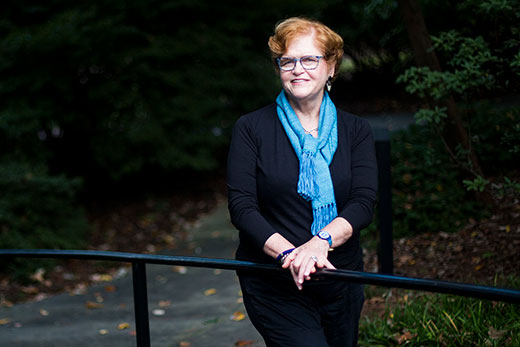
lipstadt

Congratulations to Dr. Deborah Lipstadt on receiving Emory’s 2020 Exemplary Teacher Award (formerly known as the Scholar/Teacher Award) for transformational teaching and public scholarship. Lipstadt is Associated Faculty in the History Department and Dorot Professor of Modern Jewish and Holocaust Studies in the Department of Religion and The Tam Institute for Jewish Studies. The award is one of the top honors given to faculty at Emory.

Michael A. Elliott, dean of Emory College of Arts and Sciences and Charles Howard Candler Professor of English, nominated Lipstadt for the award, writing: “As an historian, public intellectual, teacher and mentor, her tireless commitment to scholarly rigor and to social justice are expressed in her astonishing level of service to the university, and to the broader community, all of which she models to her students.” Read a full profile of Listadt, authored by the Emory News Center’s Kimber Williams, here: “Lipstadt receives Exemplary Teacher Award for transformational teaching and public scholarship.”

‘Classes that Click’: Emory News Center Features Crais’s Virtual ‘The Making of Modern South Africa’

Image may contain: 1 person, sitting, screen, table, office and indoor

The Emory News Center’s Leigh DeLozier recently featured Dr. Clifton Crais, graduate assistant Georgia Brunner, and several students from his “Making of Modern South Africa” class. Crais, Brunner, and the students share their perspectives on finding success in the online transition. Read an excerpt from the article below, along with the full piece: “Classes that click: The making of modern South Africa.”

What’s one lesson you’ve learned during this transition, and how will you use it later?

Crais: The importance of human contact and our common humanity, beginning with the simple act of looking into another person’s eyes. I will renew my effort to develop a unique relationship with each and every student, no matter how large the class. Paradoxically, online teaching has taught me the importance of a residential college experience. We are learning new things about the world and about each other. We are going to come out of this crisis better teachers and better students – and citizens.

Eckert Wins Emory Williams Distinguished Undergraduate Teaching Award

Congratulations to Dr. Astrid M. Eckert, Associate Professor of History, on being awarded the Emory Williams Distinguished Undergraduate Teaching Award. The award is presented annually to faculty members in each of the four undergraduate schools in recognition of a record of excellence in undergraduate teaching. The award was established by Emory Williams, a 1932 Emory College alumnus and long-time trustee. Eckert is one of only six faculty on campus to receive the award this year. Read more about the Undergraduate Teaching Award, including past recipients.

Strocchia’s FYS, ‘Epidemics in History,’ Brings Historical Insights to Unfolding Pandemic

Dr. Sharon T. Strocchia, Professor of History, is teaching a first-year seminar titled “Epidemics in History” this spring. The COVID-19 pandemic has made the course far more timely than she or the students anticipated. The Emory News Center featured “Epidemics in History” among Emory courses where professors and students are using the pandemic as a learning opportunity. Read about all of those courses in their article, “COVID-19 in Class.” Strocchia also offered comments on her original idea for the class and how she modified it in order to investigate this historical moment in real time. Read her comments below.

My freshman seminar this semester, “Epidemics in History,” was not designed to coincide with a global pandemic. I did plan to end the course with a study of the 1918 influenza epidemic after examining the Black Death and nineteenth-century cholera outbreaks. Our goal was to explore the historical and biological effects of urbanization, environmental change, and the human connectivity resulting from faster modes of transportation. But I also wanted to raise issues of preparedness with my students, many of who planned careers in medicine and science. It seemed oddly serendipitous that the Wuhan outbreak of coronavirus hit the headlines just as spring semester started. At our first class meeting in January, we decided that tracking its progression would make a good class project. Relying on trusted news outlets, we learned the value of social distancing, good hand hygiene, and flattening the curve. Week by week, the news grew more startling but still seemed far from home. By the time spring break arrived, though, COVID-19 already had an official name and the world was on the verge of pandemic. We’ve since modified our syllabus to make direct comparisons between the experiences of 1918 and our own day, looking at public health policies, frontline healers, issues of fear and resilience. It’s been a rewarding but sobering experience—one that shows there’s much to be learned about health and society from studying the past.

– Sharon Strocchia