Michael Camp (PhD, ’17) Publishes Chapter in ‘Energy in the Americas: Critical Reflections on Energy and History’

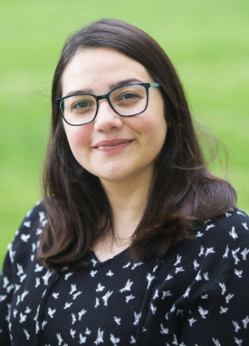
Dr. Michael Camp, a 2017 graduate of the doctoral program, has written a chapter in a forthcoming volume Energy in the Americas: Critical Reflections on Energy and History (University of Calgary Press). Camp’s chapter is titled “Tellico Dam, Dickey Dam, and Endangered Species Law in the United States during the 1970s.” The volume grew out of an energy history conference convened in Calgary in October 2014. The University of Pittsburg Press published Camp’s first book and a related project, Unnatural Resources: Energy and Environmental Politics in Appalachia after the 1973 Oil Embargo, in 2019. Dr. Joseph Crespino, Jimmy Carter Professor of History and Department Chair, served as Camp’s advisor.

Alumni Update: Richard Rawls (PhD, ’02)

Dr. Richard S. Rawls, a 2002 graduate of the doctoral program, recently provided the department with an update. Rawls holds a dual appointment in the History and Religion Departments at Georgia Gwinnett College. His recent publications include co-editing the book Curriculum Internationalization and the Future of Education (IGI Global, 2018) with Semire Dikli and Brian Etheridge. He authored two chapters in the volume: “Internationalizing a Course on the Cultural and Intellectual History of the Ancient World” and “Reflecting on New Faculty Training: Internationalized Learning Essentials” (with Semire Dikli). Rawls also composed the encyclopedia article “Peloponnesian War” for The Encyclopedia of Diplomacy (Wiley-Blackwell, 2018).

Abrahamson Receives Fellowship at the Boundary End Archaeology Research Center

Doctoral candidate Hannah Abrahamson received a 2021-22 George Stuart Residential Fellowship. The fellowship is housed at the Boundary End Archaeology Research Center, a scholarly retreat, library and meeting space place in the North Carolina mountains. The center was founded by Dr. George Stuart, a former Associate Editor of the National Geographic Magazine who, in that role, participated in many significant archeological investigations of Mesoamerican sites. The fellowship will help to support Abrahamson’s work completing her dissertation, titled “Women of the Encomienda: Households and Dependents in Sixteenth and Seventeenth-Century Yucatan, Mexico.” Her advisers are Yanna Yannakakis, Javier Villa-Flores, and Tonio Andrade.

Anderson Draws Parallels to Jim Crow Era in CNN Articles on Voter Suppression

Dr. Carol Anderson was quoted in two recent CNN articles produced as part of a series on voter suppression. The articles examine legislation in multiple states, including Georgia, that observers see as meaningfully restricting voting access and curbing voters’ rights. Anderson explains how this legislation echoes voter suppression tactics from the Jim Crow era.

Dr. Anderson is Charles Howard Candler Professor of African American Studies, Department Chair, and Associated Faculty in the History Department. She is the author of One Person, No Vote: How Voter Suppression is Destroying Our Democracy (Bloomsbury, 2018). Read an excerpt from Anderson’s contribution to the first CNN article below, along with the full versions of each: “Republican state lawmakers look to empower partisan poll watchers, setting off alarms about potential voter intimidation” and “A short history of the long conservative assault on Black voting power.”

“Carol Anderson, an historian and professor of African American Studies at Emory University, said the new proposals build on a history of voter intimidation that long has targeted people of color. ‘What’s built into this is the inequality of the system itself,’ she said. ‘You know that somebody who is Black or Hispanic will not be able to go up into an all-White precinct and start challenging those voters without having a massive law-enforcement response.’ She called the wave of new laws ‘infuriating.’ ‘It’s infuriating because we’ve done this dance before,’ Anderson said. ‘We know what a Jim Crow democracy looks like and the damage it does to the United States of America and to its people.'”

Suh Contributes to ‘TIME’ Series on Asian-American History

Dr. Chris Suh, Assistant Professor of History, recently contributed to a TIME article chronicling significant, though often unknown, moments from Asian-American history. Suh’s entry focused on the 1913 Alien Land Act in California, which effectively prevented Asian-Americans from owning agricultural land and limited their lease term to three years. Washington, Oregon, and Arizona would pass similar measures in the years following. These statutes were upheld by the Supreme Court in 1923 and only repealed in the aftermath of World War II. Read Suh’s entry for more, along with the other ten entries from scholars and activists across the U.S.: “11 Moments From Asian American History That You Should Know.”

Celebrating Doctoral Program Graduates: Drs. López Fuentes, Lu, and Ramsay

Congratulations to three doctoral students from the History Department who received their degrees in the course of the 2020-’21 academic year. Julia López Fuentes completed her degree in the summer of 2020. López Funtes’s dissertation, “Thinking Europe, Thinking Democracy: The Struggle for European Democracy in Spain, 1949-1986,” was overseen by S C Dobbs Emeritus Professor Walter Adamson and Associate Professor Astrid M. Eckert. Rebekah A. Ramsay also finished in the summer of 2020. Overseen by Associate Professor Matthew Payne, Ramsay’s dissertation was titled “Kindling the Hearths of Culture: Kazakh Citizenship and Cultural Revolution on the Soviet Frontier, 1917-1937.” Cheng-Heng Lu completed in the fall of 2020 under the advisement of Professor Tonio Andrade. His dissertation was titled “The Art of Being an Imperial Broker: The Qing Conquest of Taiwan and Maritime Society (1624-1788).”

Celebrating the Class of 2021

Congratulations to the History Department-affiliated undergraduate and graduate students receiving degrees at Emory’s 2021 commencement! Find out more information about Emory’s commencement ceremonies here. See below for a list of undergraduate students graduating with special recognition.

History Majors Graduating with Honors
Melanie Mills Dunn
Jason Paul Goodman
Colin Andrew Hutton
Cameron Vida Katz
Ryan Andrew Kelly
Sun Woo Park
Rachel Elizabeth Remmers
Max K Rotenberg

Graduating Members of the History Department Honor Society, Phi Alpha Theta, Phi Tau Chapter
Zachary Charles Ball**
Daniel Manuel Batterman
Elise Lauren Black
Colleen Elizabeth Carroll
Jessica Arevalo Dam
Melanie Mills Dunn
Jason Paul Goodman
Cameron Vida Katz
Ryan Andrew Kelly
AnnMarie Marlow
Rachel Elizabeth Remmers
Jesse Leib Steinman
Rowan M. Thomas

James L. Roark Prize in American History
Cameron Vida Katz

Matthew A. Carter Citizen-Scholar Award
Ciara Murphy

George P. Cuttino Prize in European History
Jesse Leib Steinman

James Z. Rabun Prize in U.S. History
Max K Rotenberg
Melanie Mills Dunn

Latin America & Non-Western World History Prize
Jacob Angelo DeFazio

Alumni Update: Dr. Claudia Kreklau (PhD, ’18)

Dr. Claudia Kreklau is a 2018 graduate of the doctoral program and associate lecturer at the University of St. Andrews in Scotland. Kreklau offers an update of recent publications, presentations, and podcast contributions in the list below. Kreklau completed her dissertation, titled “‘Eat as the King Eats’: Making the Middle Class through Food, Foodways, and Food Discourses in Nineteenth-Century Germany,” under the advisement of Dr. Brian Vick.

Journal article:

“Neither Gendered nor a Room: The Kitchen in Central Europe and the Masculinization of Modernity, 1800-1900,” in Special Section: The Kitchen in History, Global Food History, T&F, 7:1, (January 2021 e-version, March Issue 2021 paper)5-35DOI: 10.1080/20549547.2020.1863744.

Keynote Papers and Plenary Contributions:

“Otto von Bismarck’s Devouring Masculinity: Identity Shortcomings and Culinary Compensation of a Political Titan, 1815-1898,” Keynote, Devouring Men: Food, Masculinity and Power, University of St Andrews, (4th September 2020). 

Making Modern Eating. How the German Middling Shaped our Culinary Practices, 1780-1914,” Plenary Lunch Lightning Round Presentation “Food for Thought,” German Studies Association (GSA) 43rd Annual Conference, Portland, USA (3-6th Oct. 2019).

Podcasts

“‎Episode1: Making Cows Brains your Oyster.” Season 1. Looking the Part. 90 Second Narratives on Apple Podcasts. Accessed March 31, 2020. https://podcasts.apple.com/us/podcast/making-cow-brains-your-oyster/id1503904443?i=1000470033190

History Dept. Students and Faculty Receive Grants from Halle Institute

Emory’s Halle Institute for Global Research has awarded multiple undergraduate and graduate students and faculty members from the History Department with research funding throughout the 2020-’21 academic year. Directed by Dr. Jeffrey Lesser, Samuel Candler Dobbs Professor of History, the Halle Institute supports and promotes global research opportunities for faculty, students, and visiting scholars throughout all of Emory’s schools. See the History Department’s recipients and their funded projects below.

Rethinking Global Inequalities (with Goizueta Business and Society Institute)

Michelle Armstrong-Partida – “Singlewomen: Enslaved and Free in the Late Medieval Mediterranean”

Halle-CFDE Global Atlanta Innovative Teaching (GAIT) Grants

Adriana Chira – “Human Trafficking in World History”

URC-Halle International Research Awards in partnership with the University Research Council (URC)

Astrid M. Eckert – “Germany and the Global Commons: Environment, Diplomacy, and the Market”

Graduate Global Research Fellows

Georgia Brunner – Rwanda/Italy/Belgium      

Undergraduate Global Research Fellows

Bronwen Boyd – “The Signares of Senegambia: Slavery, “Progress,” and the French Colonial Project in the Nineteenth Century,” Emory College of Arts and Sciences: History, French Studies

Ellie Coe – “Unlikely Friendships: The Little-Known Meetings of Cosmonauts and Astronauts in the Early Space Age,” Emory College of Arts and Sciences: History, Russian and East European Studies

Alex Levine – “Dueling Dragons: Examining Welsh National Identity Through Late Nineteenth and Early Twentieth Century British Imperial Involvement in China,” Emory College of Arts and Sciences: History

Annie Li – “A Comparative History of the Activism of Chinese American Churches and Taiwanese Churches,” Emory College of Arts and Sciences: History, Sociology

Willie Lieberman – “English Femininity in Purcell’s Operas,” Emory College of Arts and Sciences: History

Julien Nathan – “Who is the Nation: Analyzing the Relationship Between Gastarbeiter and the New Left Student Movement, 1960-1973,” Emory College of Arts and Sciences: History

Brunner Wins Fulbright for Research in Rwanda

Congratulations to doctoral candidate Georgia Brunner on being awarded a Fulbright to support her dissertation fieldwork in Rwanda. Brunner’s project is titled “Building a Nation: Gender, Colonialism, and the Struggle for a National Identity.” Her adviser is Dr. Clifton Crais, Professor of History. Read an abstract of Brunner’s project, as well as her plan of research and service activities for the year ahead, below.

At the intersection of gender studies, the history of empire, and the history of labor, this project elucidates the ways in which gender informed divergent nationalisms in late colonial and early postcolonial Rwanda. As migratory Rwandan men looked on from neighboring Uganda and Tanzania, women still in Rwanda were left with colonial forced labor obligations, building infrastructure and commercial coffee farms. Both conservative men abroad and liberal women at home thought of forced labor as an oppressive colonial regime but they had different visions for Rwanda’s future. While liberals, and liberal women in particular, hoped for reforms in education and voting rights, conservative men hoped to reinstate what they viewed as traditional norms — patriarchal nuclear families with women confined to the domestic sphere. These new nationalisms reveal the possibilities of late colonialism and the constraints of newly independent states. By investigating the gendered dynamics of labor and nationalism in late colonial Rwanda, this project adds crucial knowledge to the history of women in the formal economy, the creation of multiple nationalisms during decolonization processes, and the gendered politics of empires and postcolonial states.

Because of a close relationship with my host university, I have been planning a number of ways to engage with undergraduate and masters students. In talking with Father Balthazar Ntivuguruswa, the Vice Chancellor of my host institution The Catholic Institute of Kabayi, I have plans to work with social science masters students to create an oral history project and bank housed at the university based both on my own research and the interests of the students. Similarly, I have plans to work with undergraduate students at the university on English writing skills that will help them in finding internationally oriented jobs after graduating.