New Books Series: Q&A with Jeffrey Lesser about ‘Living and Dying in São Paulo’


Dr. Jeffrey Lesser, Samuel Candler Dobbs Professor of History, published Living and Dying in São Paulo: Immigrants, Health, and the Built Environment in Brazil with Duke University Press in the spring of 2025. Editora UNESP recently released the Portuguese-language version, Viver e morrer em São Paulo: Imigração, saúde e infraestrutura urbana (século XIX até o presente). Focused on São Paulo’s Bom Retiro neighborhood, Living and Dying examines competing visions of well-being in Brazil among racialized immigrants and policymakers and health officials. Jerry Dávila, who holds the Jorge Paulo Lemann Chair in Brazilian History at the University of Illinois, describes Lesser’s book as “methodologically innovative, conceptually powerful, and engagingly written.” Both the English-language and Portuguese-language versions will have open access editions thanks to a tome (Toward an Open Monograph Ecosystem) grant from the Andrew W. Mellon Foundation and Emory University. 

In the Q&A below, Dr. Lesser gives us a glimpse into the making of the monograph as part of the History Department’s New Books series.

Books are produced over years if not decades. Give us a sense for the lifespan of this book, from initial idea to final edits.

Living and Dying was conceived about a decade ago during a very boring meeting of department chairs and administrators. Fortunately, I was sitting in the back of the room with the bad kids, including Uriel Kitron, at the time chair of the Department of Environmental Sciences. As we discussed our mutual research interests in Brazil, we began to think of a project on the relation between immigration and health. It did not take long for us to jointly teach an interdisciplinary seminar on the topic and arrange a grant to bring some students in that class to Brazil. Starting about 5 years ago, I was able to arrange regular funding for what became the Lesser Research Collective, an interdisciplinary group of students from Emory and UNIFESP in São Paulo. While we all work in the São Paulo neighborhood of Bom Retiro, on questions related broadly to health, we do so via individual projects and then we meet weekly to share our research.    

What was the research process like?

Living and Dying reflects the many approaches that I use to generate and analyze data. Like many in the humanities, I spent most of my career thinking of myself as a solitary researcher even while acknowledging the help of archivists, librarians, and students. For this project, however, I worked with three interconnected teams whose data, ideas, and conclusions influence every sentence of this book. The research is informed by disciplines including history, cultural studies, public health, anthropology, geography, and sociology.  

I used a variety of historical and contemporary sources, including archives, observation, oral histories, cartography, digital map creation, photographic exhibits, and participation in city-sponsored health programs. Much of the material was found in the archives of the Emílio Ribas Public Health Museum, situated in the building that had been São Paulo’s Central Disinfectory, and the archival and historical space became an actor in the interpretation of some of the documents.

I used the Pauliceia 2.0 Historical Geographic Information Systems Platform to link quantitative data (e.g., demography, infrastructure planning, health outcomes, and socioenvironmental challenges) to the built environment, especially in order to see continuities in spatial patterns over time. I often matched the quantitative data with blueprints, architects’ notes, street notes, and press reports to map contemporary human flows through and around the buildings, which I then compared with photographs and etchings from earlier periods. My own observations and oral histories emerged from multiple years embedded in a primary care team at the Bom Retiro Public Health Clinic.

Are you partial to a particular chapter or section?

I loved writing “Unliving Rats and Undead Immigrants” because it gave me a chance to treat zombies and ghosts as serious historical actors. The chapter analyzes why public health officials targeted Bom Retiro and its residents during the turn-of-the-century bubonic plague and 1918 influenza outbreaks. I show how the two epidemics led to similar discourses from health officials, often targeting immigrants. The immigrant working classes responded to the two events in similar ways as well, ranging from using popular medicinal practices for care and cure, to rising from the dead to wander to and from Bom Retiro. The chapter also analyzes how a public health campaign to buy rats during the late 19th century Bubonic Flu outbreak led to surprising (from the perspective of officials) responses from the public, like breeding rats or collecting them outside of the city and then bringing them to the Ministry of Health for sale.

How does this project align with your broad research agenda at this point in time?

My beloved advisor and mentor, the later Warren Dean, always argued that we should try to change our research agenda after each book. While in some ways I have rejected his advice (I am broadly interested in Brazil, ethnicity, and national identity) I have taken to heart his broad position, writing about topics as different as armed guerilla organizations, ethnic militancy, and public health. One idea I have for next book is to write the history of modern Brazil via the story of the Corinthians football team (the greatest in the universe!), which was founded in Bom Retiro by English railroad workers in the early twentieth century and whose captain, Socrates, would lead a movement called Corinthian democracy, against the dictatorship in the 1970s.

Welcoming New Graduate Students

The Emory History Department is excited to welcome five new doctoral students to the department in the fall 2025 semester, along with one graduate exchange student from the University of Augsburg, Germany. Read abridged profiles of the new graduate cohort below and follow the links to read their full biographies on the History Department website.

Savanna Courtney-Durrett received her B.A. and M.A. from the University of North Florida. Her research examines African American women’s entrepreneurship and activism in the funeral business during the early twentieth century. Her graduate work will be advised by Drs. Crystal Sanders, Jason Morgan Ward, and Kali Gross

>> Read More

Maren Fauth is an exchange student from the University of Augsburg, Germany. She received her B.A. in English and American Studies with a minor in Philosophy in 2024 and is currently pursuing a M.A. in North American Studies. Her research interests include women’s history, African American history, and the history of social protest movements. Fauth’s work will be advised by Drs. Astrid M. Eckert and Laura Nenzi.

>> Read More

Ziying Lin received her B.A. from the University of Minnesota – Twin Cities and M.A. from the University of Pennsylvania. Lin studies social history, environmental history, and gender studies, with a particular research interest in the material culture of dowries in Edo Japan. Drs. Laura Nenzi and Julia Bullock will advise her work.

>> Read More

Mary Elizabeth Marquardt received her A.B. from Princeton University in history and African American studies and her M.A.R. from Yale University. She studies religion, race, and legal history in the U.S. South, with a focus on 20th century interactions between churches and the state. Drs. Joseph Crespino, Mary Dudziak, and Alison Collis Greene will advise Marquardt’s work.

>> Read More

Yerbol Munai earned a bachelor’s degree in Kazakh Language and Literature and a master’s degree in Turkology from Minzu University of China. He specializes in the modern history of Central Asia, with a focus on the Kazakh and other Central Asian Turkic communities in the early 20th century. Drs. Matthew J. Payne and Hwisang Cho will advise Munai’s work.

>> Read More

Jayden Trawick-Junta is a native of Portland, OR, and earned his B.A. from Berea College in History and African & African American Studies. He studies race, culture, and sports in the U.S. during the twentieth century, focusing on how Negro League baseball teams interacted with Black communities in their cities. Drs. Carl Suddler and Jason Morgan Ward will advise his work.

>> Read More

History Department Well Represented in Fox Center’s 2025-26 Fellows Cohort


History Department faculty and students are well represented in the recently-announced 2025-26 cohort of fellows at the Fox Center for Humanistic Inquiry. Faculty and graduate fellows will conduct research intersecting with this year’s theme, Life/Story, which draws “inspiration from the many ways humanities fields and disciplines often approach a single life as the entry point for examining broad political, socio-cultural, and historical phenomena.”

Four undergraduate History students will hold Undergraduate Humanities Honors fellowships. These Fellowships support undergraduates as they complete their honors theses, introduce them to the life of the Humanities, and provide a venue for interdisciplinary interchange, mentorship, and conference-style presentation.

View short profiles of the faculty and student fellows below and follow the links to more extended biographies.

Hwisang Cho (Associated Faculty in History) specializes in the cultural, intellectual, and literary history of Korea, comparative textual media, and global written culture. His major work-in-progress is  “Irresistible Fabulation: Moral Imagination and Storytelling in Korean Confucian Tradition.”

>> Read More

Alejandro Guardado is a 6th year PhD Candidate in the Department of History. His dissertation, “Reimagining Community: Indigenous Organizing in Mexico’s Neoliberal Turn (1968-2000),” examines how Indigenous activists developed political networks to bolster self-determination movements in the Mexican state of Oaxaca.

>> Read More

Leo Raykher is a senior majoring in History. His thesis, titled “Economics, Espionage, and Exile: the Surveilled life of David Drucker, esq.,” examines the life of his great, great uncle David Drucker.

>> Read More

Thora Jordt is a History and Art History major from Chapel Hill, North Carolina. Her project examines the artist Alexandra Exter’s contributions as a costume and set designer for theatre and film between 1915 and 1925, with a focus on the 1924 film Aelita: Queen of Mars.

>> Read More

Daniel Bell is a rising senior from Chicago, Illinois, double-majoring in Economics and History. His thesis project is centered around Herbert Jenkins, Atlanta’s influential twentieth-century police chief.

>> Read More

Eunjae Thompson is a senior studying Philosophy and Religion with a minor in History. Their honors thesis, titled “Beyond Capture: Blackened Piety & the Politics of Refusal,” will interrogate how the life-writing genre not only illuminates but draws the boundaries of the human condition.

>> Read More

Yannakakis Named Samuel Candler Dobbs Professor of History


Dr. Yanna Yannakakis has been named Samuel Candler Dobbs Professor of History in recognition of her excellent scholarship, outstanding teaching, and deep service to Emory. Yannakakis is a social and cultural historian of colonial Latin America with specializations in the history of Mexico, ethnohistory, the history of legal systems, and the interaction of indigenous peoples and institutions in Mexico. The new position is effective September 1, 2025.

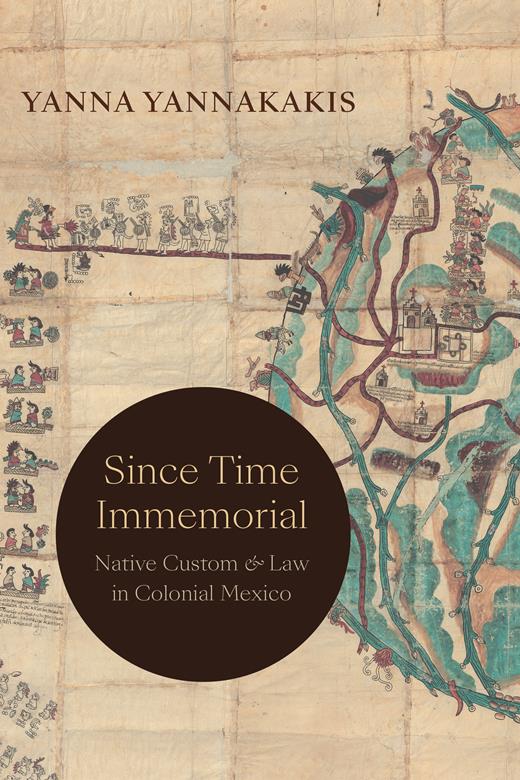
Her most recent book, Since Time Immemorial: Native Custom & Law in Colonial Mexico (Duke University Press, 2023) was awarded the Peter Gonville Stein Book Award from the American Society for Legal History and the Friedrich Katz Prize in Latin American and Caribbean History, one of the top awards from the American Historical Association. Since Time Immemorial traces the invention, translation, and deployment of the legal category of Native custom, with particular attention to how Indigenous litigants and colonial authorities refashioned social and cultural norms related to marriage, crime, religion, land, labor, and self-governance in Native communities. The monograph was published open access with support from Emory’s TOME initiative.


Yannakakis’ first book, The Art of Being In-Between: Native Intermediaries, Indian Identity, and Local Rule in Colonial Oaxaca (Duke University Press, 2008), examined how native cultural brokers negotiated with Spanish courts and the Catholic Church to open and maintain a space for the political and cultural autonomy of indigenous elites and their communities during Mexico’s colonial period. The book won the 2009 Howard Francis Cline Memorial Award from the Conference on Latin American History for the best book on the history of Latin America’s Indigenous peoples.

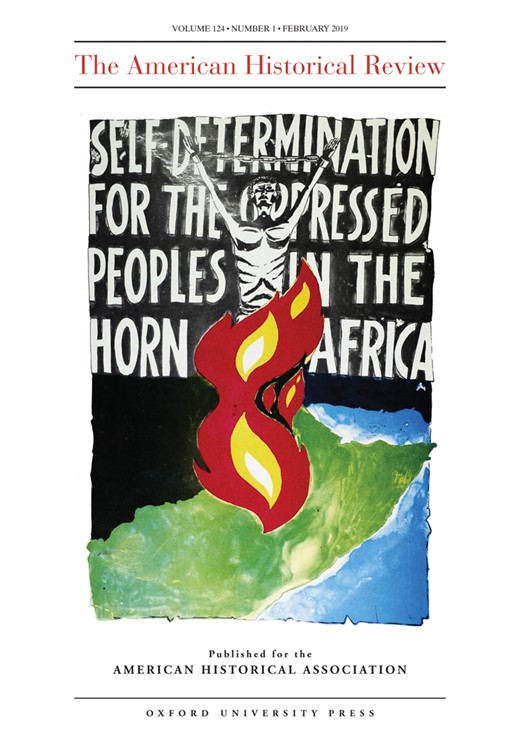
Yannakakis has co-edited or co-authored multiple other books and articles, including Indigenous Intellectuals: Knowledge, Power, and Colonial Culture in Colonial Mexico and the Andes (Duke University Press, 2014) (with Gabriela Ramos), Los indios ante la justicia local: intérpretes, oficiales, y litigantes en Nueva España y Guatemala siglos XVI-XVIII (Colegio de Michoacán, 2019) (with Luis Alberto Arrioja Díaz Viruell and Martina Schrader-Kniffki), “A Court of Sticks and Branches: Indian Jurisdiction in Colonial Mexico and Beyond,” American Historical Review (February 2019) (with Bianca Premo), and the special issue “Law, Politics, and Indigeneity in the Making of Ethnohistory: Perspectives from Latin America, Africa, and the Pacific,” Ethnohistory (70:2, 2023) (with Miranda Johnson).


Yannakakis is also the coordinator on an ongoing, open access digital humanities project, titled “Power of Attorney: Native People, Legal Culture, & Social Networks in Mexico.” Read more about this project: “Recent Faculty Publications: Q & A with Yanna Yannakakis about ‘Power of Attorney.’”

Lesser Publishes ‘Living and Dying in São Paulo’ with Duke UP


Dr. Jeffrey Lesser, Samuel Candler Dobbs Professor of History, has published a new monograph, Living and Dying in São Paulo: Immigrants, Health, and the Built Environment in Brazil, with Duke University Press. The work examines competing visions of wellbeing in Brazil among racialized immigrants, policymakers, and health officials over 150 years and primarily in São Paulo’s Bom Retiro neighborhood, drawing out the connected systems of the built environment, public health laws and practices, and citizenship. In addition to historical and literary documentation, Lesser’s book was informed by a multi-year observation of a basic health team at the Octávio Augusto Rodovalho Public Health Clinic of the Brazilian National Health Service. Read praise for Living and Dying below and find the full open access book from Duke UP.

Living and Dying in São Paulo is methodologically innovative, conceptually powerful, and engagingly written. Jeffrey Lesser’s book has rare precision and creativity. Not only does he give an insightful reading of place and people, he also makes a bold case for historians to adopt new approaches and for those in the social and biomedical sciences to pose questions historically. This is the kind of writing I am sure most historians—myself included—wish they could do.” – Jerry Dávila, Jorge Paulo Lemann Chair in Brazilian History, the University of Illinois.

Alex Minovici (C ’25) Receives Inaugural Fox Center Undergraduate Honors Award

Recent Emory graduate and history major Alex Minovici has been selected as the inaugural recipient of the Fox Center for Humanistic Inquiry’s Undergraduate Honors Award for the thesis, “Singe Spaima: The 1989 Revolution and the Politics of Violence in Socialist and Post Socialist Romania.” Minovici, who completed a double major in Philosophy, Politics, and Law, produced the thesis as an Undergraduate Honors Fellow at the Fox Center over the 2025-26 academic year. “Singe Spaima” received Highest Honors from the Emory Department of History.

Minovici offered reflections on the thesis and experience as a fellow at the Fox Center in conversation with Karl-Mary Akre (Fox Center Communications and Outreach Coordinator). Read an excerpt below along with their full conversation.

“…what truly gives Romanian people power in their new democracy is remembering the violence and trauma with the express purpose of holding state officials accountable; refusing to forget abuses. Memory can be an act of resistance. Along these lines, I feel as if my thesis is part of a broader effort to document, remember, and respect the trauma that Romanians experienced in recent history.”

Undergraduates Receive Awards for Research Produced in History Courses

Emory Libraries recently announced the 2025 recipients of the Elizabeth Long Atwood Undergraduate Research Award, which annually recognizes Emory College students who engage with the library’s collections and demonstrate excellence in undergraduate research. Three of the five awardees produced their projects in courses in the history department, taught by Dr. Judith A. Miller and Dr. Jinyu Liu, respectively. They are:

  • Anushka Basu, class of 2026, a double major in QSS: Data Science and vocal performance, received an Atwood Award for her paper, “Gender in Opera: How Mozart’s Bastien und Bastienne Reflects and Reinforces Enlightenment-Era Roles of Women,” that she completed for “History 412W: Music and Politics” (taught Dr. Judith A. Miller).
  • Jasper Chen, class of 2028, a classics and computer science major, received an Atwood Award for his paper, “Sardis: A Millennium of Adaptation,” that he completed for “Classics 190/History 190: Freshman Seminar: Ordinary Romans” (taught by Dr. Jinyu Liu).
  • Agustin Zelikson, class of 2025, double major in philosophy, politics, and law as well as history, received an honorable mention for his paper, “A National Identity Arises: The Political Origins of Aurora,” that he completed for “History 412W: Music and Politics” (taught by Dr. Judith A. Miller).

Read more about the Atwood Award as well as all five of this year’s winners.

Reuther (Ph.D., ’16) Publishes ‘The Bonds of Kinship in Dahomey’ with IU Press


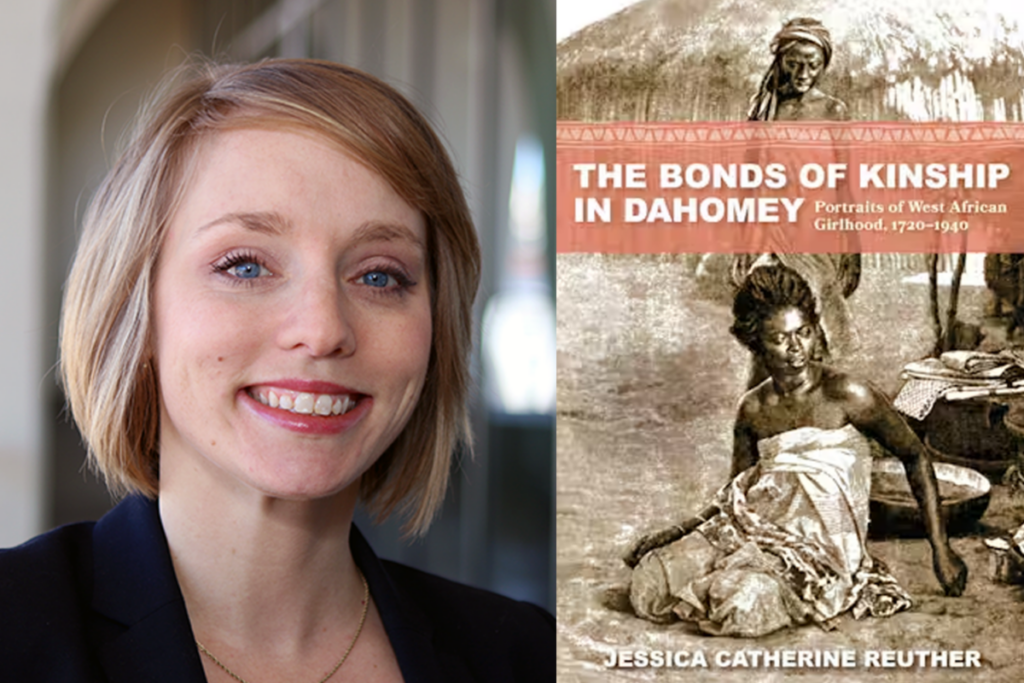
Dr. Jessica Catherine Reuther, a 2016 graduate of the doctoral program and Associate Professor of History at Ball State University, has published her first book, The Bonds of Kinship in Dahomey: Portraits of West African Girlhood, 1720–1940 (Indiana University Press, 2025). Relying on research throughout the world – from Benin, Senegal, France, and Switzerland to the United States – The Bonds of Kinship in Dahomey examines the common practice of girl fostering, or “entrusting,” in the kingdom and later colony of Dahomey (now the Republic of Benin) from 1720 to 1940. Reuther’s book draws from her dissertation, “Borrowed Children, Entrusted Girls: Legal Encounters with Girlhood in French West Africa, c. 1900-1941,” which was advised by Dr. Kristin Mann, Professor Emerita.

Read the abstract of The Bonds of Kinship in Dahomey below and consider purchasing a discounted copy during Women’s History Month from IU Press with code U25WHM (discount is 40%).

From the 1720s to the 1940s, parents in the kingdom and later colony of Dahomey (now the Republic of Benin) developed and sustained the common practice of girl fostering, or “entrusting.” Transferring their daughters at a young age into foster homes, Dahomeans created complex relationships of mutual obligation, kinship, and caregiving that also exploited girls’ labor for the economic benefit of the women who acted as their social mothers.

Drawing upon oral tradition, historic images, and collective memories, Jessica Reuther pieces together the fragmentary glimpses of girls’ lives contained in colonial archives within the framework of traditional understandings about entrustment. Placing these girls and their social mothers at the center of history brings to light their core contributions to local and global political economies, even as the Dahomean monarchy, global trade, and colonial courts reshaped girlhood norms and fostering practices.

Reuther reveals that the social, economic, and political changes wrought by the expansion of Dahomey in the eighteenth century; the shift to “legitimate” trade in agricultural products in the nineteenth century; and the imposition of French colonialism in the twentieth all fundamentally altered—and were altered by—the intimate practice of entrusting female children between households. Dahomeans also valorized this process as a crucial component of being “well-raised”—a sentiment that continues into the present, despite widespread Beninese opposition to modern-day forms of child labor.

Fields-Black’s ‘COMBEE’ Wins Gilder Lehrman Lincoln Prize

Dr. Edda L. Fields-Black (BA, ’92), Professor and Director of the Dietrich College Humanities Center at Carnegie Mellon University, has received the 2025 Gilder Lehrman Lincoln Prize for her book COMBEE: Harriet Tubman, the Combahee River Raid, and Black Freedom during the Civil War (Oxford UP, 2024). COMBEE offers the fullest account to date of Tubman’s Civil War service, including her role in the momentous 1863 raid that led to the freeing of nearly 800 people. The Gilder Lehrman Lincoln Prize, which includes an award of $50,000, is given annually to a work that enhances the general public’s understanding of Abraham Lincoln, the American Civil War soldier, or the American Civil War era.

Fields-Black received her undergraduate degree in history and English from Emory and her PhD from the University of Pennsylvania. Her research specializations include the transnational history of West African rice farmers, peasant farmers in pre-colonial Upper Guinea Coast and enslaved laborers on rice plantations in the antebellum South Carolina and Georgia Lowcountry. Indiana UP published her first book, Deep Roots: Rice Farmers in West Africa and the African Diaspora, in 2014. She has also produced compelling work about that past that transcends disciplinary boundaries. She served as executive producer and librettist of “Unburied, Unmourned, Unmarked: Requiem for Rice,” a contemporary classical and multimedia symphonic work and the first symphonic work about slavery on rice plantations.

Read a quote from Dr. Fields-Black about receiving the prize below and find the press release from the Gilder Lehrman Institute of American History here.

“I am thrilled to receive this award and honored to be the vehicle through which the story of Harriet Tubman’s Civil War service and the Combahee River Raid are told. I came to the history of the Combahee River Raid through my many years of work on rice-growing technology, rice fields, and rice laborers (free and enslaved) on both sides of the Atlantic and my passion for uncovering new sources and methods, which reveal the voices of Africans and people of African descent who did not author written sources. I aspired to tell the history of the Combahee River Raid from the perspectives of the people who participated in it, Harriet Tubman, the 2nd South Carolina Volunteers, and the Combahee freedom seekers who liberated themselves in the raid. This was no small feat since they were all formerly enslaved and the overwhelming majority were illiterate.

Picone (Ph.D. ’19) Publishes ‘Landscaping Patagonia’ with UNC Press


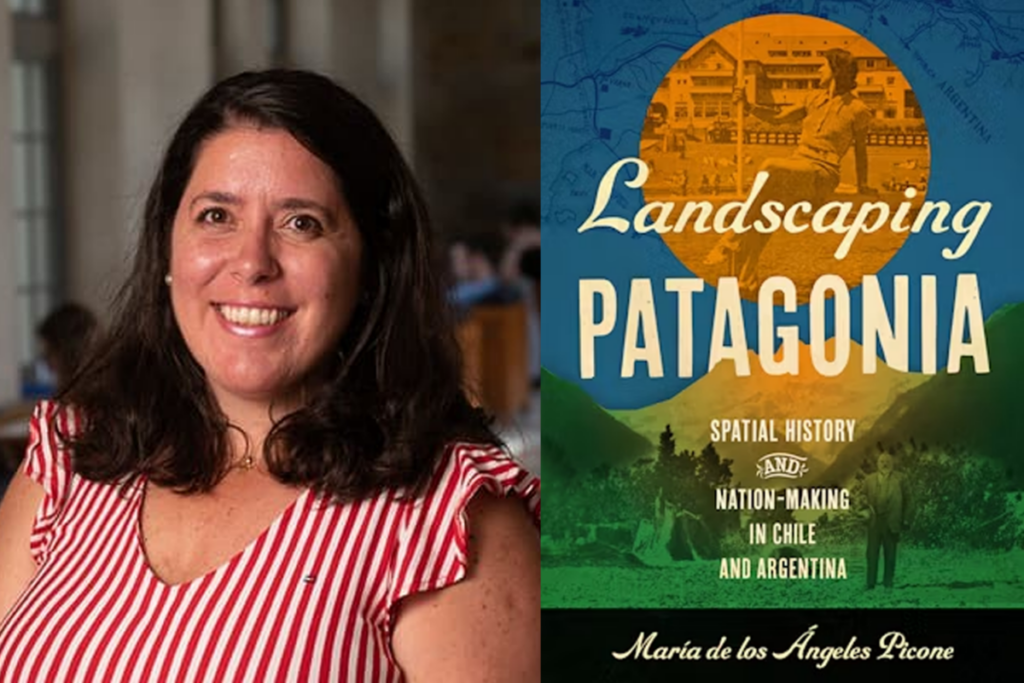
Dr. María de los Ángeles Picone (PhD, 2019) has published her first book, Landscaping Patagonia: Spatial History and Nation-Making in Chile and Argentina, with UNC Press. Focused on northern Patagonia in the late-19th and early-20th centuries, the inventive monograph charts how an array of people who lived in, governed, and traveled through this region “sought to construct versions of Chile and Argentina based on their ideas about and experiences in geographical space.” Dr. Emily Wakild, a leading environmental historian of Latin America, describes Landscaping Patagonia as a “masterful, field-changing work.” She continues: “The Patagonian landscape takes center stage as Picone brings to life the people who inhabited this ecologically and culturally expansive region.” Picone, currently an Assistant Professor of History at Boston College, completed her dissertation under the advisement of Drs. Jeffrey Lesser, Thomas D. Rogers, and Yanna Yannakakis in 2019. Read the full abstract of Landscaping Patagonia below.

In late nineteenth-century Latin America, governments used new scientific, technological, and geographical knowledge not only to consolidate power and protect borders but also to define the physical contours of their respective nations. Chilean and Argentine authorities in particular attempted to transform northern Patagonia, a space they perceived as “desert,” through a myriad of nationalizing policies, from military campaigns to hotels. But beyond the urban governing halls of Chile and Argentina, explorers, migrants, local authorities, bandits, and visitors also made sense of the nation by inhabiting the physical space of the northern Patagonian Andes. They surveyed passes, opened roads, claimed land titles or leases, traveled miles to the nearest police station, rode miles on horseback to escape the police, and hiked the landscape.

María de los Ángeles Picone tells the story of how people living, governing, and traveling through northern Patagonia sought to construct versions of Chile and Argentina based on their ideas about and experiences in geographical space in the late nineteenth and early twentieth centuries. By repositioning the analytical focus from Santiago and Buenos Aires to northern Patagonia, Picone reveals how a wide array of actors, with varying degrees of political, economic, and social power, assigned distinctive—and sometimes conflicting—meanings to space and national identity.