Harvard UP Publishes Sharon T. Strocchia’s ‘Forgotten Healers’

forgotten-healers

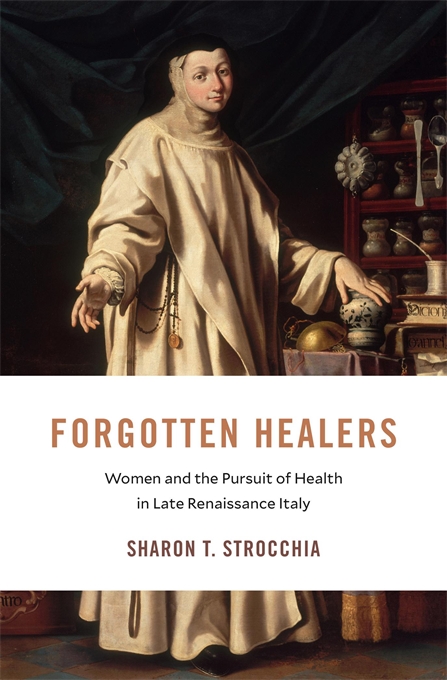
In December of 2019 Harvard University Press released Professor Sharon T. Strocchia‘s newest book, Forgotten Healers: Women and the Pursuit of Health in Late Renaissance Italy.  The monograph recovers the pivotal roles that women played in providing health care in Renaissance Italy and, in doing so, uncovers their role in the transformation of early modern medicine and medical science. Sheila Barker, director at the Medici Archive Project, writes that Strocchia’s work “makes a vital contribution to the history of medicine, gender studies, and Renaissance studies.” Strocchia’s previous monographs were Death and Ritual in Renaissance Florence (Johns Hopkins UP, 1992) and Nuns and Nunneries in Renaissance Florence (Johns Hopkins UP, 2009), which was awarded the 2010 Marraro Prize by the American Catholic Historical Association. Read more about Forgotten Healers on the site for Harvard UP.
Emory News Center Features ‘Archival Lives’ Conference

FirstPosterDraft

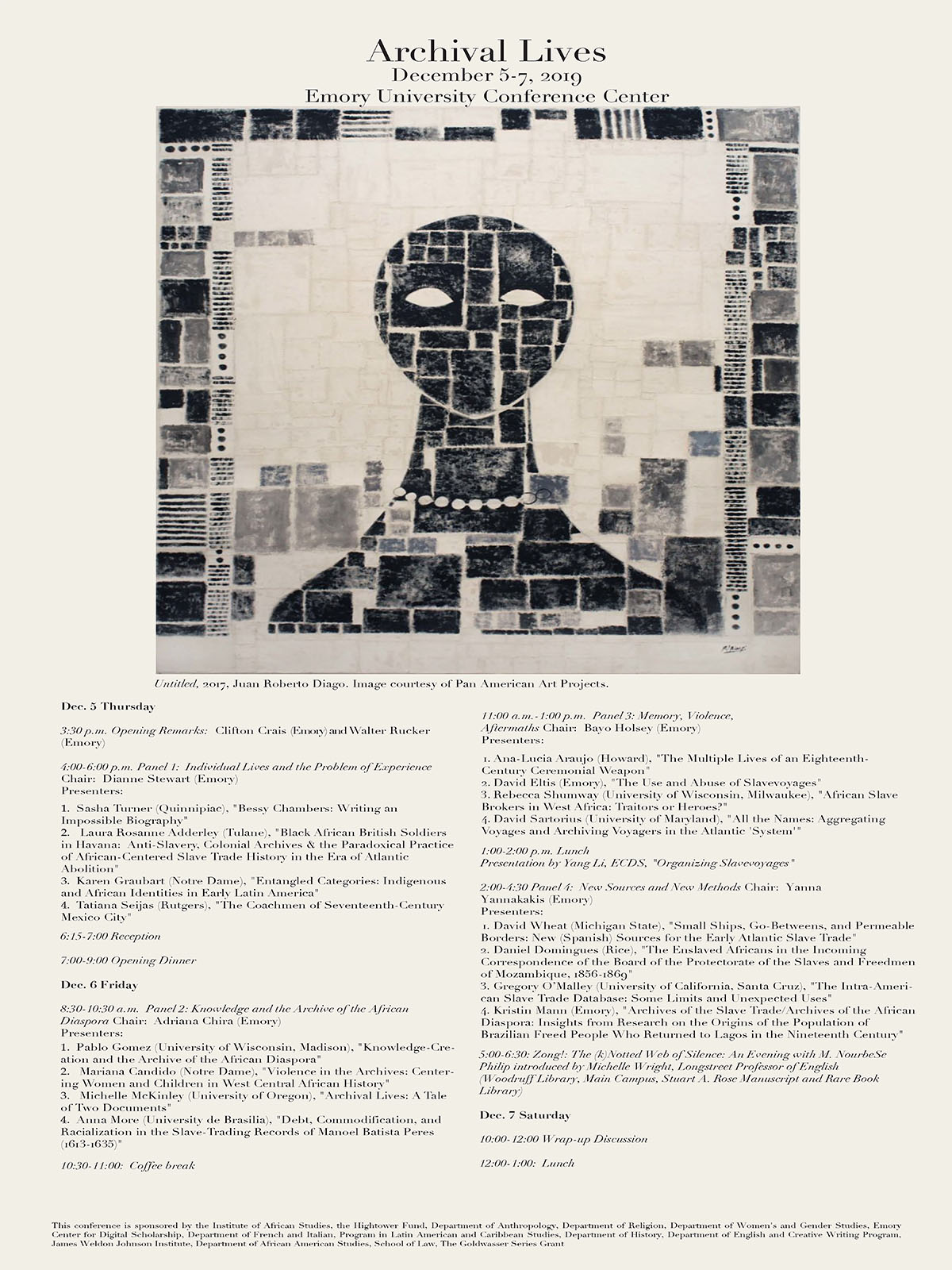
The Emory News Center featured a profile of the Archival Lives conference from December 5-7, 2019. Co-convened by Adriana Chira (History), Clifton Crais (African Studies/History), and Walter C. Rucker (African American Studies/History), the workshop brought together an array of participants “to reckon with what it means to work with and produce archives of the African diaspora.” Read April Hunt’s feature story on the Emory News Website, “‘Archival Lives’ conference examines trans-Atlantic slave trade,” in addition to the full description of the conference at “Archival Lives.”

Martin Pimentel, Senior History Major and Fox Fellow, Posts on Research About Detroit’s Rumor Control Center

Martin Pimentel, a senior double-majoring in history and political science, recently published a blog post for the Fox Center for Humanistic Inquiry. Pimentel is a Fox Center Undergraduate Humanities SIRE Fellow. He is completing his honors thesis, which examines the history of Detroit’s rumor control center in the 1960s. Read his recent post here: “Detrioters: The Rise and Fall of the Detroit Rumor Control Center, 1967-1970.”

Undergraduate Fox Center Fellow and History Major Daniel Thomas Publishes Blog Post About Honors Thesis

Daniel Thomas, a senior history and international studies double major, recently published a blog post about his honors thesis for Emory’s Fox Center for Humanistic Inquiry. Thomas researches the history of Russian separatism in the Donbas, a region in Eastern Ukraine. He completed fieldwork for his thesis in the summer of 2019 in Kyiv, Ukraine, with support from the History Department’s George P. Cuttino Scholarship for Independent Study Abroad. Thomas is currently an undergraduate fellow at the Fox Center and works with Dr. Matthew Payne. Read his post here: “Neighbors against Neighbors: Historical roots of the Donbas War, 1985-2014.”


History Majors Coe and Fuller Win 2019 Elizabeth Long Atwood Undergraduate Research Awards

Annually Emory’s Woodruff Library recognizes outstanding research among undergraduates in the Emory College with the Elizabeth Long Atwood Undergraduate Research Awards. Eligible students must use the library’s collections and research resources in their original papers, digital projects, or posters and show evidence of critical analysis in their research skills.

Congratulations to two history majors who won this award for 2019. Ellie Coe (class of 2022), is a history and Russian & East European studies double major. She won for her project, “The Soldier’s Queue in the Eighteenth Century.” Hannah Fuller (class of 2020) is a history major and was recognized for her project, “Jemima Wilkinson: The Genderless Feminist of the Enlightenment.” Both Coe and Miller completed their research under the supervision of Dr. Judith A. Miller, Associate Professor of History.

Read more about the Atwood Awards, including former history students who have won the prize, here: The Elizabeth Long Atwood Undergraduate Research Award.

Crespino Writes Op-Ed for ‘The New York Times’: “The Democrats Are in Georgia. The Stakes Couldn’t Be Higher.”

Dr. Joseph Crespino, Department Chair and Jimmy Carter Professor of History, authored an opinion piece in The New York Times last month on the day of the democratic presidential primary debate held here in Atlanta. In the article, “The Democrats Are in Georgia. The Stakes Couldn’t Be Higher,” Crespino provides historical context for democratic optimism that Georgia could turn blue in the 2020 election. Crespino’s most recent book is Atticus Finch: The Biography (Basic Books, 2018). Read an excerpt of The New York Times article below along with the full piece: “The Democrats Are in Georgia. The Stakes Couldn’t Be Higher.”

“In many ways, American politics today resemble an earlier era in Southern history, when candidates who only a few years before their election had been dismissed as jokes or nobodies stoked reactionary impulses to win the highest office in the state. That’s what happened in Georgia in 1966 when Lester Maddox, a folksy restaurateur and longtime failed candidate, was elected governor. After Congress passed the Civil Rights Act in 1964, forcing the desegregation of public accommodations in the South, Maddox leapt to public prominence by wielding an ax handle to chase away African-Americans who attempted to eat at his restaurant. He attracted the same voters that George Wallace won in neighboring Alabama — white Southerners embittered by social and political changes that they felt were being forced upon them by sanctimonious, out-of-touch elites.”

History Dept. Event Showcasing Eckert’s New Book Draws Crowd

AstridTalk 06

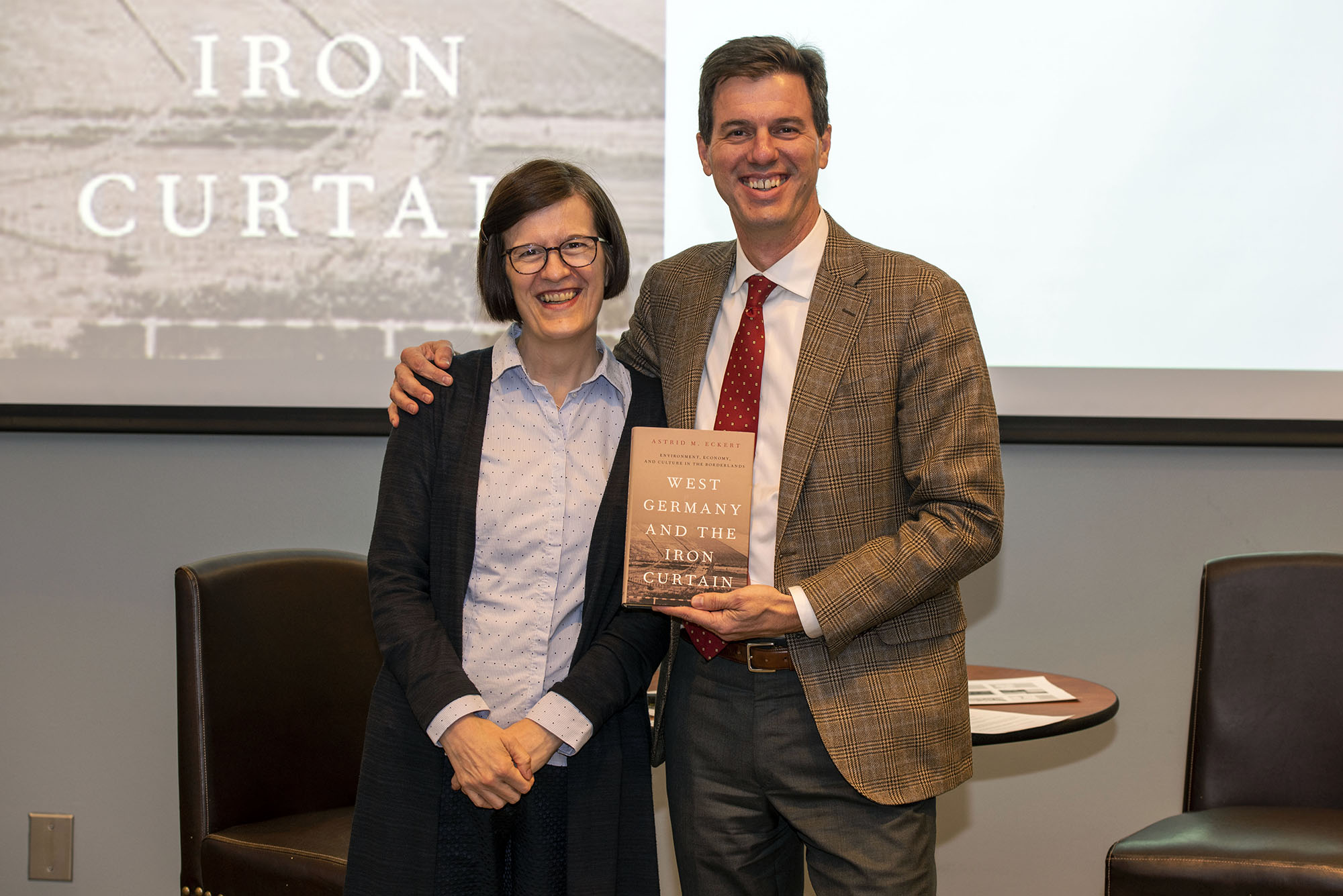
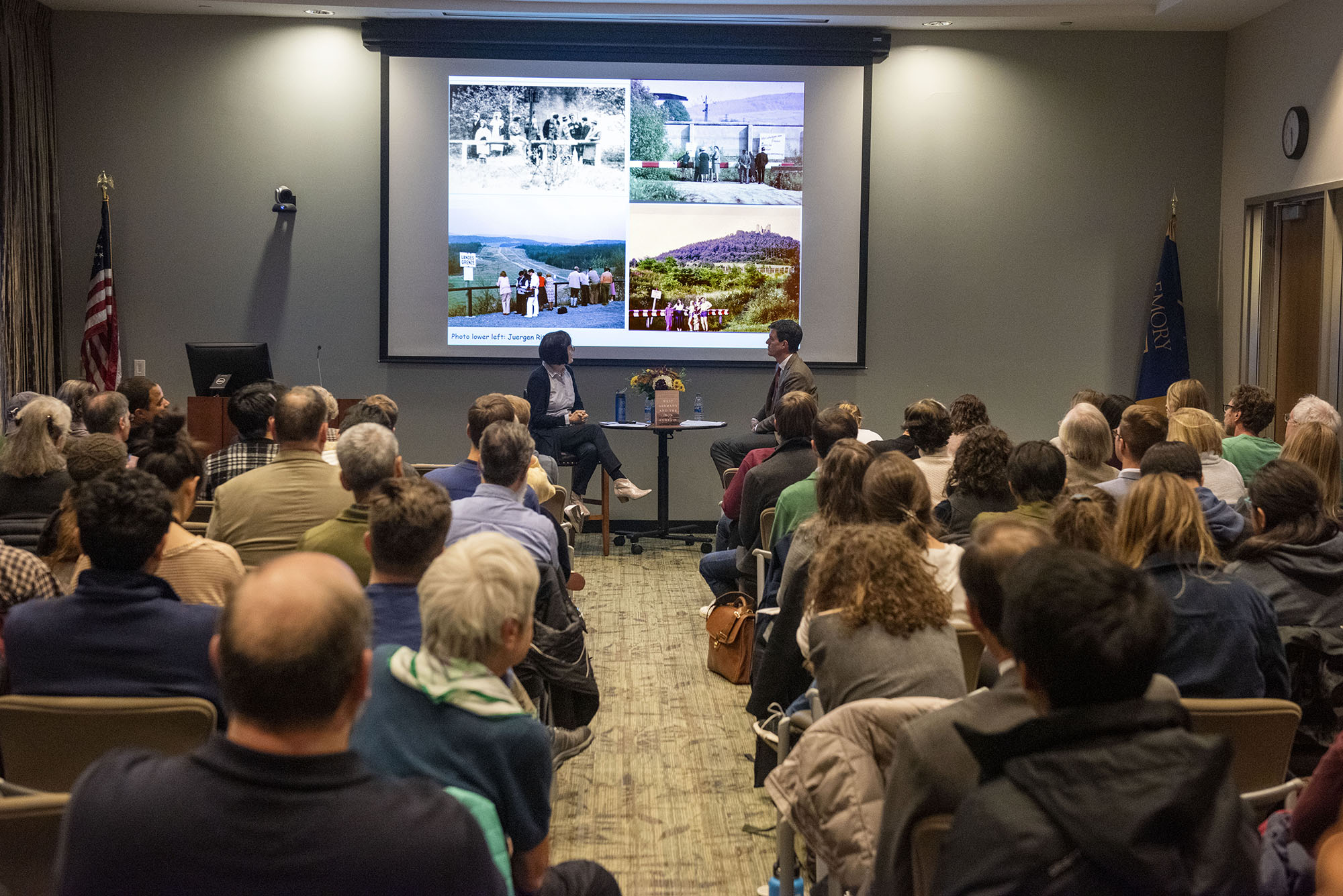
Dr. Astrid M. Eckert, Associate Professor of History, published West Germany and the Iron Curtain: Environment, Economy, and Culture in the Borderlands with Oxford University Press in October 2019. The History Department recently sponsored a public presentation and conversation about the new monograph with Eckert and Joseph Crespino, Department Chair and Jimmy Carter Professor of History. Over 75 guests attended the event, which is the first of three that the Department will host this year. To learn more about Eckert’s newest work, read the recent written Q&A we published: “New Books Series: Q & A with Astrid M. Eckert about ‘West Germany and the Iron Curtain.’”

AstridTalk 28

Samantha Perlman (17C) Wins City Council Election in Massachusetts

Former History major and 2017 alumna Samantha Perlman was recently elected to the city council of Marlborough, MA. Perlman is the youngest woman elected to Marlborough’s city council, and in the election earlier this month she received more votes than any other candidate. Perlman completed a double major in History and African-American Studies at Emory. Read more about the recent election: “After Dogged Campaign, Perlman Is Marlborough’s Biggest Winner.”

Emory News Center Features Eckert’s ‘West Germany and the Iron Curtain’ in Advance of Talk with Crespino

The Emory New Center recently published a feature about Dr. Astrid M. Eckert‘s new book, West Germany and the Iron Curtain: Environment, Economy, and Culture in the Borderlands (Oxford UP). The article presents some of Eckert’s central findings, which she will discuss in more depth with History Department Chair Joseph Crespino on Thursday, November 14. Find out more information about the event, hosted at 5pm in the Jones Room, 311 of the Robert W. Woodruff Library, here. Read the full Emory News Center article (written by April Hunt): “Iron Curtain’s consequences still evident for former West Germany.” Also learn more about the project by checking out our recent Q&A with Eckert: “New Books Series: Q & A with Astrid M. Eckert about ‘West Germany and the Iron Curtain’.” 

Eltis Cited in ‘Nature’ Article on Tracing Origins of the Enslaved from St. Helena Island

David Eltis, Woodruff Professor Emeritus of History, was recently cited in a Nature article on research tracing the origins of the enslaved on St. Helena Island. Led by University of Copenhagen researchers Marcela Sandoval-Velasco and Hannes Schroeder, the study analyzed the DNA of 20 individuals from St. Helena and concluded that they were likely taken from West-Central Africa, or present-day Gabon and Angola. The piece quotes numerous scholars who see promise in genomic analysis for reconstructing the geographic origins of the enslaved.

Eltis co-founded Slave Voyages, the Emory-based digital memorial and database that collects nearly 36,000 transatlantic slaving voyages. This past summer Slave Voyages was re-launched in expanded and updated form. The Emory News Center featured the new edition here: “Documenting Slave Voyages: Led by Emory, a massive digital memorial shines new light on one of the most harrowing chapters of human history.”

Read the excerpt from the Nature piece that features Eltis below along with the full article: “Genomes trace origins of enslaved people who died on remote island.”

“David Eltis, a historian at Emory University in Atlanta, Georgia who co-founded a database that collects information on 36,000 slaving voyages between 1514 and 1866, notes that most people captured in the transatlantic slave trade originated from south of the equator — where a paucity of genome data from modern inhabitants makes it difficult to trace the origins of enslaved individuals with any accuracy.”