‘Archival Lives’ Conference Brings Leading Scholars of the African Diaspora and Slavery to Emory

In early December 2019 leading scholars of the African diaspora and slavery will gather at Emory University for a conference entitled “Archival Lives.” The conference is organized by Adriana Chira (Assistant Professor, History), Clifton Crais (Professor, History and Director, African Studies), and Walter C. Rucker (Professor, History and African American Studies). The History Department is a co-sponsor of the conference, which will feature multiple current and emeritus faculty along with PhD program alumni. Read more about the event on the website for Emory’s Institute for African Studies: “Archival Lives Conference.”

Crespino Discusses Polarization, Past and Present, on GPB’s ‘Political Rewind’

Dr. Joseph Crespino, History Department Chair and Jimmy Carter Professor of History, was recently a featured guest on Georgia Public Broadcasting’s show Political Rewind. The special edition show, which is hosted by Bill Nigut, was titled “Our Polarized Politics, How Did We Get Here?” Read a summary of the show below and listen to the full conversation at GPB’s Political Rewind.

“Today on Political Rewind, Republicans have called the impeachment investigation of President Trump a Democratic witch hunt. Two decades ago, Democrats attacked the impeachment of President Clinton with similar fury.

Efforts to impeach a president may reveal the deep partisan divide that cleaves our country in two, but the growth of political polarization began long before Clinton and Trump came on the scene.

Today, we’ll look at key moments in American history that revealed the sharpness of our partisan divide, and propelled it forward.”

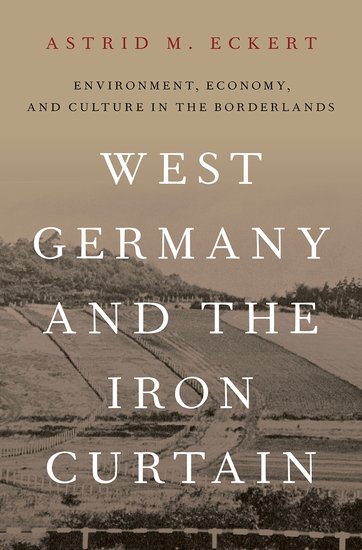
Dr. Astrid M. Eckert Publishes New Book: ‘West Germany and the Iron Curtain’

west-germany.jpg

Congratulations to Dr. Astrid M. Eckert on the publication of her book West Germany and the Iron Curtain: Environment, Economy, and Culture in the Borderlands with Oxford University Press. The book takes a fresh look at the history of Cold War Germany and the German reunification process from the spatial perspective of the West German borderlands that emerged along the volatile inter-German border after 1945. It also provides the first environmental history of the Iron Curtain. Dr. Eckert is Associate Professor of History.

Carl Suddler Discusses Race and the Criminal Justice System on ‘Politics and Polls’

Assistant Professor of History Dr. Carl Suddler recently appeared on the Princeton University Podcast Politics and Polls. Julian Zelizer interviewed Suddler in a conversation that centered on the racialized nature of the criminal justice system. Suddler’s first book, Presumed Criminal: Black Youth and the Justice System in Postwar New York, was published by NYU Press earlier this year. Listen to the full episode here: “Politics & Polls #156: Black Youth and the Criminal Justice System Ft. Carl Suddler.”

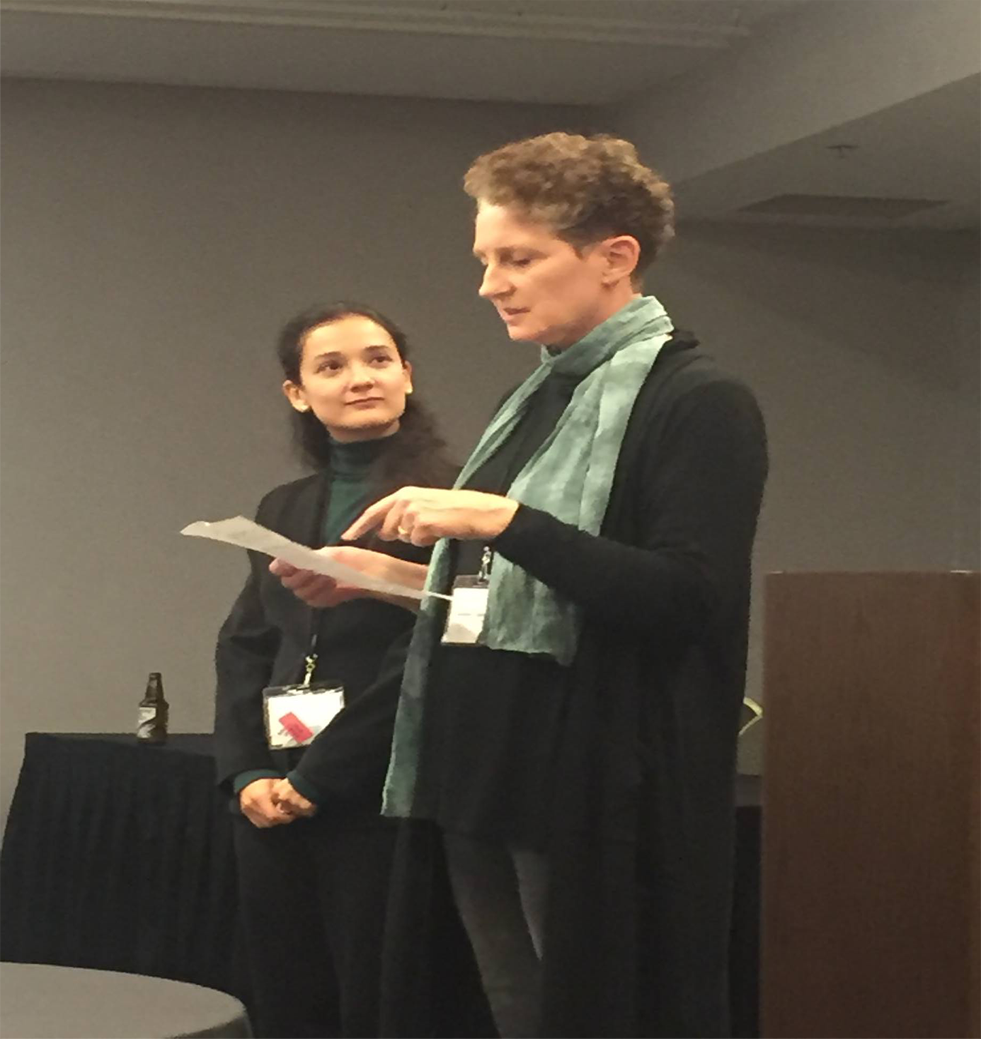
Claudia Kreklau (PhD, ’18) Wins Article Prize from Goethe Society of North America

kreklau.png

Congratulations to Claudia Kreklau (PhD ’18), who won the Richard Sussman Prize in the History of Science 2019 for her article “Travel, Technology, Theory: The Aesthetics of Ichthyology during the Second Scientific Revolution” (German Studies Review, 2018). The prize is awarded by the Goethe Society of North America and was announced at the German Studies Association 43rd Annual Meeting in Portland, Oregon.

Carol Anderson on Impeachment, Democracy, and White Supremacy in the ‘Washington Post’

Dr. Carol Anderson recently authored an op-ed for The Washington Post, titled “Impeachment is the latest chapter in the battle between democracy and white supremacy.” Anderson, an expert in race, justice, and equality in the U.S., surveys key episodes from U.S. history that contextualize Donald Trump’s reaction to the recently-initiated impeachment investigation. She concludes that “When it comes to a nation held hostage to racism, we have been here before.” Professor Anderson is Associated Faculty in the History Department, Charles Howard Candler Professor of African American Studies, and Chair of African American Studies. She is also the author, most recently, of One Person, No Vote: How Voter Suppression is Destroying Our Democracy (Bloomsbury, 2018). Read an excerpt of the article below along with the full piece here.

“Since the nation’s founding, the refusal to believe in democracy and follow through on the nation’s ideals — equality and freedom — has been the nation’s consistent enemy. Time and time again, white supremacists have sacrificed these principles to advance their own interests and that of their white supporters. Trump has followed suit, adding the disregard for the rule of law to the list. When challenged, he has also invoked the strategy white supremacist leaders have also mastered: threats of violence and extortion.”  – Carol Anderson

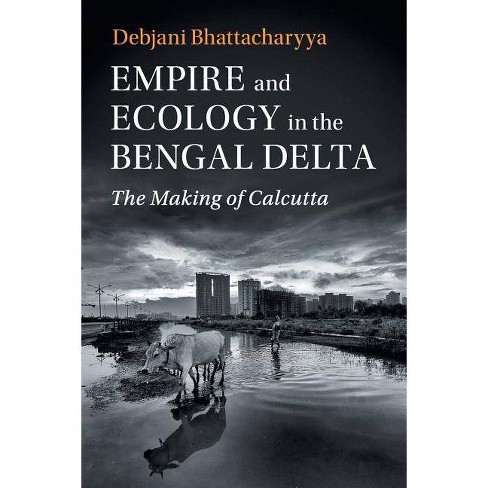
Debjani Bhattacharyya (PhD, ’14) Wins Honorable Mention for Best Book from the Urban History Association

Congratulations to Dr. Debjani Bhattacharyya, Assistant Professor of History at Drexel University and a 2014 PhD, whose first book recently won an award from the Urban History Association. Bhattacharyya published Empire and Ecology in the Bengal Delta: The Making of Calcutta with Cambridge in May of 2018. The Urban History Association awarded the book honorable mention for 2017-18 Best Book in Non-North American History.  Bhattacharyya is currently a Visiting Research Scholar at Princeton University in the Department of History and the Shelby Cullom Davis Center for Historical Studies.

Deborah Dinner Quoted in ‘Washington Post’ Article on Gender Discrimination in the Workplace

Dr. Deborah Dinner, Associate Professor at Emory Law and Associated Faculty in the History Department, recently contributed to an article in The Washington Post. Dinner, a specialist in the legal history of gender and work, discusses gender discrimination in the workplace in advance of a Supreme Court case that will revisit LGBTQ rights at work. Marisa Iati wrote the piece, titled “Supreme Court, set to rule on LGBTQ rights at work, addressed gender discrimination 30 years ago.” Read an excerpt below along with the full piece.

“The stereotype is that a male should dress in a certain way or perform his gender identity in a particular way or should have romantic relationships with women and not men,” Dinner said. “And so by discriminating on the basis of somebody’s gender identity or on the basis of their sexual orientation, what an employer in fact is doing is discriminating on the basis of a gender stereotype.” – Deborah Dinner

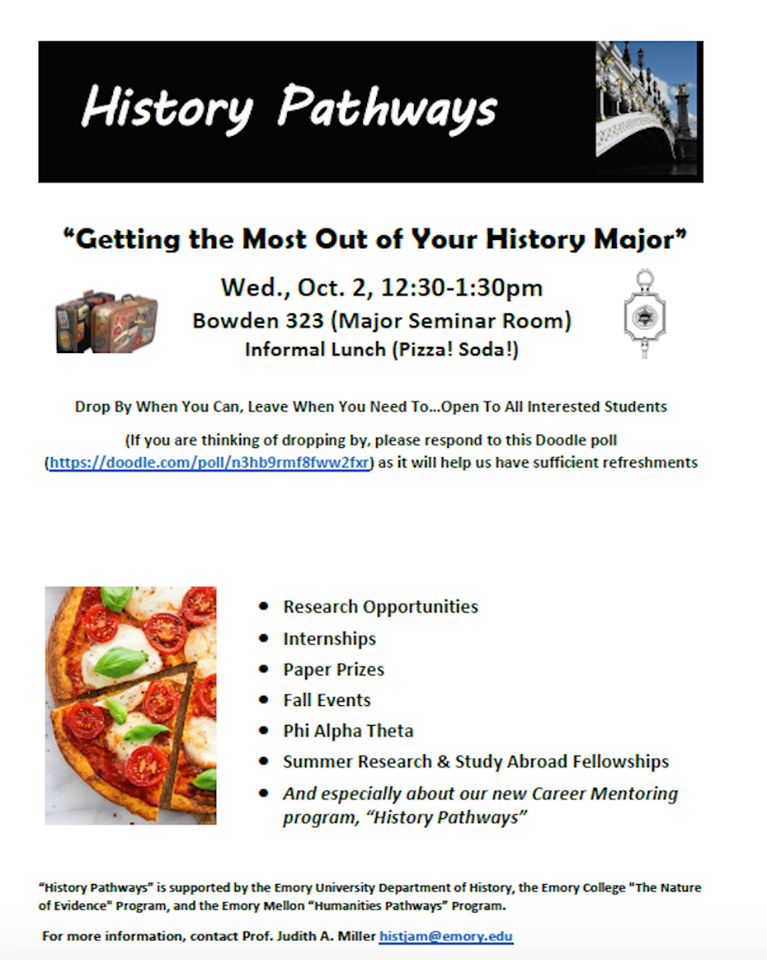
Join us for First ‘History Pathways’ Event: “Getting the Most Out of Your Emory History Major”

Join us for our first History Pathways event, “Getting the Most Out of Your Emory History Major,” on Wednesday, October 2, from 12:30-1:30pm in Bowden Hall 323. The event is open to all students – from first year through seniors – who want to learn more about Emory’s History Department. The event will include pizza and soft drinks, and we will cover the many exciting opportunities we offer for undergraduates, such as Cuttino Fellowships and Clio Paper Prizes. We will also launch our “History Pathways” program, aimed at developing career mentoring and internship programs. If you plan to attend, please respond to the poll here. Reach out to Professor Judith A. Miller (histjam [at] emory [dot] edu) with any questions. 71478852_1343103635864184_8628822273870004224_n.png

Alumni Update: Alexander Gouzoules (C’08) Publishes “The Diverging Right(s) to Bear Arms”

Alexander Gouzoules graduated from Emory College in 2008 and subsequently attended Harvard Law School. He recently published an article, “The Diverging Right(s) to Bear Arms: Private Armament and the Second and Fourteenth Amendments in Historical Context,” in the University of Alabama Civil Rights and Civil Liberties Law Review (Vol. 10, 2019). The blog Second Thoughts from Duke University recently featured Gouzoules’ piece in their Scholarship Spotlight series. Read part of their summary below, along with the full article here. Gouzoules is an attorney in New York City.

“The main thrust of the article is to emphasize and explore the nature and scale of change in how private armament was understood between 1791, when the Second Amendment was ratified, and 1868, when the Fourteenth Amendment (which makes the Second Amendment applicable to the states) was ratified. To over-simplify a bit: While private arms-bearing to deter the tyranny of the standing federal army might have made sense in the 1790s, the situation was entirely different by the late 1860s. In showing as much, Gouzoules deepens (and credits) an argument that Akhil Amar made more than a decade before Heller. Gouzoules’ target is not simply the Second Amendment, however, but originalism itself: ‘These radically different understandings can only be reconciled by defining the right to bear arms at such a high level of generality as to overlook the actual intentions of both amendments’ framers, thus undermining the project of originalism to which these contemporary decisions were ostensibly committed.’