History Honors Student and Undergraduate Fox Center Fellow Yi Xie (19C) Reflects on Research

Senior History Honors student Yi Xie is currently working on her thesis as an undergraduate fellow at the Fox Center for Humanistic Inquiry. Xie’s thesis is titled “Becoming American in a Multiracial Context: Chinese ‘Sojourners’ and African Americans’ Battle for Inclusion in a White Republic, 1868-1904.” She recently wrote a reflection, “Becoming American: A Historical Parallel between Chinese Immigrants and African Americans, 1868-1904,” about her research and experiences at the Fox Center. Read the full post here along with an excerpt from the abstract of her project below.

“This research aims to develop a clear understanding of the racial dynamics of the second half of the nineteenth century by studying the ‘Chinese Question,’ the ‘Negro Problem,’ and the relations between the two from the perspectives of abolitionists, Caucasian immigrants, African Americans, and the Chinese. She investigates why and how the ‘Chinese Question’ and the ‘Negro Problem’ were conflated and differentiated, and how dynamic and complex were the relations between the two. She also conducts a comparative study of anti-black and anti-Chinese violence on the West Coast. She has visited archives in Northampton, MA and will conduct more archival research in Seattle, WA.”
Dr. Carol Anderson on Election Fraud and Voter Suppression in ‘The New York Times’

Dr. Carol Anderson recently published an opinion piece, “Our Democracy Is Being Stolen. Guess Who the Thieves Are,” in The New York Times. Anderson is Associated Faculty in the History Department and Charles Howard Candler Professor and Chair of African American Studies. Her piece addresses claims and realities of voter suppression and election fraud with a focus on the recent midterm election in North Carolina’s Ninth Congressional District. Anderson is, most recently, the author of White Rage: The Unspoken Truth of Our Nation’s Divide (Bloomsbury, 2017). Read an excerpt below along with the full piece here.

“The real theft of American democracy happens through election fraud and voter suppression. And Republicans are the thieves.

“What happened in North Carolina during the 2018 midterms was a textbook case of election fraud. That’s when a candidate’s campaign sets out to manipulate vote tallies to steal an election.”

Mary L. Dudziak in ‘The Washington Post’: “The Toxic Legacy of the Korean War”

Asa Griggs Candler Professor of Law Mary L. Dudziak recently published an article in The Washington Post on how the Korean War shaped the balance of power between the executive and legislative branches of the United States government. Dudziak, who is affiliated faculty in the History Department, charts how Harry S. Truman’s 1950 decision to authorize military action in the Korean peninsula without congressional authorization established a precedent that U.S. presidents have invoked since. Read an excerpt of Dudziak’s piece below and the full article, “The toxic legacy of the Korean War,” here:

“The Korean War precedent converged with and informed another practice. After Korea, authorizations for the use of military force became the primary way for Congress to exercise its constitutional power. This method has been around since 1798, when President John Adams sought authority to use the Navy to protect American ships during an undeclared naval war with France.

Authorizations replaced war declarations for even large-scale wars like the one in Vietnam. In 2001, Congress passed an Authorization for Use of Military Force approving armed conflict “against those nations, organizations, or persons” who had “planned, authorized, committed, or aided the terrorist attacks that occurred on September 11, 2001,” and those who had harbored them. Like the Korean War precedent, this had unexpected aftereffects. It was later interpreted to apply to groups that did not even exist at the time it was passed. Through this process, presidential war power has become a one-way ratchet. By failing to step in, Congress has acquiesced in the loss of its own power.”

‘HowStuffWorks’ Features Crespino’s ‘History 385: Right-Wing America’

This spring Jimmy Carter Professor of History and Department Chair Joseph Crespino is teaching a 385 course titled “Right-Wing America.” HowStuffWorks contributing writer John Donovan recently featured Crespino’s course in the article “Bridging the Chasm: Emory Class Delves Into America’s Right-wing History.” HowStuffWorks editorial board describes the website as a “source for unbiased, reliable, easy-to-understand answers and explanations of how the world actually works.” Read the full article here and check out Donovan’s observations from the first day of the spring course below.

“‘Donald Trump really defied what we thought we knew about American politics,’ Crespino tells his class that first day. ‘Trump’s election not only kind of upended what we thought were these iron laws of American politics’ — mainly, that candidates have to run toward the center to get elected — ‘but it also makes the American past look a lot different, you know? Things that we used to take for granted as kind of hiccups along the way all of a sudden look more important. And they look more ominous. And we begin to see that they weren’t just hiccups, but they’re kind of a recurring pattern.’

That pattern is what interests scholars. It’s what Crespino hopes his students will grasp, too; that the ideas and beliefs that drive right-wing America today didn’t begin with Trump. And they won’t disappear when he does, either.”

History Major John Priddy Named Bobby Jones Scholar

Congratulations to John Priddy, a senior History and Political Science double major, for being selected as one of four students to receive Emory’s prestigious Robert T. Jones Jr. Scholarship. Active since 1976, the program supports a year of study at the University of St Andrews in Scotland for students who exhibit academic excellence, character, and integrity. Priddy’s academic and policy interests center on the criminal justice system, particularly the factors that shape public opinion about solitary confinement. Read more about Priddy’s extensive leadership on Emory’s campus as well as this years other Bobby Jones Scholars: “Outstanding students chosen as Bobby Jones Scholars for study in Scotland.”

Lipstadt Discusses the Reemergence of Public Antisemitism on ‘All Things Considered’

NPR’s Michel Martin, host of “All Things Considered,” recently interviewed Dr. Deborah E. Lipstadt about the resurgence of public antisemitism in the contemporary United States. Lipstadt is, most recently, the author of Antisemitism: Here And Now (Schocken, 2019). At Emory she holds positions as Dorot Professor of Modern Jewish History and Holocaust Studies and as associated faculty in the History Department. Read the full transcript of the interview here.

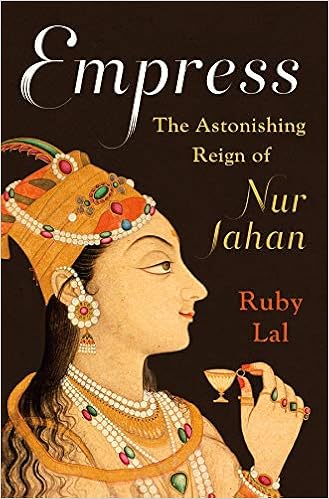
Ruby Lal’s ‘Empress: The Astonishing Reign of Nur Jahan’ Named Finalist for ‘L.A. Times’ Book Prize

Congratulations to Dr. Ruby Lal, Professor of South Asian Studies and affiliated faculty in the History Department. Lal’s recent monograph, Empress: The Astonishing Reign of Nur Jahan (W. W. Norton & Company, 2018), has been named a finalist in the History category for the 2018 L.A. Times Book Prize. Read more about Lal’s book here.

History Honors Student Junyi Han Presents at Texas A&M Conference on Resistance and the ‘Great Purge’

Junyi Han, an undergraduate and Honors student in the History Department, will present a paper at the 10th Annual Texas A&M History Conference: “Resistance in Retrospect.” Han’s paper asks why the “Great Purge,” or Joseph Stalin’s violent repression of dissenters in the 1930s, did not generate greater resistance in Soviet society. Han has conducted the research under the direction of Dr. Matthew Payne, Associate Professor of History and a specialist in modern Russian and Soviet history. Read more about the conference and check out Han’s abstract below:

The Spread of Terror

This research project examines a lack of resistance against the Great Purge in the Soviet Union. This topic has great historical significance and rich research potential. A thorough examination of the reasons that caused a lack of resistance among Soviet society can provide insights into the dynamics of the Great Purge and facilitates an understanding of mass terror under dictatorial regimes in general.

While the Great Purge was originally targeted at the political elites, it expanded at an unexpected speed and millions of ordinary civilians became its victims. My research uses a bottom-up approach to examine the internal driving forces that dragged people into this political turmoil. The findings are mainly based on primary sources, such as personal letters, diaries, and memoirs. I have also consulted secondary literature to support my argument.

This project suggests that the expansion of terror is in fact largely a matter of individual choice. During the Great Purge, a sense of duty, fear, personal grudges, and opportunism significantly propelled Soviet people to spread terror at a breakneck speed, and therefore caused numberless victims to be devoured in the 1930s. This research provides insights into the dynamics of mass terror and serves as a stepping stone for further research on political repressions in dictatorial regimes.

Jeffrey Lesser Lectures on “Bad Health in a Good Retreat” at the University of Cape Town’s African Centre for Cities

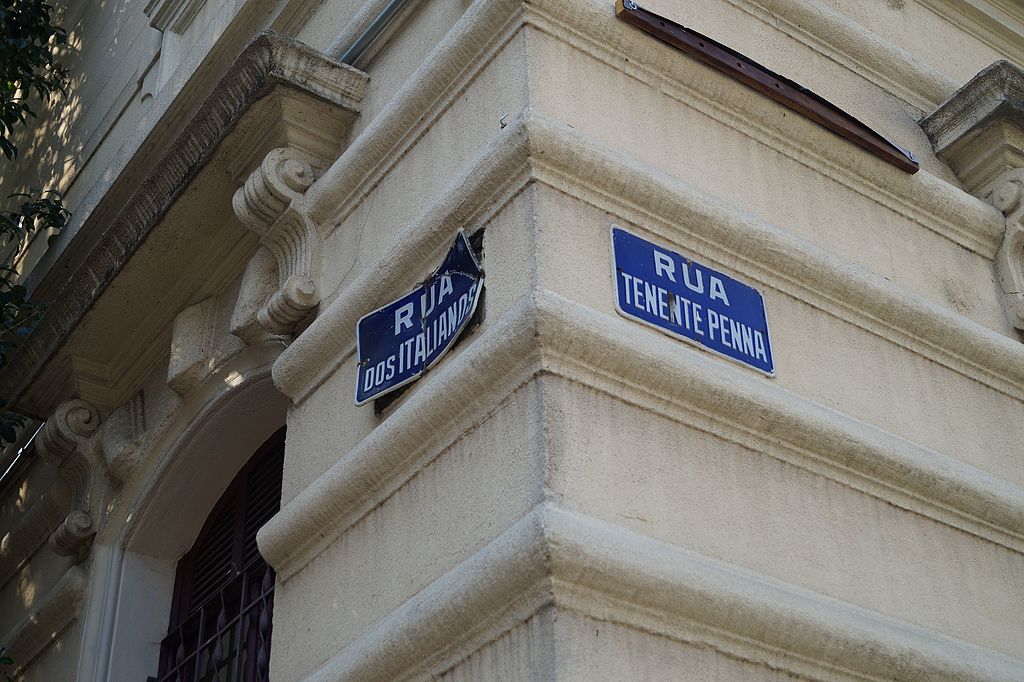
Localização_do_Desinfectório_Central_(Bom_Retiro_-_São_Paulo_-_SP)

Bom Retiro’s Desinfectório Central, a key site of public health history in São Paulo. Image by Giuliana Saringer [CC BY-SA 4.0 (https://creativecommons.org/licenses/by-sa/4.0)]

Dr. Jeffrey Lesser, Samuel Candler Dobbs Professor of History and Director of the Halle Institute for Global Research and Learning, will deliver a seminar at the University of Cape Town’s African Studies Centre on February 25, 2019. Lesser will speak about his research on the history of public health in São Paulo’s Bom Retiro neighborhood. The talk is entitled, “Bad Health in a Good Retreat: Life and Death in the ‘Worst’ Neighborhood of São Paulo, Brazil.” Read the paper abstract below and find out more information about the seminar.

Bom Retiro was (and is) a small neighborhood in the huge megalopolis of São Paulo, Brazil.  The mainly working class neighborhood has been populated since the end of the 19th century by immigrants, migrants from the impoverished Brazilian northeast, and Afro-Brazilian descendants of slaves. While the cultural backgrounds of the immigrants have shifted (from Italians, Spaniards and Portuguese Catholics in the early 20th century to East European Jews in the mid-20th century to Chinese, Korean, Paraguayan, and Bolivian immigrants today), the neighborhood has been viewed internally and externally as one where health (in the broadest sense of the word) is precarious. “Bad Health in a Good Retreat” analyzes the relationship between “Public Health” (as a state driven set of policies and linked enforcement) and “The Public’s Health” (how real people understand their own experiences).  By focusing on one square block of Bom Retiro from about 1900 to the present I use archival and ethnographic methods to analyze the daily practices of residents and health officials, and the stories they tell about life, death, and the spaces in between.


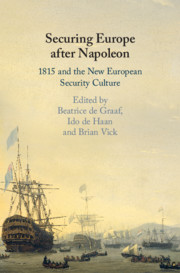
Brian Vick Co-Edits ‘Securing Europe after Napoleon’ with Cambridge UP

securing-europe

Cambridge University Press recently released the edited volume Securing Europe after Napoleon: 1815 and the New European Security Culture, co-edited by Emory Professor of History Brian Vick. Vick’s collaborators are Beatrice de Graaf (Universiteit Utrecht, the Netherlands) and Ido de Haan (Universiteit Utrecht, the Netherlands). The volume includes a chapter by Vick, who is a specialist in Modern Germany and Central Europe in the Long Nineteenth Century, entitled “The London Ambassadors’ Conferences and Beyond: Abolition, Barbary Corsairs, and Multilateral Security In The Congress Of Vienna System.” A book launch in New York City will take place on February 27. More details and registration can be found at: bit.ly/after-napoleon.