Dr. David Eltis Named to American Academy of Arts and Sciences

Congratulations to Dr. David Eltis, who was recently elected to the American Academy of Arts and Sciences. A brief profile of Dr. Eltis’ storied career was published by the Emory News Center and is reproduced below:

David Eltis, professor of history emeritus, joined the Emory faculty in 2002 and served as the Robert W. Woodruff Professor of History for the next decade. His research focuses on the early modern Atlantic world, slavery and migration, and he is considered one of the foremost authorities on these issues. Eltis is co-editor of the Transatlantic Slave Trade database (www.slavevoyages.org), a groundbreaking free and interactive Web-based resource that documents the slave trade from Africa between the 16th and 19th centuries.

Growing out of the Voyages database research, Eltis served as principal investigator of a three-year National Endowment for the Humanities collaborative project on the origins of Africans pulled into the transatlantic slave trade. The African Origins Project draws on the records of 92,000 names (taken down pre-orthographically) and descriptions of Africans liberated from slave vessels in the first half of the 19th century. The information was extracted from the registers of international courts created to adjudicate vessels detained as they engaged in the transatlantic slave trade.

Eltis is the author of “Economic Growth and the Ending of the Transatlantic Slave Trade” (1987), which won the Trevor Reese Memorial Prize, and “The Rise of African Slavery in the Americas” (2000), awarded the Frederick Douglass Prize, the John Ben Snow Prize and the Wesley-Logan Prize. His “Atlas of the Transatlantic Slave Trade” (2010), co-authored with David Richardson, won four prizes including the American Publishers Award for the most outstanding scholarly work in all disciplines of the arts and sciences. He has edited and co-edited numerous scholarly collections and published over 80 research essays, including five in the American Historical Review.

A research associate since 1993 at Harvard University’s W.E.B. Du Bois Research Institute, Eltis is completing work on creating sustainability for the Voyages website.

Daniel LaChance Publishes Article in ‘The Conversation’

Professor LaChance, Assistant Professor in the Emory History Department, published an article in The Conversation titled “Utah’s firing squad plan is another twist in America’s long quest for a perfect execution method.”

Here is an excerpt from the piece:

Shooting people kills them more quickly and reliably than electrocuting, gassing, or poisoning them. But it’s harder to watch or read about than lethal injection.

The raw violence of the act puts it at odds with the aesthetic values that have historically shaped the development of capital punishment in the United States. Guns uncomfortably blur the line between the righteous violence of the state and the lawless violence of the criminal. The gun is, historically speaking, the only instrument of execution that is also commonly used by criminals. Its use in executions reminds us of a past in which there was less of a distinction between the state that carried out the law and those it punished.

Indeed, in its jarring loudness, its bloodiness, and its mutilating effects on the body, execution by firing squad comes much closer to expressing the “eye for an eye” logic that has long stoked Americans’ demand for the death penalty, but that has, since the nineteenth century, been carefully excised from its actual administration.

That, in the end, is what is most newsworthy about Utah’s decision to return to the gun. In the violent imagery it conjures, execution by firing squad has the power to remind Americans of a simple truth that lethal injection has, for a long time, made it easy for them to forget: executions are acts of extreme, body-mutilating violence.

PhD Alumnus Alex Borucki and Dr. David Eltis Co-Publish Article in the American Historical Review

Emory History Department PhD Alumnus Alex Borucki co-wrote and published “Atlantic History and the Slave Trade to Spanish America” in The American Historical Review with Dr. David Eltis of Emory and Dr. David Wheat of Michigan State. The article can be found here.

Borucki is currently an Assistant Professor of History at the University of California, Irvine. Borucki’s From Shipmates to Soldiers: Emerging Black Identities in the Río de la Plata will be published by University of New Mexico Press in 2015. He is also the author of Abolicionismo y tráfico de esclavos en Montevideo tras la fundación republicana (Biblioteca Nacional, 2009) and co-author, with Karla Chagas and Natalia Stalla, of Esclavitud y trabajo: Un estudio sobre los afrodescendientes en la frontera uruguaya(Pulmón Ediciones, 2004.

David Eltis is Emeritus faculty at Emory and Research Associate at the University of British Columbia. Among many publications, he is the author of Economic Growth and the Ending of the Transatlantic Slave Trade (Oxford University Press, 1987) and The Rise of African Slavery in the Americas (Cambridge University Press, 2000), and co-author, with David Richardson, of the Atlas of the Transatlantic Slave Trade (Yale University Press, 2010). Along with Paul Lachance and Martin Halbert, he is the co-creator of the Trans-Atlantic Slave Trade Database, an open-access website containing an interactive database of more than 35,000 slave voyages that has led to major advancements in the understanding of this traffic.
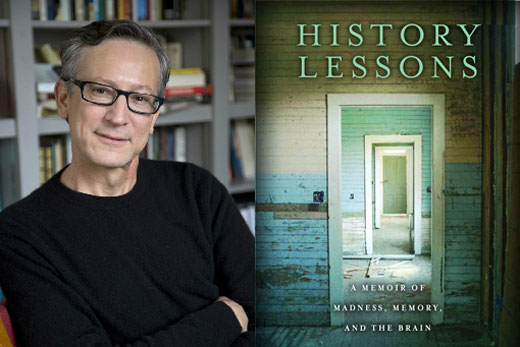
Jeffrey S. Reznick (PhD, 1999) received the 2015 Archivists and Librarians in the History of the Health Sciences (ALHHS) best article award

Jeffrey S. Reznick (PhD, 1999), who is Chief of the National Library of Medicine’s History of Medicine Division, received the 2015 Archivists and Librarians in the History of the Health Sciences (ALHHS) best article award for “Embracing the Future as Stewards of the Past: Charting a Course Forward for Historical Medical Libraries and Archives.” The article appeared in RBM: A Journal of Rare Books, Manuscripts, and Cultural Heritage (fall 2014 volume 15, number 2). Co-edited by Dr. Reznick and Michelle DiMeo, PhD, Curator of Digital Collections at the Chemical Heritage special, this open-access issue which contains the proceedings of the December 2013 symposium Emerging Roles for Historical Medical Libraries: Value in the Digital Age held at the College of Physicians of Philadelphia.

Alumni and Friends: Help Fund Student Research

The Emory College Department of History places student research at the heart of its mission. The department’s approach to learning—including quantitative analysis, close textual reading, work with primary materials, excellence in communication, and mastery of research methods—prepares students to do their own research on the cutting edge of the discipline. With a faculty distinguished for its expertise, Emory’s Department of History does more than ensure that undergraduates know about history. The department’s emphasis on independent research fosters the skills and intellectual discipline students need to thrive in any number of professions.

Through research, Emory students gain strong analytical abilities that help them in all aspects of their professional lives: in government work and with nongovernmental organizations, in medicine and other health professions, and in law and business.

Alumni and friends who want to champion historical understanding, educational excellence, or student success after graduation will find meaningful investment opportunities in undergraduate research at the Department of History.

Learn more here: Fund Student Research

Dr. Leslie M. Harris in ‘The New Republic’: ‘The Long, Ugly History of Racism at American Universities’

Dr. Leslie M. Harris, Associate Professor of History, penned an article for The New Republic titled “The Long, Ugly History of Racism at American Universities.” Here is a brief excerpt:

The events occurring on campuses today echo these troubled times and reveal the continuing unease that some have with diverse campuses. But significant progress has been made in the 65 years since Heman Sweatt attempted his law degree at University of Texas.