Chira`s `Patchwork Freedoms` Wins Elsa Goveia Book Prize from ACH

The Association for Caribbean Historians has awarded Dr. Adriana Chira’s book Patchwork Freedoms: Law, Slavery, and Race beyond Cuba’s Plantations (Cambridge UP, 2022) with its Elsa Goveia Book Prize. Named for renowned Caribbean historian Elsa Goveia (1925-80), the biennial prize recognizes scholarly excellence in the field of Caribbean history. Patchwork Freedoms was released as part of Cambridge’s Afro-Latin America series. The following citation about Patchwork Freedoms was read at the ACH annual meeting in June 2023:

In Patchwork Freedoms: Law, Slavery, and Race beyond Cuba’s Plantations (Cambridge University Press, 2022), Adriana Chira probes an extensive but little-known archive of legal documents to analyze how Afro-descendent rural cultivators negotiated liberty and landholding rights in nineteenth-century Santiago de Cuba. Her meticulous research demonstrates how protracted struggles against local legal institutions blurred the lines between enslavement and freedom. Chira argues that it was these gradual, lengthy, community-based processes, coupled with the flexibility of customary law, rather than innovations from above, that allowed these landholders to carve out spaces of greater autonomy. Patchwork Freedoms is an important counterpoint to scholarship that emphasize freedoms gained through Atlantic and circum-Caribbean mobility or formal processes of abolition and emancipation. It is essential reading for scholars of Atlantic world slavery, legal regimes, and agrarian societies. 
Students Contribute Original Research to the History of Skiing & Snowsports Website

Emory undergraduate students recently contributed their original research projects to the website of the History of Skiing & Snowsports course. Dr. Judith A. Miller, Associate Professor, has offered this innovative class since the spring semester of 2021. This year’s 24 student contributions tackle a range of compelling subjects, from the history of affordable housing in Aspen to the development of adaptive technologies that enable disabled persons to ride the slopes. View the full collection of student research, encompassing three years of the course’s offering, on the History of Skiing & Snowsports website.

Lipstadt Front and Center amid Biden Administration’s Effort to Combat Antisemitism

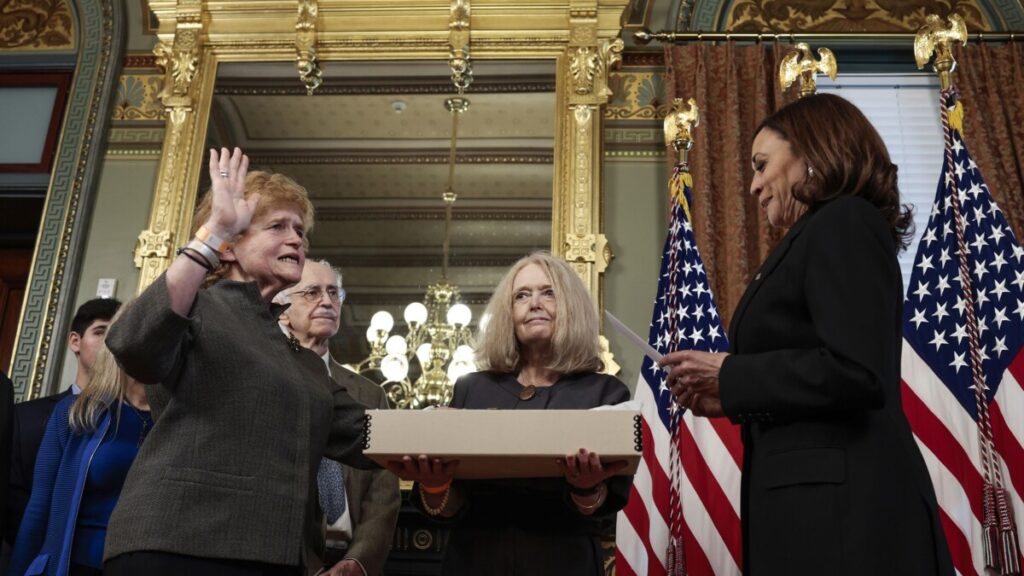
Dr. Deborah E. Lipstadt, Dorot Professor of Modern Jewish History and Holocaust Studies and the US Ambassador to monitor and combat antisemitism, was front and center at the recent release of the Biden Administration’s plan to combat rising hate, bias, and violence against Jews. The first-of-its-kind policy, dubbed the National Strategy to Counter Antisemitism, outlines more than 100 steps that the US government and other stakeholders can take to combat antisemitism. Lipstadt participated in the unveiling of the strategy at the White House alongside Doug Emhoff, spouse of Vice President Kamala Harris, White House domestic policy advisor Susan Rice, and homeland security adviser Liz Sherwood-Randall. Lipstadt described the strategy as a “historic moment in the modern fight against what’s known as the world’s oldest hatred.” Read more about the plan and the event via the AP News article “Biden releases new strategy to tackle rise in antisemitism, says ‘hate will not prevail’.”

Webster Awarded a 2023 NISS Dissertation Grant

Fourth-year doctoral candidate Anjuli Webster has been awarded a 2023 dissertation grant from the National Institute of Social Sciences. The NISS grant will support research for Webster’s dissertation, titled “Fluid Empires: Histories of Environment and Sovereignty in southern Africa, 1750-1900.” History department faculty members Clifton Crais, Mariana P. Candido, Yanna Yannakakis, and Thomas D. Rogers serve as advisors for Webster’s dissertation. The NISS typically awards no more than four grants each year, spanning the fields of Anthropology, Economics, History, Political Science, Psychology, and Sociology.

Olivia Cocking Receives Prestigious Chateaubriand Fellowship

Fourth-year doctoral candidate Olivia Cocking has received a prestigious Chateaubriand Fellowship in Humanities and Social Sciences (HSS), a grant administered by the Cultural Services of the Embassy of France in the United States. The fellowship will support research in France for Cocking’s dissertation, which examines how migrants from the French empire navigated municipal courts and social welfare programs in the metropole between 1919 and the 1960s. Cocking’s dissertation is advised by Drs. Judith A. Miller and Tehila Sasson.

Commencement

Nine History Doctoral Students Recognized at May 2023 Commencement

At the May 2023 Emory Commencement nine PhD candidates from the History Department were recognized for completing their degrees. Some of the students received their diplomas in the summer or fall of 2022 but were not honored until the 2023 ceremony. The students represent more than seven areas of research specialization and are pursuing an array of professional positions inside and outside the academy. In the table below, find the names, advisors, and dissertations of these recently-minted PhDs.

StudentAdvisorGraduation YearDissertation
Hannah R. AbrahamsonYanna Yannakakis2022“Women of the Encomienda: Households and Dependents in Sixteenth-Century Yucatan, Mexico”
Stephanie BryanAllen Tullos2023“‘Domesticated Outlaws’: Indigenous Species and Monocultural Capitalism in the American South”
Alexander Maximilian CorsYanna Yannakakis2022“Newcomers and New Borders: Migration, Settlement, and Conflict over Land along the Mississippi River, 1750-1820”
Mary Grace Gibbs DuPreeJudith Evans Grubbs2022“Faces of David: Late Antique and Medieval David Cycles in East and West”
Alexandra Lemos ZagonelJeffrey Lesser and Thomas Rogers2022“Blessed Generation: Countercultural Youth, Music, and Spirituality in Authoritarian Brazil”
Arturo Luna LorancaJavier Villa-Flores2023“The Dog Remains: Mexico City’s Canine Massacres During the Enlightenment, 1770-1821”
Timothy Reid RomansTonio Andrade2022“The Rise and Fall of the Suetsugu Maritime Dynasty of Tokugawa Japan, 1571-1676”
Madelyn StoneClifton Crais2022“Sovereignty Work: Policing Colonial Capitalism in South Africa, 1867–1936”
Anastasiia StrakhovaEric Goldstein and Ellie Schainker2022“Selective Emigration: Border Control and the Jewish Escape in Late Imperial Russia, 1881-1914”

Allitt Offers Historical Context on Charles’s Coronation Ceremony

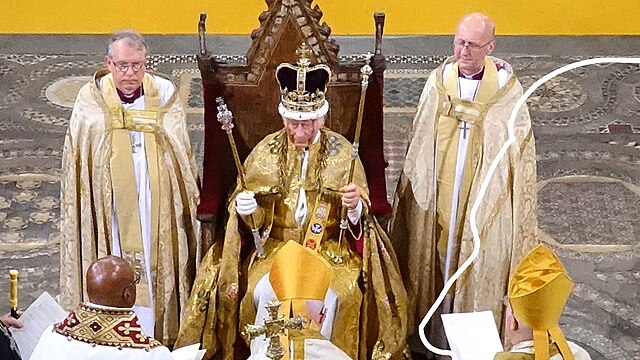
Dr. Patrick N. Allitt, Cahoon Professor of American History, was quoted early last month in a HuffPost article in the lead up to the coronation of King Charles of England. A native of England and specialist in American intellectual, environmental, and religious history as well as Victorian Britain, Allitt offered historical context for one of the key aspects of the ceremony: the king’s anointing. This part of the ceremony is both the most sacred and the most shrouded in secrecy. Read an excerpt of Allitt’s comments below along with the full article here: “We Won’t Even Get To See The Most Sacred Part Of King Charles’ Coronation.”

Patrick Allitt, a professor of American history at Atlanta’s Emory University, elaborated further on the anointing, telling HuffPost by email Thursday that “the idea is that the monarch is appointed not by the people but by God.” It’s a notion that he said “was held with special force in the 1600s.”

“I don’t suppose that anyone still believes that God chooses the king, but the British monarch is still the head of the Church of England,” Allitt said. “The secrecy surrounding the anointing is a way of emphasizing that it is the symbol of a contract between king and God rather than king and people.”

First-Year Graduate Students Present Research at Hi-Five Presentations

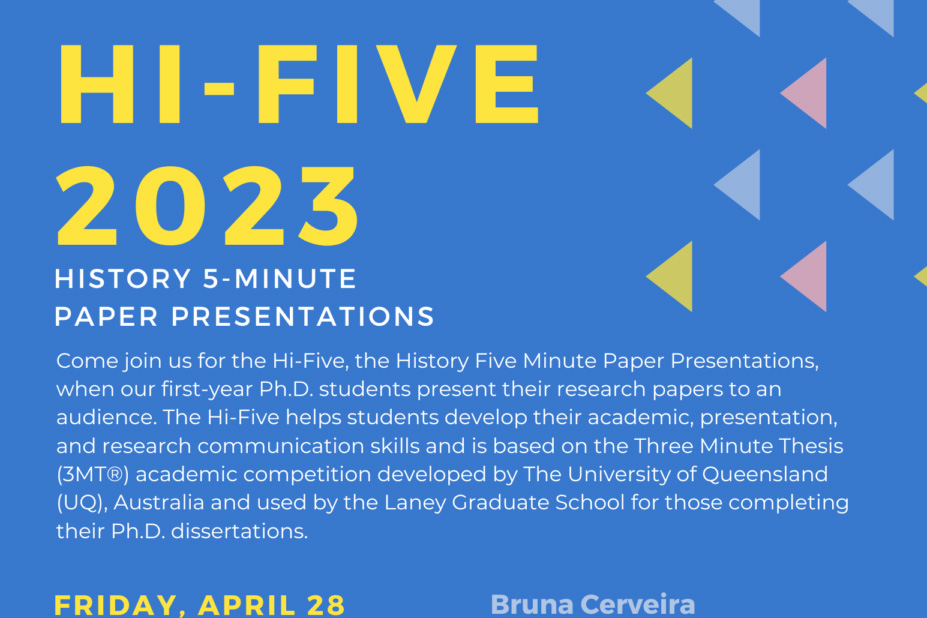
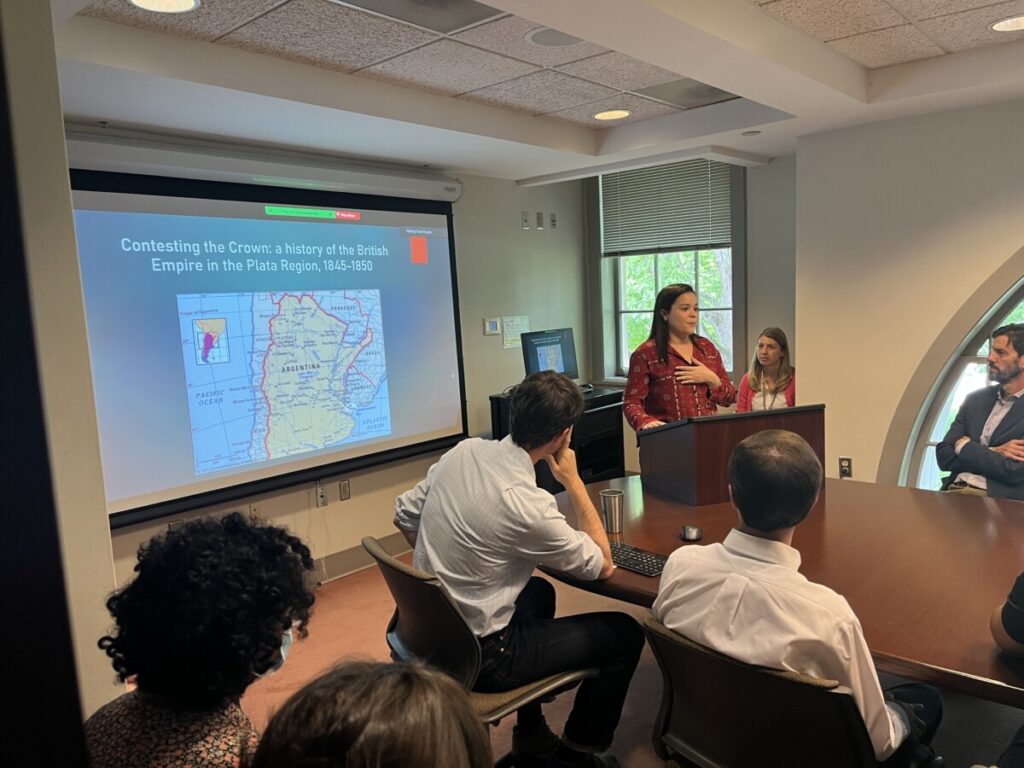
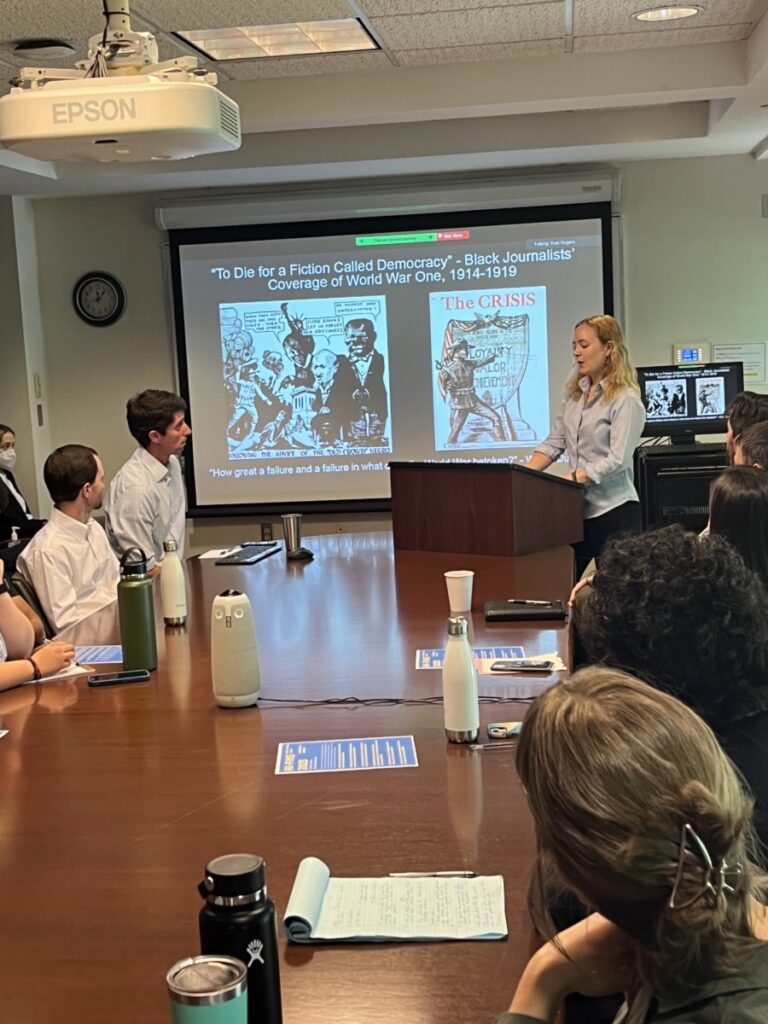
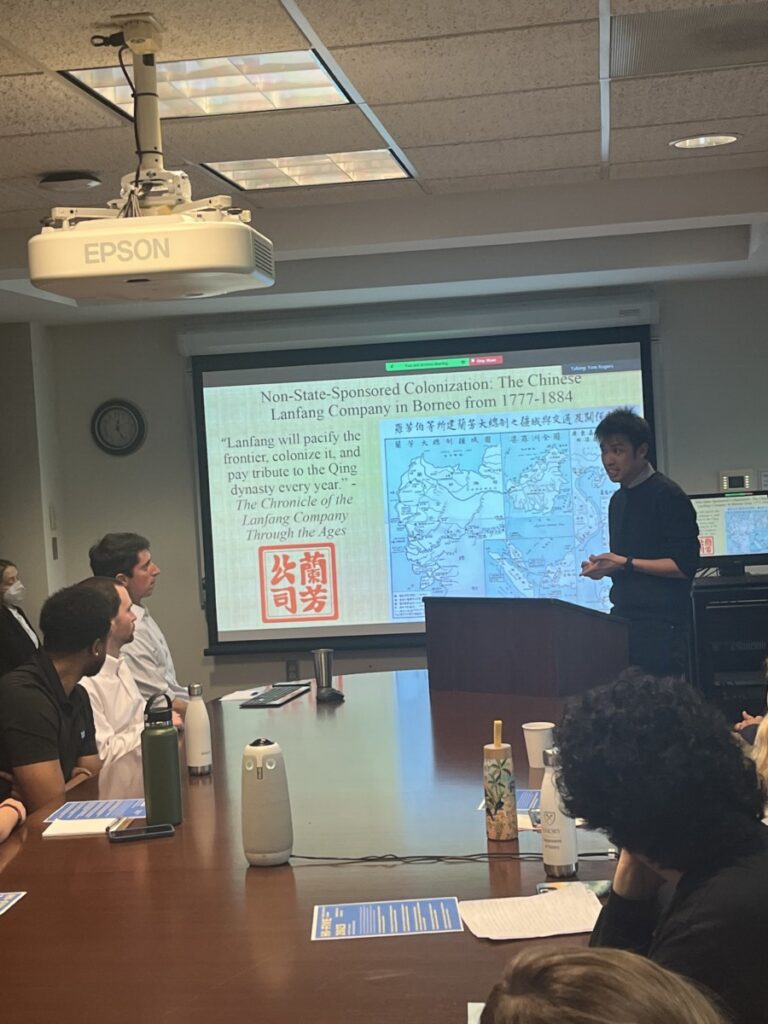
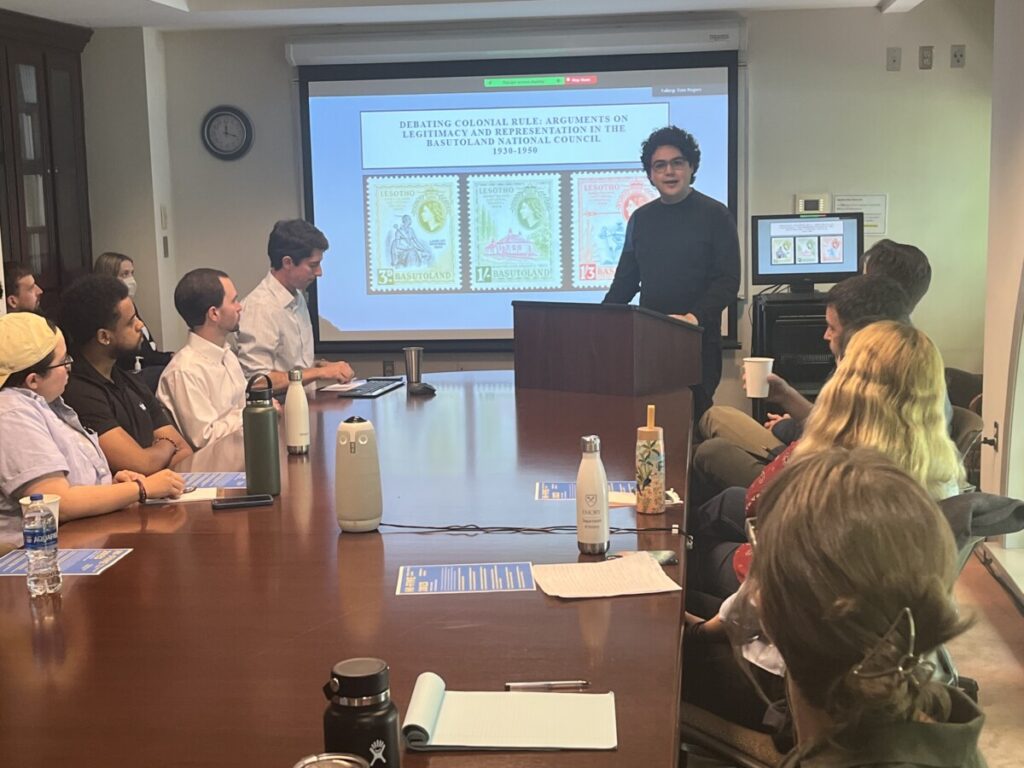
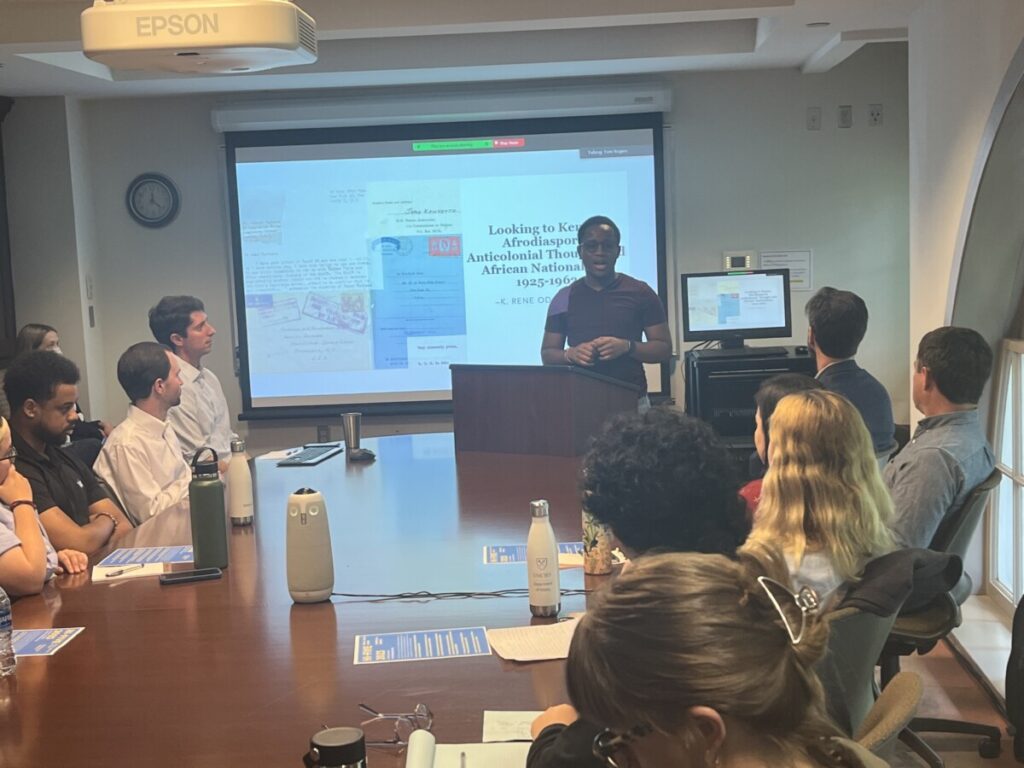
The first-year cohort of doctoral students recently presented their research at the History Department’s annual Hi-Five gathering. Adapted from the University of Queensland’s Three Minute Thesis model, the Hi-Five charges students to put forth a sound, compelling, and accessible distillation of their research. Five first-year History Department students presented their work:

See images of the event below and learn more about these students’ research on their graduate student webpages.

History Faculty Receive Support from the Halle Institute for Global Research

Three History Department faculty members have received grant support from the Halle Institute for Global Research for 2023. The winners and associated research categories are:

Dr. Tehila Sasson, Assistant Professor – “The Politics of Financial Exclusion in Britain, 1960s-2000s,” (Global Perspectives on Race+, Ethnicity+, and Nation+)

Dr. Mariana P. Candido, Associate Professor – “Africans in Colonial Courts: Agency, Gender, and the Rule of Law in Angola and Cape Verde, 1800-1950s” (Halle Foundation Collaborative Research Grantees)

Dr. Brian Vick, Professor – “The Internationalization of Science and Politics in the Nineteenth Century” (URC International Research Grants)

Congratulations to the grantees!

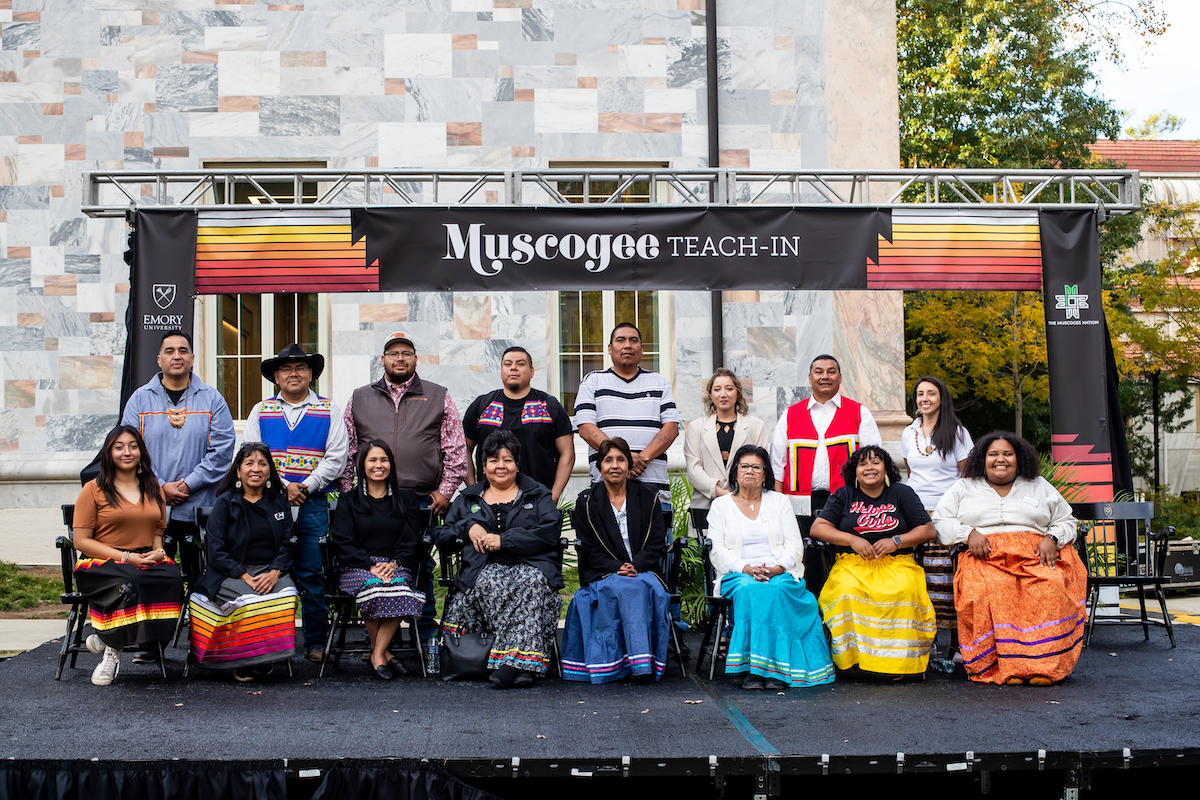
New Center for Native and Indigenous Studies to Launch in Fall 2023 with Lowery as Director

In the fall of 2023 the Emory College of Arts and Sciences will launch the new Center for Native and Indigenous Studies. Cahoon Professor of American History Dr. Malinda Maynor Lowery will serve as the director of the new center, which will also receive support from Emory’s James Weldon Johnson Center for the Study of Race and Difference. The center emerges from – and aims to deepen – a unique collaborative partnership between Emory and the College of the Muscogee Nation (CMN) in Oklahoma centered on the advancement of Native and Indigenous Studies (NAIS) and the preservation of the Mvskoke language. Lowery, who is a member of the Lumbee Tribe of North Carolina, is the author, most recently, of The Lumbee Indians: An American Struggle (UNC Press, 2018). Read a quote from Dr. Lowery about the new center below, and learn more via the Emory News Center article “New Center for Native and Indigenous Studies set to launch in fall 2023.”

“The launch of the Center for Native and Indigenous Studies in the College of Arts and Sciences will further our partnership with the College of the Muscogee Nation,” says Lowery. “Emory has an incredible opportunity to learn from CMN’s degree program in Native American studies as we develop a new approach for scholarship, teaching and collaboration that centers Indigenous knowledge and values. This approach will advance cutting-edge scholarship and pedagogy in ways that will also promote an education that heals the trauma of dispossession and forced assimilation.”