Anderson, Goldmon, and Pugh Among Recipients of Mellon Foundation Grant on Reparations Solutions

Emory University is one of the recipients of a $5 million grant awarded by the Andrew W. Mellon Foundation to the University of Michigan’s Center for Social Solutions and other institutions as part of the Foundation’s Just Futures initiative. The project creates and leverages a national network of scholars working in partnership with community-based organizations to develop racial reparation solutions. Dr. Carol Anderson, Charles Howard Candler Professor of African American Studies, AAS department chair, and associated faculty in the history department, will lead a team of scholars that also includes Vanessa Siddle Walker, Samuel Candler Dobbs Professor of African American Studies, and AAS assistant professors Dr. Janeria Easley and Dr. Jessica Lynn Stewart.

History doctoral students Camille Goldmon and Aleo Pugh will support the team’s work. Goldmon’s dissertation, advised by Dr. Allen E. Tullos and Anderson, is titled “Land Retention Amongst African-American Farmers in the U.S. South.” Pugh’s dissertation, advised by Dr. Walter Rucker, Dr. Jason Ward, and Anderson, is titled “‘Leery of Being Consumed’: Working-Class Black Dissent and the Legacy of Brown.” Read more about the grant below.

The grant’s project, “Crafting Democratic Futures: Situating Colleges and Universities in Community-based Reparations Solutions” will involve community fellows as well as local organizations in a collaborative public history reckoning designed to offer tangible suggestions for community-based racial reparations solutions. The project emerges from the Center for Social Solutions’ focus on slavery and its aftermath, and is informed by three generations of humanistic scholarship and what that scholarship suggests for all seeking just futures. The Center is led by former Emory Provost Earl Lewis.

-“Recent Mellon Foundation Grants Awarded to AAS Faculty,” AAS Newsletter.

Anderson Quoted in ‘WaPo’ Article on Black Voters’ Responses to Trump’s Baseless Fraud Claims

Dr. Carol Anderson was recently quoted in a Washington Post article titled “Anger builds in Black community over Trump’s claims of voter fraud in big cities.” The piece analyzes how Black voters have responded to Donald Trump’s accusations of voter fraud in cities with high populations of Black residents, such as Philadelphia, Detroit, Atlanta, and Milwaukee. Anderson is Charles Howard Candler Professor of African American Studies and Associated Faculty in the History Department. Read an excerpt from the article quoting Anderson below along with the full piece.

“It’s as vile now as it was during Reconstruction, when Democrats believed that Republicans were illegitimate and that Black voters had no right to be voting, and they did all of these terrorist activities to block African Americans from voting,” said Carol Anderson, professor of African American studies at Emory University. “It’s a very narrow, slippery slope, from saying ‘illegal votes’ to ‘illegal voters,’ so this attack on Black voters is real.”

Lipstadt Condemns Yad Vashem Nomination in ‘The New York Times’

Deborah E. Lipstadt, Dorot Professor of Modern Jewish History and Holocaust Studies and associated faculty in the History Department, was recently quoted in an article in The New York Times titled “Israel’s Pick to Head Holocaust Memorial Stirs International Uproar.” In the piece, Lipstadt condemns the nomination of Effie Eitam, a retired general and far-right politician, to head Irael’s official Holocaust memorial, the Yad Vashem. Read an excerpt of the piece below along with the full article.

“This is more than a colossal mistake — it’s a tragedy,” said Deborah E. Lipstadt, a professor of modern Jewish history and Holocaust studies at Emory University in Atlanta who has written several books on the subject. “Appointing Eitam to this position would be a blot on Yad Vashem’s reputation and Yad Vashem’s record.”

Erica Bruchko (PhD, ’16) Helps to Archive Generations of Black Emory Students’ Calls for Change

In August of 2020 Emory University President Gregory L. Fenves asked Dean Yolanda Cooper, the University Librarian, to research and make available online calls for change from past and present generations of Black Emory students. Dr. Erica Bruchko, a 2016 alumna of the History Department’s graduate program and librarian for African American Studies and United States history at Emory Libraries, is working to advance this project. Bruchko has published three articles so far with collaborators Jina DuVernay, collection development archivist for African American collections, Stuart A. Rose Manuscript, Archives, and Rare Book Library, and Maureen McGavin, writer, Emory Libraries. Read about the work of generations of Black leaders and anti-racism at Emory in the first three articles to emerge from the initiative:

Suddler Edits Special Edition of ‘The American Historian’: “History for Black Lives”

Dr. Carl Suddler, Assistant Professor, edited the September issue of The American Historian. The volume features seven articles on “History for Black Lives” contextualize the nationwide protests that occurred in the wake of the murders of George Floyd, Breonna Taylor, and others. The special issue is open for a limited time to the general public, regardless of OAH membership, here.

Suddler Quoted in ‘Washington Post’ Article on Potential Return of NBA

Assistant Professor of History Carl Suddler was recently quoted in a Washington Post article by columnist Jerry Brewer on what the resumption of NBA play might mean for Black athlete activism and the anti-racist movement broadly. Suddler is the author of Presumed Criminal: Black Youth and the Justice System in Postwar New York (NYU Press, 2019). Read Brewer’s article here: “In the fight for equality, the NBA can be a symbol and an inspiration — not a distraction.”

Anderson Discusses GA’s Primary Voting Issues on ‘All Things Considered’

NPR’s Ari Shapiro recently interviewed Dr. Carol Anderson, Charles Howard Candler Professor of African American Studies and Associated Faculty in the History Department, on All Things Considered. Anderson, whose most recent book is One Person, No Vote: How Voter Suppression is Destroying Our Democracy (Bloomsbury, 2018), discusses the problems that Georgia voters faced during this past Tuesday’s primary. Listen to the piece: “The Reasons Behind Voting Issues in Georgia.”

Suddler Invited to Contribute to Association of American Medical Colleges Roundtable on Racial Inequities and Medicine

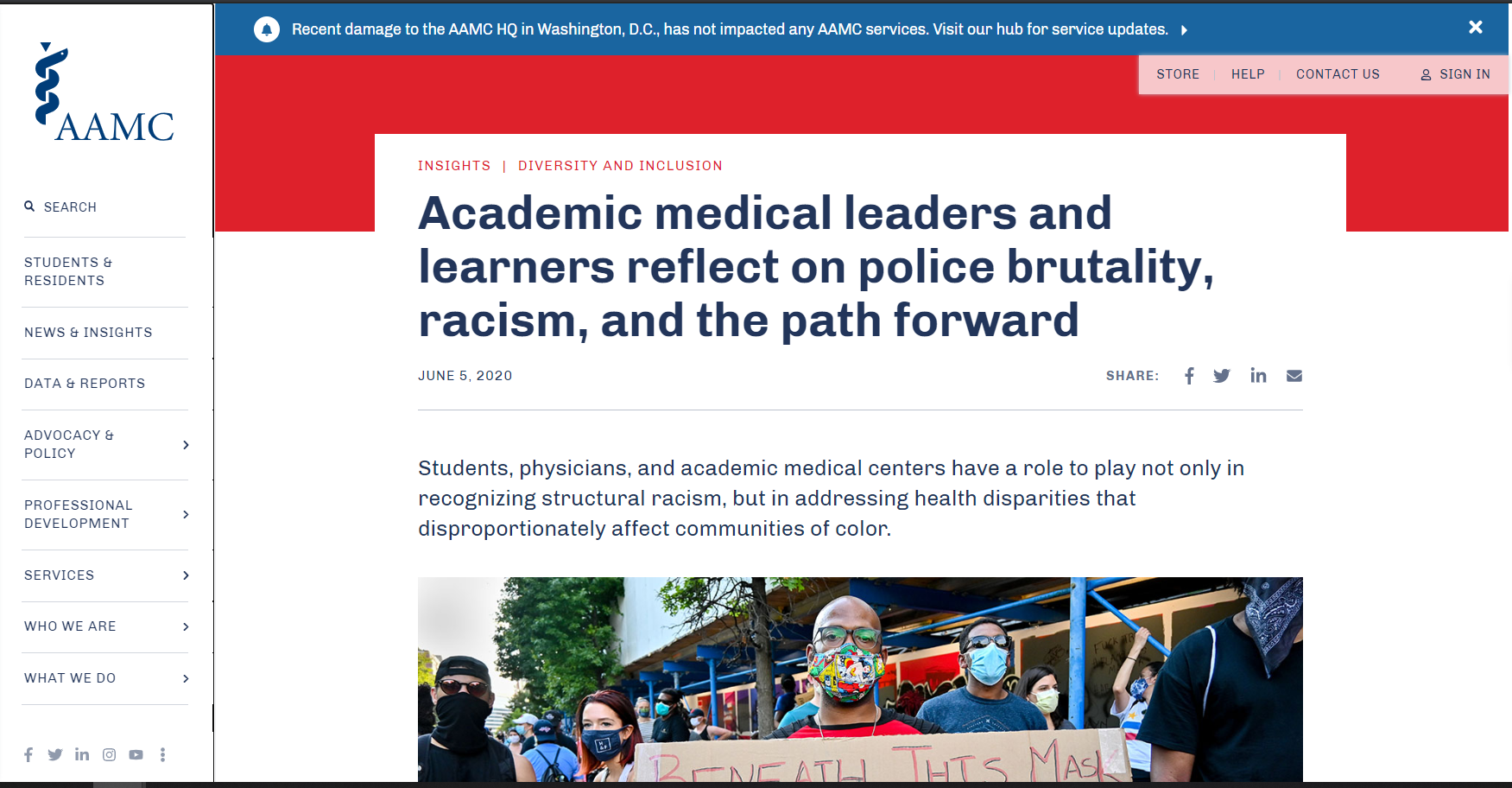
The Association of American Medical Colleges invited leaders and learners in academic medicine to share their thoughts on recent events, the complicity of medicine in perpetuating inequities, and the role of students, physicians, and academic medical institutions in helping to heal the nation. Read Prof. Carl Suddler’s contribution, “Investing in health care, divesting from law enforcement” (scroll down, 10th entry).

suddler-capture

Dr. Polly J. Price, Associated Faculty in History, Discusses Jurisdiction and COVID-19 on CNN

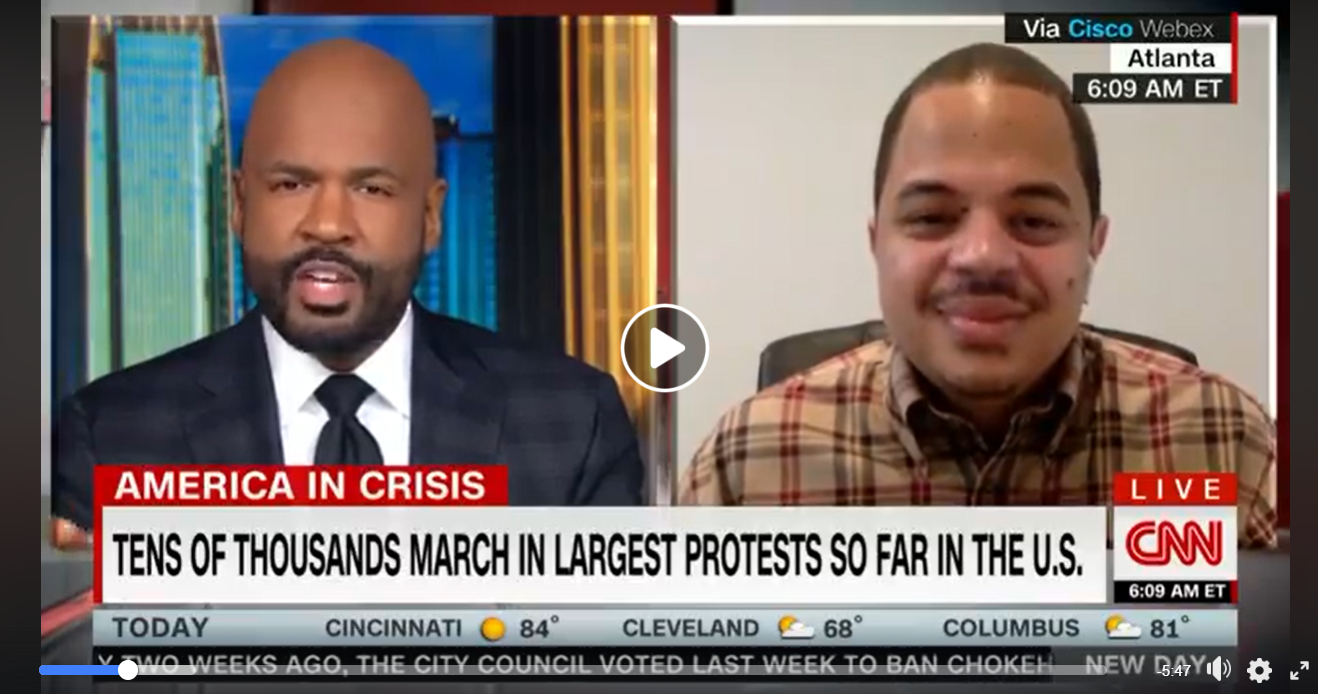
Dr. Polly J. Price is the Asa Griggs Candler Professor of Law, Professor of Global Health, and Associated Faculty in the History Department. Price recently contributed to a CNN segment with host Michael A. Smerconish about jurisdiction in the context of stay-at-home orders and social distancing measures intended to curb the spread of COVID-19. View the segment here: “Why is there no national lockdown?”

Price is a public health law scholar as well as a legal historian and citizenship and immigration law expert. Her current book project, Plagues in the Nation (forthcoming from Beacon Press), examines how epidemics have shaped US law and continue to pose challenges for disease control in democratic societies. In recent weeks Price has also authored two pieces for The Atlantic: “A Coronavirus Quarantine in America Could Be a Giant Legal Mess” and “How a Fragmented Country Fights a Pandemic.”