Dr. Jinyu Liu, Betty Gage Holland Professor of Roman History, was awarded a fellowship at the Institute for Advanced Study (IAS) in the School of Historical Studies for the fall 2025 semester. This prestigious membership allows for focused research and the free and open exchange of ideas among an international community of scholars at one of the foremost centers for intellectual inquiry.
At IAS, Jinyu Liu will be working on “Outsiders in Town,” which explores social exclusion and the negotiation costs of relocation for mobile and immigrant tradesmen and craftsmen in the Roman West during the first three centuries.
Each year, IAS welcomes more than 250 of the most promising post-doctoral researchers and distinguished scholars from around the world to advance fundamental discovery as part of an interdisciplinary and collaborative environment. Visiting scholars are selected through a highly competitive process for their bold ideas, innovative methods, and deep research questions by the permanent Faculty—each of whom are preeminent leaders in their fields. Past IAS Faculty include Albert Einstein, Erwin Panofsky, John von Neumann, Hetty Goldman, George Kennan, and J. Robert Oppenheimer.
Among past and present scholars, there have been 37 Nobel Laureates, 46 of the 64 Fields Medalists, and 24 of the 28 Abel Prize Laureates, as well as MacArthur and Guggenheim fellows, winners of the Turing Award and the Wolf, Holberg, Kluge, and Pulitzer Prizes.
Dr. Danielle Wiggins, a 2018 graduate of the U.S. History doctoral program, has published her first monograph: Black Excellence: Atlanta and the Making of Modern Black Liberalism (University of Pennsylvania Press, 2025). Framed by Atlanta in the 1970s and ’80s, Black Excellence “offers a provocative new history of modern black liberalism by situating the seemingly conservative tendencies of black elected officials in the post–civil rights era within neoliberal American politics and an enduring black liberal tradition.” Marcia Chatelain, author of Franchise: The Golden Arches in Black America, describes Wiggins’ work as a “richly researched and beautifully written analysis of the role of Black liberals, a complicated group of scholars, activists, and leaders, who sought racial justice while holding onto antiquated, moralistic, and harmful views of the Black communities that needed justice the most.” Wiggins recently joined the history department at Georgetown University as an assistant professor. She completed her dissertation under the advisement of Dr. Joseph Crespino, Senior Associate Dean of Faculty and Divisional Dean of Humanities and Social Sciences and the Jimmy Carter Professor of History. Read more about Black Excellence via University of Pennsylvania Press.
Dr. Jeffrey Lesser, Samuel Candler Dobbs Professor of History, published Living and Dying in São Paulo: Immigrants, Health, and the Built Environment in Brazil with Duke University Press in the spring of 2025. Editora UNESP recently released the Portuguese-language version, Viver e morrer em São Paulo: Imigração, saúde e infraestrutura urbana (século XIX até o presente). Focused on São Paulo’s Bom Retiro neighborhood, Living and Dying examines competing visions of well-being in Brazil among racialized immigrants and policymakers and health officials. Jerry Dávila, who holds the Jorge Paulo Lemann Chair in Brazilian History at the University of Illinois, describes Lesser’s book as “methodologically innovative, conceptually powerful, and engagingly written.” Both the English-language and Portuguese-language versions will have open access editions thanks to a tome (Toward an Open Monograph Ecosystem) grant from the Andrew W. Mellon Foundation and Emory University.
In the Q&A below, Dr. Lesser gives us a glimpse into the making of the monograph as part of the History Department’s New Books series.
Books are produced over years if not decades. Give us a sense for the lifespan of this book, from initial idea to final edits.
Living and Dying was conceived about a decade ago during a very boring meeting of department chairs and administrators. Fortunately, I was sitting in the back of the room with the bad kids, including Uriel Kitron, at the time chair of the Department of Environmental Sciences. As we discussed our mutual research interests in Brazil, we began to think of a project on the relation between immigration and health. It did not take long for us to jointly teach an interdisciplinary seminar on the topic and arrange a grant to bring some students in that class to Brazil. Starting about 5 years ago, I was able to arrange regular funding for what became the Lesser Research Collective, an interdisciplinary group of students from Emory and UNIFESP in São Paulo. While we all work in the São Paulo neighborhood of Bom Retiro, on questions related broadly to health, we do so via individual projects and then we meet weekly to share our research.
What was the research process like?
Living and Dying reflects the many approaches that I use to generate and analyze data. Like many in the humanities, I spent most of my career thinking of myself as a solitary researcher even while acknowledging the help of archivists, librarians, and students. For this project, however, I worked with three interconnected teams whose data, ideas, and conclusions influence every sentence of this book. The research is informed by disciplines including history, cultural studies, public health, anthropology, geography, and sociology.
I used a variety of historical and contemporary sources, including archives, observation, oral histories, cartography, digital map creation, photographic exhibits, and participation in city-sponsored health programs. Much of the material was found in the archives of the Emílio Ribas Public Health Museum, situated in the building that had been São Paulo’s Central Disinfectory, and the archival and historical space became an actor in the interpretation of some of the documents.
I used the Pauliceia 2.0 Historical Geographic Information Systems Platform to link quantitative data (e.g., demography, infrastructure planning, health outcomes, and socioenvironmental challenges) to the built environment, especially in order to see continuities in spatial patterns over time. I often matched the quantitative data with blueprints, architects’ notes, street notes, and press reports to map contemporary human flows through and around the buildings, which I then compared with photographs and etchings from earlier periods. My own observations and oral histories emerged from multiple years embedded in a primary care team at the Bom Retiro Public Health Clinic.
Are you partial to a particular chapter or section?
I loved writing “Unliving Rats and Undead Immigrants” because it gave me a chance to treat zombies and ghosts as serious historical actors. The chapter analyzes why public health officials targeted Bom Retiro and its residents during the turn-of-the-century bubonic plague and 1918 influenza outbreaks. I show how the two epidemics led to similar discourses from health officials, often targeting immigrants. The immigrant working classes responded to the two events in similar ways as well, ranging from using popular medicinal practices for care and cure, to rising from the dead to wander to and from Bom Retiro. The chapter also analyzes how a public health campaign to buy rats during the late 19th century Bubonic Flu outbreak led to surprising (from the perspective of officials) responses from the public, like breeding rats or collecting them outside of the city and then bringing them to the Ministry of Health for sale.
How does this project align with your broad research agenda at this point in time?
My beloved advisor and mentor, the later Warren Dean, always argued that we should try to change our research agenda after each book. While in some ways I have rejected his advice (I am broadly interested in Brazil, ethnicity, and national identity) I have taken to heart his broad position, writing about topics as different as armed guerilla organizations, ethnic militancy, and public health. One idea I have for next book is to write the history of modern Brazil via the story of the Corinthians football team (the greatest in the universe!), which was founded in Bom Retiro by English railroad workers in the early twentieth century and whose captain, Socrates, would lead a movement called Corinthian democracy, against the dictatorship in the 1970s.
The Emory History Department is excited to welcome five new doctoral students to the department in the fall 2025 semester, along with one graduate exchange student from the University of Augsburg, Germany. Read abridged profiles of the new graduate cohort below and follow the links to read their full biographies on the History Department website.
SavannaCourtney-Durrett received her B.A. and M.A. from the University of North Florida. Her research examines African American women’s entrepreneurship and activism in the funeral business during the early twentieth century. Her graduate work will be advised by Drs. Crystal Sanders, Jason Morgan Ward, and Kali Gross
Maren Fauth is an exchange student from the University of Augsburg, Germany. She received her B.A. in English and American Studies with a minor in Philosophy in 2024 and is currently pursuing a M.A. in North American Studies. Her research interests include women’s history, African American history, and the history of social protest movements. Fauth’s work will be advised by Drs. Astrid M. Eckert and Laura Nenzi.
ZiyingLin received her B.A. from the University of Minnesota – Twin Cities and M.A. from the University of Pennsylvania. Lin studies social history, environmental history, and gender studies, with a particular research interest in the material culture of dowries in Edo Japan. Drs. Laura Nenzi and Julia Bullock will advise her work.
Mary Elizabeth Marquardt received her A.B. from Princeton University in history and African American studies and her M.A.R. from Yale University. She studies religion, race, and legal history in the U.S. South, with a focus on 20th century interactions between churches and the state. Drs. Joseph Crespino, Mary Dudziak, and Alison Collis Greene will advise Marquardt’s work.
Yerbol Munai earned a bachelor’s degree in Kazakh Language and Literature and a master’s degree in Turkology from Minzu University of China. He specializes in the modern history of Central Asia, with a focus on the Kazakh and other Central Asian Turkic communities in the early 20th century. Drs. Matthew J. Payne and Hwisang Cho will advise Munai’s work.
JaydenTrawick-Junta is a native of Portland, OR, and earned his B.A. from Berea College in History and African & African American Studies. He studies race, culture, and sports in the U.S. during the twentieth century, focusing on how Negro League baseball teams interacted with Black communities in their cities. Drs. Carl Suddler and Jason Morgan Ward will advise his work.
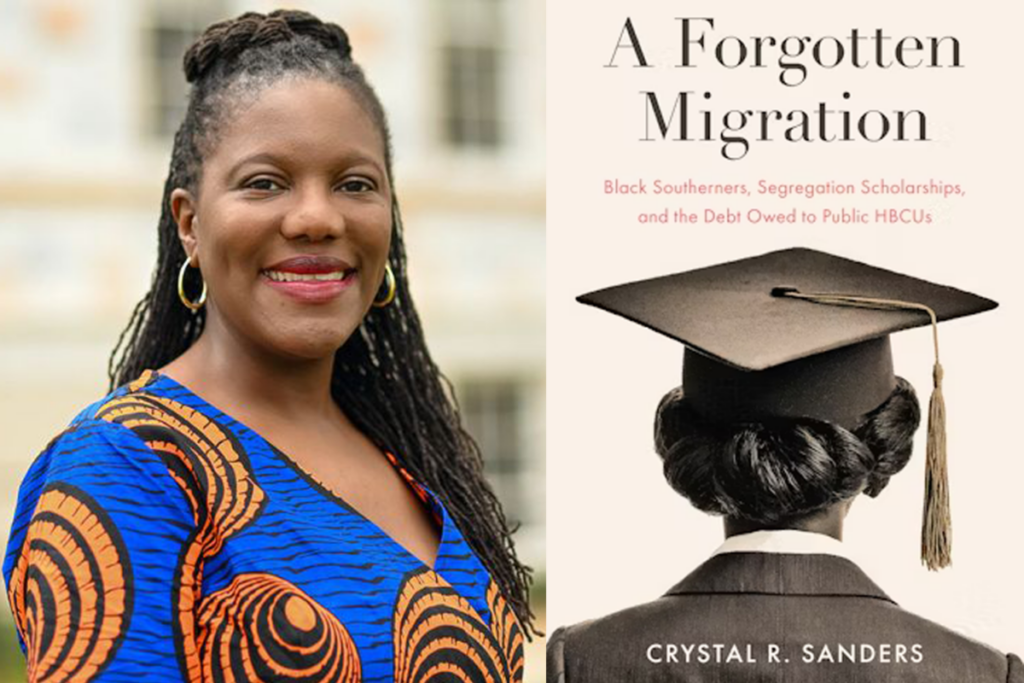
“During the age of Jim Crow, especially, many white people saw educated African Americans as a threat to the racial status quo so there was no enthusiasm or adequate financial appropriation to assist African Americans in pursuing postbaccalaureate degrees. That is why segregation scholarship programs were never funded sufficiently and demand always exceeded supply.“
History graduate student Emilie Cunning has received a Moody Research Grant from the LBJ Presidential Library. She will head to Austin this fall to conduct archival research on transnational protest cultures in the US and UK in the 1960s-1970s. Her dissertation project is tentatively titled “Transnational Protest Cultures: The Anti-War and Black Power Movements in Britain and the United States, 1960-1974.”
Cunning has developed her dissertation project through varied activities over the last year. In the spring semester, she taught a course related to her research titled “US & the Cold War.” In March, she presented her work at the Boston University American Political History Graduate Conference. The paper focused on transnational anti-war networks during the Vietnam era, specifically on the role of “American Exiles” in Britain who formed a persistent source of opposition to the American war in Vietnam while working with British anti-war groups such as the BCPV and CND.
Earlier this summer, Cunning attended BOCA LONGA at University College London. BOCA LONGA is an annual spring workshop that brings together U.S. historians (both faculty and graduate students) from Boston University, Stanford University, UC Berkeley, UC Davis, University College London, and Emory. She attended along with History Department graduate student Jessica Locklear, Emory College Senior Associate Dean Joseph Crespino, and Profs. Jason Ward, Daniel LaChance and Carl Suddler.
Cunning will defend her dissertation prospectus this August.
Doctoral candidate Olivia Cocking has won two fellowships to support her dissertation, titled “France After Empire: Migration, Citizenship, and Social Rights, 1946 – Present.” The European Union Studies Association awarded Cocking its Ernst Haas Dissertation Fellowship, and Emory’s Laney Graduate School awarded her the Emory University Women’s Club Memorial Fellowship. Cocking is completing research and dissertation write up in Paris. She has presented papers at the Society for the Study of French History conference in Manchester, UK, and the Groupe de recherche sur les orders coloniaux colloquium, in Nantes, France.
Cocking has also received honorable mention for the Edward T. Gargan Prize from the Western Society for French History for her paper “‘Je ne comprends pas pourquoi j’ai perdu tous mes droits’: Migration and Welfare in France After Empire.” She presented the paper at the society’s conference in San Francisco in November 2024.
History Department faculty and students are well represented in the recently-announced 2025-26 cohort of fellows at the Fox Center for Humanistic Inquiry. Faculty and graduate fellows will conduct research intersecting with this year’s theme, Life/Story, which draws “inspiration from the many ways humanities fields and disciplines often approach a single life as the entry point for examining broad political, socio-cultural, and historical phenomena.”
Four undergraduate History students will hold Undergraduate Humanities Honors fellowships. These Fellowships support undergraduates as they complete their honors theses, introduce them to the life of the Humanities, and provide a venue for interdisciplinary interchange, mentorship, and conference-style presentation.
View short profiles of the faculty and student fellows below and follow the links to more extended biographies.
Hwisang Cho (Associated Faculty in History) specializes in the cultural, intellectual, and literary history of Korea, comparative textual media, and global written culture. His major work-in-progress is “Irresistible Fabulation: Moral Imagination and Storytelling in Korean Confucian Tradition.”
Alejandro Guardado is a 6th year PhD Candidate in the Department of History. His dissertation, “Reimagining Community: Indigenous Organizing in Mexico’s Neoliberal Turn (1968-2000),” examines how Indigenous activists developed political networks to bolster self-determination movements in the Mexican state of Oaxaca.
Leo Raykher is a senior majoring in History. His thesis, titled “Economics, Espionage, and Exile: the Surveilled life of David Drucker, esq.,” examines the life of his great, great uncle David Drucker.
Thora Jordt is a History and Art History major from Chapel Hill, North Carolina. Her project examines the artist Alexandra Exter’s contributions as a costume and set designer for theatre and film between 1915 and 1925, with a focus on the 1924 film Aelita: Queen of Mars.
Daniel Bell is a rising senior from Chicago, Illinois, double-majoring in Economics and History. His thesis project is centered around Herbert Jenkins, Atlanta’s influential twentieth-century police chief.
Eunjae Thompson is a senior studying Philosophy and Religion with a minor in History. Their honors thesis, titled “Beyond Capture: Blackened Piety & the Politics of Refusal,” will interrogate how the life-writing genre not only illuminates but draws the boundaries of the human condition.
Doctoral student Ursula Rall has won a fellowship for at the McNeil Center for Early American Studies at the University of Pennsylvania. She is working on her dissertation, entitled “Forging Inter-Urban Communities: Spatial Mobilities and Social Networks of Women of African Descent in New Spain, 1580-1740.” Drawing on research in Spain and Mexico, the project explores how the social networks that Black women formed across urban centers were key to the socioeconomic mobility of the Black Mexican population during the seventeenth century. She argues that Afro-descended women had a sense of a shared racialized and gendered community, forming close ties and financial networks that improved their social and material lives.
Rall’s research has been supported by a Fulbright-Hays Doctoral Research Abroad Grant, the American Historical Association, the Forum on Early-Modern Empires and Global Interactions, the Conference on Latin American History, and Emory University’s Halle Institute for Global Research. Dr. Yanna Yannakakis, Professor and Department Chair, is Rall’s faculty advisor.
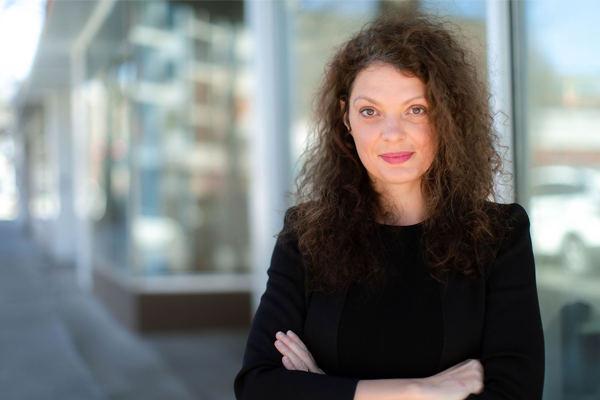
Dr. Adriana Chira, Associate Professor of Atlantic World History, has been named Winship Distinguished Professor of History (effective September 1, 2025). Chira’s research and teaching specializations include: Atlantic history; Cuba in world history; race; slavery and the law; land tenure and property; and post-emancipation. This prestigious appointment recognizes Chira’s scholarly eminence and contributions to Emory’s mission.
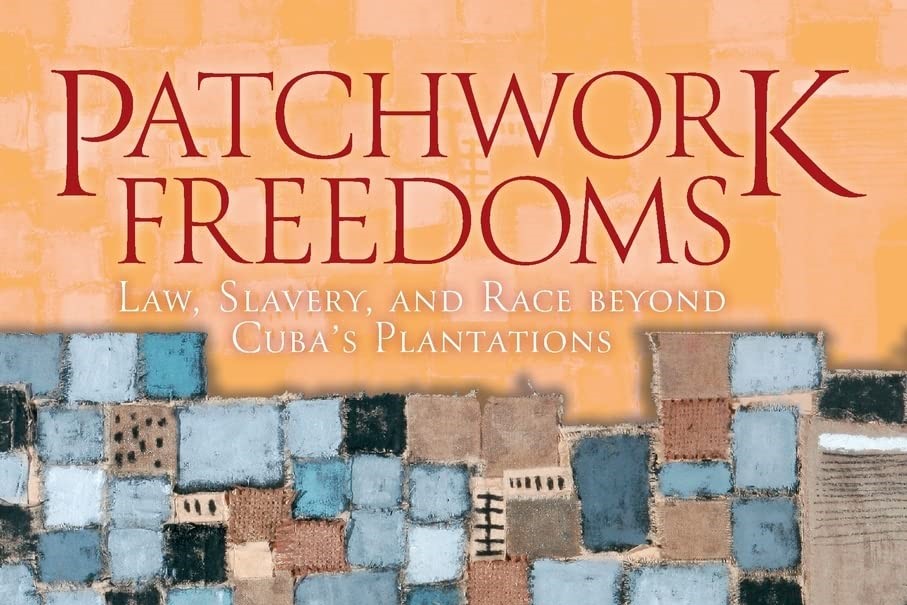
Chira’s first book, Patchwork Freedoms: Law, Slavery, and Race beyond Cuba’s Plantation (Cambridge University Press, Afro-Latin America Series, 2022), focuses on enslaved and free Afro-descendants’ efforts to own landed property and to attain free legal status through claims to ownership filed inside first instance and appellate courts in Cuba during the nineteenth century. The book traces the political implications of these processes, arguing for a history of emancipation that pays attention to vernacular legalism and modes of claiming property. The project is based on extensive archival research within Cuba (in Havana and Santiago de Cuba) and Spain.
Patchwork Freedoms received the Outstanding First Book Prize from the Association for the Study of the Worldwide African Diaspora, the James A. Rawley Prize in Atlantic World History from the American Historical Association, the Peter Gonville Stein Prize for best book in non-US legal history from the American Society for Legal History, and the Elsa Goveia Prize for excellence in Caribbean history from the Association of Caribbean Historians. It has also received honorable mentions from the Latin American Studies Association (the Nineteenth Century Section) and from the Latin American and Caribbean Studies Section of the Southern Historical Association.
Chira has also authored multiple acclaimed scholarly articles, including:
“Freedom with Local Bonds: Custom and Manumission in the Age of Emancipation,” The American Historical Review 126.3 (September), 949-977
“Ampliando los significados de sevicia: Los reclamos de protección corporal de los esclavos en la Cuba del siglo XIX,” Páginas: Revista Digital de la Escuela de Historia de la Universidad de Rosario (Argentina) no. 33 (Sept./Oct.): https://revistapaginas.unr.edu.ar/index.php/RevPaginas/article/view/546
“Affective Debts: Manumission by Grace and the Making of Gradual Emancipation Laws in Cuba, 1817-1868,” Law and History Review 36.1 (winter), 1-33.
Chira teaches a range of thematic and placed-based courses, from “Human Trafficking in World History” to “History Lab: Puerto Rico.” She also created an Emory study abroad program in Cuba, which focuses on questions of food sovereignty and environmental history, that usually takes place during the Maymester semester.
Students and faculty on Cuba study abroad trip, 2024
Chira’s research has been supported by the National Endowment for the Humanities and by residential fellowships at Yale University (at the Agrarian Studies Center) and at Harvard University (with the Weatherhead Initiative in Global History).