Assistant Professor Chris Suh recently moderated a conversation entitled “Changing with the Times: Asian American Studies Then and Now.” Sponsored by Emory’s Office for Racial and Cultural Engagement, the conversation brought together panelists Ellen Wu (Associate Professor of History, Indiana University Bloomington), Quan Tran (Lecturer in Ethnicity, Race, and Migration, Yale University), and Calvin Cheung-Miaw (PhD candidate in Modern Thought and Literature, Stanford University). The panelists discussed Asian American Studies both as a social movement and an academic field. Find more information below.
Category / Uncategorized
Crespino to Moderate “Reflections and Resiliency: The Future of American Democracy in 2021”

Dr. Joseph Crespino, Jimmy Carter Professor and Department Chair, will moderate the upcoming event “Reflections and Resiliency: The Future of American Democracy in 2021.” The panelists will include Dr. Mary L. Dudziak, Asa Griggs Candler Professor of Law and Associated Faculty in the History Department, and Dr. Kali Gross, Professor of African American Studies. The event will take place via Zoom on Tuesday, April 13, 2021, from 6:00 PM to 6:45 PM. Read the full event description below and find more information here.
“The last six months in our nation have been tumultuous—from a highly contested election, an insurrection at the Capitol, to the inauguration of a new President. Faculty experts from Emory College of Arts and Sciences and Emory Law will contextualize these events and the path ahead that preserves democracy through the lenses of history, law, and policy—with a focus on resiliency.“
Anderson Quoted in WABE Story on New Georgia Voting Law
Dr. Carol Anderson, Charles Howard Candler Professor of African American Studies and Associated Faculty in the History Department, was recently quoted in a story produced by Atlanta’s WABE. The story, “The Good, The Bad And The ‘Petty’ In Georgia’s New Voting Law,” discusses the effects of and debates about the state’s new voting legislation. Read an excerpt quoting Anderson below along with the full piece.
“It also bans counties from accepting private grant money used to open more polling sites and hire more workers to process absentee ballots. ‘When you’re counting 2,000 votes, that’s one thing, when you’re counting hundreds of thousands of votes, that’s another,’ said Emory University professor Carol Anderson.
“Anderson, who studies the history of voting rights, says a one-sized fits all approach to running elections is impractical and disproportionately affects voters in larger cities — often minority voters. Anderson says Georgia lawmakers from both parties should embrace the record voter turnout seen in the 2020 election cycle. ‘But instead of that, we get this cauldron of gloom and doom, and we get this horrible bill that becomes a law that is designed to basically take the power away from voters,’ she said.“
Alison Collis Greene Discusses Post-COVID Future for Churches
Dr. Alison Collis Greene, Associate Professor in the Candler School of Theology and Associated Faculty in the History Department, was recently interviewed for a story by Atlanta’s WSB-TV news outlet. The piece focuses on the challenges that churches have faced in the midst of COVID-19 and discusses what the end of the pandemic might mean for them. Greene is the author, most recently, of No Depression in Heaven: The Great Depression, the New Deal, and the Transformation of Religion in the Delta (Oxford University Press, 2016). Watch the piece here.
Emory History Graduate Programs Highly Ranked by U.S. News’ 2022 Guide
The U.S. News & World Report recently released its 2022 edition of their “America’s Best Graduate Schools” guide. Numerous programs in the Laney Graduate School were ranked highly, including the History graduate program, which sits at 26th on the “Best History Programs” general list. The African History and Latin American History programs ranked seventh and tenth, respectively, among top programs focused on those specific regions. Other ranked Laney programs include: African-American literature (4th), American politics (18th), British literature (16th), comparative politics (20th), English (26th), international politics (18th), political methodology (14th), and political science (19th). Read more about the ranking of programs throughout the Emory campus here: “Emory’s graduate, professional schools ranked among best by U.S. News.”
Suddler to Moderate “State of the Playing Field” in Final Event of Sports History Lecture Series
Dr. Carl Suddler, Assistant Professor of History, will moderate the final event in the Sports History Lecture Series, titled “State of the Playing Field: Sports Historians Wrap Up,” along with History honors student Hannah Charak (21C) and Mathematics major Matthew Ross (21C). The panel will include: Amira Rose Davis, assistant professor of history and African American Studies at Penn State University; Louis Moore, associate professor of history at Grand Valley State University; Theresa Runstedtler, associate professor of history at American University; and Derrick White, professor of history and Africana Studies at the University of Kentucky. Following the panel, the speakers will answer questions from the audience. Registration is required, and registrants will be entered into a prize raffle.
Allitt Discusses John Marshall at Carter Center with Author Robert Strauss
Dr. Patrick N. Allitt, Cahoon Family Professor of American History, will join author Robert Strauss for a conversation about former U.S. Supreme Court Chief Justice John Marshall. The public event, titled “John Marshall: The Final Founder,” is hosted by the Carter Center and will take place on Wednesday, April 7, at 7pm EST. Read the full event below and join the conversation via this link.
Eighteenth- and 19th-century contemporaries believed John Marshall to be, if not the equal of George Washington and Benjamin Franklin, at least very close to that pantheon. In his new book, journalist and historian Robert Strauss recounts how the Chief Justice acted as the glue that held the union together after the original founding days. Strauss will be in conversation with Emory University History Professor Patrick Allitt.
Andrade Gives Wallace T. MacCaffrey Distinguished Lecture in History at Reed College
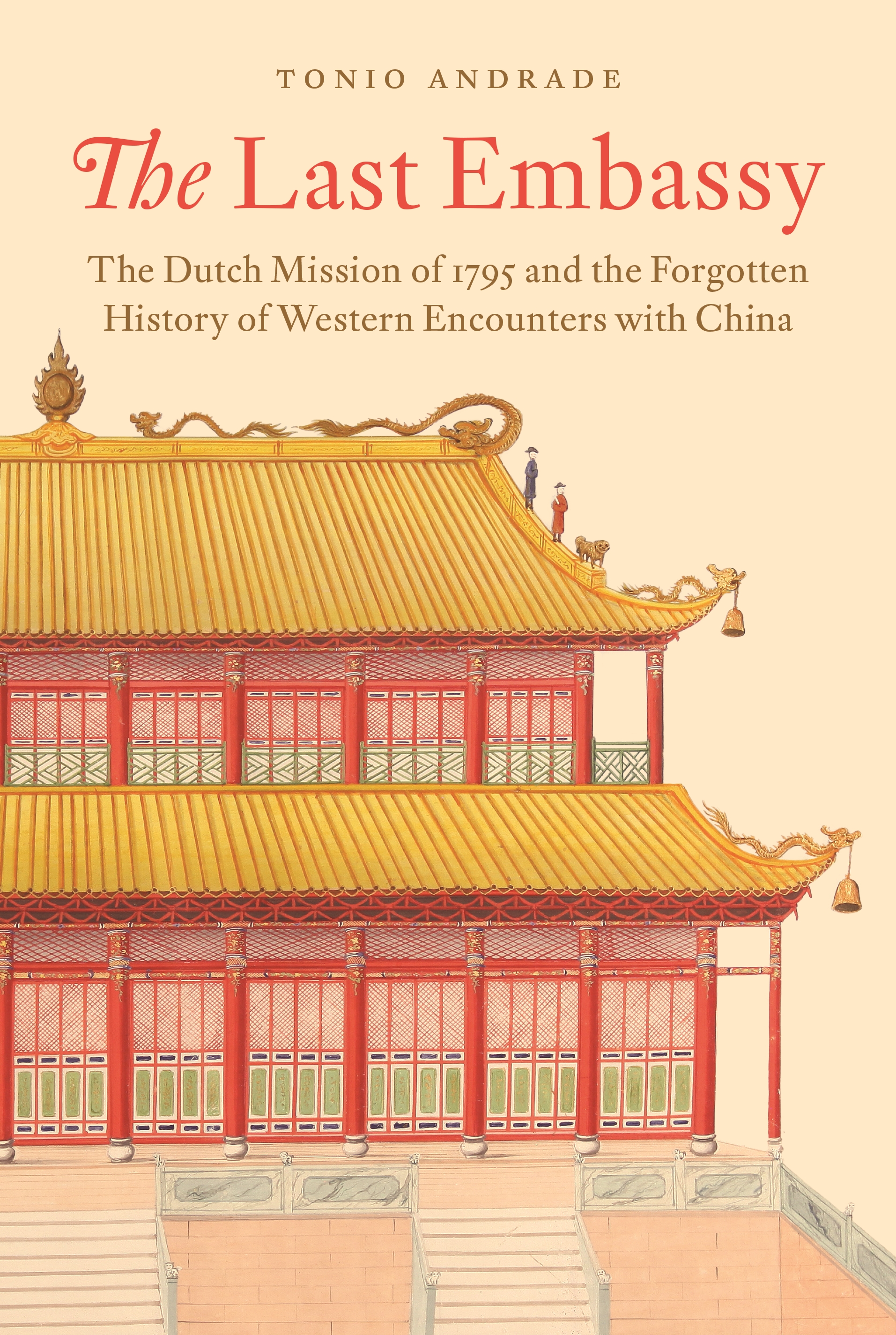
In late March Dr. Tonio Andrade, Professor of History, delivered the Wallace T. MacCaffrey Distinguished Lecture in History at Reed College. Andrade’s talk, “The Last Embassy: The 1795 Dutch Mission to the Qianlong Court,” focused on a little-studied embassy to the Qing court: the Dutch mission of 1794–95. The talk draws from research Andrade conducted for his forthcoming book, The Last Embassy: The Dutch Mission of 1795 and the Forgotten History of Western Encounters with China (Princeton UP, June 2021). Find out more about the event here.
Honors Student Willie Lieberman Celebrates Jane Austen Collection in Emory’s Rose Library
Willie Lieberman, a third-year student in the History honors program specializing in European Studies, recently published a post on the blog of Emory’s Stuart A. Rose Manuscript, Archives, and Rare Book Library. Coinciding with Women’s History Month, the article surveys the Rose Library’s exciting Jane Austen collection. Read an excerpt from Lieberman’s piece below along with the full article here.
“March is Women’s History Month – a time to celebrate women’s accomplishments throughout history, address past and present injustices, and pave the path to a more liberated future for all women. The Stuart A. Rose Manuscript, Archives, and Rare Book Library is home to a wealth of collections by significant female authors like Sylvia Plath and Alice Walker. One of the Rose Library’s most exciting features is its Jane Austen collection. Jane Austen is one of the best-known and most successful female authors…The Rose Library’s Jane Austen holdings signify her commercial success and the value of her writing to society, while also pointing to inequities female authors faced in publishing.“
Ward Publishes Op-Ed in ‘NY Times’ on GA Voting Law and ‘Jim Crow 2.0’
Dr. Jason Morgan Ward, Professor of History, recently published an opinion piece in The New York Times. The article, “Georgia’s Voter Law Is Called ‘Jim Crow 2.0’ for a Reason,” offers essential historical context for understanding the new voting law that Georgia Republicans passed in the last month. Among the evidence Ward cites is research conducted by History Department senior honors thesis student Hannah Charak. Read an excerpt from the article below along with the full piece here.
“But we may not be as distant in our political moment from theirs as we might think: The long struggle to block access to the ballot has always relied on legal maneuvering and political schemes to achieve what bullets and bombs alone could not.
“What legislators in Georgia and across the country have reminded us is that backlash to expanded voting rights has often arrived by a method that our eras have in common: by laws, like Georgia’s Senate Bill 202, passed by elected politicians.”