Anderson Discusses Voting Rights and Voter Suppression in ‘AJC’ and on ‘Utah Public Radio’

Dr. Carol Anderson, Charles Howard Candler Professor of African American Studies and Associated Faculty in the History Department, was recently featured on Utah Public Radio and in the Atlanta Journal-Constitution. Anderson was a guest on Access Utah in advance of speaking at the the Voting Rights Symposium at Utah State University on September 17. Anderson was also a prominent contributor to the recent AJC opinion piece, “Trench warfare over the right to vote has arrived in Georgia.” Read an excerpt from the AJC piece below along with the full article here.

“Voter fraud is rare. And Georgia voters faced widespread administrative failures during this primary. Documented failures. What we really need to be having is a conversation about providing reassurance, calm and clarity,” Anderson said.

– Carol Anderson, “Trench warfare over the right to vote has arrived in Georgia.”
Anderson Pens Op-Ed for ‘The Boston Globe’

Dr. Carol Anderson, Charles Howard Candler Professor of African American Studies and Associated Faculty in the History Department, recently published an opinion piece in The Boston Globe. Titled “The Supreme Court’s starring role in democracy’s demise,” the article critiques the Supreme Court’s lack of action to protect Black Americans’ voting rights in the midst of increasing disenfranchisement due to voter suppression tactics and the COVID-19 pandemic. Read an excerpt below along with the full article here.

“In a series of recent decisions imperiling voters’ access to the ballot box, the Supreme Court acted as if COVID-19 barely existed and the laws Republicans passed for absentee ballots were actually about election security and not outright disfranchisement. The first instance was the stunning decision in April that forced Wisconsin voters, in the middle of a pandemic, to make a Hobson’s choice between the right to vote or their own safety. In an unsigned decision by the five conservative justices, COVID-19 was barely mentioned, only that the tens of thousands of requested absentee ballots, which had not yet even arrived in the homes of voters by that night, still had to be postmarked by the next day to count. The result was that many in Wisconsin stood in line, risked their health to vote, and paid the horrible price by contracting the virus.“

– Carol Anderson, “The Supreme Court’s starring role in democracy’s demise,” The Boston Globe

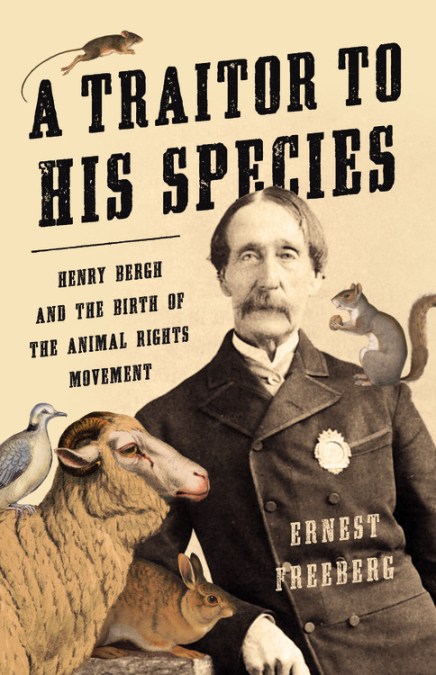
Ernest Freeberg (PhD, 1995) Publishes ‘A Traitor to His Species: Henry Bergh and the Birth of the Animal Rights Movement’

A Traitor to His Species

Dr. Ernest Freeberg (PhD, 1995), Professor and Department Head in the History Department at the University of Tennessee Knoxville, recently published A Traitor to His Species: Henry Bergh and the Birth of the Animal Rights Movement with Basic Books. Freeberg has authored three award-winning books. Read a summary of his newest below.

In Gilded Age America, people and animals lived cheek-by-jowl in streets that were dirty and dangerous to man and beast alike. As more people squeezed into crowded cities, their need for animals only grew—for energy and food, companionship and entertainment. At the same time, animals came to be associated with filth and disease and were often subject to cruel treatment and the worst abuses of human exploitation. The industrial city brought suffering, but it also inspired a compassion for animals that fueled a controversial anti-cruelty movement.

In A TRAITOR TO HIS SPECIES: Henry Bergh and the Birth of the Animal Rights Movement (Basic Books; September 22, 2020), award-winning historian Ernest Freeberg tells the fascinating story of the eccentric aristocrat who launched a then-shocking campaign to bring rights to animals. In 1866, Henry Bergh founded New York’s American Society for the Prevention of Cruelty to Animals (ASPCA), the nation’s first animal welfare organization, and successfully promoted an anticruelty law that paved the way for similar legislation across the country. Bergh and his corps of badge-wielding agents staged dramatic arrests and put abusers on trial, provoking public debate about our obligation to other species.

Suddler Among Panelists for “Emory Faculty Speak: On This Time (Summer 2020) and This Place (ATL)” Discussion

Assistant Professor of History Carl Suddler participated in a faculty panel as a part of new student orientation in mid August. Suddler was joined by three other Emory faculty panelists, Pearl Dowe, Gregory Ellison, and Tayari Jones, as well as moderator Andra Gillespie. The conversation centered on our current historic moment, the convergence of social and health inequities and the need for advocacy, the importance of Atlanta, and the ways students can productively process and engage with these issues. Read more about the event here.

Sean Wempe (PhD, 2015) Publishes ‘Chronic Disparities: Public Health in Historical Perspective’ with Oxford UP

Dr. Sean Wempe, a 2015 alumnus of the History PhD program, has published his second book with Oxford University Press. The timely book – Chronic Disparities: Public Health in Historical Perspective – follows Wempe’s 2019 Revenants of the German Empire:
Colonial Germans, Imperialism, and the League of Nations. Wempe is Assistant Professor at California State University Bakersfield. Read more about Chronic Disparities below.

Chronic Disparities: Public Health in Historical Perspective begins with a controversial and pressing issue facing students today: how have public health initiatives challenged and/or reinforced societal inequalities of race, class, and gender? It explores the cultural, political, religious, demographic, and economic effects both government and private public-health practices have had on inequalities of race, class, and gender in an increasingly globalizing society, from the pre-Modern era to the present.

Chronic Disparities examines events and processes including the emergence of public health and sanitation in Europe; the coercive globalization of systems of health; colonial medicine and the selective application of “Western” medical policy; eugenics; responses to substance abuse; the AIDS/HIV pandemic; and many more. It includes a series introduction that explains this innovative approach to learning history and a conclusion that offers a model for applying the approach in seeking to understand other public health policies, events, and crises.

Anderson Quoted in ‘The 19th’ Article on Race and Suffrage

Dr. Carol Anderson, Charles Howard Candler Professor of African American Studies and Associated Faculty in the History Department, was recently quoted in an article published on The 19th, a nonprofit, nonpartisan newsroom reporting at the intersection of gender, politics and policy. Titled “‘We’ versus ‘Me’: Suffrage centennial exposes vote gap in Black and White women,” the piece charts the divergent histories of voting rights activism, organizing, and victories for Black and White women from the movement to pass the 19th amendment through the present. Read an excerpt quoting Anderson below along with the full piece.

In the century since White women won access to the ballot, they have often sided with White men, choosing their race over their gender to maintain an unequal America, says Carol Anderson, Emory University professor and author of “One Person, No Vote.”

“Black women’s political power has been about strengthening the United States,” Anderson said. “For White women, it has been about entrenching White supremacy. It is about the ‘we’ versus the ‘me.’ And it’s that difference in framing that is fundamental.” 

Klibanoff Awarded New Arts and Social Justice Fellowship

In the fall 2020 semester Emory inaugurated the Arts and Social Justice (ASJ) Fellowship program, which pairs Emory faculty and students with Atlanta artists to examine how creative thinking and artistic expression can inspire positive social change. One of the recipients of the inaugural fellowship is Hank Klibanoff, the director and co-teacher of the Georgia Civil Rights Cold Cases Project and the James M. Cox Jr. Professor of Journalism. Klibanoff is paired with actor Garrett Turner, an Emory alumnus as well as former Woodruff and Bobby Jones Scholar. Their work will center on the lives and times of known victims of the 1906 Atlanta race massacre. Read more about the collaboration and the other members of the inaugural ASJ cohort here: “Emory faculty, students join forces with Atlanta artists to explore social justice.”

Price to Serve on Public Health Emergency Committee

Dr. Polly J. Price, Asa Griggs Candler Professor of Law, Professor of Global Health, and Associated Faculty in the History Department, was recently chosen to serve on the Study Committee on Public Health Emergency Authorities of the Uniform Law Commission. The Uniform Law Commission describes the scope of the committee’s work as studying “the need for and feasibility of one or more uniform state laws addressing the authority of state governments to respond to epidemics, pandemics, and other public health emergencies.” Price’s areas of expertise include immigration and citizenship, U.S. legal history, legislation and regulation, public health law. She is currently authoring Plagues in the Nation (forthcoming from Beacon Press), a book about how epidemics have shaped U.S. law and continue to pose challenges for disease control in democratic societies.

Dinner Awarded Fellowships from ACLS and Princeton

Dr. Deborah Dinner, Associate Professor of Law and associated faculty in the History Department, has received two fellowships this year. The American Council of Learned Societies (ACLS) awarded Dinner the Frederick Burkhardt Residential Fellowship for Recently Tenured Scholars, which she will use at the Kluge Center, Library of Congress, in 2022-2023. In addition, Dinner received the the Law and Public Affairs Fellowship from Princeton University, where she will hold a visiting, residential appointment for the academic year 2020-21. Read more about these awards and Dinner’s work here.


Rogers Co-Authors Editorial in ‘Brasil Wire’: “Ethanol: Fuel for Corruption”

Dr. Thomas D. Rogers, Arthur Blank/NEH Chair in the Humanities and Humanistic Social Sciences (2018-2021) and Associate Professor of Modern Latin American History, recently published an opinion piece in Brasil Wire. Titled “Ethanol: Fuel for Corruption,” the article was co-written with Rogers’s collaborator Jeff Manuel (Southern Illinois University Edwardsville). Rogers and Manuel are writing a transnational history of biofuels in Brazil and the United States. The Brasil Wire article situates recent ethanol-fueled corruption in a longer historical arc of biofuel business, policy, and politics within and between the two countries. Read a description of the article below, along with the full piece.

“Ethanol burst into the news cycle again last week with reports that the US ambassador to Brazil had lobbied for the cancellation of an ethanol tariff, arguing that the move would help Trump’s reelection. As historians writing a transnational history of ethanol in Brazil and the United States, we recognize the episode as part of a familiar pattern. Within and between the two countries, corruption has followed the politically-charged fuel and so have battles over its market. This history reveals the irony of the recent attacks on Brazil’s tariff.”