Dr. Belle Tuten (PhD alumna) on “The Mansplaining Hordes”

Dr. Belle Tuten,  W. Newton and Hazel A. Long Professor of History at Juniata College, wrote a piece “The Mansplaining Hordes” on the blog Smart Women Talking. Tuten received her PhD from Emory’s History Department in the 1990s with Steve White. Read an excerpt of the post below and check out Tuten’s full post.

“As a college professor I have the luxury of having at least some claim to knowledge about my own expertise on my own turf (although many college students may not consider it knowledge worth having; that is a different problem). But I’m a professor in the humanities. There is certainly a different conundrum for my female and non-binary colleagues and colleagues of color in the social and natural sciences. I cannot help but think that as the humanities have more and more female etc. professors, the humanities get more and more sidelined by the “real” [read: quantitative?] social and physical sciences, from which female and nonbinary students and students of color are dropping out at demonstrably higher rates than straight white male ones. Is that also a statement on the nature of authority?”


The 2016 Election in the Classroom: History Department Courses and Contemporary Politics

The Emory News Center recently featured two History Department courses in a piece examining offerings across the campus this semester that are engaging contemporary politics and especially the 2016 election. The courses from the Department are: “Race and the American Presidency” (Dr. Brett Gadsden) and “Popular Culture and Politics in the United States” (Dr. Daniel LaChance). Read more about each of the courses at “Unprecedented election cycle provides focus for courses.”


Dr. Deborah Lipstadt on ‘Denial’ in the “Los Angeles Times”

[youtube https://www.youtube.com/watch?v=yH7ktvUWaYo]

The Los Angeles Times recently profiled Dr. Deborah Lipstadt, Dorot Professor of Modern Jewish History and Holocaust Studies, following a weekend where the showing of film Denial was expanded throughout the United States. Based on Lipdstadt’s 2005 History on Trial: My Day in Court with a Holocaust DenierDenial tracks her 1996 libel case in a British court for accusing author David Irving of denying the Holocaust. Read the full piece here: “Denial’s’ real-life scholar who fought Holocaust revisionists says movie confronts those ‘who think it’s OK to change facts.”

“In a sense Lipstadt sees herself as similarly carrying on the legacy — speaking, via her scholarship, for a generation that can’t speak for itself. As depicted in the film, survivors would come up to her outside the trial and ask why none of them could testify; she had the difficult task of explaining to them, and herself, why the unimaginable possibility of silence was actually the wiser course and that allowing Irving to harangue them or twist their words in a cross-examination setting would do neither them nor the case any good.

“Lipstadt in this regard walks a fine line, feeling the emotion of the tragedy but practicing the rigor of its study.”

Joseph Crespino in Conversation with Natasha Trethewey on History and Poetry at “Neil Asks” Event

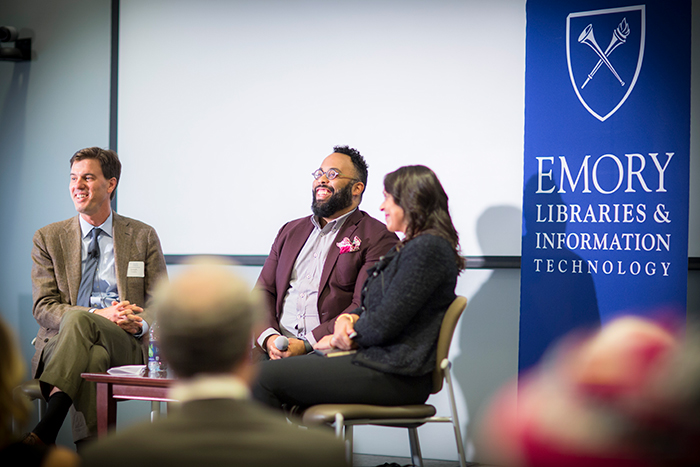
Emory professors Joe Crespino, Kevin Young and Natasha Trethewey discuss poetry and history at the "Neil Asks" event.

Dr. Joseph Crespino, Jimmy Carter Professor of History, recently participated in a discussion about history and poetry with Natasha Trethaway, Robert W. Woodruff Professor of English and Creative Writing, director of the Creative Writing program and former U.S. poet laureate. Moderated by Kevin Young, Atticus Haygood Professor of English and Creative Writing and curator of the Raymond Danowski Poetry Library, the conversation marked the 8th edition of the “Neil Asks” event. Check out an excerpt from the Emory News Center article below and read the full piece.

Both Crespino and Trethewey agreed that, with history and poetry, “there is always borrowing across the line,” as she noted. Crespino views that borrowing as a necessity, saying that even with regard to 20th-century history, where we are blessed with so much source material, still “there are so many silences in the archives” that need unpacking, whether by poets or historians.


Professor Carol Anderson in ‘U.S. News’ Article: “Donald Trump’s Dismal Appeal to Black Voters”

Dr. Carol Anderson, Samuel Candler Dobbs Professor of African American Studies, was recently quoted in a U.S. News article “Donald Trump’s Dismal Appeal to Black Voters,” written by Joesph P. Williams.  Anderson analyzes Trump’s recent comments on contemporary race relations and his strategy to gain support among black voters. Anderson is the author of White Rage: The Unspoken Truth of Our Racial Divide (Bloomsbury, 2016). Read an excerpt of the article below or the full piece.

The black community understands stop-and-frisk to be “a tool of intimidation and criminalization,” Anderson says. “Again, the ‘outreach’ is not about courting black voters.”

Anderson doubts the college-educated whites Trump apparently covets would go for such a bald appeal to racial solidarity, but she argues the problem is with the messenger – in this case, a bombastic, occasionally crass, former reality-TV star – and not the message.

If he were a more-skilled, more-nuanced politician, yes, it would work,” Anderson says. Kicking off his 1980 presidential campaign, she says, President Ronald Reagan “declared his love for states’ rights in Neshoba County, Mississippi, the site of a triple murder of civil rights workers. Reagan walked away with the white vote.”

Coming out of the Civil Rights Movement, “the key was to use dog whistles – crime, welfare, forced busing, neighborhood schools – to trigger a Pavlovian anti-black response, without being openly racist,” Anderson explains. “It was racism with plausible deniability and it worked for years. Trump, however, didn’t dog whistle, he just barked: ‘Mexicans are rapists, criminals, and drug mules. Muslims are terrorists – ban all of them.'”

Dr. Deborah Lipstadt’s “History on Trial” Adapted to the Big Screen

Dr. Deborah Lipstadt, Dorot Professor of Modern Jewish History and Holocaust Studies, authored History on Trial: My Day in Court with a Holocaust Denier (Harper Perennial, 2005) about her experiences in 1996 facing libel charges for asserting that British author David Irving had distorted truth in his denials of the Holocaust. A decade after the book’s release, Lipstadt’s trial will be the subject of the film “Denial,” opening October 7 in Atlanta. Read more about Lipstadt’s story and the film.

[youtube https://www.youtube.com/watch?v=A5PREFWXTgI]

Patrick Allitt in ‘The Spectator’: “The women who paved the way for Hillary’s bid for the White House”

Dr. Patrick N. Allitt, Cahoon Family Professor of American History, recently penned an article for The Spectator titled “The women who paved the way for Hillary’s bid for the White House.” With an eye to the upcoming presidential election, Allitt surveys the long history of women from the United States in electoral politics as voters and candidates. Check out the excerpt below and the full article.

“American women, in other words, have been important to women’s participation in politics on both sides of the Atlantic. The outcome in November will show whether any office remains out of reach to female candidates. “

Dr. Carol Anderson in Politico’s 50 Thinkers, Doers and Visionaries

White Rage: The Unspoken Truth of Our Racial Divide by [Anderson Ph.D., Carol]

Historian Carol Anderson, Samuel Candler Dobbs Professor of African American Studies, was recently featured in Politico’s “50,” a guide to “the thinkers, doers and visionaries transforming American politics in 2016.” Anderson is featured alongside Michael Tesler, a political scientist at the University of California Irvine. Situating the 2016 election in a longer historical context, Anderson and Tesler assert that “white racism has long shaped American politics—and 2016 is no exception.” The article highlights Anderson’s recent book, White Rage: The Unspoken Truth of Our Racial Divide (Bloomsbury, 2016). View an excerpt below and check out the full article.

“This year, in her book White Rage: The Unspoken Truth of Our Racial Divide, Anderson argues that black Americans’ advances have always been followed by white Americans’ efforts to resist them or roll them back. After slavery was abolished, there were Jim Crow laws; after Brown v. Board of Education, whites segregated themselves in private schools and wealthier districts; after passage of the Civil Rights Act and the Voting Rights Act, Richard Nixon made an appeal to white voters with his “Southern strategy” and Ronald Reagan escalated the war on drugs, which disproportionately jailed African-Americans. Whether in legislatures, the courts or police departments, Anderson argues, white rage against black progress has worked to keep deep racial inequality entrenched in American society—and does to this day.” 

James V.H. Melton’s `Religion, Community, and Slavery on the Colonial Southern Frontier` Wins the Austrian Studies Book Prize

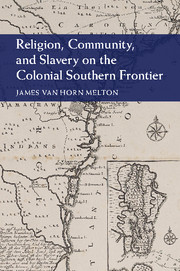
Religion, Community, and Slavery on the Colonial Southern Frontier

Congratulations to Dr. James V.H. Melton, Professor of History, whose most recent book was awarded the Austrian Studies Book Prize by the Center for Austrian Studies at the University of Minnesota. Melton’s work, Religion, Community, and Slavery on the Colonial Southern Frontier, was published by Cambridge University Press in 2015. The prize marks the second in as many years for an Emory historian of German-speaking Europe, following Professor Brian Vick‘s award last year for The Congress of Vienna: Power and Politics after Napoleon (Harvard University Press, 2014).

Emory Launches First Annual Brazil Week, September 19-23

image of mosquito silhouette

On September 19, 2016, Emory will inaugurate the first annual Brazil Week, a celebration of the university’s engagement with Brazil. The multidisciplinary series of activities, organized by Emory’s Brazil Initiative through the Claus M. Halle Institute for Global Learning, will involve History faculty and students from Emory and elsewhere. History Department faculty within the Brazil Initiative include Dr. Jeffrey Lesser (Chair and Samuel Candler Dobbs Professor of History) and Dr. Thomas D. Rogers (Associate Professor of Modern Latin American History). Check out a schedule of events below, read more about the Brazil initiative, and visit this page to register for the week’s events.
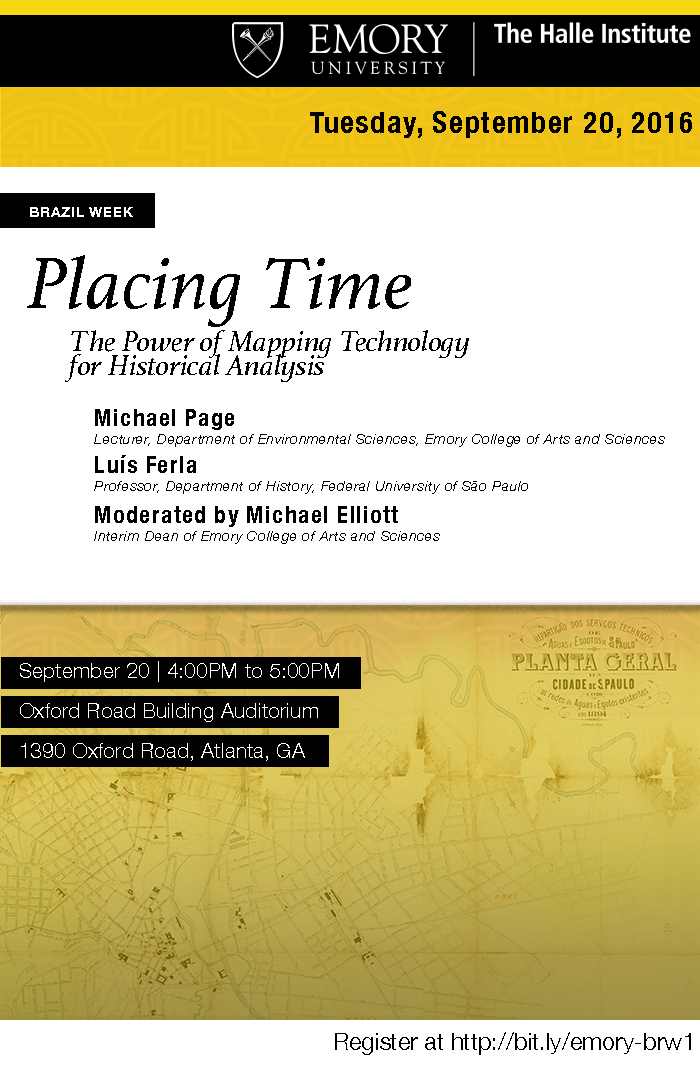
brazil-week-placing-time-flier-copy-1

Placing Time: The Power of Mapping Technology for Historical Analysis
Tuesday, September 20
4:00-5:00pm
Oxford Road Building Auditorium

Emory professor Michael Page will present Atlanta Explorer, a project dedicated to building and disseminating geographical datasets and tools for exploring Atlanta’s history. Professor Luís Ferla of Federal University of São Paulo will describe the work of Hímaco: History, Maps, Computers, a collaborative laboratory of historians, geographers, and computer scientists exploring the spatial history of São Paulo. This panel, moderated by Professor Michael Elliott, Interim Dean of Emory College of Arts and Sciences, features the current work of these partners in a new collaboration on Brazilian urban studies.

Zika: A Brazilian Perspective on A Global Challenge
Wednesday, September 21
4:00-5:30pm, followed by a casual reception
Atwood Hall 360
(New Chemistry Building)

Zika virus’ arrival in Brazil and the rest of the world unleashed a storm of public health challenges and media attention. Brazil has been at the forefront of the epidemic and the efforts to address it, and transmission is now ongoing in many areas in the Americas, including Florida and Puerto Rico in the U.S. Dr. Mariana Kikuti, DVM, PhD Candidate, Federal University of Bahia; Dr. Uriel Kitron, Goodrich C. White Professor of Environmental Sciences, Emory University; Dr. Igor Paploski, DVM, PhD Candidate, Federal University of Bahia; and Dr. Lincoln Suesdek, Researcher at Scientific Council of Butantan Institute, Brazil, will provide a brief overview of Zika and its mosquito vector – Aedes aegypti, present findings from their studies in the Brazilian cities of São Paulo and Salvador, and answer questions from the audience.

Bate-Papo: Portuguese Conversational Hour
Friday, September 23
1:00-2:30pm
Great Room, Longstreet-Means Hall

Come join us for pizza and conversations in Portuguese with students, faculty, and staff from across the university and broader community.

Additional cultural events will be organized throughout the week by the Brazilian Student Association (BRASA), including Capoeira Performance/Workshop on Monday, September 19 at 7:30 pm in the Woodruff P.E. Center and a Samba performance. Visit here for updates and details.