Goldstein Offers Historical Context for Representation of Jewish America in Oppenheimer


Dr. Eric Goldstein, Associate Professor of History, recently contributed to an Atlanta Jewish Times article focused on the blockbuster summer 2023 film Oppenheimer. Titled “Oppenheimer Story Set in Jewish America’s Golden Age,” the piece examines the film’s depiction of the Jewish scientists and politicians who helped to shape, and were shaped by, a crucial period of American history in the 1940s-’50s. A specialist in American Jewish history and culture, Goldstein offers illuminating insight into the broader context that figures like J. Robert Oppenheimer, his chief adversary Lewis Strauss, and others navigated in this pivotal period. Read an excerpt from the article below along with the full piece here.

“According to Emory University professor Eric Goldstein, a noted authority on American Jewish history, the 1950s were a difficult decade for American Jews, who were experiencing unprecedented acceptance in America during the years following World War II. He describes it as ‘a golden age for American Jewry.’

“‘There was a huge investment in building new synagogues and Jewish centers, particularly in the suburbs and things like that. And American culture now began to see Jews not as immigrant outsiders or members of some inferior foreign race but as part of the Judeo-Christian tradition where Jews, Protestants, and Catholics all seemed to have a kind of claim to being true Americans.'”

Klibanoff Helps Write New Chapter at WABE

Emory Journalism Professor Hank Klibanoff, who heads the Georgia Civil Rights Cold Cases Project at Emory and is also Associated Faculty in the History Department, was recently featured in an article about the shifting format and programming of the 75-year-old Atlanta NPR affiliate, WABE. Published in the Atlanta Jewish Times, the article discusses how Klibanoff’s renowned podcast, “Buried Truths,” has helped to carry WABE into a vital, digitally-oriented next chapter. A native of the small Jewish community of Florence, Alabama, Klibanoff’s work as a journalist and advocate for racial justice has received extensive recognition, including through a Pulitzer Prize and Peabody Award and a seat on the Presidential commission on racial justice. Read an excerpt of the AJT article below, along with the full piece here: “Klibanoff, Reitzes Lead WABE into a Digital Future.”

“When Hank Klibanoff won a Pulitzer Prize in 2007 for a book on journalism in the Deep South of the 1950s, he felt he might achieve a certain amount of fame and a boost to his professional reputation. Maybe, he thought, he might be able to make some money off the nonfiction award winner.

“‘It was good recognition,’ Klibanoff says. ‘It won a Pulitzer Prize, for goodness sakes, and you feel if you sell 30,000 copies of the book you’ve accomplished something, but even at that, I didn’t make a nickel from it, not even over several years.’

“But Klibanoff, who grew up in the small Jewish community of Florence, Ala., before his long and successful career in journalism, was destined for stardom. It would not come in newspapers or the publishing world he knew so well, but on the radio and in the rapidly growing world of podcasts — something he knew little about.”

Anderson Talks Democracy in America, Past and Present, for WaPo Live

Dr. Carol Anderson, Charles Howard Candler Professor of African American Studies and Associated Faculty in the History Department, was recently a featured guest on The Washington Post Live with Post journalist Sarah Ellison. Framed by the theme “Democracy in America,” Anderson offers historical context and contemporary analysis of issues threatening the vitality of democracy in the U.S., ranging from polarization in Congress and popular mistrust in institutions to the dissemination of political disinformation. Anderson is the author, most recently, of The Second: Race and Guns in a Fatally Unequal America (Bloomsbury, 2021). Watch the interview below or on YouTube: “Historian Carol Anderson on America’s democracy and the lessons of the past.”

Clio Prizes Awarded for Outstanding Undergraduate Research in History

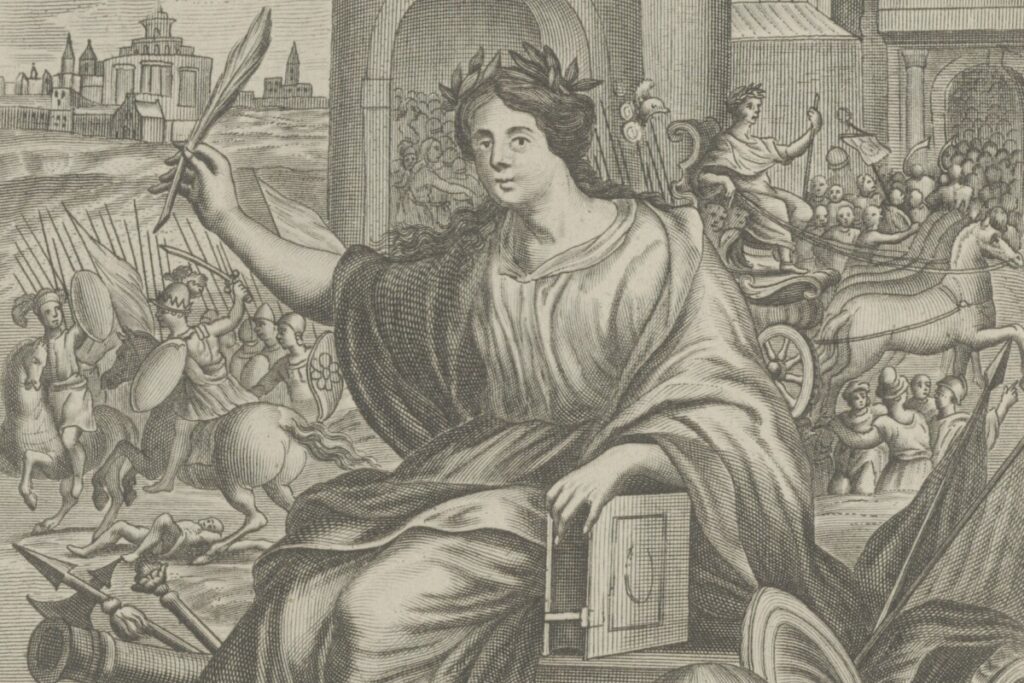
Clio, Muse of History in Greek Mythology

Four Emory College undergraduates were recently recognized for outstanding historical research through the History Department’s Clio Prizes, awarded annually to the best research paper in a junior/senior History Colloquium and to the best paper in a Freshman History Seminar. This year’s recipients are:

For the best paper written in a freshman seminar

  • Ethan Hill, “Are Video Games Causing Violence?” (Nominated by Prof. Judith Miller)
  • Thora Jordt, “Zapata’s Ghost: The Reinterpretation of Revolutionary Agrarian Values and Symbolism in the Zapatista Movement” (Nominated by Prof. Yanna Yannakakis)

For the best research paper written in a junior/senior colloquium

  • Tori Jordan, “Reproducing Slavery” (Nominated by Prof. Yami Rodgriguez)
  • Yingyi Tan, “Meat and Modernity” (Nominated by Prof. Laura Nenzi)

Congratulations to the 2022-23 winners! Find the archive of all past winners here.

Allitt Provides Context for Current Surge of Labor Strikes

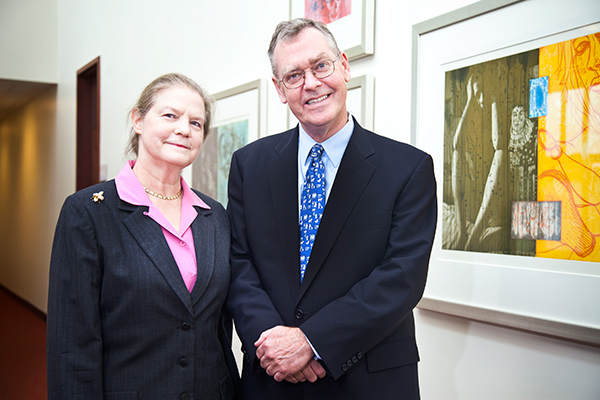
Dr. Patrick N. Allitt, Cahoon Family Professor of American History, pictured with Emory alumna and trustee Susan Cahoon

Dr. Patrick N. Allitt, Cahoon Family Professor of American History, was recently quoted in an article in the New York Post about labor strikes in Hollywood, on car manufacturing plants, and beyond. An expert in the history of industrialization, Allitt offers historical context for the current surge of union organizing and work stoppages. He also comments on the relationship between labor, technological innovation, and prosperity. Read an excerpt from the article below along with the full piece here: “What writers and auto workers strikes say about unions and innovation.”

“Professor Allitt empathizes with today’s workers, but with his historian’s eye sees a picture of broadly-shared progress, even on the labor front. ‘Every time one set of jobs has disappeared, new ones have appeared and in every generation more of the jobs have been relatively interesting, well paying, and fulfilling.'”

Klibanoff Helps Identify Two Victims of 1906 Atlanta Race Massacre

Professor Hank Klibanoff, Director of the Georgia Civil Rights Cold Cases Project and Associated Faculty in the History Department, recently contributed to the identification of two of the at least nine unknown Black victims of the 1906 Atlanta Race Massacre. The two victims, Stinson Ferguson, 25, and 13-year-old Marshall Carter, were among 25 Black Atlantans killed by a massive white mob in one of Georgia’s bloodiest, yet least remembered, outbursts of collective racial violence. The revelation coincided with the 117th anniversary of the massacre. Klibanoff and staff from the Georgia Civil Rights Cold Cases Project worked alongside the National Center for Civil and Human Rights and the Afro-American Historical and Genealogical Society on the effort to identify the unknown victims. Read more about this project here:

Patchwork Freedoms wins James A. Rawley Prize

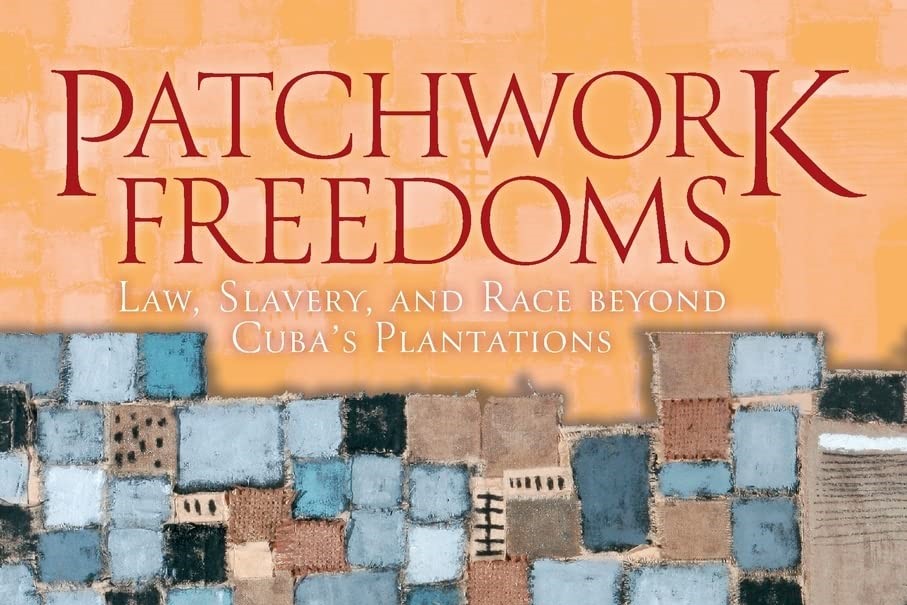
Congratulations to Dr. Adriana Chira, Associate Professor of History, whose book Patchwork Freedoms: Law, Slavery, and Race Beyond Cuba’s Plantations (Cambridge UP, 2022) has won the American Historical Association’s Rawley Prize. Named for James A. Rawley, the Carl Adolph Happold Professor of History Emeritus at the University of Nebraska at Lincoln, this prize recognizes outstanding historical writing that explores aspects of integration of Atlantic worlds before the 20th century. Published as part of Cambridge’s Afro-Latin America series, Patchwork Freedoms has already won two other awards: Honorable Mention, Best Book, Nineteenth Century Section, from the Latin American Studies Association, and the 2023 Elsa Goveia Prize from the Association of Caribbean Historians.

Brunner Receives Honorable Mention for Article from African Studies Association

Georgia Brunner

Congratulations to doctoral candidate Georgia Brunner on receiving honorable mention for her paper “Chaos, Possibility, and Foreclosure for Women’s Futures in Revolutionary Rwanda” in the category of Graduate Student Paper Prize from the African Studies Association. Brunner’s scholarship examines gender and colonialism in Africa, particularly late colonialism and early postcolonialism in Rwanda. Her dissertation, “Building a Nation: Gender, Labor and the Politics of Nationalism in Colonial Rwanda, 1916-1962,” is advised by Drs. Clifton Crais and Mariana P. Candido.

LaChance Interviewed for One Year Podcast on Slate

Dr. Daniel LaChance, Winship Distinguished Research Professor in History, 2020-23, and Associate Professor, was recently interviewed on the Slate podcast One Year: 1955. The episode, “Siberia, USA,” focuses on “The Communist-hunting housewives who spawned a far-right conspiracy theory about an American gulag.” The episode features a discussion of Lucille Miller, the subject of LaChance’s forthcoming book, Mrs. Miller’s Constitution: Civil Liberties and the Radical Right in Cold War America.

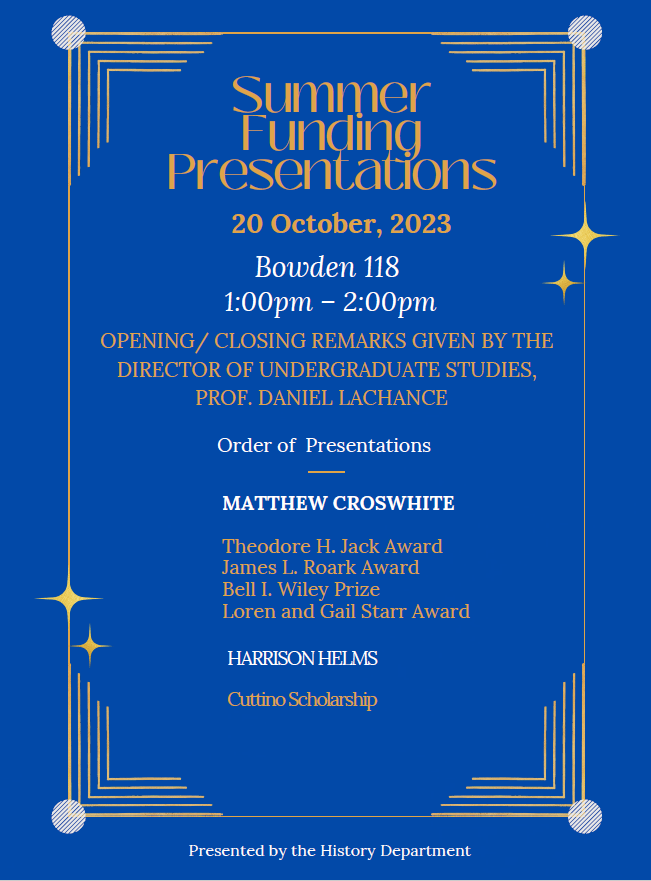
Undergraduate Research Featured in Summer Funding Presentations Oct. 20

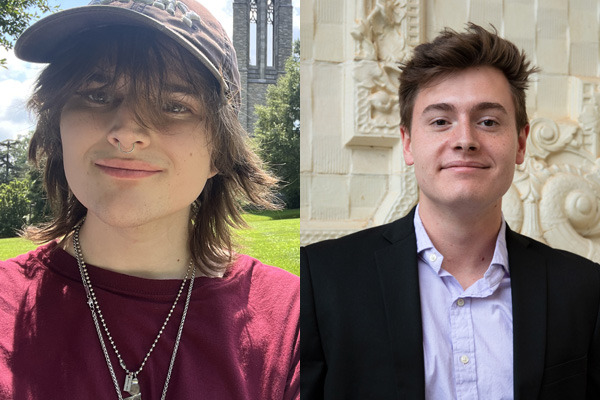
Matthew Croswhite and Harrison Helms

Over the summer of 2023, two undergraduate History students, Matthew Croswhite and Harrison Helms, conducted riveting research on various topics and participated in exciting travel experiences with the help of funding awards they received from the History Department. Please join us on Oct 20, 2023, from 1-2pm as our summer funding recipients give presentations detailing their use of the scholarship funds for their travel and research. For more information on the History Department’s travel funding awards and fellowships, please visit our website: Travel Funding.