Wiggins (18G) to Speak on “Legacies of Reconstruction” in “Lift Every Voice” Seminar Series

Dr. Danielle Wiggins, a 2018 graduate of the History PhD program, will join other panelists on November 10, 2020, to discuss the legacies of Reconstruction. Wiggins is Assistant Professor of History at Caltech. PhD candidate in History Camille Goldman will moderate the conversation. The event is a part of the Lift Every Voice seminar series, organized as a tribute to the late Dr. Pellom McDaniels, III. Find more details about the event, including registration, here: http://emorylib.info/lift-nov.

Anderson Discusses Slavery and the Origins of the Electoral College for NPR’s ‘All Things Considered’

Dr. Carol Anderson, Charles Howard Candler Professor of African American Studies and Associated Faculty in the History Department, was recently interviewed for the NPR program “All Things Considered.” Anderson, an expert in public policy with a focus on race, justice and equality, discusses how politicians from slaveholding states successfully lobbied for the creation of what became known as the Electoral College at the 1787 Constitutional Convention in Philadelphia. Listen to the piece at the following link: “The Electoral College: Why Do We Do It This Way?

Strocchia’s ‘Forgotten Healers’ Awarded 2020 Marraro Prize

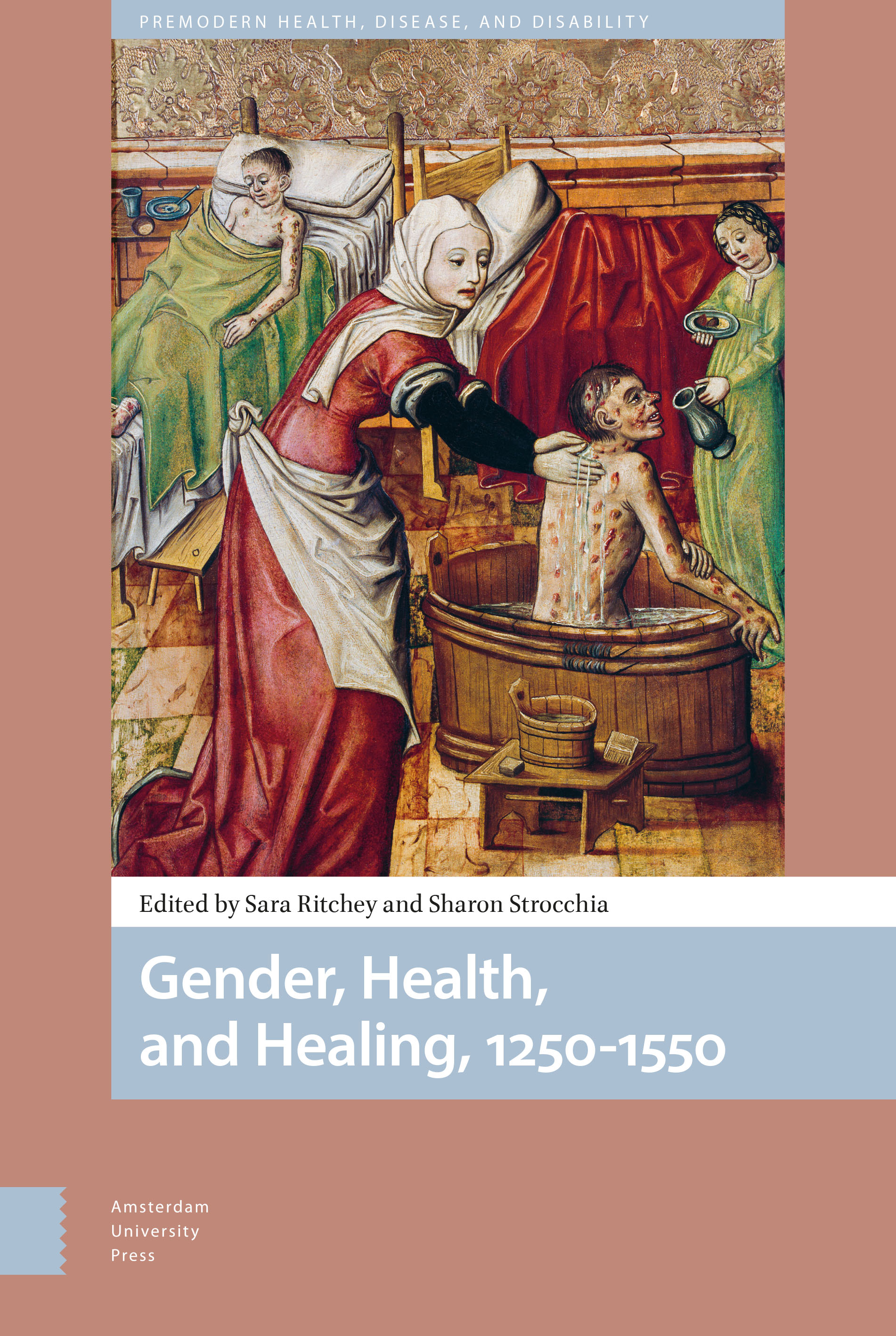
The Society for Italian Historical Studies (SIHS) has awarded the 2020 Marraro Prize for the best book in Italian history to Prof. Sharon Strocchia’s Forgotten Healers: Women and the Pursuit of Health in Late Renaissance Italy (Cambridge, MA: Harvard University Press, 2019). The prize committee offered the following appreciation of Prof. Strocchia’s work:

“Drawing on extensive work in Florentine archives, Strocchia develops a sophisticated and incisive investigation of the manifold roles women played as protagonists in Renaissance health practices. Her case studies illuminate the contributions of convent pharmacies and pharmacists, of aristocratic women who prepared and employed household remedies, and of the poor young women who worked as nurses in the pox hospital. More suggestive than conclusive, this pioneering work opens up inviting pathways for further investigation.”

Read our Q&A with Dr. Strocchia about Forgotten Healers from earlier this year: “New Books Series: Q & A with Sharon T. Strocchia about ‘Forgotten Healers.’”

Pugh and Webster Win 2019-’20 McLean Prize

Congratulations to History graduate students Aleo Pugh and Anjuli Webster on winning the 2019-’20 Ross H. and May B. McLean prize. Established to honor Dr. McLean at his retirement in 1957, the prize is awarded each year to the first-year student/s in the History graduate program who achieved the most distinguished record for the year. Pugh’s graduate work, which is advised by Profs. Walter Rucker, Jason Ward, and Carol Anderson, examines African American history, social history, memory studies, and Black feminist theory in the Twentieth-Century United States. Profs. Clifton Crais and Yanna Yannakakis advise Webster, whose research engages issues related to empire, law and sovereignty in southeastern Africa. Find previous winners of the McLean Prize here.

Webster Wins 2019-’20 Francis S. Benjamin Prize

Image credit: Jacques Nicolas Bellin, Carte de la coste orientale d’Afrique depuis le Cap de Bonne Esperance jusqu’au Cap del Gada (Cape Town: University of Cape Town Libraries, 1740), islandora:19752, Islandora Repository, University of Cape Town Digital Collections.

Congratulations to History graduate student Anjuli Webster on winning the 2019-20 Francis S. Benjamin prize for her paper, “From extraction to enclosure: Delagoa Bay as aqueous borderland in the nineteenth century.” The paper traces the history of failed British claims to Portuguese Delagoa Bay in south Eastern Africa over the nineteenth century. Through disputes over geography, jurisdiction, and possession of this imperial outpost, the border between what would become Mozambique and South Africa slowly and episodically coalesced long before the territorial carve up of Africa during the Berlin Conference of 1884.

The Benjamin prize was established in early 1974 in memory of Francis Benjamin who taught at Emory from 1946 till 1973. This gift is used to reward the best paper written by a graduate student during their first two years in the Emory History PhD program. View previous winners of the prize here.

Dr. Claudia Kreklau (18G) a Featured Speaker at Emory 2020 Homecoming

Emory’s 2020 Homecoming virtual program featured 2018 History PhD alumna Claudia Kreklau, currently Associate Lecturer in the School of History at the University of St. Andrews. Kreklau spoke as a part of the program “A Taste of Emory from Around the World,” which was organized by Emory International Advancement and Constituent Engagement. Dr. Brian Vick advised Kreklau’s dissertation, titled “‘Eat as the King Eats’: Making the Middle Class through Food, Foodways, and Food Discourses in Nineteenth-Century Germany.” Read more about the Homecoming program below and watch Dr. Kreklau’s presentation (Emory credentials required) here.

Take an exciting journey around the world to learn about the fascinating work of three international alumni working in the food and beverage industry. Discover how Jamie Koh 07B founded Singapore’s first stand-alone, micro-distillery for gin. Hear how Digant Kapoor 10Ox 12C is helping to expand sustainable farming in Dubai. And, learn the unique history of food from Claudia Kreklau 16G 18G.

Dr. Carol Anderson Dissects Voter Suppression, Past and Present, for PBS’s ‘NewsHour’

Dr. Carol Anderson, Charles Howard Candler Professor of African American Studies and Associated Faculty in the History Department, was recently a guest on the PBS NewsHour program “America, Interrupted.” Titled “Why voter suppression continues and how the pandemic has made it worse,” the episode includes Anderson’s insights into the history of voter suppression and how such practices continue through the present. Anderson is, mostly recently, the author of One Person, No Vote: How Voter Suppression is Destroying Our Democracy (Bloomsbury, 2018). Watch the episode here.

Coleman, Shan, and Hutton Present Undergraduate Honors Thesis Proposals

Please join us this coming Thursday, November 5, at 4:20pm to learn about the latest history honors research projects. Three undergraduates, Ayriel Coleman, Brian Shan, and Colin Hutton, will present their work on the history of drug use in America, the racialization of Chinese Americans, and gardening in West Virginia coal mining towns. If you have not received the zoom link via email, please contact Prof. Eckert at aeckert [at] emory [dot] edu

Faculty-Undergraduate Workshop Convenes to Discuss Chapter from Montalvo’s ‘Archives of the Enslaved’

Undergraduate students and faculty gathered on Wednesday, October 28, 2020, for a virtual workshop to discuss a chapter from Assistant Professor Maria R. Montalvo‘s book Archive of the Enslaved: Power, Enslavement, and the Production of the Past. The conversation focused on enslaved people, illness, and commodification in the antebellum courtroom.

Crespino Places Biden’s Visit to Warm Springs in Historical Context for ‘The AJC’

Dr. Joseph Crespino, History Department Chair and Jimmy Carter Professor, was recently quoted in an article in The Atlanta Journal Constitution about the upcoming visit of Democratic presidential nominee Joseph R. Biden to Warm Springs, Georgia. The town served as a vacation retreat for Franklin Delano Roosevelt during his 12 years as president. AJC political columnist Jim Galloway interviewed Crespino to help explain the significance of the visit along with the parallels between Roosevelt and Biden and the 1930s and 2020s. Read an excerpt below, along with the full article: “Opinion: Joe Biden heads for Warm Springs and the Roosevelt legacy.”

Joe Crespino is the Jimmy Carter Professor of History at Emory University. Much of his work has involved the Depression-era South.

Biden’s visit is ‘interesting symbolically and historically because of where Biden fits within the Democratic party in 2020,’ he told me. ‘He’s had to move to the left in the primary to accommodate a younger, more liberal wing within the party. Roosevelt was pushed by the left wing of his party.

‘Yes, [Roosevelt] was a liberal. He was surrounded by liberals. But he was pulled to the left by the circumstances of the time. He became more liberal, and the New Deal became more far reaching,’ Crespino said.