Remembering James Van Horn Melton (1952-2025)


It is with great sadness that the History Department shares the news of the passing of a beloved colleague and friend, Professor Emeritus of History James (Jamie) Van Horn Melton. Jamie died suddenly and unexpectedly at his home in Atlanta on June 28th.

Jamie touched many people on this campus as a distinguished scholar, generous mentor, inspiring teacher, engaging and supportive colleague, and kind friend. He was born in 1952 in Charlotte, NC, and in 1959, he moved with his parents and two brothers to Chatham, VA. Jamie received his BA in History from Vanderbilt University in 1974 and his PhD in History from the University of Chicago in 1982. During his doctoral studies, he conducted dissertation research in Vienna, Austria as a Fulbright Scholar. After he completed the PhD, he spent two years as an Assistant Professor at the University of Arkansas, three years as an Assistant Professor at Florida International University, and in 1987 he joined the faculty at Emory. He was promoted to Associate Professor in 1990 and Full Professor in 2001. He retired from Emory in 2023.

Jamie left a profound mark as a historian of early modern Europe, Germany, the Enlightenment, and the Atlantic World. He published three single-authored books with Cambridge University Press, two of which garnered national prizes: Absolutism and the Origins of Compulsory Schooling in Prussia and Austria (1988), The Rise of the Public in Enlightenment Europe (2001), and Religion, Community, and Slavery on the Southern Colonial Frontier (2015). His books were translated into German, Spanish, Russian, and Turkish. He also edited or co-edited three scholarly anthologies, published thirty peer-reviewed articles and fifty book reviews, and co-translated a book by an Austrian scholar from German into English. Inspired by his love of opera, he spent his last years at Emory working on a book project focused on the life of an Italian-born librettist who wrote for three of Mozart’s greatest operas. On Jamie’s last day, he was preparing an abstract for a piece based on a keynote address he gave last year in Vienna, which young Austrian scholars had invited him to provide because they considered his first book to be a path-breaking study. It was exciting to see a new generation of scholars inspired by his early work.

Through a remarkable record of service, Jamie left a lasting impact on Emory. He arrived on campus less than a decade after the university received the legendary gift from Robert W. and George Woodruff that transformed it from a regional liberal arts college into a nationally ranked research institution. As a young and ambitious scholar, Jamie was thrilled by the new opportunities that Emory’s expansion presented. At the same time, he and his cohort experienced enormous service burdens as they rolled up their sleeves to help Emory grow. Even among his peer group, Jamie’s contributions stand out. He chaired three departments — History, German Studies, and Spanish and Portuguese — and steered them through challenging times. He also served two terms as Director of Graduate Studies in History, one term as Director of Undergraduate Studies in History, and a three-year term on the College Tenure and Promotion Committee. He chaired twelve faculty search committees across three departments and served as a member of countless others. Outside of Emory, he served as President of the Central European History Society from 2012-2013, chaired five national book prize committees, and sat on numerous editorial boards. These are only some of his most visible service contributions. His ability to give so much time and energy to the communities of which he formed a part while producing field-defining scholarship earned him the deep admiration of colleagues, students, and staff at Emory and beyond.

Jamie brought his whole self to Emory, enriching the lives of those who were lucky enough to work with him. He was warm, funny, passionate, irreverent, and utterly unpretentious. He cared deeply about colleagues, staff, and students, and sought ways to support junior faculty especially. Jamie stood on his principles and lived out his ideals. He was vocal and courageous at key inflection points during his time at Emory, defending faculty governance and publicly supporting contingent faculty, graduate students, and employees. He was a tremendous person, and we will miss him terribly.

Jamie is survived by his wife, Barbara Lawatsch-Melton, his two children, Sarah (Matt Miller) and Peter, his former wife, Donna Walko Melton Provost, and his two brothers Ed (Julie) and Will (Eliza).

Yanna Yannakakis, Professor and Department Chair

Kyungtaek Kwon Publishes Article in ‘Russian History’


Recent doctoral program graduate Kyungtaek Kwon has published an article in the journal Russian History. Titled “Inspection journey of K.E. Voroshilov to the Far East (1931),” the article follows the travels of prominent Soviet official K.E. Voroshilov to military and industrial facilities in the Volga region, the Urals, Siberia, and the Far East. Kwon shows that Voroshilov sought to evaluate the process and results of the industrialization and militarization of the USSR in defense preparations.

Kwon completed his graduate work under the advisement of Dr. Matthew J. Payne in 2023. His dissertation was titled, “Identifying the City: Komsomol’sk-na-Amure Transformation from Military Outpost to the City of Youth in the Soviet Far East, 1932-1982.” He has recently been appointed assistant professor in the History Department of Pusan National University.

Gill’s ‘Labors of Division’ Wins Book Prize


Doctoral program alum Navyug Gill (’14) has received the Henry A. Wallace Award from the Agricultural History Society for his 2024 work, Labors of Division: Global Capitalism and the Emergence of the Peasant in Colonial Panjab (Stanford UP). The Wallace prize recognizes the best book on agricultural history outside of the United States. The prize committee offered the following appraisal of Labors of Division:

“Navyug Gill’s Labors of Division: Global Capitalism and the Emergence of the Peasant in Colonial Panjab traces the invention of a peasantry in the context of colonialism and demonstrates how ‘landless laborer’ and ‘landowning peasant’ emerged as vital political, cultural, and economic categories in the making of global capitalism under colonialism. The ambitious book weaves together a wide variety of sources to generate a history that deeply troubles our received understanding of the role of ‘peasants’ and ‘the peasantry’ and the position of agriculture within the history of political economy. In Gill’s capable hands, we must reckon with the surprising idea that modernity was not the death of the peasant, but its site of origin. This book challenges a range of fields in the social sciences and humanities by questioning one of the fundamental categories—the peasant—mobilized at the birth of foundational political and economic theories across the disciplines.”

Gill completed his doctoral work under the advisement of Dr. Gyanendra Pandey, and he is currently Associate Professor in the Department of History, Philosophy and Liberal Studies at William Paterson University. His scholarly and public writings have appeared in venues such as Past and Present, the Journal of Asian Studies, Economic and Political Weekly, Outlook, Al Jazeera, Scroll, the Law and Political Economy Project, Borderlines and Trolley Times.

Ursula Rall Awarded Fellowship at the McNeil Center at the University of Pennsylvania


Doctoral student Ursula Rall has won a fellowship for at the McNeil Center for Early American Studies at the University of Pennsylvania. She is working on her dissertation, entitled “Forging Inter-Urban Communities: Spatial Mobilities and Social Networks of Women of African Descent in New Spain, 1580-1740.” Drawing on research in Spain and Mexico, the project explores how the social networks that Black women formed across urban centers were key to the socioeconomic mobility of the Black Mexican population during the seventeenth century. She argues that Afro-descended women had a sense of a shared racialized and gendered community, forming close ties and financial networks that improved their social and material lives.

Rall’s research has been supported by a Fulbright-Hays Doctoral Research Abroad Grant, the American Historical Association, the Forum on Early-Modern Empires and Global Interactions, the Conference on Latin American History, and Emory University’s Halle Institute for Global Research. Dr. Yanna Yannakakis, Professor and Department Chair, is Rall’s faculty advisor.

Chira Named Winship Distinguished Professor of History

Adriana Chira


Dr. Adriana Chira, Associate Professor of Atlantic World History, has been named Winship Distinguished Professor of History (effective September 1, 2025). Chira’s research and teaching specializations include: Atlantic history; Cuba in world history; race; slavery and the law; land tenure and property; and post-emancipation. This prestigious appointment recognizes Chira’s scholarly eminence and contributions to Emory’s mission.

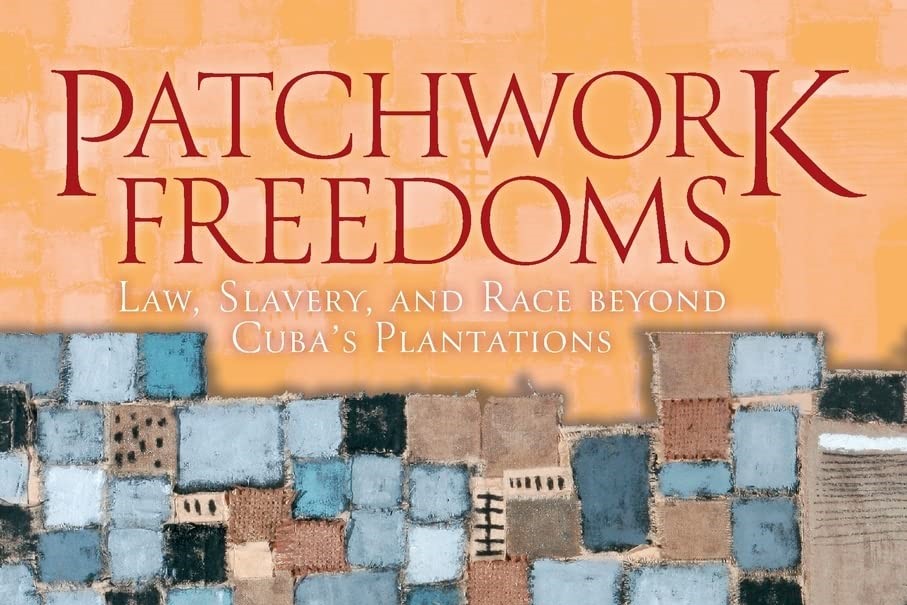
Chira’s first book, Patchwork Freedoms: Law, Slavery, and Race beyond Cuba’s Plantation (Cambridge University Press, Afro-Latin America Series, 2022), focuses on enslaved and free Afro-descendants’ efforts to own landed property and to attain free legal status through claims to ownership filed inside first instance and appellate courts in Cuba during the nineteenth century. The book traces the political implications of these processes, arguing for a history of emancipation that pays attention to vernacular legalism and modes of claiming property. The project is based on extensive archival research within Cuba (in Havana and Santiago de Cuba) and Spain.


Patchwork Freedoms received the Outstanding First Book Prize from the Association for the Study of the Worldwide African Diaspora, the James A. Rawley Prize in Atlantic World History from the American Historical Association, the Peter Gonville Stein Prize for best book in non-US legal history from the American Society for Legal History, and the Elsa Goveia Prize for excellence in Caribbean history from the Association of Caribbean Historians. It has also received honorable mentions from the Latin American Studies Association (the Nineteenth Century Section) and from the Latin American and Caribbean Studies Section of the Southern Historical Association.

Chira has also authored multiple acclaimed scholarly articles, including:

  • “Freedom with Local Bonds: Custom and Manumission in the Age of Emancipation,” The American Historical Review 126.3 (September), 949-977
  • “Ampliando los significados de sevicia: Los reclamos de protección corporal de los esclavos en la Cuba del siglo XIX,” Páginas: Revista Digital de la Escuela de Historia de la Universidad de Rosario (Argentina) no. 33 (Sept./Oct.): https://revistapaginas.unr.edu.ar/index.php/RevPaginas/article/view/546
  • “Affective Debts: Manumission by Grace and the Making of Gradual Emancipation Laws in Cuba, 1817-1868,” Law and History Review 36.1 (winter), 1-33.

Chira teaches a range of thematic and placed-based courses, from “Human Trafficking in World History” to “History Lab: Puerto Rico.” She also created an Emory study abroad program in Cuba, which focuses on questions of food sovereignty and environmental history, that usually takes place during the Maymester semester.

Students and faculty on Cuba study abroad trip, 2024


Chira’s research has been supported by the National Endowment for the Humanities and by residential fellowships at Yale University (at the Agrarian Studies Center) and at Harvard University (with the Weatherhead Initiative in Global History).

Yannakakis Named Samuel Candler Dobbs Professor of History


Dr. Yanna Yannakakis has been named Samuel Candler Dobbs Professor of History in recognition of her excellent scholarship, outstanding teaching, and deep service to Emory. Yannakakis is a social and cultural historian of colonial Latin America with specializations in the history of Mexico, ethnohistory, the history of legal systems, and the interaction of indigenous peoples and institutions in Mexico. The new position is effective September 1, 2025.

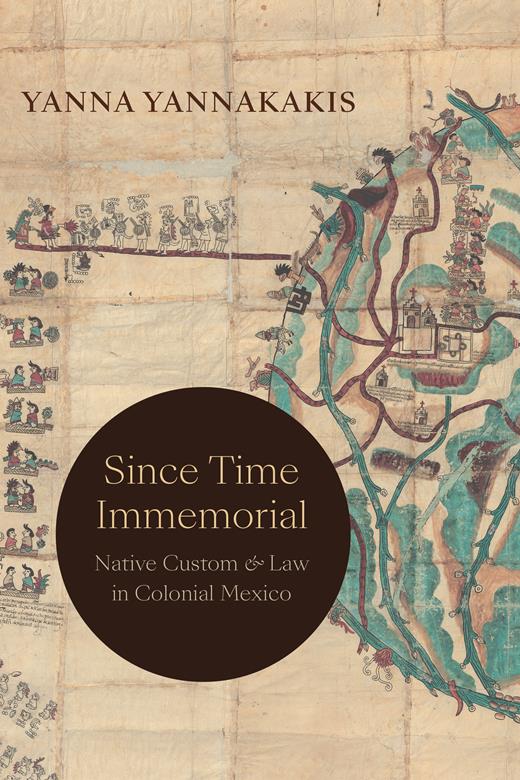
Her most recent book, Since Time Immemorial: Native Custom & Law in Colonial Mexico (Duke University Press, 2023) was awarded the Peter Gonville Stein Book Award from the American Society for Legal History and the Friedrich Katz Prize in Latin American and Caribbean History, one of the top awards from the American Historical Association. Since Time Immemorial traces the invention, translation, and deployment of the legal category of Native custom, with particular attention to how Indigenous litigants and colonial authorities refashioned social and cultural norms related to marriage, crime, religion, land, labor, and self-governance in Native communities. The monograph was published open access with support from Emory’s TOME initiative.


Yannakakis’ first book, The Art of Being In-Between: Native Intermediaries, Indian Identity, and Local Rule in Colonial Oaxaca (Duke University Press, 2008), examined how native cultural brokers negotiated with Spanish courts and the Catholic Church to open and maintain a space for the political and cultural autonomy of indigenous elites and their communities during Mexico’s colonial period. The book won the 2009 Howard Francis Cline Memorial Award from the Conference on Latin American History for the best book on the history of Latin America’s Indigenous peoples.

Yannakakis has co-edited or co-authored multiple other books and articles, including Indigenous Intellectuals: Knowledge, Power, and Colonial Culture in Colonial Mexico and the Andes (Duke University Press, 2014) (with Gabriela Ramos), Los indios ante la justicia local: intérpretes, oficiales, y litigantes en Nueva España y Guatemala siglos XVI-XVIII (Colegio de Michoacán, 2019) (with Luis Alberto Arrioja Díaz Viruell and Martina Schrader-Kniffki), “A Court of Sticks and Branches: Indian Jurisdiction in Colonial Mexico and Beyond,” American Historical Review (February 2019) (with Bianca Premo), and the special issue “Law, Politics, and Indigeneity in the Making of Ethnohistory: Perspectives from Latin America, Africa, and the Pacific,” Ethnohistory (70:2, 2023) (with Miranda Johnson).


Yannakakis is also the coordinator on an ongoing, open access digital humanities project, titled “Power of Attorney: Native People, Legal Culture, & Social Networks in Mexico.” Read more about this project: “Recent Faculty Publications: Q & A with Yanna Yannakakis about ‘Power of Attorney.’”

Anhhuy Do (C’24) Traces Family’s Remarkable Journey from Sài Gòn to Nashville in ‘Southern Spaces’

Do’s grandfather, Đỗ Phương Anh, in front of Bách Thảo Market in Nashville, after passing his citizenship test in 2000. Photo courtesy of the Anhhuy Do.

Alumnus Anhhuy Do, a 2024 graduate who completed majors in History and Political Science, has published a powerful article in Southern Spaces. The piece, “Sài Gòn to Nashville: A Refugee Journey,” traces the remarkable and harrowing migration of his family from Vietnam to Nashville, Tennessee, where they resettled in the 1990s as part of the U.S. government’s Humanitarian Operation. Published fifty years after the fall of Sài Gòn and the communist takeover of Laos, Cambodia, and Việt Nam, Do’s piece illuminates the legacies of the post-Việt Nam War era in Southeast Asia and among Vietnamese American communities throughout the U.S.

While at Emory, Do was active in many groups, including Asian Pacific-Islander Desi American Activists, Pi Sigma Alpha, the Vietnamese Student Association, he Atlanta Urban Debate League, Center for Civic and Community Engagement (CCE) Society, and Imagining Democracy Lab. In his senior year, he won the History Department’s Matthew A. Carter Citizen-Scholar Award and the Jane Yang Award for Community Advocacy from the Office of Campus Life.

Do is pursuing his PhD in Vietnamese History from Princeton University, supported by a Presidential Fellowship. He extends a special thank you to Dr. Allen Tullos, Professor and Co-Director of Emory Center for Digital Scholarship, “for making this publication possible and remaining steadfast in amplifying unheard voices across Southern US history.” Read Do’s piece here: “Sài Gòn to Nashville: A Refugee Journey.”

Many South Vietnamese sought new identities as they resettled in locations such as California, Texas, Washington State, Louisiana, and the DC metro area including Maryland and northern Virginia. Perhaps surprisingly, Tennessee also became home to generations of Vietnamese refugees and immigrants with intense transnational migration histories. One family’s story is that of my own, whose refugee experience does not follow the typical timeline of helicopter escapees and boat people. Rather, as Humanitarian Operation arrivals, my family’s history offers an illuminating narrative.

Lesser Publishes ‘Living and Dying in São Paulo’ with Duke UP


Dr. Jeffrey Lesser, Samuel Candler Dobbs Professor of History, has published a new monograph, Living and Dying in São Paulo: Immigrants, Health, and the Built Environment in Brazil, with Duke University Press. The work examines competing visions of wellbeing in Brazil among racialized immigrants, policymakers, and health officials over 150 years and primarily in São Paulo’s Bom Retiro neighborhood, drawing out the connected systems of the built environment, public health laws and practices, and citizenship. In addition to historical and literary documentation, Lesser’s book was informed by a multi-year observation of a basic health team at the Octávio Augusto Rodovalho Public Health Clinic of the Brazilian National Health Service. Read praise for Living and Dying below and find the full open access book from Duke UP.

Living and Dying in São Paulo is methodologically innovative, conceptually powerful, and engagingly written. Jeffrey Lesser’s book has rare precision and creativity. Not only does he give an insightful reading of place and people, he also makes a bold case for historians to adopt new approaches and for those in the social and biomedical sciences to pose questions historically. This is the kind of writing I am sure most historians—myself included—wish they could do.” – Jerry Dávila, Jorge Paulo Lemann Chair in Brazilian History, the University of Illinois.

Alex Minovici (C ’25) Receives Inaugural Fox Center Undergraduate Honors Award

Recent Emory graduate and history major Alex Minovici has been selected as the inaugural recipient of the Fox Center for Humanistic Inquiry’s Undergraduate Honors Award for the thesis, “Singe Spaima: The 1989 Revolution and the Politics of Violence in Socialist and Post Socialist Romania.” Minovici, who completed a double major in Philosophy, Politics, and Law, produced the thesis as an Undergraduate Honors Fellow at the Fox Center over the 2025-26 academic year. “Singe Spaima” received Highest Honors from the Emory Department of History.

Minovici offered reflections on the thesis and experience as a fellow at the Fox Center in conversation with Karl-Mary Akre (Fox Center Communications and Outreach Coordinator). Read an excerpt below along with their full conversation.

“…what truly gives Romanian people power in their new democracy is remembering the violence and trauma with the express purpose of holding state officials accountable; refusing to forget abuses. Memory can be an act of resistance. Along these lines, I feel as if my thesis is part of a broader effort to document, remember, and respect the trauma that Romanians experienced in recent history.”

Jessica Alvarez Starr to Intern with Puerto Rico Archival Collaboration

Jessica Alvarez Starr, a first-year PhD student, will be serving as an intern with the Puerto Rico Archival Collaboration (PRAC) Summer 2025 Graduate Student Internship Program. As part of this 8-week program, Jessica will gain valuable exposure to collections in the Archivo General de Puerto Rico (AGPR) and the University of Puerto Rico’s Colección Puertorriqueña (CPR). Jessica will work alongside archivists to aid in organizing, transcribing, and digitizing efforts for the AGPR while developing their own research project on enslavement and emancipation practices in Mayagüez, Puerto Rico. As an intern, Jessica will receive a stipend to cover travel and living costs for their work in San Juan. They are grateful for the opportunity to conduct archival research, gain preservation skills, and develop connections with scholars to advance their studies. Read more information about the PRAC internship. Their dissertation, tentatively titled “Revolutionary Rhetoric: Antislavery and Anticolonial Alliances in Nineteenth-Century Puerto Rico,” is advised by Drs. Adriana Chira and Yanna Yannakakis.