Postdoctoral Fellow Teresa Davis on Imprisoned Historian and Colleague in ‘The Washington Post’

Dr. Teresa Davis is a Postdoctoral Fellow in Transnational Latin American History in the History Department. She completed graduate school at Princeton University, where she was a colleague of historian Xiyue Wang. Wang was imprisoned in Iran in 2016 while conducting archival research on nineteenth-century nomadic populations of contemporary Central Asia, Russia, Iran, western China and Mongolia. Davis wrote a piece in The Washington Post arguing for increased attention to his research and imprisonment. Read an excerpt below along with the full piece, “Iran has imprisoned a historian for three years. Here’s why his research matters.”

“We should all work tirelessly for Wang’s release. There is no zero-sum equation between fighting to free an innocent researcher in an Iranian prison and advocating for productive diplomatic relations with Iran. Indeed, if diplomacy and sanity are to succeed, we will need to protect the work of researchers such as Wang, who systematically challenge the idea of a foundational clash between East and West, Islam and Christianity, or “backward” and “modern” forms of political organization. To support Wang is to cast our lot in favor of historical nuance and humanity against the hard-liners — both abroad and in our midst.”
Jeffrey Lesser Discusses Prison Conditions in Brazil in Wake of Massacre

Dr. Jeffrey Lesser contributed to a July 30 article in Al Jazeera about a prison massacre in the Brazilian state of Pará that left 57 inmates dead. Lesser is Samuel Candler Dobbs Professor of History and Director of the Halle Institute for Global Research. Read his quote from the article below along with the full piece: “Scores killed in Brazil prison riot; 16 decapitated.”

“The prisons themselves are the opposite of rehabilitation. They are taking young people and making them into hardened criminals and that is in part because Brazil has in some ways an extremely weak state and because the state is weak, the criminal gangs expand.” – Jeffrey Lesser

‘SaportaReport’ Features New Works by Carl Suddler and Colson Whitehead

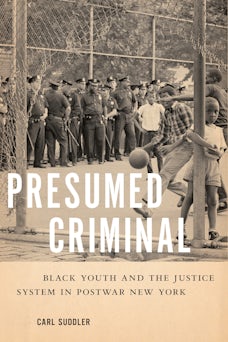
Presumed Criminal

SaportaReport recently featured two new books about black youth experiences in the justice system published by History Department Assistant Professor Carl Suddler and Pulitzer Prize-winning author Colson Whitehead, respectively. Managing Editor David Pendered wrote the piece, titled “Justice for black youths, reparations in Atlanta’s conversations this summer.” Pendered discusses Suddler’s Presumed Criminal: Black Youth and the Justice System in Postwar New York, which was published by NYU press last month. Suddler offers a reading of Whitehead’s The Nickel Boys, which was also published last month. Whitehead recently presented at the Atlanta History Center. Read the full piece in SaportaReport here.

Graduate Student Stephanie Bryan Presents Paper and Wins Commendation at Oxford Symposium

Graduate student Stephanie N. Bryan presented her paper “Under the Cover of Savory Vapors: Opossums, Power, and Jim Crow Politics” at the Oxford Symposium on Food and Cookery. The paper addresses the custom of hunting and cooking opossums in the southern USA and its manipulation by early 20th century politicians. The paper subsequently won a commendation by the Sophie Coe Prize committee. The judges praised the paper as “a surprising piece of culinary history” and considered it “well researched and well told.” Read the full judge’s report here. Bryan’s advisers in the History Department are Allen Tullos and Patrick Allitt.

Dr. Stefanie M. Woodard (PhD ’19) Wins Essay Prize from NC German Studies Seminar and Workshop Series

Congratulations to Dr. Stefanie M. Woodard (PhD ’19). Her article manuscript “Ethnic German ‘Resettlers’ from Poland and their Integration into Western Germany, 1970-1990” won the inaugural Konrad H. Jarausch Essay Prize for Advanced Graduate Students in Central European History from the North Carolina German Studies Seminar and Workshop Series (NCGS). The jury selected Dr. Woodard’s work because it “married archival rigor and theoretical sophistication.” Read more about the prize here.

Dr. Carl Suddler Places ‘Central Park Five’ in Historical Context for the ‘AJC’

Presumed Criminal

Incoming Assistant Professor of History Carl Suddler recently contributed to an article in the Atlanta Journal-Constitution, “Yusef Salaam of Central Park Five: ‘Born with a target on our backs.'” Shelia Poole wrote the piece, which centers on Yusuf Salaam, one of the so-called Central Park Five. Read the excerpt that quotes Dr. Suddler below as well as the full article.

“I think when we see these cases, especially wrongful convictions, it does kind of beg the question just how many of these cases have happened over time,” said Carl Suddler, author of “Presumed Criminal: Black Youth and the Justice System in Postwar New York” and professor of history, who will join the faculty at Emory University this fall. “In the United States, we do not have a justice system, we have a legal system. We have a system that followed the letter of the law, not necessarily fairness.”

Claudia Kreklau (PhD ’18) Wins Parker-Schmitt Dissertation Award from the Southern Historical Association

Congratulations for Dr. Claudia Kreklau for winning the Parker-Schmitt Dissertation Award from the European History Section of the Southern Historical Association. Kreklau completed her dissertation, entitled “‘Eat as the King Eats’: Making the Middle Class through Food, Foodways, and Food Discourses in Nineteenth-Century Germany,” in 2018. The dissertation was advised by Drs. Brian Vick, Sander Gilman, and Dawn Peterson. Kreklau is currently Associate Lecturer in Modern European History at the University of St Andrews, Scotland. 


Crespino and Lal Win Georgia Author of the Year Awards

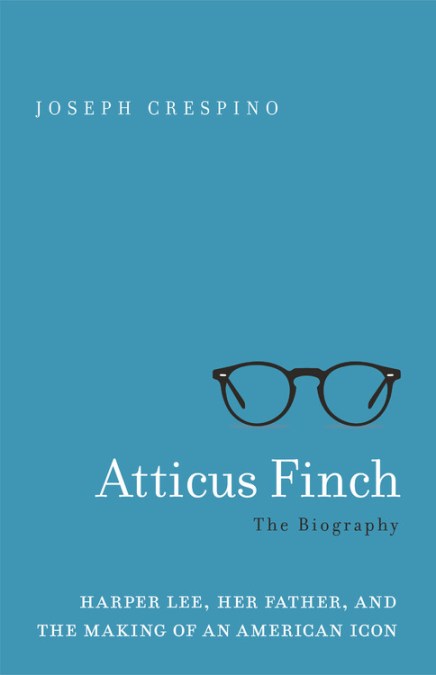
Atticus Finch

Two History Department faculty have won 2019 Georgia Author of the Year awards. Dr. Joseph Crespino, Chair and Jimmy Carter Professor of History, won in the history category for his Atticus Finch: The Biography (Basic Books). The publisher describes Atticus Finch as charting

how Harper Lee’s father provided the central inspiration for each of her books. A lawyer and newspaperman, A. C. Lee was a principled opponent of mob rule, yet he was also a racial paternalist. Harper Lee created the Atticus of Watchman out of the ambivalence she felt toward white southerners like him. But when a militant segregationist movement arose that mocked his values, she revised the character in To Kill a Mockingbird to defend her father and to remind the South of its best traditions. A story of family and literature amid the upheavals of the twentieth century, Atticus Finch is essential to understanding Harper Lee, her novels, and her times.

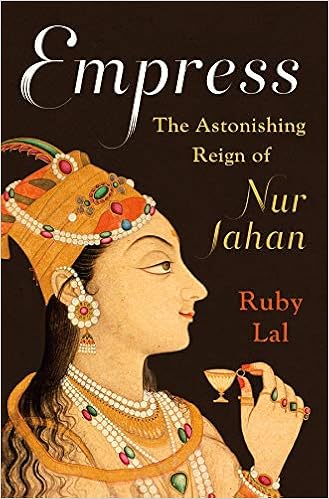
Associated Faculty in History Ruby Lal, whose primary appointment is as Professor of South Asian Studies in the Department of Middle Eastern and South Asian Studies, received the Author of the Year award in the biography category. Lal’s Empress: The Astonishing Reign of Nur Jahan chronicles the life of a seventeenth-century empress who “wielded unprecedented power, strategizing with senior counselors, minting currency, addressing the public, shooting tigers, and designing clothing and architecture.” The book was also a finalist for the Los Angeles Times Book Prize.

Sean Andrew Wempe (PhD, 2015) Publishes ‘Revenants of the German Empire’ with Oxford UP

In June of 2019 Oxford University Press will publish the first book of Sean Andrew Wempe, a 2015 doctoral program alumnus. Wempe’s monograph is entitled Revenants of the German Empire: Colonial Germans, Imperialism, and the League of Nations. Benedikt Stuchtey, Professor at Philipps-University Marburg, Germany, describes Revenants as a “timely and meticulously researched book based on a wide array of archival material.” Wempe is currently Assistant Professor of Modern European History at California State University–Bakersfield. Read the publisher’s description of the book below.

In 1919 the Treaty of Versailles stripped Germany of its overseas colonies. This sudden transition to a post-colonial nation left the men and women invested in German imperialism to rebuild their status on the international stage. Remnants of an earlier era, these Kolonialdeutsche (Colonial Germans) exploited any opportunities they could to recover, renovate, and market their understandings of German and European colonial aims in order to reestablish themselves as “experts” and “fellow civilizers” in discourses on nationalism and imperialism.

Revenants of the German Empire: Colonial Germans, Imperialism, and the League of Nations tracks the difficulties this diverse group of Colonial Germans encountered while they adjusted to their new circumstances, as repatriates to Weimar Germany or as subjects of the War’s victors in the new African Mandates. Faced with novel systems of international law, Colonial Germans re-situated their notions of imperial power and group identity to fit in a world of colonial empires that were not their own. The book examines how former colonial officials, settlers, and colonial lobbies made use of the League of Nations framework to influence diplomatic flashpoints including the Naturalization Controversy in Southwest Africa, the Locarno Conference, and the Permanent Mandates Commission from 1927-1933.

Sean Wempe revises standard historical portrayals of the League of Nations’ form of international governance, German participation in the League, the role of interest groups in international organizations and diplomacy, and liberal imperialism. In analyzing Colonial German investment and participation in interwar liberal internationalism, the project challenges the idea of a direct continuity between Germany’s colonial period and the Nazi era.

Dr. Carl Suddler on “When They See Us” in ‘The Washington Post’

Assistant Professor Carl Suddler recently wrote a piece in The Washington Post commenting on the Netflix miniseries “When They See Us,” which chronicles the story of five teenagers — the so-called Central Park Five — forced to confess to a rape they did not commit in 1989. Suddler is the author of Presumed Criminal: Black Youth and the Justice System in Postwar New York, to be published by NYU press in July of 2019. Read the full piece, “How the Central Park Five expose the fundamental injustice in our legal system,” along with the excerpt below.

“When They See Us” sheds new light on this old tale and aims to create change. DuVernay’s miniseries joins the decades-long efforts by activists to humanize the Central Park Five beyond the numeric moniker. It also, perhaps most notably, has inspired the next generation of social justice activists committed to working to overturn wrongful convictions and to reigniting mainstream discussions about criminal injustices in America’s legal system, in the hope of achieving an overhaul of the system.