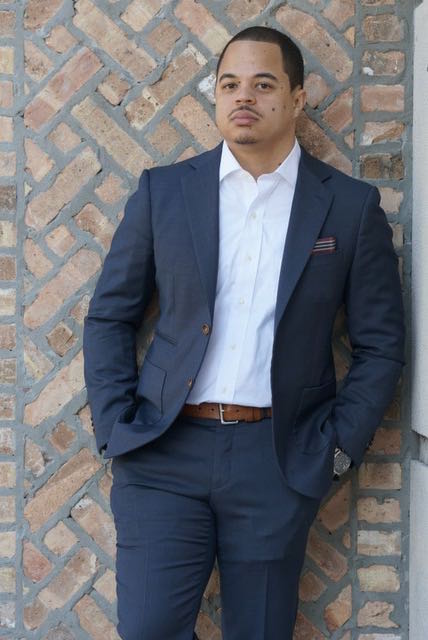
Welcoming New Faculty: Q & A with Dr. Maria R. Montalvo

In the fall of 2019 the Emory History Department welcomed four new faculty members. In the third of four posts, the following profiles the work of Assistant Professor Maria R. Montalvo. Dr. Montalvo completed her Ph.D. at Rice University in 2018.
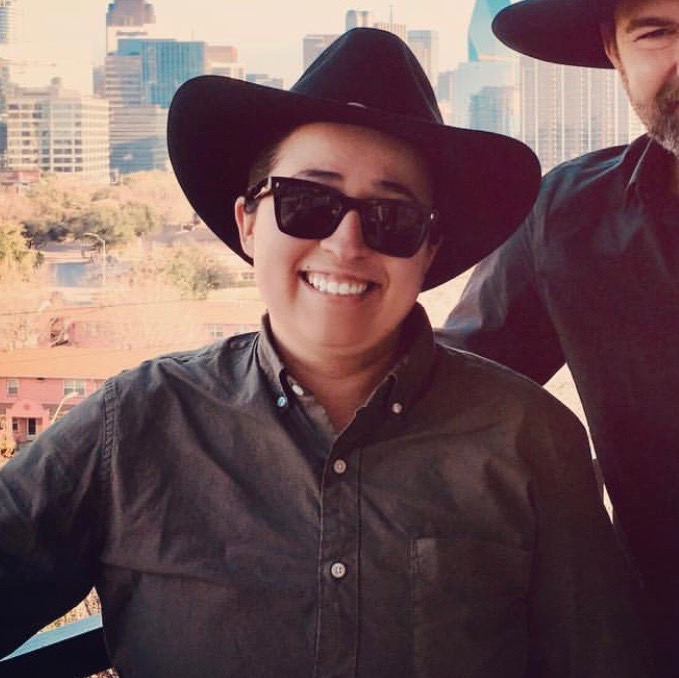
Montalvo-Faculty Photo - Maria Montalvo (1)

Tell us about the focus of your research and principal current project. 

My research centers on the history of slavery, capitalism, and the law in the nineteenth-century United States. My current book project, tentatively titled “The Archive of the Enslaved: Power, Enslavement, and the Production of the Past,” examines the relationship between the production of enslaved property and the production of the past. Building on my analysis of over 17,000 sets of antebellum New Orleans court records, my project illuminates the significant connections between historical processes of commodifying enslaved human beings and the construction and preservation of the documentary archive.

Was there a particularly memorable moment from archival or field research that has had a lasting impact on your work or career?

Tracing an enslaved woman named Sarah Connor throughout much of her life and across the nineteenth century has been a transformative experience. Connor’s life and choices were shaped and constrained by the realities of living as an enslaved and, later, free woman of color in the nineteenth-century United States. Finally locating her last will and testament in Washington, D.C., after much time spent trying to learn about her through the words of her enslavers, was an experience I will not soon forget.

What sort of courses—undergraduate or graduate—are you most excited to offer at Emory?

I am most excited to offer courses for students at all levels where we can work together to not only learn about the past and how historians work to reconstruct it but also improve our reading, writing, and critical thinking skills. In the survey course I’ll be teaching this fall (American History Until 1877) as well as the senior research seminar I’ll be leading in the spring (Enslaved People and the Archive), the development of historical knowledge takes center stage in my classroom. I’m thrilled to be able to offer students the opportunity to do the work of historians while learning how to be more engaged individuals.

What drew you to Emory? 

Emory not only expects but also does everything it can to make sure that its faculty have every opportunity to succeed as scholars and as teachers. From the moment I set foot on campus, I have had zero doubts that Emory’s supportive community as well as its commitment to its faculty and its students make it the perfect place for me to grow as an educator and a historian. The sky’s the limit here, and I look forward to becoming an active member of the history department and the wider Emory community.

History Department Welcomes Lakesia Hayes, New Undergraduate Academic Degree Coordinator

Image may contain: 1 person, smiling

The History Department staff has grown this past summer with the addition of Lakesia Hayes, who serves as the undergraduate academic degree coordinator. Hayes is a native of Decatur, GA and has a passion for creativity and the liberal arts. She graduated from Georgia Southern in 2009 as an English/English Education major and then moved to South Korea to teach English as a Second Language to elementary students. Living abroad helped her gain an appreciation for cultural diversity, tradition, and history. She returned to the United States and eagerly stepped into the classrooms of the Dekalb County School System, where she taught for four years. While new to the History Department, Hayes is not new to Emory. Her most recent position was with Emory Healthcare, where she worked side by side with a surgical oncologist. Welcome, Lakesia! 

WABE’s ‘Closer Look’ Features Dr. Carl Suddler

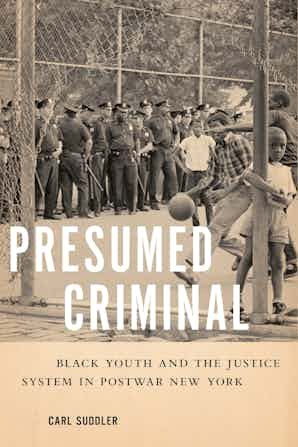
 Dr. Carl Suddler is the author of the new book "Presumed Criminal: Black Youth and the Justice System in Postwar New York"

Assistant Professor Carl Suddler was recently interviewed by Rose Scott, host of the WABE (one of Atlanta’s NPR affiliates) show “Closer Look.” Suddler discussed his new book, Presumed Criminal: Black Youth and the Justice System in Postwar New York (NYU Press, 2019). Listen to the full show, “Closer Look: The History of Black Youth & The Criminal Justice System,” and check out the recent new faculty profile of Dr. Suddler.

Welcoming New Faculty: Q & A with Dr. Carl Suddler

In the fall of 2019 the Emory History Department welcomed four new faculty members. In the second of four posts coming in the next two weeks, the following profiles the work of Assistant Professor Carl Suddler. Suddler completed his PhD at Indiana University, Bloomington and was Assistant Professor of History at Florida Atlantic University before coming to Emory.

Suddler_bio image

Tell us about the focus of your research and principal current project. 

As a scholar of African American history whose research interests lie at the intersections of youth, race, and crime, I am committed to developing better understandings of the consequences of inequity in the United States. My research and teaching interests are related to twentieth-century U.S. history, African American urban history, histories of crime and punishment, the carceral state, sport history, and histories of childhood and youth. My first book, Presumed Criminal: Black Youth and the Justice System in Postwar New York (New York University Press, 2019) points to a critical shift in the carceral turn between the 1930s and 1960s when state responses to juvenile delinquency increasingly criminalized black youths and tethered their lives to a justice system that became less rehabilitative and more punitive.

In researching the criminalization of black youth for my first book, I was struck by how the state extended its surveillance powers through recreation and organized sports. As early as the late nineteenth century, there were calls from city authorities to increase recreational spaces and facilities to curb youth crime. It was assumed that to prevent delinquent behaviors, city authorities needed to better occupy youths’ idle time with structured activities that reinforced valuable life lessons, encouraged them to take instructions, and ordered them to follow rules. Thus, sports were used to distract youths from the social ills that city life presented––poor housing, disproportionate access to education, and inadequate healthcare––while providing an escape and promoting an ill-advised “way out” for its most vulnerable players.

In my current projects, I am examining these connections, including the unchallenged use of discretion in both sports and criminal justice, to bring together histories of the carceral state and sports studies.

Was there a particularly memorable moment from archival or field research that has had a lasting impact on your work or career?

I was in the throes of the archive for the first book when the Schomburg Center for Research and Black Culture in Harlem acquired James Baldwin’s personal papers. This was big for me, because Baldwin was engaged in some of the more critical moments of the New York City history that I touch on in the book and it allowed me to connect them to a historical giant.

What sort of courses – undergraduate or graduate – are you most excited to offer at Emory?

My research and scholarly insight relate directly to my teaching interests – so whenever, I have an opportunity to teach courses that engage various intersections of youth, race, and crime, I get excited. This semester, I’m looking forward to both undergraduate courses – a research seminar on sports in American history and culture and a postwar African American urban history course. In the Spring, I am planning to teach a graduate readings course on mass incarceration.

What drew you to Emory? 

The students and the intellectual community drew me to Emory. When I was a postdoctoral fellow at the James Weldon Johnson Institute (jwji) for the Study of Race and Difference in AY2015–2016, I got a sneak peek about what it was like to be at Emory. I taught an undergraduate course, which allowed me to engage with students regularly –– and I was blown away by their level of dedication. I also engaged with various faculty and participated in a weekly colloquium with visiting scholars from across the country.


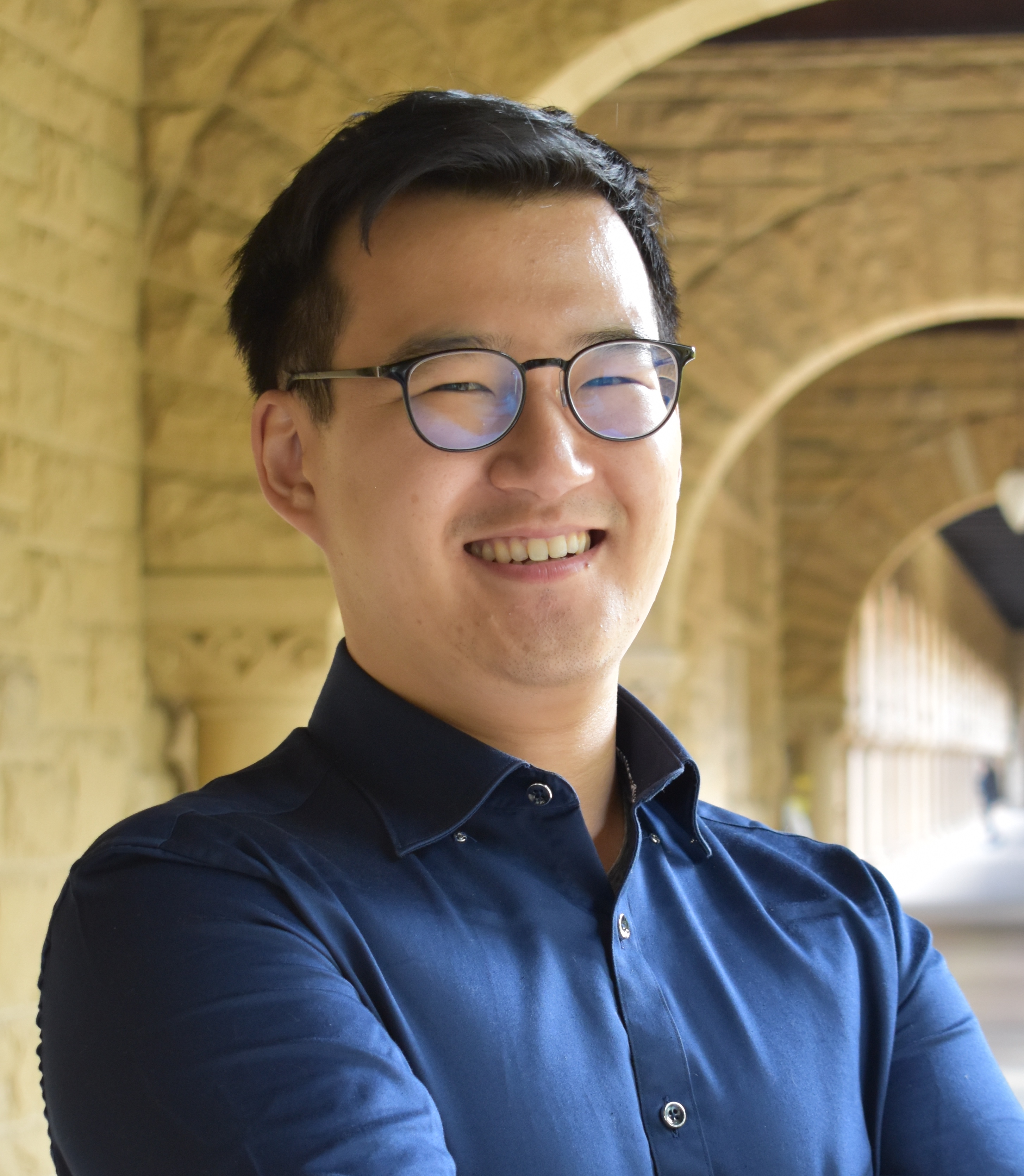
Welcoming New Faculty: Q & A with Dr. Chris Suh

In the fall of 2019 the Emory History Department welcomed four new faculty members. In the first of four posts coming in the next two weeks, the following profiles the work of Assistant Professor Chris Suh. Suh completed his PhD at Stanford University in 2018.

Suh profile pic - Chris Suh (1).jpg

Tell us about the focus of your research and principal current project. 

My research focuses on several interrelated topics: the United States in the Pacific, Asian American history, and the role of ideas about race and ethnicity in shaping human life.

My current book project, tentatively titled At the Dawn of the Pacific Era, charts the rise of the United States as a Pacific power in the first half of the twentieth century, a process that entailed an unprecedented level of overseas imperial expansion and immigration restriction. My project takes as its starting point that the United States began to rise as a Pacific power during the “Progressive Era”—a period mostly known for the surge of reform movements dedicated to the expansion of democracy and eradication of social problems caused by industrial capitalism. I argue that historical figures of this era genuinely came to see empire and exclusion as “progressive” because American policies were deliberately shaped to allow for the selective inclusion of certain Asians in imperial governance of the Pacific as they appeared to acquire the virtues of Western “civilization.” The policy of selective inclusion did not aim to end racial inequality. Yet from the perspective of certain race leaders at the time, this policy represented an opportunity for the non-white races to climb up the racial hierarchy and claim their place within the world of empires, not as “subject races,” but as one of the “civilized” powers.

Was there a particularly memorable moment from archival or field research that has had a lasting impact on your work or career?

I actually came to work on my book project after encountering the incredible diary of Yun Ch’i-ho, class of 1893, the first international student at Emory. Although Yun is well known in Korean history, much less is known about his exceptionally perceptive observations of how ideas about race shaped not only American domestic policy but also foreign policy. As a Korean educated in the Jim Crow South, Yun was particularly well positioned to see, even after his return to Korea, how ideas about race were crucial to maintaining the imperial order in the Pacific that the United States helped construct in the 20th century. When I was in graduate school, I visited Emory’s Stuart A. Rose Manuscript, Archives, and Rare Book Library to look at Yun’s papers and published a portion of my research in the Journal of American History under the title, “What Yun Ch’i-ho Knew: U.S.-Japan Relations and Imperial Race Making in Korea and the American South, 1904–1919” (2017).

What sort of courses – undergraduate or graduate – are you most excited to offer at Emory?

I am excited to have the opportunity to introduce students to the tools of the historian and help them understand our present moment through several courses that relate to my research interests.

This fall, I will be teaching a research seminar called “Transpacific Lives” that explores the history of US-Pacific relations through biographies, autobiographies, and historical monographs whose narratives are driven by an identifiable cast of central figures. I am hoping that students will make use of the rich archival collection at the Stuart A. Rose Manuscript, Archives, and Rare Book Library and discover interesting historical connections that have been obscured by nation-bound narratives, just as I did with my work on Yun Ch’i-ho.

Also related to my research is a lecture course on Asian American history, which I will teach in spring. It will investigate several timely issues including legal and illegal immigration, structural and cultural racism, and liberal and conservative politics. In addition to traditional historical sources, I will use photographs, film, music, art, and works of fiction as a lens through which to interpret multiple dimensions of Asian American lives as well as American society at large.

In addition, I am very excited to offer this fall a lecture course titled “Sounds of the Century: Understanding 20th Century US History through Popular Music,” which draws on my undying personal interest in popular music. The course will explore race, gender, sexuality, class, and nation through various kinds of music and social movements in the 20th century. I hope this course will offer students an interdisciplinary angle to understand many pressing issues in today’s political culture and cultural politics.

What drew you to Emory? 

Working at Emory is a dream come true for me. Not only did I already have interest in Emory’s relationship with the Pacific World through my research, I was also deeply impressed by Emory’s institutional commitment to create an educational environment for students from all backgrounds. Emory is home to world-class faculty, staff, and students, and I am excited to join this thriving community.

Mary L. Dudziak Calls to Shed Light on Secret Laws that Govern Presidential Power

Dr. Mary L. Dudziak recently wrote a piece for The Hill arguing for access to secret documents authored by the Justice Department’s Office of Legal Counsel that govern the scope of U.S. executive power. Dudziak joined other parties in a issuing a formal challenge for the release of this legal corpus, which has been built over decades without substantial oversight (public or otherwise). Dudziak, who is Asa Candler Griggs Professor of Law and associated faculty in the History Department, is the author (most recently) of War Time: An Idea, Its History, Its Consequences (Oxford University Press, 2012). Read the full piece in The Hill: “Shedding light on secret laws governing presidential power.”

Suddler’s New Book, ‘Presumed Criminal,’ Featured by ‘Diverse Issues in Higher Education’

Assistant Professor of History Dr. Carl Suddler was recently interviewed by Diverse Issues in Higher Education about his new book, Presumed Criminal: Black Youth and the Justice System in Postwar New York. New York University Press published the book earlier this year. Lamont Jones wrote the piece for Diverse, entitled “Emory History Professor’s New Book Probes Black Youth, Criminal Justice.” Read an excerpt below, in which Suddler discusses the book’s cover photo, along with the full article here.

What’s the story behind that compelling cover photo?

[Suddler] “I love the cover image for several reasons. It’s a photo from 1966 Brooklyn. The patrolmen in the backdrop are amongst the 1,500 that were assigned to the neighborhood and, what I often like to point out, is the ‘diversity’ amongst the ranks. There is no information related to the ages of the boys in the image, but you can gather that they are all relatively young, especially the youngster peering out into the camera from the hole in the fence. At its core, however, I feel this image captures the crux of the book – and the heart of the problem today – and that is how normal the over-policing of Black and Brown communities has become. The boys continue to play ball; the officers continue to stand pat. Their proximity does not appear to phase the youngsters. However, we all know too well that increased interactions with the police often lead to increased arrest rates, arrest rates dictate ‘crime’ statistics, and as a country – because we have yet to figure out a better alternative – we rely on crime statistics to make sense of who is ‘presumed criminal.’ Whether or not they committed a crime becomes moot.”

Dr. Lisa Greenwald (PhD, ’96) Discusses ‘Daughters of 1968’ on New Books Network Podcast

Dr. Lisa Greenwald, an alumna of the History graduate program, was recently interviewed on the podcast of the New Books Network. Earlier this year Greenwald published Daughters of 1968: Redefining French Feminism and the Women’s Liberation Movement with the University of Nebraska Press. She was interviewed by Beth Mauldin, an Associate Professor of French at Georgia Gwinnett College in Lawrenceville, Georgia. Greenwald teaches history at Stuyvesant High School in New York City. Go to the New Books Network website to listen to the podcast.


Carol Anderson on the Parallels Between Anti-Black Lynchings and Contemporary Violence

Dr. Carol Anderson, Associated Faculty in the History Department, recently contributed to a CNN.com article comparing contemporary acts of violence to anti-black lynchings in the twentieth century and before. John Blake authored the piece, “Why El Paso and other recent attacks in the US are modern-day lynchings,” which quotes Anderson extensively. The historian, who is Charles Howard Candler Professor of African American Studies and Chair of African American Studies, draws from her work on lynchings in White Rage: The Unspoken Truth of Our Racial Divide and notes that her uncle was “almost lynched in the early 20th century for standing up to a white man in an Oklahoma store.” Read an excerpt that features Anderson below along with the full article.

“But Anderson and others warn that many of the same elements that spawned the lynching era are stirring once again in America. One commentator even described the El Paso shooter as ‘a lynch mob of one.’

“The result, Anderson says, is that more Americans — Latinos, blacks, Muslims, Jews, anyone not seen as white enough — are now experiencing the same fear of being murdered at random in public that their relatives faced during the lynching era.”

Chris Suh Speaks to NPR about Japan’s Proposal for Racial Equality in the Treaty of Versailles

Assistant Professor of History Chris Suh contributed to a recent article published as a part of NPR’s Code Switch series. Josh Axelrod wrote the piece, entitled “A Century Later: The Treaty Of Versailles And Its Rejection Of Racial Equality,” which discusses Japan’s ultimately-rejected proposal for an anti-racist clause in the 1919 accord that ended World War I. Read part of Suh’s contribution below along with the full article.

“‘At the bottom of all of this is the idea that certain people of color cannot be trusted and people of color do not deserve a place, not only on the world stage but also in our own communities,’ says professor Chris Suh who studies Asian American history.

“The rejection of the proposal would play a role in shaping the U.S.-Japan relationship, World War II and Japanese American immigration. It sheds light on the treatment of nonwhite immigrant groups by the U.S. and its legacy of white supremacy.

“‘Basically … there continues to be this sense of racial superiority among the Americans’ toward Japan, Suh argues.”