Vulnerability as a Category of Historical Analysis: Initial Thoughts in Tribute to Martha Albertson Fineman

by Deborah Dinner

Illustration by Martha A. Fineman

“Take a closer look at a physical copy of Martha Albertson Fineman’s recent book series and you will notice that the cover art is a print of one of Martha’s own etchings. The print shows two faces, one staring intently at the viewer and the other looking to the side. The faces are not isolated; rather, they are connected by intersecting and overlapping spherical lines. Trees and leaves encircle and, perhaps, protect the faces. For me, the emotions evoked by the etchings include curiosity, warmth, forthrightness, creativity, and an awareness of relationship to other people and to the environment. Martha possesses these qualities, as a scholar and colleague. As an artistic medium, furthermore, etchings draw viewers’ attention to negative spaces as well as positive lines. This is the quality of Martha’s scholarship that is, for me, most inspiring and generative. Martha has a knack for rendering visible the negative spaces—the dimensions of law and social life that others are missing.

Over the last decade, Professor Fineman has turned her attention to one such negative space: vulnerability in the human condition. In 2008, she published The Vulnerable Subject: Anchoring Equality in the Human Condition. This essay, since cited by more than 150 law-review articles and countless book chapters, presented Fineman’s critique of the limits of antidiscrimination law and argued that recognition of universal human vulnerability should serve as the ethical foundation for a more responsive state. In the last decade, vulnerability theory has evolved considerably, but I will start my remarks with a brief overview of this landmark essay.

Fineman’s piece starts with a familiar critique: that the formal conception of equality in U.S. antidiscrimination law—same treatment for similarly situated individuals—has proved wholly inadequate either to challenge structures of subordination or to remedy socioeconomic inequality. She draws attention to the way in which the rhetorical prominence of antidiscrimination, as our legal culture’s dominant frame for justice and injustice, reinforces the perceived legitimacy of a restrained state. Putting a twist on our understanding of the public–private divide, she argues that the contemporary state has not withered. Rather, the state refrains from using its formidable coercive authority to guarantee substantive equality.

The essay then proceeds to chart wholly new territory in legal scholarship: universal and constant human vulnerability. Of crucial importance, Fineman departs from the popular conception of vulnerability as signaling the “victimhood, deprivation, dependency, or pathology” of particular groups. Rather, the essay advances the radical notion that vulnerability is a universal and constant aspect of the condition. Vulnerability, she explains, “should be understood as arising from our embodiment,” which carries with it the capacity for “harm, injury, and misfortune… whether accidental, intentional, or otherwise.” Vulnerability also stems from individuals’ differential location in social, economic, and political institutions. For this reason, while vulnerability is universal, Fineman reasons, its manifestations in specific individuals’ experiences are particular and varying.

In my own view, Fineman’s thoughts about the simultaneous universality and particularity of vulnerability offer fruitful terrain for further scholarship. Scholars may explore the points of overlap and departure between Fineman’s theory and critical-race and feminist theories. The latter view vulnerability as institutionally produced and, generally, challenge universalist theories as insufficiently attentive to the construction and deployment of power. It seems that these two approaches to vulnerability may be compatible—a view that should not be surprising given the long and profound role Fineman has played in the development of critical theory within the legal academy. Existential vulnerability, if understood as particular in its manifestation, may support theoretical insights into the institutional production of vulnerability. Fineman and critical theorists of vulnerability similarly highlight the ways in which both state and civic society institutions construct privilege and disadvantage. Indeed, Fineman herself argues that it is not identity traits, themselves, that produce inequality. Rather, “systems of power and privilege . . . interact to produce webs of advantages and disadvantages.”

Fineman’s project, however, is ultimately constructive rather than critical. In keeping with her laudable pragmatism, Fineman’s theory calls for a responsive state that promotes both human and institutional resilience. Vulnerability theory argues that the state has a responsibility to promote resilience by facilitating the just distribution of physical assets such as material resources, human assets such as education and health care, and social assets such as strong, functional families and communities. For the purposes of this Essay, however, I will focus on the concept of human vulnerability rather than its cognate—resilience.

Even at this early stage, the reader might wonder: why does the author, whose primary intellectual identity lies within the field of legal history, find this particular piece of legal theory so compelling? Here is the answer: Fineman’s theory is of considerable interest to legal historians because it is fundamentally concerned with how we should re-theorize law given the inevitability of change over time. I take the occasion of this tribute issue honoring Martha Albertson Fineman’s oeuvre to outline some ideas about the significance of vulnerability theory as a category of analysis in legal history. To begin, vulnerability theory makes historical analysis critical to law by placing historicalchange (and not just originalist inquiry) at the core of legal analysis. Vulnerability theory draws our attention to the fact that human beings are constantly susceptible to change, both positive and negative, in our bodily, social, and environmental circumstances. Vulnerability theory, therefore, reconceives the universal political–legal subject as dynamic rather than static, materially fragile, and socially interdependent. Vulnerability theory is thus well-suited to legal history because it foregrounds temporality as a means to understand social experience as well as institutional arrangements under law. The theory demonstrates that any theory of social justice must account for change over time.

Even as it demonstrates the relevance of temporality for legal theory, vulnerability theory demands that historians pay greater attention to the persistence of enduring and constant human needs across time. Over the last three decades, critical-race and feminist theory has informed historical scholarship by showing how ideas about identity and difference have structured social–legal institutions. Vulnerability theory, I would argue, challenges historians to examine how history is shaped, too, by what Fineman terms inevitable, biological dependency across the life course as well as the derivative dependency of caregivers. These existential characteristics have provoked varied and shifting institutional and legal responses over time. The question for legal historians is how and why law has constructed and reconstructed the institutional arrangements of dependency. Accordingly, recognition of vulnerability can offer new ways to organize historical periodization and theories of causation.

This Essay uses an illustrative example from my own scholarship to demonstrate the capacity for vulnerability theory to enrich legal history. It analyzes the legal construction and obfuscation of vulnerability in the U.S. “welfare regime”: the public as well as private arrangements that order social provisioning. As a short Essay meant to provoke rather than to answer questions, the piece is necessarily cursory in its treatment of historical causation, controversies, and patterns. First, I outline the relationship between gender and vulnerability in the liberal welfare regime, premised on concepts of feminine vulnerability and masculine independence. Second, I discuss the ways in which the neoliberal welfare regime assumes invulnerability: it valorizes sex neutrality, while reinforcing private responsibility for dependency. Third, I use vulnerability theory to help illuminate a historical path not taken: the transformation of the welfare regime according to the model of the universal, interdependent caregiver rather than the universal, autonomous breadwinner. Throughout this brief exposition, I endeavor to explain how Fineman’s theoretical insights inform my own methodology and analysis as a legal historian.”

A World Fit for Children is a World Fit for Everyone: Ecogenerism, Feminism, and Vulnerability

by Barbara Bennett Woodhouse

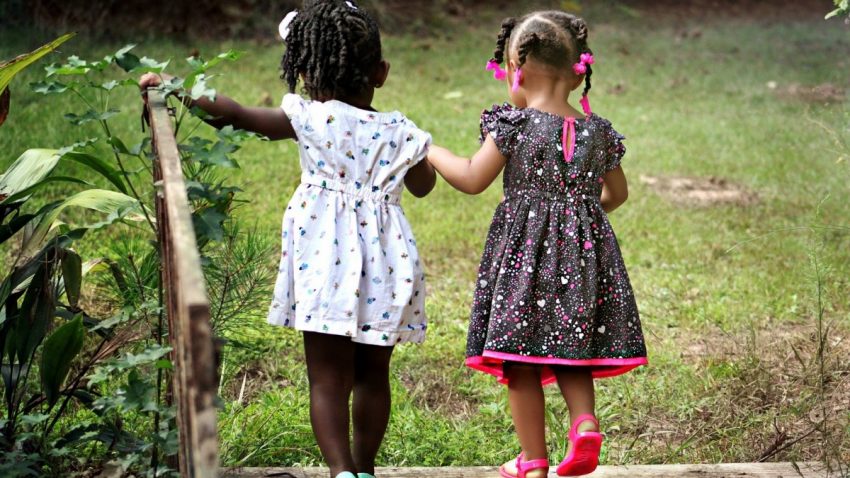
Image of two small girls walking together. The girls have their hair in braids and they are holding on to each other. One girl has her left hand on a wooden railing.

Image via Pixabay

“I. INTRODUCTION: THE UNIVERSALITY OF VULNERABILITY

“A World Fit for Children” is the title of a report delivered to the U.N. General Assembly’s Special Session on Children in 2002. The report was the fruit of three days of discussions and debates carried out by over 400 youth delegates aged ten to eighteen (also referred to as the ‘U-18s’) representing children from all of the nations of the world. In their report, the children identified many threats to their well-being, from the degradation of the natural environment, to the HIV epidemic, to war and hunger, each of which is also a threat to women and, indeed, to humans everywhere. The U-18s were not engaged in special pleading on behalf of children, but on behalf of all who inhabit the planet. These U-18s played an integral role in the 2002 U.N. Special Session, and their message transcends the politics of division to make a statement about our shared vulnerability and our shared strength. This Article is premised on the notion that building a world in which children flourish is integral to the project of building a world in which women flourish, and vice versa. By meeting the needs of children and their caregivers, we build an environment in which all can flourish.

In my prior writings, inspired by the work of feminists, and especially the Feminism and Legal Theory Project, I developed a child-centered theory called ‘generism.’ Inspired by environmental, physical, and social science, I have refined this theory under the more descriptive title of ‘ecogenerism.’ In this Article I am claiming that feminism and generism or ecogenerism are mutually complementary and compatible approaches to a broad range of concerns that threaten shared values of human flourishing. Feminist theory, and especially the branch called ‘intersectionality,’ challenges inequality and systematic marginalization of others besides women. Likewise, generist theory does not cease to be generist theory when it challenges the oppression of others besides children. Generism also does not cease to be generism when it addresses the devaluation of persons other than children. I will argue that systematic devaluations of women and children are deeply interconnected and need to be addressed together.

My premise is not novel. Political analysts already lump all manner of things that matter to children — decent schools, safe streets, quality and affordable health care and day care– under the somewhat patronizing rubric of “women’s issues.” Human rights documents already demonstrate that the concerns of women and the concerns of children are deeply interconnected.8But, too often, we in the United States seem to magnify out of proportion the rare clashes between women’s rights and children’s rights, rather than focusing on the overwhelmingly positive correlations between rights for women and rights for children. Perhaps our Constitution, with its single-minded focus on individual rights, looms so large in our imaginations that it blocks our view of the basic human rights concepts that unite us. Lawyers trained in the United States tend to frame discussions as clashes of rights– the fetus’s right not to be killed and the woman’s right not to be told when or whether to bear a child, for example. This framework suggests that rights are a zero sum game. More rights for women mean fewer rights for children, and vice versa.

Instead, I will argue that employing an ecogenerist method brings from the margins to the center those basic economic and social rights that are missing from the U.S. Constitution but so critical to understanding human rights and the human condition generally. Human rights principles, by placing rights in an economic and social context, acknowledge and make visible the interdependency of women’s and children’s rights and the interdependency of women’s and children’s interests. As others have observed, both the right to life and the right to reproductive choice are hollow if the material conditions necessary to exercise such rights are lacking.9 Feminism and the child-centered perspective I call ecogenerism are alike in recognizing that rights without resources are meaningless to dependent persons and those who care for them. Both methods avoid the trap of focusing narrowly on the individual and both demand that we recognize our shared interconnectedness and our shared vulnerabilities, as well as our rights to individual autonomy and privacy.”

Woodhouse, Barbara Bennett, A World Fit for Children is a World Fit for Everyone: Ecogenerism, Feminism, and Vulnerability (March 4, 2010). Houston Law Review, Vol. 46, No. 3, 2009, Emory Public Law Research Paper No. 10-95, Available at SSRN: https://ssrn.com/abstract=1564937

The Evolution of Plural Parentage: Applying Vulnerability Theory to Polygamy and Same-Sex Marriage

by Dr. Stu Marvel

“II. MARRIAGE,CHILDREN, AND VULNERABILITY THEORY

It is no radical proposition to argue for the centrality of the legal institution of marriage in allocating rights and legitimating functions in American society. Marriage remains critically important as both a symbolic and an organizational structure. Indeed, much of the debate around whether gays and lesbians should be permitted to marry has issued from a recognition of the vital role of marriage, not only in childrearing but as a barometer for social order and “traditional” values. While the moral disapproval of same-sex marriage is an admittedly diverting topic, this Article is more interested in a functional analysis of the marriage institution. What work does marriage do for the state? Why marriage, and why does it remain so foundational?

The contemporary answer, I believe, has to do with the priority placed by the state on ensuring mechanisms for the care and nurturance of children. Thus, the battle over same-sex marriage is not merely about gays and lesbians but about the social institution of family and the resilience of the marital form. Can it withstand the challenges posed by same-sex marriage movements? Will it crumble if opened to even broader forms, such as polygamous unions? These contestations are matters of urgency not only for the families involved but for the larger institution of marriage itself. The resilience of the marital family is a particularly critical concern within a “weak” welfare state such as the United States, where the private family is expected to do much of the work of childcare and nurturing. The manner in which the state channels rights, benefits, and obligations through our intimate lives thus continues to be of paramount importance.

While the arcs of the same-sex marriage and polygamous marriage movements have been far from parallel, there are nevertheless important continuities and linkages to be found. The role and position of children in both movements, as well as the vulnerability of the state in regard to the care of dependent children, offer useful signposts toward a future of plural parents and caretakers within the family. But what does it mean to reference “the vulnerability of the state”? How can an institution, much less the state, be understood as vulnerable? The next section will introduce the vulnerability paradigm developed by Martha Fineman and explain its utility in analyzing these social concerns.

Continue reading The Evolution of Plural Parentage: Applying Vulnerability Theory to Polygamy and Same-Sex Marriage

The Family in Civil Society

by Martha Albertson Fineman

Image via Pixabay.

“The civil societarians claim the family as their domain, its salvation as their mission. The family is a foundational concept-the “cradle of citizenship”-which teaches  “standards  of  personal conduct that cannot be enforced by law, but which are indispensable traits for democratic civil society.”‘ Problems with the family, therefore, are clearly seen as problems for democracy, justifying legal and political responses. In recent years a number of civil societarian groups have met, held conferences and hearings, and generated position papers and calls for action in an effort to engage the  nation in a discussion of civil society.

I will address two reports which set forth the purported diminished state of civil society and suggest proposals for civic renewal: A Nation of Spectators: How Civic Disengagement Weakens America and What We Can Do About It, prepared by the National Commission on Civic Renewal (the “Commission”), and A Call To Civil Society: Why Democracy Needs Moral Truths, prepared by the Council on Civil Society (the “Council”).    There is significant overlap in the membership of both bodies, which may explain the similarity in analysis and in policy recommendations.  Of particular interest is the fact that William Galston is both a member of the Council and the Executive Director of the Commission. Professor Galston has been an active and influential advocate for policies encouraging the traditional two-parent family. The reports evidence that he  has played a strong conceptual role in both bodies.

Professor Galston’s position on the family exemplifies the civil societarian approach. My basic argument is that his emphasis on the decline of the two-parent family, evidenced in the reports of both the Commission and the Council, operates to eclipse concern with social and economic forces that are truly destructive of families  regardless of their form. Of particular concern in this process are the political implications of civil societarian discourse, which is replete with allusions to crisis and family breakdown. I am also troubled by the way that civil societarians construct arguments using public opinion polls as though the responses to certain questions by a majority of those polled represented some  transcendent  “truth”  about  the state of American society.  That “truth” then becomes the justification for legal policy punishing some families and privileging others.

Civil societarians justify coercive action based upon opinion polls that show that the American public agrees with their dire observations about the family. But the term “family” is susceptible to a variety of definitions. In addition to the “traditional” family populated by formally married sexual affiliates and their biological children, family can be understood to include other couples­ unmarried sexual affiliates, whether heterosexual or homosexual, with or without children. To some people, family may also mean collections of people related by blood or kinship systems, sexual affiliation not being paramount. Slightly different is the sense of family associated with lines of descent – an intergenerational concept of family.

There are other possible meanings of family, but the point I want to emphasize is that it is by no means clear what definitions respondents have in mind when replying to opinion polls inquiring about “the family.” For example, agreement with the statement that breakdown in the family is a major indicator of moral decline may evidence concern with divorce and single motherhood. It may also indicate concern with the breakdown of intergenerational ties evidenced by the fact that adult children no longer care for their aging parents at home, or with a breakdown in family discipline evidenced by the fact that overworked parents (married as well as single) do not discipline their children into civility.

In addition to definitional problems with the concept of family, terms such as “breakdown” chosen by the civil societarians serve an ideological function. Using “breakdown” to describe changes in patterns of intimate behavior generates a sense of crisis, transforming demographic information into societal problems. The civil societarians have not merely identified an existing crisis for democracy and called for solutions. The civil societarians have constructed a crisis in morality, as well as for democracy, by turning the evolution of the traditional family form into a primary organizing analytical tool. Marriage becomes more than a legal category. It is reconfigured into public policy and presented as the path to personal and family salvation.

But marriage is nothing more than a legal category. The term itself does not necessarily indicate how individuals are living their lives or performing their societal functions. And it is family functioning, not family form, with which we should be concerned. The question is not what is happening to marriage, but how those members of our society who are dependent are faring and what institutional adjustments are warranted in order to address their needs. By focusing exclusively on family form, these are the questions the civil societarians never ask.”

Read more here: https://ssrn.com/abstract=2132273
Fineman, Martha Albertson, The Family in Civil Society (2000). Chicago-Kent Law Review, Vol. 75, 2000, Available at SSRN: https://ssrn.com/abstract=2132273

The Nature of Dependencies and Welfare ‘Reform’

by Martha Albertson Fineman

Image via Pixabay

Introduction

“As a nation, this is one of our definitive moments.  We are making determinations about our social welfare system with significant and widespread implications for the weakest and most defenseless Americans. It is widely understood that the social safety net is being torn apart by the rhetoric of budget necessity and professed American moral values. Yet, most of us stand outside of the debate, complacent or paralyzed in disbelief as our political leaders substitute market ideology for moral responsibility and sacrifice “realities” to symbol and myth.

The articulated assumptions and assertions advanced for the proposed changes in welfare must be challenged. Various academics and other researchers have produced a  multitude of studies questioning the premises behind putting welfare mothers to work and indicating that punitive measures designed to curtail reproduction do not work. These scholarly efforts at providing empirical information relevant to the current political debates are not widely reported in the media, nor do they persuade in the legislature. This particular set of reforms seems driven by ideology as uncomplicated by empirical studies as it is resistant to appeals for caution and compromise in the name of compassion.

Continue reading The Nature of Dependencies and Welfare ‘Reform’

Equality Across Legal Cultures – The Role for International Human Rights

by Martha A. Fineman

“It was an honor to present the Second Annual Ruth Bader Ginsberg Lecture. Justice Ginsburg has been a leader on the United States Supreme Court in the fledgling battle over whether and how to integrate international human rights concepts with traditional American Constitutional jurisprudence. The tasks of acceptance and integration have proven difficult to accomplish, with recent attempts generating a backlash that seemingly sprung from a deep well of belief about American superiority and exceptionalism.



Justice Ginsberg is not an isolationist in her approach to the U.S. Constitution, nor does she think America an exception when it comes to assessing the merits of comparative analysis. A few years ago, she wrote that an international comparative approach is “relevant to the task of interpreting constitutions and enforcing human rights.” She recognized that the United States loses an opportunity to expand upon its historic understanding of equality if we neglect the struggles of others in trying to address the disadvantaged status and bias shown against women, and other historically vulnerable societal groups. In this context, Justice Ginsberg was referring to affirmative action policies. In developing arguments in favor of affirmative action it has been productive when countries such as Australia, Canada, and South Africa consult the experiences and resolutions of their sister states, a practice in which they engage routinely. Noting the comparative lack of integration of other countries’ reasoning, as well as the relative silence in regard to international human rights generally, Justice Ginsberg wrote: “the same readiness to look beyond one’s own shores has not marked the decisions of the [United States Supreme Court].”

At the time she wrote this article in 1999, Justice Ginsburg found only five references to the Universal Declaration of Human Rights in United States Supreme Court opinions. Only two references were found in the opinions of Supreme Court majorities and the most recent citation at that time had appeared thirty-two years earlier in a dissenting opinion written by Justice Thurgood Marshall.

Continue reading Equality Across Legal Cultures – The Role for International Human Rights

The Politics of Custody and the Transformation of American Custody Decision Making

by Martha A. Fineman

Image via Pixabay

“INTRODUCTION

In recent years, much political attention in the United States has focused on the family as an institution in a state of crisis and transition. Advocates of various reforms assert that the stresses of modern life, par­ticularly the high divorce rate, will certainly change the family. The family is viewed as an institution in a transitional stage and, as such, is the subject of ideological struggle within the context of the political sys­tem. Of particular interest is the form and substance of the various characterizations of the perceived problems associated with the family. The way we define the issues, to a great extent, dictates the solutions. The assumptions underlying a variety of suggested reforms in the rules that govern families reveal the tensions in conflicting attitudes concerning the familial institution. Separated out for particular concern have been the children, anointed as the “victims” of the dislocations in the modern family. For example, moral and political concerns over the implications of the no-fault, freely accessible divorce systems adopted by the states have tended to center on the resulting precarious position of the “children of divorce.”

Characterizing children as innocent victims in need of protection is typical of professional reformers’ rhetoric in this age of no-fault di­vorce. Continue reading The Politics of Custody and the Transformation of American Custody Decision Making

Our Sacred Institution: the Ideal of the Family in American Law and Society

by Martha Albertson Fineman

Image via Pixabay


“Law and the images of social organizations reflected and reinforced in law are important devices in the imposition and perpetuation of generalized societal norms. The relationship between dominant ideology and law is suggested in the processes of generation and interpretation of specific legal rules-in the creation of legal rhetoric. As lawgivers create and interpret law they also articulate, define, and shape the perceived interest of the larger society.

Societal interest is “found” by reference to many types of data, typically produced outside of the law-making process and incorporated through introduction as evidence or expert testimony in adjudications or legislative hearings. In drawing conclusions about society, human nature, and/or the interests to be expressed in law, lawmakers may reference information produced by a variety of methods, framed by specific disciplines-science, history, religion, logic, philosophy, sociology, etc.-or, perhaps, just derive answers from their own past experiences and present intuitions. Every method used for production of knowledge results in some controversial outcomes. Quite often there is conflicting, unclear, or dubious information about any specific “fact” or conclusion.

Continue reading Our Sacred Institution: the Ideal of the Family in American Law and Society

Religious Resistance to Family Law Reform in the US

by Martha Albertson Fineman

“America is a deeply divided nation. We differ on such basic issues as how we should order our lives and the role of society and its institutions in shaping human behavior. We have divergent views on the importance of duty and obligation as contrasted with liberty and individuality. Various traditions, religious, cultural and otherwise, have produced very different and as strongly held beliefs. Caught in the cross hairs of this diversity is the American family.

The American family has changed dramatically, particularly over the past four decades, and these changes are reflected both in modern family law and in contemporary movements to alter that law. Social movements have organized around these changes that have goals that are in stark opposition to each other: one group seeking to use law to expand our ideas about the family and provide more people the benefits of family status, the other mobilizing to remove innovations and steer society back to the more exclusive (and excluding) ―morally-mandated‖ traditional family.  Representing polar opposites in this struggle are the feminist approaches to family law reform, which is individualistic and rights-centered and fundamentalist rhetoric, which is steeped in religious imagery, symbols, and metaphors.

Continue reading Religious Resistance to Family Law Reform in the US

Intimacy Outside of the Natural Family: The Limits of Privacy

by Martha Albertson Fineman

Image via Pixabay

“In this paper I undertake a very pragmatic and focused consideration of whether it is possible to rework existing legal concepts of privacy in a way that would be ideologically compatible with dominant social norms in order to shield single mothers from excessive state regulation and supervision. I ultimately conclude that my desire to protect the decision-making autonomy and the dignity of poor and/or single mothers cannot be satisfied by resort to this area of law. At the constitutional level, this is so because notions of privacy are typically articulated as rights belonging to individuals, not family entities. And in the common law, the concepts of “family” or “entity” privacy similarly fail to protect poor and single mothers because these concepts have been developed and employed in the context of widely shared ideological constructions of what constitutes the “natural” family. This image of the natural family in turn serves as the norm in our understandings of intimacy in discussions of the family. For the law to assert that poor and/or single mothers are, or should be, included within the realm of “normal” and “natural” families, and therefore entitled to  privacy, would require a leap of legal imagination not likely to be undertaken without the safety net of dominant social and cultural concurrence.

The development of privacy doctrine has thus been limited by societal assumptions about intimacy, families, and individuality, and by ideas concerning fairness and just deserts. The question arises, how­ ever, whether privacy, even if it is a concept embedded in social and cultural presuppositions, could be rehabilitated or reworked to include single mother families? There are both ideological and doctrinal barriers to this endeavor. As things now stand, it does not seem likely that an emphasis on privacy will do anything other than further reinforce the ideology of the natural or normal family. In fact, it may be that continued emphasis on privacy as the concept to constitutionally protect certain sorts of intimate behavior will serve to deter the development of other legal principles  that might  help to limit state regulation of poor and single mother families.

Continue reading Intimacy Outside of the Natural Family: The Limits of Privacy