Update from Nancy Locklin

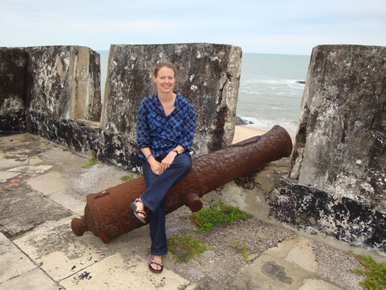
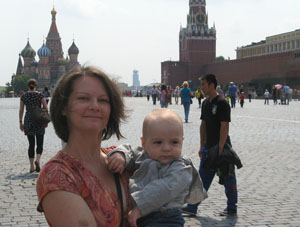
Nancy Locklin and her new son at Red Square.

Nancy Locklin (PhD 2000) has just published an article, “‘Til death parts us’: Women’s Domestic Partnerships in Eighteenth-Century Brittany,” in the Journal of Women’s History, Winter 2011 (volume 23, issue 4). In even bigger news, she and her husband have adopted a baby boy from Russia. Congratulations on both counts, Nancy!

Update from Neal Robin

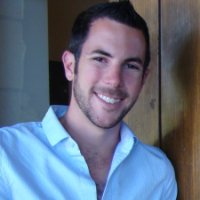
Neal Robin was the editorial producer for “Elusive Justice: The Search for Nazi War Criminals.”

Neal Robin (B.A. 2007) served as editorial producer for “Elusive Justice: The Search for Nazi War Criminals,” a documentary premiering Tuesday, November 15 (at 9PM on PBS; check for local listings) that chronicles the 65-year effort to identify, prosecute, and punish Nazi perpetrators of the Holocaust.

After the end of WWII, the international community failed to uphold its pledge to prosecute and punish suspected Nazi war criminals. Thousands of Nazi officials fled to safe havens around the world, assuming false identities and concealing their war records to evade exposure.  The documentary explores how and why this happened, as well as profiles the men and women who, in the face of apathy and violence, pursued Nazis on their own terms when official institutions failed to enforce its laws.  The film includes interviews with suspected war criminals and their defenders, government investigators and prosecutors, intelligence officers, so-called Nazi-hunters, and Holocaust survivors.

As editorial producer, Neal conducted on-camera interviews, coordinated story assignments (including overseas assignments), located archival footage, and researched trials and investigations of suspected Nazi perpetrators to incorporate into the film.

Neal says, “My background in history served as an indispensable background for me during the documentary production, and will continue to be invaluable in all my educational and professional endeavors.  I read historical accounts of groups of people who were abused and disenfranchised for bigoted reasons, and whose memory served as a basis on which future generations attempted to raise the moral and social consciousness to issues of injustice.  I drew on the lessons I learned in class by listening to firsthand accounts of those who bore witness to crimes as they unfolded, and then trying to understand the stories behind them.”

Update on Jeffrey Reznick

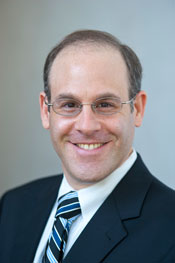
Jeffrey Reznick

Congratulations to Jeffrey Reznick (PhD 1999) for his new appointment as Chief of the History of Medicine Division of the National Library of Medicine at the National Institutes of Health. Previous to this appointment he was Deputy Chief and then Acting Chief of the History of Medicine Division of the NLM, and has an extensive background in the social and cultural history of medicine. He has also served as senior curator at the National Museum of Health and Medicine of the Armed Forces Institute of Pathology, Executive Director and Senior Research Fellow at the Orthotic and Prosthetic Assistance Fund, and as the assistant director of the former Institute of Comparative and International Studies at Emory. He is the author of John Galsworthy and Disabled Soldiers of the Great War: With an Illustrated Selection of His Writings (2009) and Healing the Nation: Soldiers and the Culture of Caregiving in Britain during the Great War (2005) as well as many articles on the history of medicine and war.

Update from Jerome V. Reel

Dr. Reel signs copies of his new book, The High Seminary.

Jerome V. Reel, Jr. (Ph.D. 1967) has received the South Carolina Humanities Council award for his outstanding service to humanities education and knowledge through his 48 years of teaching at Clemson University, his six books, several chapters in books, and a dozen articles for scholarly and popular magazines on historical topics ranging from 14th century Britain, higher education history, opera and general music history, to the effects of the Arthurian legend through music and popular festivals. Although retired since 2006, he continues to teach almost every semester at Clemson in response to student requests. His most recent book, The High Seminary: A History of the Clemson Agricultural College of South Carolina, 1889-1964 (June 2011) has sold its first printing; a second is at the press.

Update from Rebecca Shumway

Rebecca Shumway celebrates the publication of her first book and the birth of her son, Derek (Kwei).

Rebecca Shumway (PhD 2004) has just celebrated two big events in her life: the publication of her first book, The Fante and the Transatlantic Slave Trade (Rochester University Press) and the birth of her son Derek (Kwei) Shumway Handley on September 14. We congratulate Rebecca on a highly productive and impressive year!


Update from Andrew Fleming

Andrew Fleming recently became the Senior Researcher at the Cape Town Partnership.

Andrew Fleming, BA 2007, who wrote his Honors thesis under Prof. Clifton Crais on patterns of rural land tenure and their political/economic/social consequences in the Glen Grey District of 19th Century South Africa, moved to Cape Town after graduation. He worked for three years in a small private equity fund manager oriented towards socially-empowering investments and aimed at job creation through entrepreneurial support and funding. In May 2010 he left South Africa to do a summer¹s worth of backpacking around the Middle East and Europe, followed by the reading for an MSc in Urbanisation and Development at the London School of Economics. He writes:

“My focus for my Master’s dissertation was on low-income housing in the Global South: Specifically, I have examined a rise in evictions from private low-income rental housing in Woodstock, one of Cape Town’s urban neighborhoods. This has proven to be developmentally problematic, placing evictees in the distant urban periphery away from jobs, healthcare, education, and family support, where gender-based and drug-fuelled violence is on the increase. The evictions are also problematic for South Africa’s post-Apartheid spatial development: Not only do the evictions continue to divide the geographical city by class, but also implicitly perpetuate imperial/colonial patterns of land use and occupation. An examination into the ways in which these evictions are taking place (largely outside of the general public awareness) and their on-the-ground consequences is vital for understanding the many ways in which South Africa’s society continues to perpetuate patterns of imperial spatial use under the guises of a neoliberal economic development agenda. Exploring not only the developmental problems associated with low-income housing evictions and displacement, but also the historical roots of the evictions in question, will open up a more solutions-oriented and creative discussion on the ways in which residential and city space can be shared by citizens from multiple income levels, interacting across different social platforms and stages.”

Andrew recently began a new job as the Senior Researcher at the Cape Town Partnership, a Public-Private Non-profit organization with the overall goal of promoting Cape Town as an inclusive and productive space in which to work, live, and interact. He will be focusing specifically on research into the ways in which the City Centre has become a more inclusive urban area for a greater number of South Africans through not only an increase in businesses coming into the city (and thus an increase in job opportunities) but also how new research initiatives and cross-institutional collaboration will lead to a growth of new and creative solutions for uniquely African urban challenges.

Update from Chris Snyder

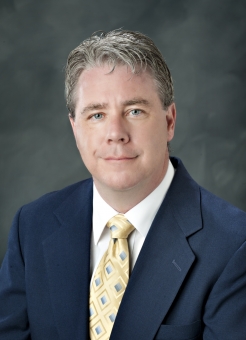
Chris Snyder is the dean of Shakouls Honor College at Mississippi State University

Chris Snyder, who received his PhD in Medieval History in 1994 under Prof. Tom Burns, is beginning his new position at Mississippi State’s Shackouls Honors College as its founding dean. Chris is an authority on early medieval Britain and has published a number of books, including An Age of Tyrants: Britain and the Britons, A.D. 400-600 (1998) and The World of King Arthur (2000) and was the General Editor of The Early Peoples of Britain and Ireland: An Encyclopedia (2008). Before arriving at Mississippi State, Chris was professor of European history and director of the honors program at Marymount University in Arlington, VA.

Update from Liz Saluke

Liz Saluke, who graduated with Honors in 2008, is currently pursuing an MFA in Dance at Florida State University. She writes “Though most of my current academic pursuits are in the field of Dance, I am always using my cultural historian lens in my creative work. And I still credit Prof Judith Miller for being one of the main reasons I realized that my professional passion was in fact Dance, and not Revolutionary France.”

Update from Vaughn Davis Bornet

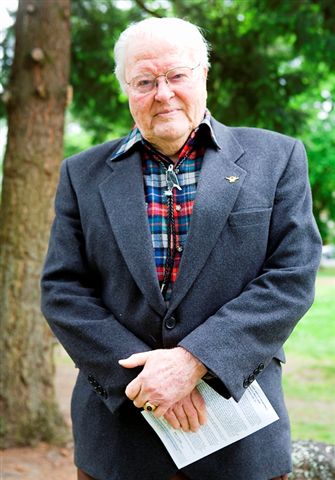
Vaughn Davis Bornet on Memorial Day 2010.

Vaughn Davis Bornet, B.A. 1939, our oldest living undergraduate alumnus, will turn 94 on October 10, 2011. Enjoying normal health, he attends Rotary routinely on Thursdays. He shared many memories of Emory faculty. He writes, “Garland Smith is mostly responsible for my later editing skills, I should think.  He gave F’s on a paper for ANY misspelled words, including AND without the N and THE without the H.  In another single course he transmitted a lifelong love of poetry (exercised now and then). Gaty Workman in Abnormal Psychology took us to Milledgeville to what was then a genuine insane asylum. Much memorialized Dean Rece transmitted in one course more comprehension of the King James Bible than years of Sunday School.  No, those books are not in chronological order, and Isaiah in addition to being spelled ‘that way’ is two books with vast time between them. Tom English offered his tour de force in the English Language, and the American Literature course introduced Walt Whitman in all his eccentricities (and beauty of phrasing).  While I found vital qualities in Southernist Hayward J. Pearce and English history lover Ross McLean, my favorite, and friend, was youthful Mose Harvey of UC Berkeley whose concentration on Russia probably detoured him to a lifetime in the State Department. I remember him waving airily toward a pile of unbound documents and saying something like ‘Here in this office I have more information than the whole Harvard History Department!’ I believed. We used that Candler Library instead of textbooks in those Depression years (1935 to 1940); we didn’t even have texts in US and Western Civ courses. No offense to the History Department, but I did get a huge boost from several Journalism courses back then.  And I’m so glad I sweated through International Law and Constitutional Law under Cullen Gosnell, heavily and routinely using the Law Library and those huge law books; again, no text.”  He also remembers Leroy Loemker in the Philosophy Department.

Since earning his Honors degree in History at Emory, he has had an eventful life and written a long list of books in United States history.  Just this year, he published Speaking Up for America: In the Rogue River Valley during the Vietnam War (2011), a collection of speeches and essays reflecting on those decades in US history, and Leaders and Issues at Southern Oregon College, 1963 to 1980 (2011).  During World War II, he entered the Navy as Yeoman First class and then earned his commission. He retired as Commander from the Naval Reserves.  He received his doctorate from Stanford University in 1951. He held a number of university positions; most notably, he was Professor of History and Social Sciences and the Chairman of the Social Sciences Division of the Southern Oregon University.   For twenty years, he served on the Oregon Committee of the U.S. Civil Rights Commission.   His articles have been published in many journals, including The American Archivist and The Historian. Dr. Bornet held a number of research positions at prominent institutions, such as the RAND Corporation, the Ford Foundation, the Commonwealth Club of California and the Institute of American History at Stanford University.  His books cover a very wide range of important topics in twentieth-century United States History: Welfare in America (1960); Labor Politics in a Democratic Republic (1964); Herbert Hoover, President of the United States (co-authored, 1975); and The Presidency of Lyndon B. Johnson (1983). He wrote the long summary appraisal article ‘United States’ three times for encyclopedia yearbooks. His sketch appears in several Who’s Who publications of the Marquis Company, and he has the Distinguished Service Medallions of the American Heart Association and Oregon Heart Association.

Since 1963, he has called Oregon home.  Still by his side is his choice for a mate:  Beth W. Bornet, who was at their meeting in 1944 the 20 year-old President of the senior class at University of Nevada, Reno and hailed from tiny Susanville, California.  She has been a leading volunteer honored by many organizations. They live in Ashland, Oregon. Their two children live in California and Connecticut.

This past Memorial Day, he spoke at the Mountain View Cemetery in Ashland. In his speech, he drew connections to Emory’s losses during World War II: “There were deaths from my own fraternity—my catcher when I pitched; the editor of the Emory Wheel newspaper; the dear son of the professor who mentored us Sigma Chis.”

Dr. Bornet’s autobiography appeared in 1995, An Independent Scholar in Twentieth Century America: The Autobiography of Vaughn Davis Bornet.
Update from Charles Le Guin

Charles Le Guin, Ph.D. 1956, has written from Portland, Oregon. He and Thomas E. Mullen (Ph.D. 1959) have remained good friends. Dr. Le Guin describes his studies: “I came to Emory to pursue my PhD in 1950 and Joseph Mathews undertook to guide me to my degree: it took a while—a Fulbright and some teaching—before that was accomplished. I believe I was the sixth History Ph.D. at Emory and the first in European History, and I think I am now the oldest living Emory History PhD. (I think Tom Mullen agrees with this.)”  The year Dr. Le Guin finished his degree on the French Revolution, Dr. Mathews was abroad on a Fulbright at Oxford, and so Russell Major took over his training.  Dr. Le Guin recounts, “I had had courses from him and he was in Paris when I was there on my Fulbright: indeed, he and Blair were at my wedding there.”  (Charles and his wife Ursula still have the samovar and tea cups that the Majors gave them as wedding presents.)

He remembers that there were about three dozen graduate students when he was at Emory.  He has looked over the department’s website. “Among the things that amazes me most,” he writes, “is the size of the department: from 1950-56, the period when I was doing my degree, I can recall only ten faculty: Mathews, Major, Posey (shared with Agnes Scott as I recall), Duncan, Rabun, Cuttino, Benjamin, McLean, Wiley, and Young.  I think Harvey Young outlived them all – I know, much as I admired the others, he was one of the sweetest men I ever knew, the sort of professor I would most like to have been.” He compared the university’s present graduate stipends with the support available when he was at Emory:  “In 1950 I had a scholarship of $750 dollars a term, which was immediately returned to cover my tuition.  I can imagine how that wouldn’t be a drop in the bucket these days.”

Dr. Le Guin moved West in 1956 and to Portland State University in 1959, where he taught the French Revolution along with many other topics, ranging from the history of Australia and New Zealand to Canada.  He explains, “It was a happy place for me to be, being a part of the development of a fledgling college of 2500 students which has grown into a university with 30,000 students in a remarkably short time: PSU has just had the good sense to hire a new College of Liberal Arts and Sciences dean who was an Emory undergraduate (Susan Beatty, a geographer).  I retired in 1995, finished a book with two colleagues (In The Balance: Themes in Global History, 1998), and have since devoted myself mainly to reading any and everything and gardening.  One of my great pleasures is seeing Tom Mullen in summers when he comes to Oregon to visit his son and grandchildren.  It is a sort of grand two person Emory History reunion way out here on the Upper Left Edge.”